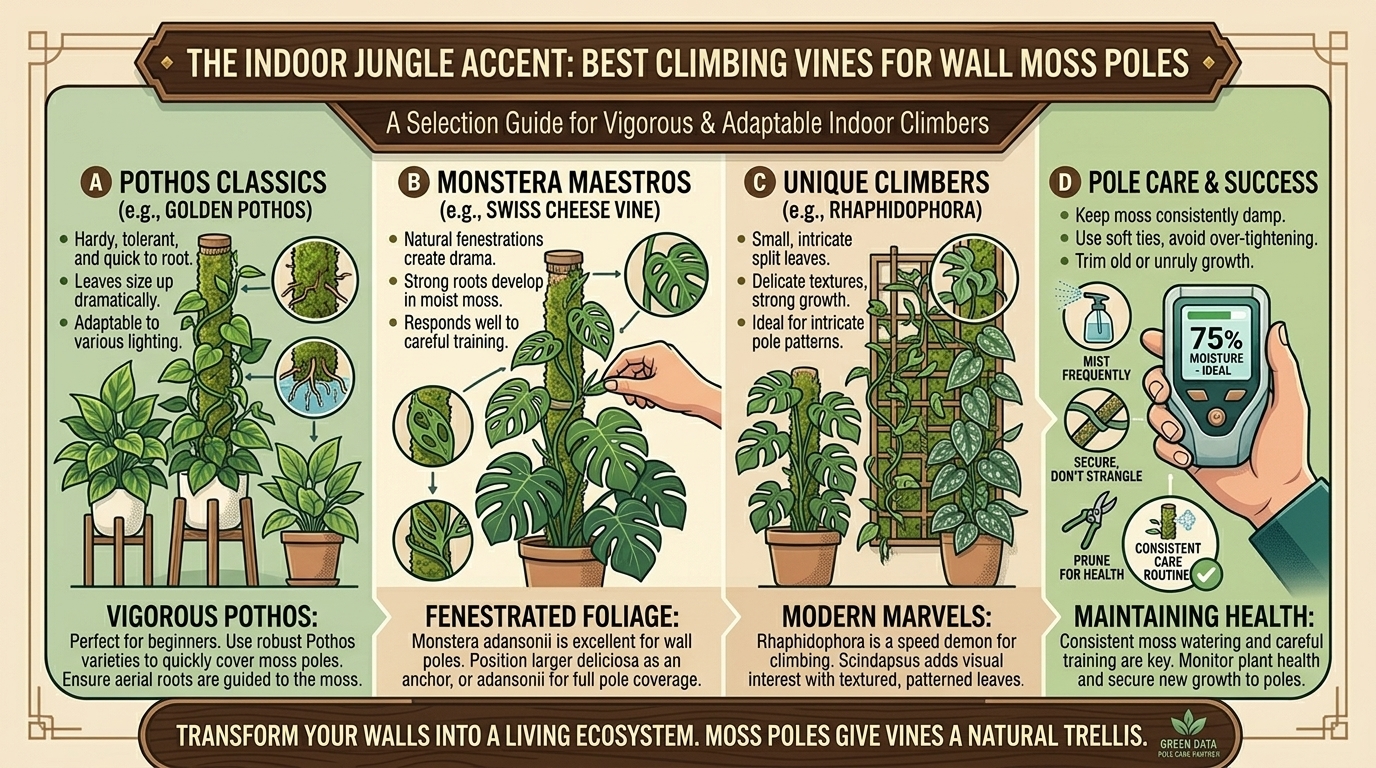
Welcome to kcplants, your ultimate digital greenhouse and urban gardening hub. Whether you are curating a lush, vertical jungle in a high-rise apartment in New York City or San Francisco, balancing indoor humidity in Washington, or designing a sunlit plant oasis in Texas and California, optimizing vertical space is one of the greatest secrets to modern indoor gardening.
When floor space is at a premium, looking upward is the ultimate game-changer. One of the most visually stunning and botanically rewarding ways to transform your indoor interior is by installing a wall moss pole and pairing it with climbing vines that naturally wrap, grip, and ascend upward.
In the wild, epiphytic climbing vines use aerial roots to scale massive jungle trees, soaking up moisture and filtered sunlight from the canopy. Replicating this in your home with a moss pole not only satisfies a plant’s natural biological instincts but also results in massive, mature, fenestrated leaves that will take your indoor collection to the next level.
Below is your exhaustive, master-level guide to the best indoor climbing vines, how moss poles work, and how to train your plants to scale them successfully.
1. The Anatomy of Climbing: How Vines Interact with Moss Poles
To understand why certain plants thrive on moss poles while others fail, it helps to understand how climbing vines navigate their environment in nature. Plants generally fall into two categories when it comes to vertical climbing:
1. Root-Climbers (Epiphytes)
These plants produce specialized aerial roots at their stem nodes. When these nodes come into contact with a moist, textured surface like a moss pole, the roots physically dig into the fibers, anchoring the plant securely and absorbing trace moisture. These are the absolute best candidates for moss poles.
2. Twiners and Tendril-Climbers
These plants climb by wrapping their stems tightly around supports (twiners) or by shooting out delicate tendrils that grab onto anything nearby (tendril-climbers). While they can climb a moss pole, they often require initial ties and do not anchor themselves via roots into the moss.
Keeping Your Moss Pole Functional
A traditional dry sphagnum moss pole is essentially just a decorative stick. A true functional moss pole is packed with high-grade sphagnum moss that is kept consistently damp. As your climbing vine grows upward, its aerial roots plunge into the wet moss, allowing the plant to mature rapidly, produce larger leaves, and establish a robust, self-sustaining vertical structure.
2. Regional Climates and Indoor Vertical Growing: TX, NY, CA, WA, and SF
Your local regional environment influences how your indoor climbing setup performs:
- San Francisco & Washington: High ambient outdoor humidity and cool coastal air can help keep moss poles damp longer. However, indoor heating during winter can dry out moss poles rapidly. Monitoring moisture retention is key.
- New York: Winter indoor radiator heat acts like a dehydrator, causing sphagnum moss poles to dry out in a matter of hours. New York growers often need to mist or top-water their poles more frequently during heating seasons.
- Texas & California: Abundant, intense natural light makes climbing vines grow with ferocious vigor. However, strong sunlight streaming through windows can scorch aerial roots if they aren’t nestled securely into a moist pole.
3. The Best Indoor Climbing Vines for Moss Poles
Not all indoor vines are created equal. If you want vigorous climbers that will happily wrap, grip, and scale a moss pole with stunning results, these are the top varieties to choose from:
1. Monstera deliciosa (Swiss Cheese Plant)
- Climbing Style: Aggressive root-climber.
- Why It Shines on a Pole: While young monsteras sprawl sideways, mature plants are absolute powerhouses on moss poles. Their thick aerial roots sink deep into the damp moss, signaling the plant to produce massive, heavily split and fenestrated leaves.
2. Philodendron micans (Velvet Leaf Philodendron)
- Climbing Style: Fast-growing root and stem climber.
- Why It Shines on a Pole: Featuring iridescent, shimmering heart-shaped leaves with a velvety texture, Micans grows rapidly upward. When allowed to climb a moss pole, its leaves often double or triple in size compared to trailing horizontally.
3. Epipremnum aureum (Golden Pothos & Varieties like ‘Marble Queen’ or ‘Neon’)
- Climbing Style: Classic root-climber.
- Why It Shines on a Pole: Pothos is famously indestructible, making it the ultimate beginner plant for moss poles. Left to trail down, the leaves stay small. Pinned to a moss pole, golden pothos leaves grow giant, develop splits like a mini-monstera, and create a striking vertical column of gold and green.
4. Philodendron ‘Brasil’ or Philodendron hederaceum (Heartleaf Philodendron)
- Climbing Style: Flexible root-climber.
- Why It Shines on a Pole: With striking chartreuse and dark green variegation, Brasil climbs eagerly when guided. Its heart-shaped leaves stack tightly along the moss pole, creating a dense, lush, cascading wall of foliage.
5. Syngonium podophyllum (Arrowhead Plant)
- Climbing Style: Vigorous herbaceous vine.
- Why It Shines on a Pole: Arrowhead plants naturally grow as climbing vines in tropical understories. On a moss pole, they transition from juvenile arrow shapes into deeply lobed, mature, multi-fingered leaves that look strikingly exotic.
6. Rhaphidophora tetrasperma (Mini Monstera)
- Climbing Style: Fast-paced fenestrated climber.
- Why It Shines on a Pole: Often mistaken for a true monstera, this slender vine climbs furiously. It features pre-fenestrated leaves that naturally curl around moss poles, making it one of the most rewarding vertical plants for modern apartments.
4. Step-by-Step Guide: Installing and Training Your Vines on a Moss Pole
Setting up a moss pole correctly ensures your climbing vines anchor securely and grow straight up rather than tipping over.
Step 1: Choosing and Constructing the Pole
Opt for a sturdy wire-mesh or plastic-backed moss pole packed tightly with high-grade, long-fiber sphagnum moss. Avoid flimsy coconut-coir (coir) poles if possible; coir is waterproof, stiff, and lacks the spongy moisture-retention qualities that real aerial roots need to dig in.
Step 2: Repotting and Anchoring the Pole
When repotting your climbing vine, sink the base of the moss pole deep into the bottom of the pot, anchoring it securely in heavy, well-draining soil so it doesn’t wobble under the weight of a growing plant. Plant your vine directly at the base of the pole.
Step 3: Attaching the Vines
Young vines cannot climb what they cannot touch. Gently position the main stem or nodes of your plant against the damp moss. Use soft plant velcro, jute twine, or green gardening tape to secure the stem loosely to the pole. Pro tip: Always tie the stem just below a leaf node, as this is where aerial roots emerge to grip the moss.
Step 4: Top-Watering the Pole
Because sphagnum moss dries from the top down, always water your setup by pouring water directly into the top opening of the moss pole. As the water trickles down through the entire length of the pole, it hydrates the moss evenly and provides a direct drink to all the aerial roots attached along the column.
5. Maintenance and Long-Term Care for Moss Pole Climbers
- Lighting Adjustments: As your vine climbs upward, the top leaves will receive much stronger light than the lower leaves. Ensure your lighting setup illuminates the entire vertical height of the pole so the base doesn’t go bald or drop leaves.
- Extending the Pole: Eventually, your monsteras or pothos will reach the top of the moss pole. When this happens, you can purchase stackable moss poles that screw directly into the top of your existing pole, allowing your indoor jungle to climb higher toward your ceiling.
- Pruning for Bushiness: If your vine gets too leggy at the top, pruning the uppermost growth tip will force the plant to activate dormant lower side-shoots, creating a fuller, bushier vertical display.
6. Troubleshooting Common Moss Pole Challenges
- Aerial Roots Refusing to Attach: If your plant’s roots are shriveling up and refusing to grip the pole, the moss is likely drying out too fast. Keep the moss consistently damp by top-watering it every few days.
- Stem Rot Where Tied Too Tightly: If twine or wire is tied too tightly around the main stem, it can slice into the plant’s vascular system as it thickens. Always use loose, flexible ties like plant velcro.
- Fungus Gnats in the Sphagnum Moss: Damp sphagnum moss can occasionally attract fungus gnats. Let the surface layer dry out slightly between waterings or treat the pole with mosquito bits/beneficial nematodes if an infestation occurs.
7. Frequently Asked Questions (FAQ)
- Are coconut coir poles better than sphagnum moss poles? No. While coir poles look neat and tidy, they are tightly bound, water-repellent, and lack internal moisture. True sphagnum moss poles retain moisture and allow aerial roots to physically penetrate and anchor inside the fibers.
- How often should I water a moss pole? Depending on your indoor humidity and heating, you generally need to top-water or mist your moss pole every 3 to 7 days to keep the sphagnum moss consistently moist.
- Can I propagate a vine directly while it’s on a moss pole? Yes! You can air-layer vines on a moss pole by wrapping a small ball of damp moss around a node with existing roots, wrapping it in plastic wrap, and cutting it off to pot once roots proliferate.
- Why are my climbing plant’s leaves getting smaller as it climbs? If leaves shrink as the plant goes up, it usually means the plant is starving for light at the top of the pole or the moss pole isn’t providing enough sustained moisture and nutrients for mature leaf development.
- Do I need to fertilize a moss pole? Yes. When watering your moss pole, use a heavily diluted liquid houseplant fertilizer once a month. The aerial roots absorbing moisture from the moss will also absorb these vital nutrients, boosting growth.
- Can I use ordinary garden dirt inside a DIY moss pole? Never use heavy garden soil inside a moss pole. It will compact, block airflow, rot the aerial roots, and create a heavy, messy hazard. Always use clean, long-fiber sphagnum moss.
- What is the fastest-growing vine for an indoor moss pole? Epipremnum aureum (Golden Pothos) and Philodendron micans are widely considered the fastest, most reliable growers that will cover a moss pole in a matter of months.
- How do I anchor a heavy Monstera to a wobbling moss pole? If your pole is wobbling under a heavy plant, you can stabilize it by attaching a plant stake or anchoring the top of the pole to a nearby wall bracket or ceiling hook using clear monofilament line.
- Will my walls get damaged if a plant climbs directly on them instead of a pole? Yes. Root-climbers like English Ivy or certain monsteras secrete natural glues or drive roots into drywall, paint, and masonry, causing permanent stains and structural damage. Always use a moss pole to protect your walls!
- Can low-light indoor rooms support climbing vines on poles? While vines like Pothos survive in low light, they will grow slowly and stay small. To achieve lush, mature tropical growth on a moss pole, ensure the area receives bright, indirect sunlight or supplement with a vertical LED grow light bar.
8. Conclusion
Transforming your indoor space with climbing vines wrapped around wall moss poles is one of the most rewarding styling choices you can make as a plant parent. By mimicking a natural jungle canopy, you unlock your plants’ true genetic potential, encouraging massive foliage, robust root systems, and stunning vertical artistry.