How to Set Up a Necessary Base Home Garden for Beginners Using Only Natural Organic Soils
Starting a home garden is one of the most rewarding, sustainable, and therapeutic journeys you can embark upon. Whether you are living in a sun-drenched backyard in Texas, managing a cozy urban balcony in New York, utilizing a vibrant patio space in California, navigating the misty climate of Washington, or working with compact urban limitations in San Francisco, the foundation of a thriving, resilient garden always begins in the same place: the soil.
For beginner gardeners, the sheer volume of advice available can feel overwhelming. Chemical fertilizers, synthetic pesticides, and complicated soil amendments often cloud the picture. However, the most successful, low-maintenance, and nutrient-dense gardens are built entirely on natural, organic soils.
This comprehensive guide will walk you through every step required to build a rock-solid, organic garden foundation tailored to your space, climate, and lifestyle.
Table of Contents
- Introduction to Organic Gardening
- Understanding Soil: The Living Ecosystem
- Sourcing and Building Your Organic Soil Base
- Choosing the Right Container or Garden Bed
- Regional Gardening Adaptations (TX, NY, CA, WA, SF)
- Essential Planting and Sowing Strategies
- Natural Water Management and Irrigation
- Organic Pest and Weed Management
- Pro Tips for Long-Term Soil Health
- Frequently Asked Questions (10 FAQs)
- Conclusion
1. Introduction to Organic Gardening
Organic gardening is more than just growing plants without chemicals; it is about mimicking nature’s closed-loop cycle. In a natural ecosystem, plants grow, shed leaves, die, and decompose back into the earth, feeding microorganisms that, in turn, nourish the next generation of plants.
When you set up an organic garden, you step into this natural rhythm. Instead of forcing plants to grow using synthetic nitrogen packets, you cultivate a living microbiome beneath the surface.
Why Go Organic from Day One?
- Superior Flavor and Nutrition: Fruits and vegetables grown in nutrient-dense organic soils absorb a broader spectrum of trace minerals, translating directly to better taste and higher nutritional value.
- Safer Environment: Eliminating synthetic weed killers and chemical bug sprays keeps your home environment safe for children, pets, local pollinators (like bees and butterflies), and beneficial birds.
- Long-Term Cost Efficiency: While chemical setups require constant repurchasing of synthetic boosters, a well-maintained organic soil bed actually improves and enriches itself year after year.
2. Understanding Soil: The Living Ecosystem
Many beginners treat soil as a mere physical anchor to hold a plant upright. In reality, healthy soil is a living organism. A single teaspoon of healthy organic soil contains billions of bacteria, fungi, protozoa, and nematodes.
The Three Pillars of Soil Composition
To build a great base garden, you need to understand the structural triad of soil:
- Sand: The largest particles. They provide excellent drainage and aeration, but do not hold nutrients well.
- Silt: Medium-sized particles. They retain moisture and feel smooth or floury when dry.
- Clay: The smallest particles. They pack tightly together, holding onto water and nutrients intensely, but can become rock-hard when dry and waterlogged when wet.
The Magic Ratio: Loam
The holy grail of gardening is loam—a balanced mixture of roughly 40% sand, 40% silt, and 20% clay, packed with rich organic matter. Because native dirt in urban backyards or barren properties is rarely perfect loam, beginners achieve the best results by building raised beds or container gardens using custom-mixed organic soil.
3. Sourcing and Building Your Organic Soil Base
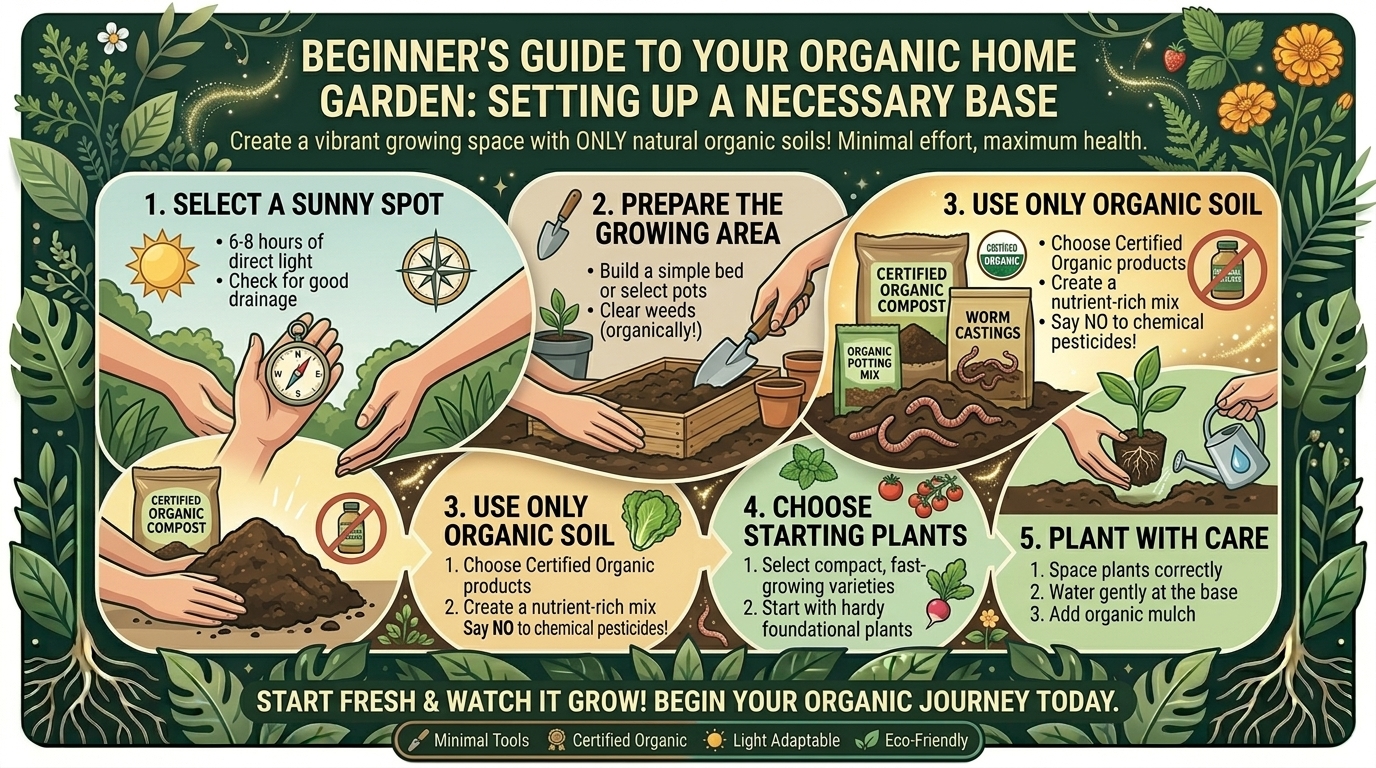
Creating your own organic soil mix guarantees that no synthetic fertilizers, chemical sludge, or systemic pesticides make their way into your edible plants or flowers.
The Classic “Mel’s Mix” / Raised Bed Organic Formula
For raised beds and large containers, a tried-and-true formula used by organic gardeners everywhere is a balanced blend of three main components:
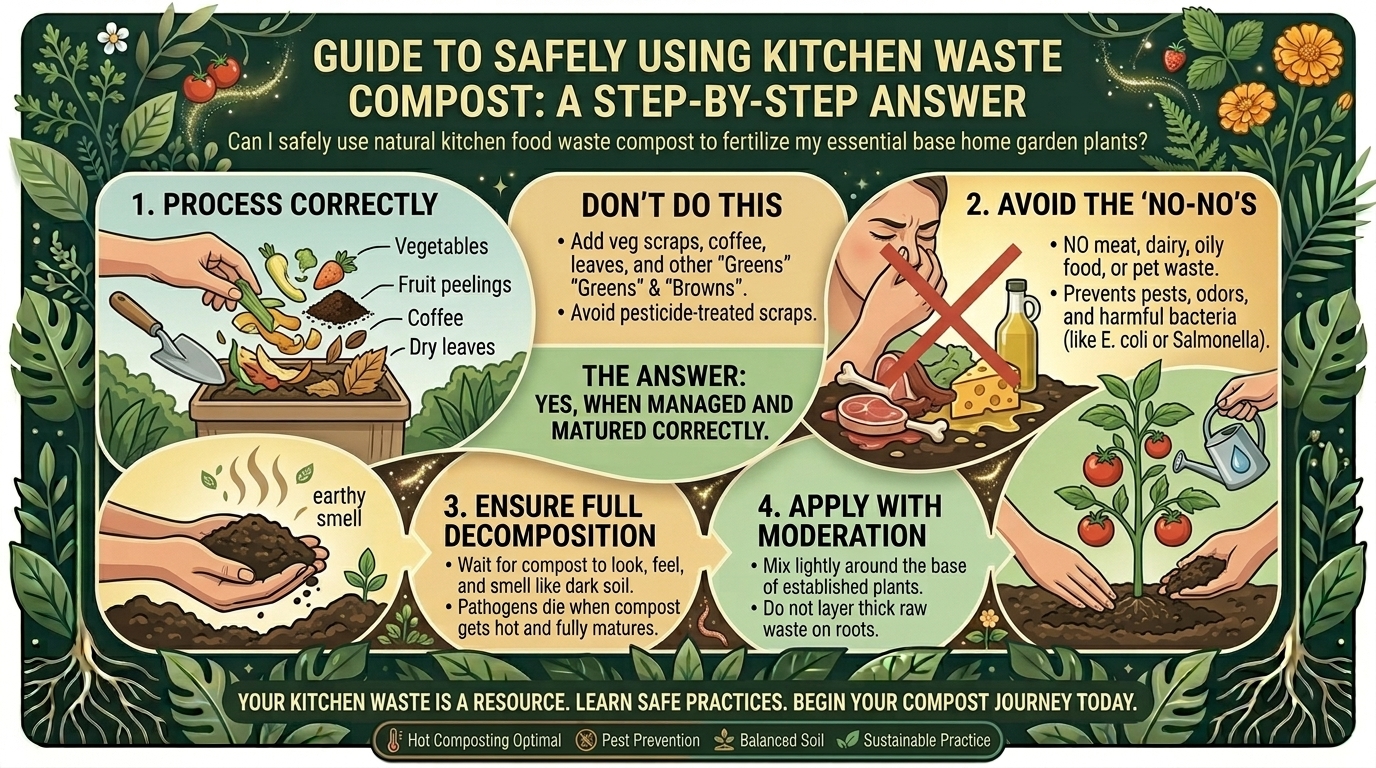
- 1/3 Compost (The Nutrient Core): Use a diverse mix of compost (such as leaf mold, worm castings, and well-rotted manure). Compost provides the broad spectrum of macro and micronutrients your plants crave.
- 1/3 Peat Moss or Coconut Coir (The Moisture Retention Agent): Coconut coir is a sustainable, renewable byproduct of the coconut industry that helps hold moisture without compacting.
- 1/3 Aeration Material (Perlite or Vermiculite): Horticultural perlite creates microscopic air pockets in the soil, ensuring that plant roots receive vital oxygen and preventing root rot.
Essential Organic Soil Amendments
To supercharge your base mix, incorporate small quantities of natural mineral and biological boosters:
- Worm Castings (Vermicompost): Adds beneficial microbes and gentle, slow-release nitrogen.
- Glacial Rock Dust: Restores missing trace minerals stripped from modern soils.
- Kelp Meal: Provides natural growth hormones and potassium.
- Bone Meal or Fish Bone Meal: Rich in phosphorus for strong root development and vibrant flowering.
4. Choosing the Right Container or Garden Bed
Your choice of growing container dictates how your organic soil behaves. Depending on your living situation, you can choose from several beginner-friendly options:
- Raised Garden Beds: Excellent for yards with poor native soil, heavy clay, or contaminated urban earth. They warm up faster in spring and provide effortless ergonomics (less bending over).
- Fabric Grow Bags: Perfect for urban environments, balconies, and patios (especially popular in New York and San Francisco apartments). Fabric bags offer ultimate root aeration (known as “air pruning”) and prevent plants from becoming root-bound.
- Traditional Containers (Terra Cotta, Wood, or Food-Grade Plastic): Ensure every container has adequate drainage holes at the base. Organic soil thrives on proper drainage; stagnant water suffocates root microbes.
5. Regional Gardening Adaptations (TX, NY, CA, WA, SF)
Climate dictates how your organic soil retains moisture, how quickly it warms up, and what pests you might encounter. Here is how to tailor your base garden setup to distinct regional realities:
Texas (Hot, Arid to Humid Subtropical)
- The Challenge: Intense summer heat can rapidly bake and dry out organic soil, killing beneficial surface microbes.
- The Solution: Use a heavy layer of organic mulch (like shredded bark or straw) at least 3 inches thick to insulate the soil surface. Opt for larger containers or deep raised beds so moisture buffers against sudden heatwaves.
New York (Cold Winters, Humid Summers)
- The Challenge: Freezing winter temperatures can crack ceramic pots and cause frost heaving in shallow beds.
- The Solution: Choose frost-resistant materials or empty fabric bags/wooden beds in late autumn. Enrich your soil with rich compost in early spring to jump-start microbial activity after the thaw.
California (Mediterranean Climate, Drought Conditions)
- The Challenge: Long dry spells and strict water conservation guidelines require maximum water retention.
- The Solution: Heavy incorporation of coconut coir and compost in your base soil mix acts like a sponge, cutting irrigation needs drastically. Drip irrigation paired with heavy mulch is your best ally.
Washington (Cool, Damp, High Rainfall)
- The Challenge: Persistent rain can leach nutrients out of the soil and cause waterlogging.
- The Solution: Prioritize extra perlite and coarse sand in your soil base to ensure superior drainage. Raised beds are practically mandatory here to keep roots elevated above saturated ground.
San Francisco (Microclimates, Coastal Fog, Mild Temperatures)
- The Challenge: Cool fog, high winds, and lower ambient soil temperatures can slow down plant metabolism.
- The Solution: Position your garden in the sunniest microclimate available on your property or balcony. Choose cool-season crops (like leafy greens, brassicas, and root vegetables) that thrive in SF’s unique weather patterns.
6. Essential Planting and Sowing Strategies
Once your organic soil bed is prepared and watered thoroughly, it is time to introduce your plants.
- Harden Off Starter Plants: If you bought young seedlings from a nursery, expose them gradually to outdoor sunlight and wind over 7 to 10 days before planting them directly into your bed.
- Proper Spacing: Resist the urge to crowd plants. Proper spacing ensures that air circulates freely between leaves, preventing fungal diseases, and gives roots enough room to explore the organic soil.
- Gentle Tamping: When planting, press the organic soil gently around the base of the plant to eliminate large air pockets, but avoid packing it down too tightly, as soil microbes need breathing room.
7. Natural Water Management and Irrigation
Organic soil relies on moisture to keep its microscopic population alive. If organic soil dries out completely, beneficial fungi and bacteria can die off, forcing you to rebuild the biome.
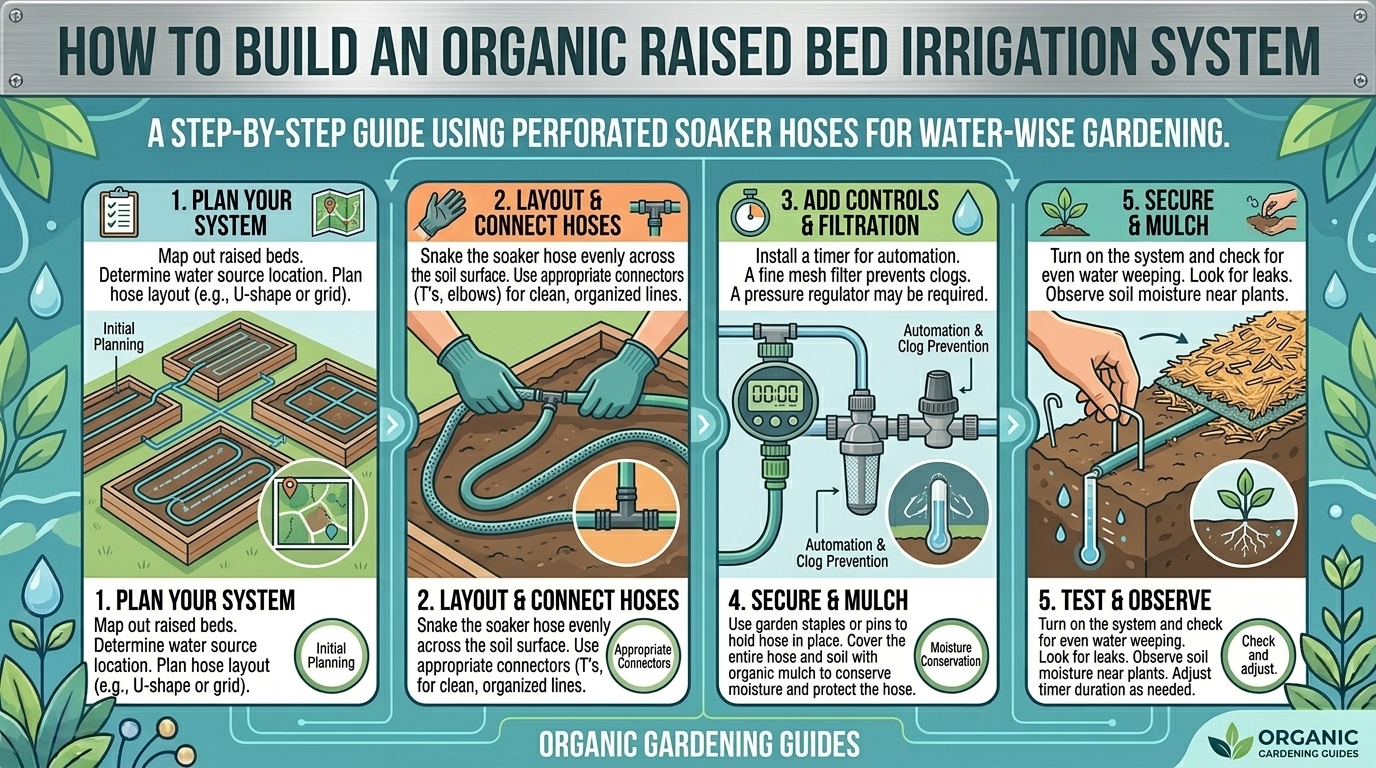
- Water Deeply and Infrequent: Rather than a light daily sprinkle that only wets the surface, water thoroughly until it runs out the bottom drainage holes (or penetrates several inches deep into a raised bed). This encourages roots to grow downward.
- Morning Watering: Water your garden early in the morning. This gives foliage time to dry before nightfall, drastically reducing the risk of powdery mildew and fungal infections.
- Mulching is Mandatory: Covering your bare soil with straw, chopped leaves, or untreated grass clippings reduces evaporation by up to 70% and shields soil bacteria from harsh ultraviolet rays.
8. Organic Pest and Weed Management
In an organic garden, pests and weeds are not enemies to be exterminated with chemical warfare; they are indicators of imbalance.
- Encourage Beneficial Insects: Plant companion flowers like marigolds, sweet alyssum, and dill to attract ladybugs, lacewings, and parasitic wasps that naturally prey on aphids and caterpillars.
- Hand-Weeding: Pull weeds when they are young and small before they set seed. Keeping a thick layer of organic mulch over your soil prevents most weed seeds from ever germinating.
- Natural Deterrents: If pests get out of hand, rely on organic remedies such as neem oil spray, insecticidal soap, or physical barrier netting.
9. Pro Tips for Long-Term Soil Health
- Never Leave Soil Bare: When a harvest finishes, do not leave your organic soil exposed to the elements. Plant a cover crop (like clover or crimson clover) or top it with a thick blanket of compost and mulch.
- Practice Crop Rotation: If growing in raised beds, avoid planting members of the same plant family (e.g., tomatoes, peppers, and potatoes all belong to the nightshade family) in the exact same spot season after season to prevent nutrient depletion and soil-borne diseases.
- Feed the Soil, Not Just the Plant: Top-dress your beds with fresh compost twice a year (spring and autumn) to continuously replenish organic matter.
10. Frequently Asked Questions (10 FAQs)
Q1: Can I just use dirt straight from my backyard for my home garden?
A: Native backyard dirt often contains high levels of clay, compacted silt, or urban contaminants, and it lacks the balanced aeration needed for containers or raised beds. It is always best to blend your own organic soil using compost, coir, and perlite.
Q2: How often do I need to replace organic garden soil?
A: You never need to completely throw away and replace healthy organic soil! Instead, rejuvenate it annually by mixing in fresh compost, worm castings, and organic amendments to restore lost nutrients.
Q3: Is compost the same thing as fertilizer?
A: Not quite. Compost is a soil conditioner that provides a slow, steady release of nutrients and builds soil structure, whereas traditional fertilizers are concentrated chemical or organic chemical boosts designed for quick plant uptake.
Q4: Why is my organic soil turning white or growing mold on top?
A: This is usually harmless saprophytic fungi breaking down organic matter or wood chips in your mulch or compost. It is a sign that your soil food web is active and healthy. Simply gently rake the surface to increase airflow.
Q5: How can I keep my soil moist during hot Texas or California summers?
A: Increase your mulch layer to 3 to 4 inches, use drip irrigation to deliver water straight to the root zone, and ensure your soil mix includes plenty of water-retentive coconut coir.
Q6: What is the best way to test my organic soil health without fancy lab equipment?
A: Look for the “earthworm test.” Healthy organic soil will naturally attract earthworms and have an earthy, sweet smell. You can also perform a simple squeeze test: moist soil should hold its shape when squeezed in your fist, but crumble easily when poked with a finger.
Q7: Can I use indoor potting soil for outdoor container gardens?
A: Indoor potting soil can work in a pinch, but outdoor mixes generally require more coarse material (like perlite or bark) to prevent compaction under heavy outdoor rain and wind.
Q8: How do I prevent gnats and fruit flies in organic container soil?
A: Fungus gnats thrive in constantly soggy soil. Let the top 1 to 2 inches of your soil dry out completely between waterings, and top-dress the soil surface with a layer of horticultural sand or fine gravel.
Q9: Are chemical fertilizers allowed if I want an organic garden?
A: No. True organic gardening strictly avoids synthetic, petroleum-derived chemical fertilizers because they salt the earth, kill beneficial earthworms and microorganisms, and disrupt the natural soil food web.
Q10: Where can I buy certified organic soil ingredients?
A: Most local nurseries, urban farm supply stores, and specialized online retailers carry organic compost, coconut coir bricks, perlite, and approved organic mineral amendments. Always check product labels for OMRI (Organic Materials Review Institute) certification listings.
Conclusion
Building a successful home garden is an enriching journey that transforms not just your outdoor space or balcony, but your relationship with nature. By anchoring your setup in natural, organic soils, you bypass the artificial chemicals of traditional landscaping and invest in a living, breathing ecosystem that rewards you with vibrant plants, bountiful harvests, and peace of mind.
Whether you are gardening beneath the bright skies of Texas, the urban hum of New York, the sun-kissed coasts of California, the lush landscapes of Washington, or the foggy hills of San Francisco, a robust organic soil base is your ultimate ticket to gardening success. Grab your compost, prep your beds, and watch your new garden flourish!