Can I Safely Use Natural Kitchen Food Waste Compost to Fertilize My Essential Base Home Garden Plants?
Transforming kitchen scraps into rich, dark, nutrient-dense compost is one of the most satisfying steps a gardener can take. Not only does it slash household waste going to landfills, but it also provides a completely free, organic superpower for your plants. Whether you are cultivating a backyard paradise in Texas, tending a container setup on a balcony in New York, managing a patio garden in California, navigating damp conditions in Washington, or working with cool-weather microclimates in San Francisco, kitchen waste composting is an incredible practice.
However, for beginner and intermediate gardeners alike, a crucial question arises: Can I safely use natural kitchen food waste compost to fertilize my essential base home garden plants without harming them or inviting unwanted pests?
The short answer is yes, absolutely—provided you follow the rules of proper decomposition and balance. Kitchen scraps can become toxic, acidic, or pest-attracting if thrown raw directly onto garden beds. When properly composted, however, they turn into “black gold.”
This comprehensive guide explores the science, safety precautions, step-by-step methods, and regional adjustments needed to safely feed your home garden using your kitchen waste.
Table of Contents
- Introduction to Kitchen Waste Composting
- The Science: How Kitchen Scraps Transform into Plant Food
- The Golden Rule: Greens vs. Browns
- What You CAN Compost vs. What to KEEP OUT
- Composting Methods for Different Spaces (TX, NY, CA, WA, SF)
- How to Tell When Kitchen Compost is Safe to Use
- Application Tips: Feeding Your Base Garden Without Burning Plants
- Common Pitfalls and Troubleshooting Odors or Pests
- Pro Tips for Maximizing Nutrient Density
- Frequently Asked Questions (10 FAQs)
- Conclusion
1. Introduction to Kitchen Waste Composting
Every time you chop vegetables, peel fruit, or brew morning coffee, you are generating valuable organic matter. Tossing these items into the trash means losing vital nitrogen, potassium, phosphorus, and micronutrients that your garden desperately craves.
When we talk about an essential base home garden, we mean plants established in a living organic soil foundation. Adding home-composted kitchen waste to this base does not just act as a quick fertilizer boost; it inoculates your soil with active, beneficial microorganisms that break down minerals and make them bioavailable to plant roots.
2. The Science: How Kitchen Scraps Transform into Plant Food
Raw kitchen scraps cannot be dropped straight onto a plant’s roots in large quantities. If you dump raw vegetable peels directly into soil, two major problems occur:
- Nitrogen Tie-Up: Soil bacteria will consume all available nitrogen to break down the raw organic material, temporarily starving your plants.
- Pest and Pathogen Attraction: Rotting food sitting on top of the soil attracts flies, rodents, ants, and unwanted pathogens.
True composting is a controlled, aerobic (oxygen-loving) biological process. Thermophilic (heat-loving) bacteria, fungi, and actinomycetes break down complex organic compounds into simple, stable humic substances. During this process, internal pile temperatures can reach 130°F to 160°F (54°C to 71°C), which naturally kills off weed seeds and harmful human or plant pathogens.
3. The Golden Rule: Greens vs. Browns
To turn kitchen waste into safe garden fertilizer, you must master the balance of chemical ratios in your compost bin. This is summarized by two categories:
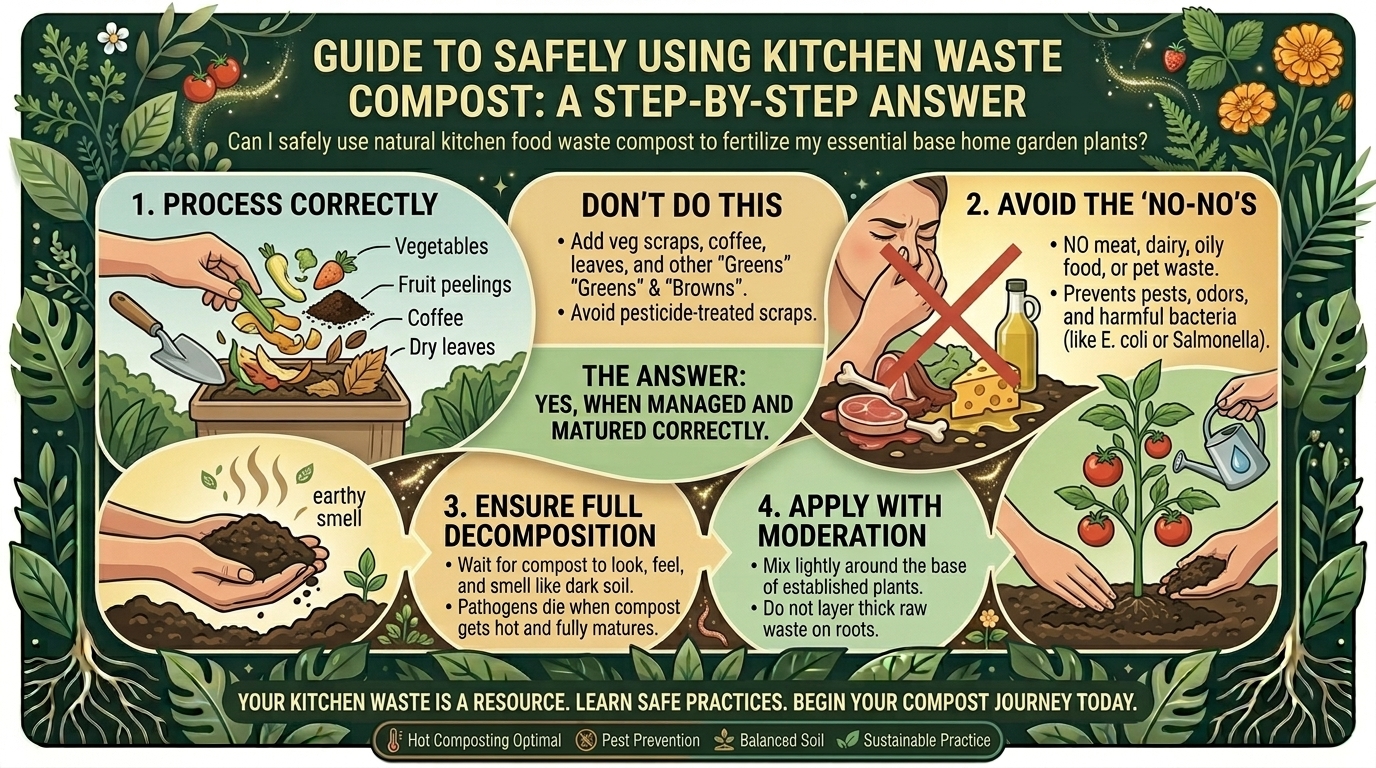
- “Greens” (Nitrogen-Rich Kitchen Scraps): Raw fruit and vegetable peels, coffee grounds, tea bags (staple-free), crushed eggshells, and leftover salad greens. These provide the protein and moisture for microbial growth.
- “Browns” (Carbon-Rich Dry Materials): Dried leaves, shredded cardboard, untreated paper towels, plain sawdust, and straw. These provide energy and structure, creating microscopic air pockets so oxygen can circulate.
The Ideal Ratio: Aim for roughly 3 parts browns to 1 part greens by volume. Too many greens lead to a wet, stinky, anaerobic sludge; too many browns stall the decomposition process entirely.
4. What You CAN Compost vs. What to KEEP OUT
Safety starts with sorting your kitchen waste properly.
Safe Kitchen Scraps to Compost
- Fruit and vegetable peelings, cores, and ends
- Coffee grounds, paper filters, and loose-leaf tea
- Crushed eggshells (great for calcium, though they break down slowly)
- Old nuts and nut shells (finely crushed)
- Stale bread, grains, and pasta (in moderation)
Hazardous Items to KEEP OUT of Home Compost
- Meat, Fish, and Bones: These attract rats, raccoons, neighborhood cats, and blowflies, and they breed dangerous putrefactive bacteria.
- Dairy Products (Cheese, Milk, Butter): Create foul odors and attract scavengers.
- Oils, Grease, and Fats: Coat organic materials, blocking water and air penetration and stopping aerobic decomposition.
- Pet Waste (Dog/Cat): Contains harmful parasites and pathogens that do not break down safely in standard backyard compost bins.
- Diseased Plant Material: Powdery mildew or blight-infected leaves can survive mild composting and reinfect your garden next season.
5. Composting Methods for Different Spaces (TX, NY, CA, WA, SF)
Your geographical location and living situation dictate which composting method will work best for your kitchen waste.
Texas (Hot, Dry Climates)
- The Challenge: Compost piles can dry out too quickly, halting microbial activity, or overheat in direct summer sun.
- The Best Method: Enclosed tumbling composters or shaded, multi-layer bins. You will need to monitor moisture levels closely and water your compost pile regularly so it feels like a wrung-out sponge.
New York (Urban Apartments & Small Backyards)
- The Challenge: Limited outdoor space and cold winters that freeze outdoor bins solid.
- The Best Method: Vermicomposting (Worm Composting) using Red Wiggler worms in a compact indoor bin under a sink or on a balcony. Worms thrive indoors year-round, converting kitchen scraps into premium worm castings without outdoor freezing issues.
California (Drought-Conscious & Suburban)
- The Challenge: Conserving water while managing high volumes of kitchen scraps from fresh local produce.
- The Best Method: Bokashi composting or traditional backyard wire bins. Bokashi fermentation uses anaerobic inoculated bran to pickle kitchen waste (including small amounts of cooked food or meat) before burying it directly into garden soil.
Washington (Cool, Wet, High Moisture)
- The Challenge: Piles can easily become waterlogged, turning anaerobic and soggy due to heavy rainfall.
- The Best Method: Covered bins or roofed three-bin systems. Incorporate an abundance of dry browns (like shredded cardboard and autumn leaves) to absorb excess rainwater.
San Francisco (Compact Urban Lots & City Living)
- The Challenge: Small footprints, strict urban wildlife management (raccoons and gulls), and mild, foggy weather.
- The Best Method: Countertop electric composters or sealed worm bins. Many SF residents also utilize the city’s robust green bin composting programs alongside compact indoor worm systems.
6. How to Tell When Kitchen Compost is Safe to Use
Never guess whether your compost is ready. Using partially decomposed kitchen waste can shock your plants. Finished, safe compost possesses distinct characteristics:
- Appearance: It is uniform, dark brown or black, crumbly, and looks rich like forest floor soil. You should no longer be able to recognize individual potato peels or apple cores.
- Smell: It smells sweet, earthy, and clean—like fresh rain after a drought. If it smells like ammonia, sulfur, or rotting garbage, it is not ready and lacks oxygen.
- Temperature: The pile has cooled down completely to ambient air temperature, indicating that the active breakdown phase is complete and it has stabilized.
7. Application Tips: Feeding Your Base Garden Without Burning Plants
Once your kitchen compost is finished and cured, it is ready to nourish your base home garden plants safely.
- Top-Dressing: Spread a 1-to-2-inch layer of finished compost over the surface of your raised beds or around the base of established container plants. Rain and irrigation will naturally wash the soluble nutrients down to the root zone.
- Soil Blending: When setting up new garden beds or potting containers, blend up to 20% to 30% finished compost into your base mix of coconut coir and perlite.
- Compost Tea Infusion: Steep a porous bag of finished compost in a bucket of water for 24 to 48 hours with an aquarium bubbler. This creates a liquid microbial spray that you can water onto plant roots or mist onto leaves for a gentle nutrient boost.
8. Common Pitfalls and Troubleshooting Odors or Pests
- Problem: The bin smells like rotten eggs.
- Cause: Too much moisture and not enough oxygen (anaerobic).
- Fix: Turn the pile immediately and add dry carbon materials like shredded paper, cardboard, or dry leaves.
- Problem: Fruit flies or gnats are swarming the kitchen scrap collection bucket.
- Cause: Exposed sweet fruit scraps left uncovered on the counter.
- Fix: Keep your countertop scrap container tightly sealed with a charcoal-filter lid, or store scraps in a sealed container in your freezer until you take them out to the main bin. Freezing scraps also ruptures cell walls, making them break down faster once thawed!
- Problem: The pile is not breaking down at all.
- Cause: Too many dry browns, lack of nitrogen (greens), or too little moisture.
- Fix: Mix in fresh green vegetable scraps and water the pile until damp.
9. Pro Tips for Maximizing Nutrient Density
- Chop Scraps Smaller: The smaller you chop your vegetable peels and fruit cores, the larger the surface area exposed to bacteria, speeding up composting time exponentially.
- Crush Eggshells into Powder: Use a coffee grinder or mortar and pestle to grind dried eggshells into a fine dust before adding them to your bin. This releases bioavailable calcium into your soil much faster.
- Inoculate with Native Microbes: Toss a small shovel of healthy garden soil or finished compost into your new kitchen waste bin to jump-start the microbial colonization process.
10. Frequently Asked Questions (10 FAQs)
Q1: Can I put citrus peels (lemons, oranges, limes) into my home compost?
A: Yes, in moderation! While some gardeners worry that citrus acidity or d-limonene will harm worms or stall bacteria, small amounts of chopped citrus break down completely in a balanced, large compost system without issue.
Q2: Is it safe to use compost made from cooked food containing oils and salt?
A: Generally, no. Cooked foods, oily leftovers, and salty scraps should be avoided in standard backyard bins because they attract pests and disrupt microbial balance. Use a Bokashi system if you want to compost cooked kitchen scraps safely.
Q3: Will my kitchen compost burn my young plant seedlings?
A: Unfinished or “hot” compost can burn tender roots with excess ammonia and nitrogen. Always ensure your compost is fully cured, dark, earthy, and cool before mixing it directly into planting holes or delicate seedling containers.
Q4: Can I compost coffee filters and tea bags?
A: Yes, paper coffee filters and loose-leaf tea are fantastic nitrogen and carbon additions. Just ensure your tea bags do not contain plastic mesh or synthetic sealing glue; opt for paper-only strings and tags.
Q5: How do I stop mice or rats from visiting my outdoor compost bin?
A: Never add meat, dairy, oil, or pet waste. Use a secure, enclosed tumbling composter or a heavy-duty bin with a fine mesh wire bottom to prevent rodents from burrowing into the pile from underneath.
Q6: Can I store kitchen scraps in the freezer until I have enough to compost?
A: Absolutely! Storing scraps in a freezer bag is one of the best pro tips. It prevents odors and fruit flies on your counter, and freezing ice crystals rupture plant cell walls, making the scraps break down twice as fast once added to your bin.
Q7: Does apartment composting smell up living spaces?
A: If managed correctly using a proper worm bin (vermicomposting) or a sealed bokashi bucket, indoor composting smells like rich forest soil or pleasant fermentation—never like rotting garbage.
Q8: How long does it take for kitchen waste to turn into finished garden compost?
A: Depending on your climate, bin type, and how small you chop your scraps, the process typically takes anywhere from 2 to 6 months.
Q9: Do I need to buy expensive compost starters or activators?
A: No. Mother Nature provides all the necessary bacteria and fungi. Simply mixing in a handful of garden soil or a little finished compost is enough to kick-start the biological activity naturally.
Q10: Can I use too much compost on my home garden plants?
A: Yes. Even though compost is natural, using 100% pure compost can create drainage issues, restrict oxygen flow around roots, and cause nutrient imbalances. Keep your compost application to a top-dressing layer or a 20% to 30% ratio in soil blends.
Conclusion
Safely using natural kitchen food waste compost to fertilize your essential base home garden is one of the most rewarding and sustainable practices you can adopt. By understanding the balance of greens and browns, avoiding hazardous scraps like meat and oils, and ensuring your compost is fully cured, you can unlock a free, endlessly renewable source of plant nutrition.