What is the Exact Best Watering Schedule for Natural Essential Herbs Growing in a Base Indoor Garden?
Bringing the outdoors inside by cultivating an indoor herb garden is one of the most rewarding ways to elevate your cooking, purify your living space, and connect with nature. Whether you are managing a cozy apartment in New York, a sun-drenched loft in San Francisco, a high-rise view in Seattle, Washington, a stylish home in California, or a spacious residence in Texas, indoor herb gardening brings fresh vitality right to your kitchen windowsill.
However, if you ask beginner gardeners what the number one cause of indoor herb death is, the answer is almost universally the same: improper watering.
Many well-meaning plant parents either drown their herbs with daily drenching or starve them by letting the soil turn to dust. Because indoor environments lack natural outdoor rain cycles, wind drying, and fluctuating outdoor humidity, establishing the right watering routine requires precision, observation, and an understanding of natural organic soil dynamics.
This comprehensive guide breaks down everything you need to know to master the watering schedule for your essential indoor herbs, tailored to your space, climate, and plant types.
Table of Contents
- Introduction to Indoor Herb Watering Dynamics
- The Myth of the “Fixed Schedule” Watering Calendar
- The Golden Rule: The Finger Test & Soil Moisture Science
- Categorizing Indoor Herbs by Their Thirst Levels
- The Impact of Indoor Microclimates (TX, NY, CA, WA, SF)
- Choosing the Right Pots and Organic Soil Base for Drainage
- Step-by-Step Guide: How to Water Indoor Herbs Correctly
- Signs of Overwatering vs. Underwatering
- Pro Tips to Maintain Optimal Humidity and Hydration
- Frequently Asked Questions (10 FAQs)
- Conclusion
1. Introduction to Indoor Herb Watering Dynamics
When growing culinary herbs like basil, mint, rosemary, and thyme indoors, you are recreating a mini-ecosystem inside a container. In natural outdoor environments, excess water drains deep into the earth, and roots stretch downward to find moisture. Indoors, your container acts as a boundary.
When you water an indoor plant growing in natural organic soil, water fills the microscopic air pockets between soil particles (perlite, coco coir, and compost). If you water too frequently, those air pockets never refill with oxygen. Without oxygen, roots suffocate, beneficial microbes die, and anaerobic fungi take over, leading to root rot—the silent killer of indoor plants.
2. The Myth of the “Fixed Schedule” Watering Calendar
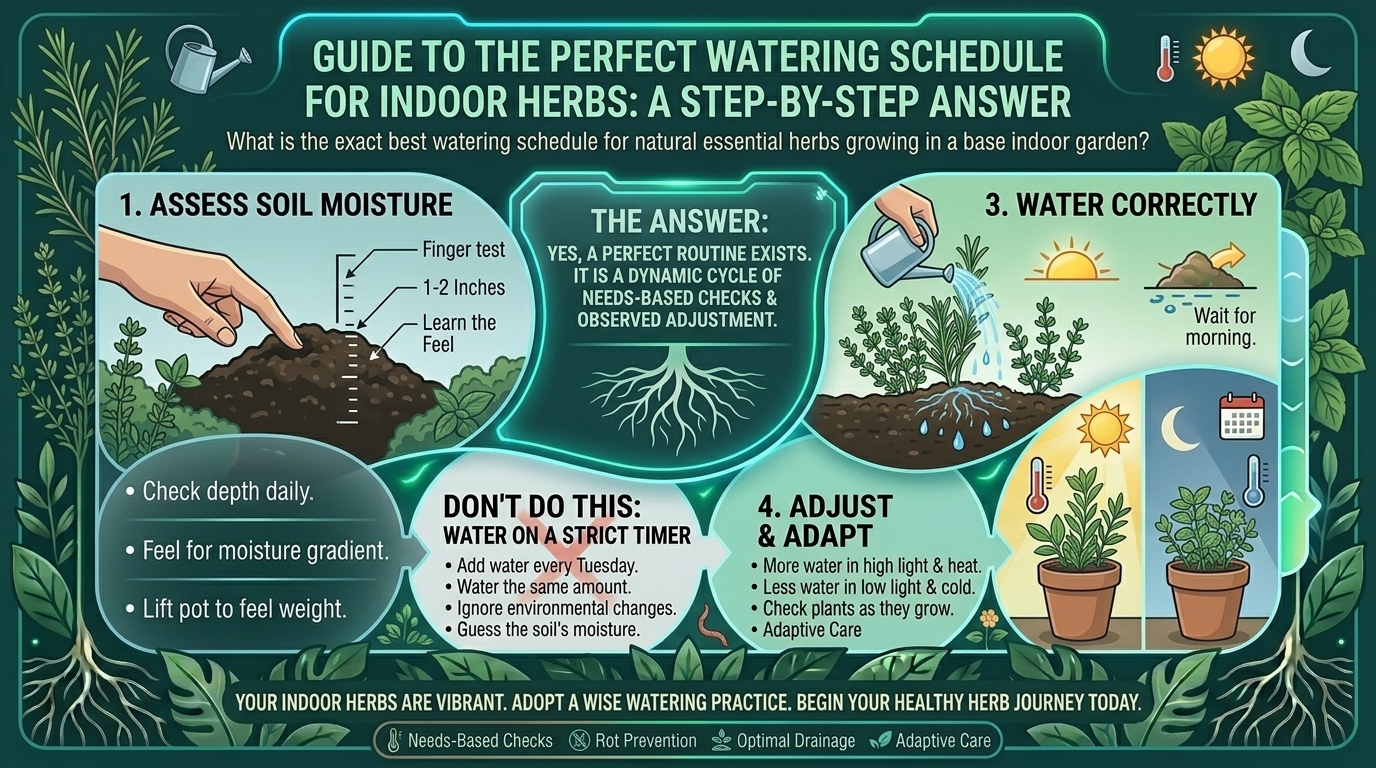
One of the most common beginner traps is following a rigid calendar rule, such as “water every Tuesday and Saturday.”
Seasons change, indoor heating kicks on during winter, air conditioning blasts in summer, and sunlight levels shift throughout the year. As a result, your herbs’ water consumption changes drastically week by week.
Instead of relying on a calendar, rely on the condition of your organic soil and the weight of your pots. A fixed schedule ignores humidity, ambient temperature, plant size, and pot material, which are the true drivers of soil evaporation rates.
3. The Golden Rule: The Finger Test & Soil Moisture Science
How do you know when it is actually time to water? Put your trust in the oldest, most reliable tool in gardening: your finger.
- The Knuckle Test: Push your index finger cleanly into the organic potting soil up to the second knuckle (about 1 to 2 inches deep).
- Assess and Decide:
- If the soil feels moist, cool, and particles stick to your skin, do not water. Wait a few days and check again.
- If the soil feels dry, warm, and crumbly at that depth, it is time for a thorough watering.
Alternatively, you can lift your potted herbs. A freshly watered pot feels heavy, while a dry pot feels remarkably light. Developing “pot-weight intuition” takes only a few weeks of practice.
4. Categorizing Indoor Herbs by Their Thirst Levels
Not all herbs are created equal. Grouping your herbs based on their native habitats helps you tailor your watering routine effectively.
Category A: The Thirsty Drinkers (High Moisture Needs)
- Examples: Basil, Mint, Parsley, Cilantro
- Native Habitat: Riverbanks, damp meadows, and subtropical regions.
- Watering Strategy: These herbs hate drying out completely. Water them when the top half-inch of soil feels dry. Mint, in particular, acts like a sponge and drinks heavily, especially under warm indoor lights.
Category B: The Moderate Drinkers (Balanced Moisture)
- Examples: Chives, Oregano, Marjoram, Cilantro (mature)
- Native Habitat: Temperate meadows and open fields.
- Watering Strategy: Allow the top 1 to 1.5 inches of organic soil to dry out completely between watering sessions. They prefer a steady rhythm of thorough drenching followed by mild drying.
Category C: The Desert Dwellers (Low Water / Drought Tolerant)
- Examples: Rosemary, Thyme, Sage, Lavender
- Native Habitat: Mediterranean cliffs, dry rocky hillsides, and arid scrublands.
- Watering Strategy: These woody herbs store energy in deep root systems and despise “wet feet.” Let the entire pot of soil dry out completely from top to bottom before watering again. Overwatering rosemary is the number one reason beginners accidentally kill it.
5. The Impact of Indoor Microclimates (TX, NY, CA, WA, SF)
Your geographical location heavily influences your home’s indoor climate, which dictates how fast your indoor herb soil dries out.
Texas (Air Conditioning and High Heat)
- The Environment: Long summer months mean air conditioning runs constantly, pulling heavy humidity out of indoor air. In winter, heating systems dry indoor spaces further.
- The Watering Impact: Indoor soil dries out exceptionally fast. Check your pots more frequently (every 3 to 5 days for moderate herbs) and ensure your organic soil mix contains plenty of moisture-retentive coconut coir.
New York (Radiator Heat and Urban Apartments)
- The Environment: Classic NY apartments often feature dry, blasting cast-iron radiator heat during winter, contrasting with humid summer days.
- The Watering Impact: Winter radiator heat causes rapid top-soil crusting. Check deeper with your finger test, because the surface may look dry while the bottom of the pot remains waterlogged.
California (Sunny, Warm Mediterranean Indoor Spaces)
- The Environment: Abundant natural sunlight floods indoor windowsills, accelerating plant metabolism and photosynthesis.
- The Watering Impact: Because your herbs will grow vigorously under California sunbeams, they will drink water much faster than plants in low-light regions. Monitor water levels weekly.
Washington (Cool, Damp, Low Ambient Light)
- The Environment: Shorter winter days and overcast gray skies mean lower light levels and slower plant transpiration.
- The Watering Impact: Herbs consume much less water during Washington’s damp winters. Reduce watering frequency significantly to prevent soggy, stagnant soil conditions.
San Francisco (Coastal Fog and Stable Cool Temperatures)
- The Environment: SF homes experience mild temperatures and frequent marine fog rolls, keeping ambient humidity moderate but indoor air cool.
- The Watering Impact: Soil evaporation rates are slower. Be mindful not to overwater drought-tolerant herbs like rosemary and lavender, as cool indoor air keeps moisture trapped in the soil longer.
6. Choosing the Right Pots and Organic Soil Base for Drainage
No matter how carefully you time your watering, a bad pot or heavy clay dirt will sabotage your efforts.
- Drainage is Non-Negotiable: Every indoor herb pot must have a drainage hole at the bottom. If you use a decorative cachepot without holes, water pools at the bottom, creating a rotting swamp for roots. Always empty the saucer beneath your pot 15 minutes after watering.
- The Organic Soil Mix: Avoid heavy backyard dirt. Use a light, aerated organic potting mix composed of one-third compost, one-third coconut coir, and one-third perlite. This ensures excess water escapes instantly while holding ideal moisture around the roots.
7. Step-by-Step Guide: How to Water Indoor Herbs Correctly
When it is finally time to water your indoor herbs, follow this proven method to ensure uniform hydration:
- Take the Pot to the Sink: If possible, carry your potted herb to the kitchen sink rather than watering with a small cup.
- Soak Thoroughly: Pour room-temperature water gently over the soil surface until you see water streaming freely out of the bottom drainage hole. This flushes out accumulated mineral salts and ensures every root zone is hydrated.
- Let it Drain Completely: Leave the pot in the sink for 10 to 15 minutes until dripping completely stops.
- Return to Saucer: Place the pot back on its saucer or decorative holder. Never let your pot sit in a puddle of standing water.
8. Signs of Overwatering vs. Underwatering
Diagnosing your herbs’ hydration issues is easy once you know what symptoms to look for:
- Signs of Overwatering:
- Lower leaves turn yellow, translucent, or mushy.
- The soil smells sour, swampy, or moldy.
- Stems feel soft or black at the base (stem rot).
- Fix: Stop watering immediately, move to a brighter spot, and let the soil dry out. If severe, repot into fresh, dry organic soil.
- Signs of Underwatering:
- Leaves curl inward, become crispy, brown at the tips, or drop off.
- Soil pulls away from the inner edges of the pot, creating a gap.
- The pot feels feather-light.
- Fix: Submerge the entire pot in a bucket of water for 20 minutes (bottom-watering) to rehydrate bone-dry hydrophobic soil, then let it drain.
9. Pro Tips to Maintain Optimal Humidity and Hydration
- Group Plants Together: Herbs transpire moisture through their leaves. Grouping your pots together creates a beneficial micro-humidity zone around them.
- Use a Pebble Tray: If your indoor air is very dry (common in heated winter homes), place a shallow tray filled with pebbles and water beneath your pots. Ensure the water level sits below the top of the pebbles so the pot bottoms never touch standing water.
- Mist with Caution: Misting leaves can temporarily freshen them, but it does little for root hydration and can invite powdery mildew if indoor air circulation is poor.
10. Frequently Asked Questions (10 FAQs)
Q1: Can I use ice cubes to water my indoor herbs?
A: No. While popular for certain houseplants like orchids, ice cubes shock the delicate tropical and Mediterranean root systems of culinary herbs with freezing cold water, causing cellular damage and root stress. Always use room-temperature water.
Q2: Why is my indoor basil drooping even though the soil is wet?
A: This is a classic symptom of root rot. If the soil is constantly waterlogged, the roots suffocate and die, rendering them unable to take up water, which mimics the exact visual signs of underwatering. Check the roots; healthy roots are firm and white, while rotted roots are brown, mushy, and foul-smelling.
Q3: Should I water my herbs in the morning or evening?
A: Morning is always the best time to water indoor plants. It aligns with their natural metabolic cycle, giving them maximum hydration ahead of daytime photosynthesis and allowing any accidental splashes on foliage to evaporate quickly.
Q4: Does tap water harm indoor herbs?
A: Most tap water is fine, but if your municipal water supply contains high levels of chlorine or fluoride, let your water sit open in a pitcher for 24 hours before watering to allow chemical gases to dissipate.
Q5: How often should I water indoor rosemary compared to basil?
A: Basil requires frequent watering (every 4 to 6 days depending on indoor warmth), as it loves moisture. Rosemary is a desert dweller and should only be watered every 10 to 14 days after its soil has dried out completely.
Q6: Can I bottom-water my indoor herbs?
A: Yes! Bottom-watering (placing your pot in a bowl of water for 20 minutes and letting the soil wick moisture upward through the drainage hole) is an exceptional way to hydrate herbs evenly without compacting the topsoil surface.
Q7: Why is mold growing on the surface of my indoor herb soil?
A: Surface mold indicates high humidity, stagnant indoor air, and soil that stays wet for too long. Scrape off the top layer of mold, let the soil dry out deeper down, and use a small oscillating fan to improve air circulation around your indoor garden.
Q8: Do self-watering pots work well for indoor herbs?
A: Self-watering pots work wonderfully for moisture-loving herbs like mint and basil, but they can be dangerous for drought-tolerant Mediterranean herbs like thyme, oregano, and rosemary, which require dry soil intervals.
Q9: How do seasonal changes affect my indoor watering schedule?
A: During spring and summer (active growing seasons), your herbs will drink twice as much water. During autumn and winter (dormant or slow-growth phases), cut your watering frequency in half because metabolism slows down and soil evaporation drops.
Q10: What is the best type of water to use for organic indoor herb gardens?
A: Room-temperature filtered water, collected rainwater, or aged tap water free of heavy mineral buildup is ideal for keeping your organic soil microbiome active and healthy.
Conclusion
Mastering the watering schedule for your essential indoor herbs is an art form rooted in observation rather than rigid rules. By understanding each herb’s native thirst level, respecting the science of drainage and organic soil, and using the simple finger test, you can eliminate guesswork and keep your kitchen garden vibrant year-round.