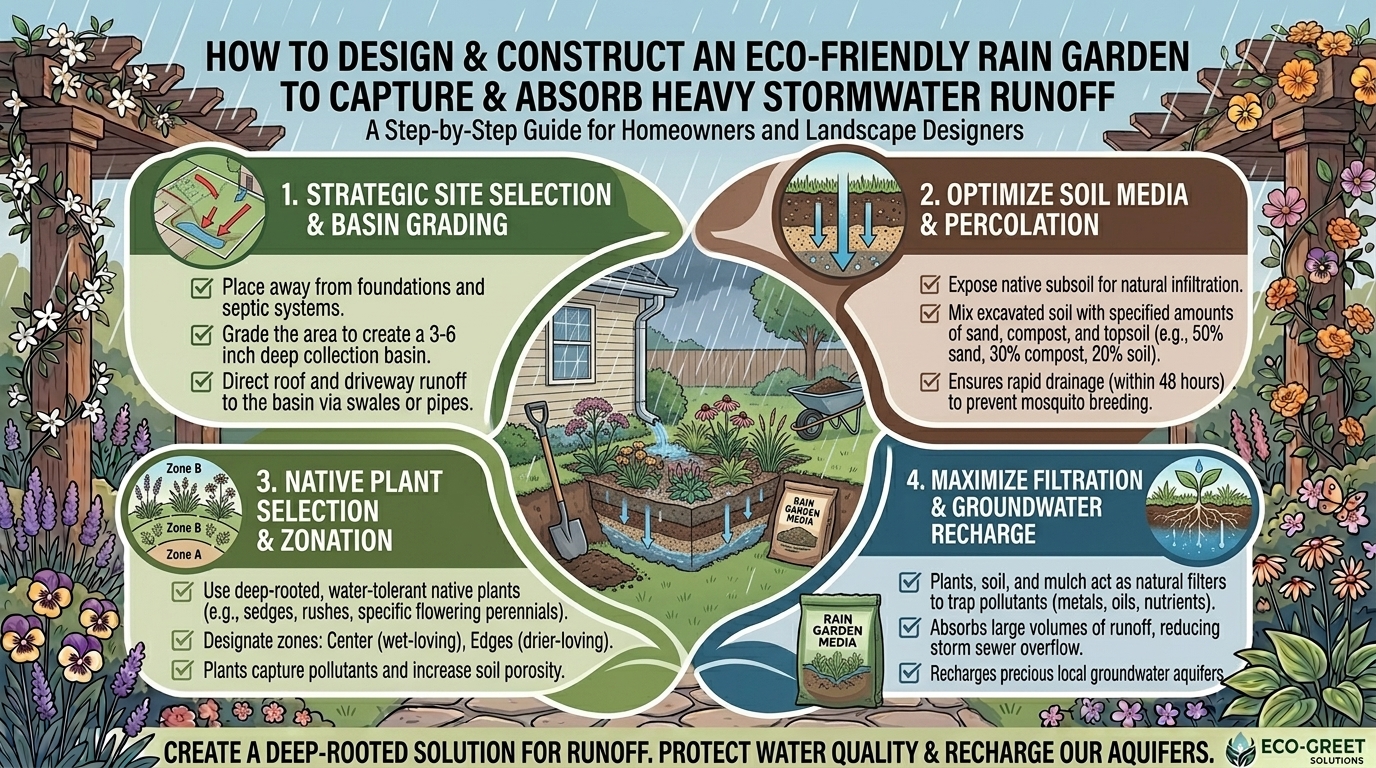
Urbanization and suburban development have drastically altered natural water cycles. Traditional landscapes—dominated by impervious surfaces like concrete driveways, asphalt roofs, and tightly compacted lawns—prevent rainwater from soaking into the ground. Instead, this water rushes across surfaces, picking up pollutants, heavy metals, fertilizers, and pet waste before overwhelming municipal storm drains and flooding local waterways.
Enter the rain garden: a beautiful, strategically designed landscaped depression planted with native vegetation that captures, absorbs, and filters stormwater runoff right at the source.
Whether you live in the arid expanses of Texas, the bustling urban environments of New York, the Mediterranean climates of California, the damp Pacific Northwest of Washington, or the hilly microclimates of San Francisco, building an eco-friendly rain garden is one of the most impactful DIY projects you can undertake. This comprehensive guide will walk you through everything you need to know to design, build, plant, and maintain a high-performing rain garden tailored to your regional climate.
1. What is a Rain Garden and How Does It Work?
A rain garden is not a pond, a marsh, or a bog. It is a dry garden bed for most of the year, designed to temporarily pool water—typically between 6 to 12 inches deep—during heavy storms. Within 24 to 48 hours, that captured water completely infiltrates into the surrounding soil, recharging local groundwater tables rather than running off into the street.
The Science of Infiltration and Filtration
Rain gardens rely on three core mechanisms to manage stormwater:
- Interception and Slowing: Plant leaves and stems break the velocity of falling raindrops, reducing soil erosion.
- Bioretention: Specially prepared soil mixes trap sediments, heavy metals, and nutrients (like nitrogen and phosphorus).
- Phytoremediation: Deep-rooted native plants absorb water and nutrients, breaking down pollutants naturally through their root zones and associated soil microbes.
2. Environmental and Financial Benefits
Designing an eco-friendly rain garden yields significant returns for both your property and the broader ecosystem:
- Mitigates Urban Flooding: By capturing runoff from roofs and driveways, you protect your home’s foundation and reduce street flooding.
- Recharges Aquifers: Instead of rushing into storm sewers, water filters back into local aquifers.
- Supports Biodiversity: Native plants attract crucial pollinators, including bees, butterflies, and beneficial birds.
- Lowers Water Bills: Once established, native rain garden plants require little to no supplemental irrigation.
- Increases Property Value: A professionally landscaped, ecologically conscious yard enhances curb appeal and modern buyer interest.
3. Site Selection and Sizing: Getting the Math Right
Location is everything. Placing your rain garden in the wrong spot can lead to structural damage or stagnant, mosquito-breeding water.
Golden Rules for Placement
- Distance from Foundations: Locate the garden at least 10 feet away from your home’s foundation to prevent basement seepage.
- Away from Septic Systems: Keep clear of drain fields and underground utility lines (call 811 before you dig!).
- Topography: Position the garden in a natural low spot or intercept the path of runoff flowing from downspouts, patios, or driveways.
- Sunlight vs. Shade: Note how much sun the area receives throughout the day, as this dictates your plant selection.
Calculating Size and Depth
A standard residential rain garden is typically sized to be about 20% to 30% of the footprint of the impervious surface (e.g., roof or driveway) draining into it.
- Depth: Aim for a depth of 6 to 8 inches if your soil drains well, or up to 12 inches if you modify the soil mixture to enhance drainage.
- Slope: If your yard slopes, build a small earthen berm on the downhill side to retain water within the basin.
4. Soil Preparation and Drainage Testing
Before buying a single plant, you must understand your soil composition. Heavy clay soils drain slowly, while sandy soils drain too fast.
The Simple “Perk” (Percolation) Test
- Dig a hole roughly 12 inches deep and 6 inches wide.
- Fill it with water and let it drain completely once to saturate the surrounding soil.
- Refill the hole and measure the water level with a ruler.
- Check the water level every hour to see how many inches drain per hour.
- Ideal infiltration rate: 1 to 3 inches per hour.
- If your soil is heavy clay: You will need to excavate deeper and amend the soil with a mixture of native soil, coarse sand, and compost (typically a 50/30/20 ratio) to create a high-performance bioretention soil bed.
5. Regional Plant Selection Guide
Selecting the right plants ensures your rain garden survives regional weather extremes—from Texas heat waves to New York winters and California droughts. Always prioritize native plants because their deep root systems create natural channels for water infiltration.
Texas
- Swamp Sunflower (Helianthus angustifolius): Thrives in periodic saturation and bursts with bright yellow blooms in fall.
- Gulf Coast Muhly Grass (Muhlenbergia capillaris): Offers stunning pink seed heads and exceptional drought and flood tolerance.
- Blue Mistflower (Conoclinium coelestinum): A magnet for butterflies that handles heavy rain with ease.
New York
- Cardinal Flower (Lobelia cardinalis): Features striking spikes of brilliant red flowers that love moist soils.
- New York Ironweed (Vernonia noveboracensis): Tall, majestic purple blooms that anchor clay-heavy soils.
- Switchgrass (Panicum virgatum): Deep roots and sturdy stems stand strong against heavy downpours and winter snow.
California (Mediterranean Climate)
- California Fuchsia (Epilobium canum): Drought-tolerant during dry months but handles winter downpours beautifully.
- Creeping Snowberry (Symphoricarpos mollis): Excellent groundcover for partial shade zones.
- Deer Grass (Muhlenbergia rigens): Forms architectural clumps that stabilize banks and filter runoff.
Washington & Pacific Northwest
- Red-osier Dogwood (Cornus sericea): Provides brilliant red winter stems and handles saturated soils effortlessly.
- Sword Fern (Polystichum munitum): Evergreen structure that excels in shady, damp Pacific Northwest microclimates.
- Pacific Ninebark (Physocarpus capitatus): Tolerates both seasonal flooding and summer dry spells.
6. Step-by-Step Construction Guide
- Mark and Excavate: Outline your garden shape with a garden hose or spray paint. Dig out the interior basin, keeping the bottom flat and leveling the edges so water spreads evenly.
- Incorporate Runoff Channels: Connect your roof downspout or hardscape runoff path to the garden using an underground solid PVC pipe or an attractive stone-lined dry creek bed.
- Amend the Soil: Layer in your bioretention soil mix if your native soil requires better drainage.
- Install the Berm and Spillway: Create a slight earthen berm on the downhill side using excavated soil. Install a gravel-lined overflow spillway so that extreme, catastrophic storms can safely exit the garden without washing away your landscape.
- Plant and Mulch: Arrange plants in drifts rather than single rows for a naturalistic look. Apply a 2-to-3-inch layer of double-shredded hardwood mulch (avoid fine chips or dyed mulches that float away in heavy water). Shredded mulch knits together to form a protective carpet that holds moisture and suppresses weeds.
7. Maintenance Best Practices
Rain gardens are low-maintenance once established, but they do require attention during their first growing season:
- Weeding: Regularly weed the garden until native plants fill in and crowd out unwanted species.
- Watering: Provide supplemental water during prolonged dry spells in the first year to help root systems establish.
- Pruning & Cleanup: Cut back dead perennial stems in late winter or early spring to make way for fresh seasonal growth.
- Clear Debris: Keep inlet pipes, dry creek beds, and overflow spillways free of leaves, twigs, and sediment buildup.
10 Frequently Asked Questions (FAQ)
1. Will a rain garden breed mosquitoes?
No. Because a properly designed rain garden drains completely within 24 to 48 hours, water does not sit long enough for mosquitoes to complete their reproductive cycle (which requires 7 to 10 days of stagnant water).
2. Can I build a rain garden if I have heavy clay soil?
Yes! While heavy clay drains slowly, you can easily modify the soil by excavating a bit deeper and mixing in sharp sand and organic compost, or by selecting clay-tolerant native plants.
3. Do rain gardens require a lot of watering?
Only during their first growing season. Once established, native rain garden plants rely entirely on natural rainfall and the stormwater runoff directed into them.
4. How close to my house can I build a rain garden?
It is recommended to maintain a minimum distance of 10 feet from your home’s foundation to prevent water from seeping into your basement or crawlspace.
5. What kind of mulch should I use?
Always use double-shredded hardwood mulch. Avoid fine bark nuggets or dyed wood chips, as they float and wash away when the garden fills with water.
6. Can I direct my sump pump discharge into a rain garden?
Yes, provided your soil and plant selection can handle the volume and mineral content. Check local codes to ensure compliance.
7. How do I prevent erosion when heavy water enters the garden?
Install a “splash pad”—a collection of river rocks or smooth stones—right where the water enters the garden from a downspout or dry creek bed to dissipate the water’s velocity.
8. Are rain gardens expensive to install?
They can be very budget-friendly, especially if you build them as a DIY project using starter native plants or plugs. Costs primarily scale with the size of the excavation and the amount of imported soil or stone needed.
9. What happens during a severe drought?
Native plants selected for rain gardens are adapted to regional climate patterns. While they benefit from runoff during storms, many deep-rooted species survive seasonal droughts with minimal stress.
10. Do I need local permits to build a rain garden?
Generally, residential rain gardens do not require permits unless you are modifying major drainage easements, connecting directly to public stormwater systems, or altering protected wetlands. Always check with your local municipality or utility locating service before digging.
Conclusion
Designing an eco-friendly rain garden is a rewarding fusion of art and environmental stewardship. By transforming a soggy yard corner or capturing roof runoff into a vibrant, native oasis, you actively protect local waterways, conserve municipal resources, and elevate your property’s natural beauty. Start planning your layout today, choose plants native to your region, and turn your next heavy rainfall into a thriving ecological asset.


One comment on “How to design an eco-friendly rain garden to capture and absorb heavy stormwater runoff.”