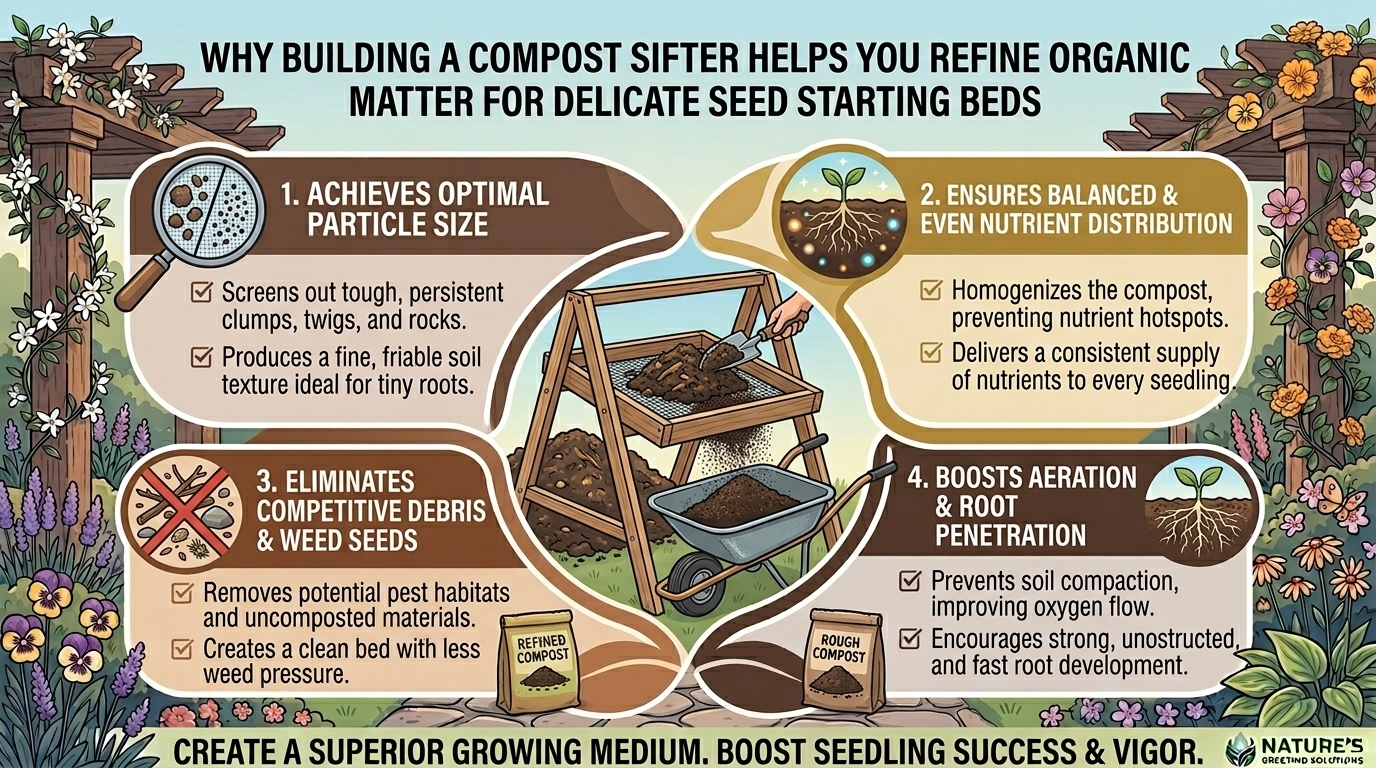
Starting seeds successfully is both an art and a science. While high-quality seeds and proper lighting are crucial, the foundational medium in which those tiny roots first emerge dictates everything that follows. For gardeners aiming for maximum germination rates and robust seedling vigor, unrefined compost simply will not cut it. Large twigs, undecomposed wood chips, and heavy clumps can suffocate delicate roots, block emerging cotyledons, and harbor unwanted pests or fungal pockets.
Enter the compost sifter—an indispensable, low-tech tool that transforms rough backyard compost into a silky, nutrient-dense amendment tailored for delicate seed starting beds. Whether you are gardening in the humid clay of Texas, the crisp urban backyards of New York, the Mediterranean microclimates of California, the damp, fertile valleys of Washington, or the breezy, fog-kissed hills of San Francisco, refining your organic matter is the ultimate shortcut to professional-grade gardening success.
The Science of Seed Starting: Why Particle Size Matters
When a seed germinates, it goes through a delicate transition phase. It relies initially on its stored endosperm, but within days, the radical (the embryonic root) must push downward, and the plumule (the shoot) must push upward.
The Physical Barrier of Unscreened Compost
Raw or coarsely screened compost contains a heterogeneous mix of particle sizes. While mature backyard compost is rich in microbial life and macronutrients, it often includes:
- Woody debris: Undigested carbon sources that take longer to break down.
- Clumps: Compacted clusters of organic matter that create localized anaerobic (oxygen-starved) pockets.
- Stones and grit: Unwanted weight that alters soil drainage and bulk density.
When delicate seeds like lettuce, petunias, tomatoes, or peppers are planted in unrefined soil, these large particles act as physical physical blockages. Roots encounter resistance and grow around obstacles rather than establishing a fine, fibrous root system. Furthermore, large organic pieces hold pockets of excessive moisture next to fragile stems, paving the way for damping-off disease—a fungal scourge that kills seedlings overnight.
The Benefits of a Uniform Micro-Bed
By passing your compost through a fine mesh sifter, you create a homogenous crumb structure. This refined medium offers several distinct advantages:
- Optimal Seed-to-Soil Contact: Fine particles wrap intimately around the seed coat, ensuring efficient moisture transfer to trigger germination.
- Enhanced Aeration: A uniform matrix allows oxygen to diffuse freely to the root zone, fueling rapid cellular respiration.
- Balanced Moisture Retention: Fine compost holds water like a sponge without becoming waterlogged, preventing both drought stress and root rot.
What is a Compost Sifter and How Does It Work?
A compost sifter (sometimes called a garden screen or trommel) is a simple wooden or metal frame fitted with a wire mesh screen. As you shovel or dump compost onto the screen and shake it, fine particles fall through into a wheelbarrow or collection bin, while oversized debris is retained on top to be tossed back into the active compost pile.
Choosing the Right Mesh Size
The size of your hardware cloth (mesh) determines the fineness of your output:
- 1/4-inch mesh: The gold standard for general garden beds, mulching, and potting up established plants. It filters out large twigs and stones while keeping some beneficial coarser texture.
- 1/8-inch mesh: The ideal choice for delicate seed starting beds and plugging plug-trays. It yields a powdery, soil-like consistency that mimics high-end commercial seed-starting mixes.
Regional Garden Realities: Why Localization Matters
Gardening environments across the United States vary dramatically, influencing how your refined compost behaves in seed trays and garden beds:
- Texas: With intense summer heat and heavy, alkaline clay soils in many regions, refined compost acts as a vital buffer. Sifted compost mixed into seed beds improves moisture infiltration and prevents crusting caused by baking sun.
- New York: Short outdoor seasons mean early indoor seed starting is essential. Using a 1/8-inch sifter ensures indoor seed trays remain light, sterile-feeling, and free of erratic debris while dealing with shifting spring temperatures.
- California: From the arid Central Valley to coastal zones, water conservation is paramount. Refined organic matter helps retain moisture precisely where tender roots need it, reducing irrigation frequency during early establishment.
- Washington & San Francisco: Cool, damp environments—especially the marine layer in SF and the Pacific Northwest rains—mean that heavy, waterlogged soils are prone to fungal issues. Sifting ensures maximum drainage and aeration, keeping seedlings healthy despite high atmospheric humidity.
Step-by-Step Guide: How to Build Your Own Compost Sifter
Building a custom compost sifter is an afternoon DIY project that pays dividends for years. Here is how to build a durable, highly efficient wooden box sifter.
Materials and Tools Needed
- Lumber: Four 2×4 boards (cut to desired dimensions, e.g., 2 feet by 3 feet for a manageable size).
- Hardware Cloth: A roll of 1/8-inch or 1/4-inch galvanized steel wire mesh.
- Fasteners: Exterior wood screws (3-inch) and heavy-duty staple gun staples or roofing nails.
- Handles: Two cabinet or drawer handles (optional, for easier shaking).
- Tools: Saw, drill, staple gun, wire cutters, measuring tape, and safety glasses.
Construction Steps
- Build the Frame: Cut your 2×4 lumber to form a rectangular frame (e.g., 24 inches by 36 inches). Assemble the corners securely using exterior wood screws, pre-drilling holes to prevent the wood from splitting.
- Square the Frame: Measure diagonally from corner to corner to ensure the frame is square before attaching the mesh.
- Cut the Mesh: Roll out your hardware cloth over the frame and cut it to size using heavy-duty wire cutters. Leave a small border so the edges can be folded down cleanly.
- Attach the Screen: Stretch the wire mesh tightly across the frame. Secure it heavily using a staple gun every 1 to 2 inches. For extra security, nail thin wooden laths or slats over the edges of the mesh to prevent sharp wire ends from snagging your hands.
- Add Handles: Screw handles onto the sides of the frame to make shaking comfortable and ergonomic.
Pro Tips for Sifting Success
- Check the Moisture Level: Compost should be damp like a wrung-out sponge, not soaking wet and not bone dry. Wet compost clogs the mesh into muddy clumps, while dry compost creates massive clouds of irritating dust.
- Work in Batches: Don’t overload the sifter. Adding just two or three shovel loads at a time makes shaking effortless and prevents frame strain.
- Repurpose the Rejects: Do not throw away the large debris left on top of the screen! Toss it right back into the center of your active compost pile to continue breaking down.
- Sanitize When Necessary: If you are using backyard compost for ultra-sensitive indoor seed starts, consider solarizing or gently heat-treating your sifted compost to eliminate weed seeds or fungus gnats.
10 Frequently Asked Questions (FAQs)
1. Can I use un-sifted compost for starting seeds?
It is strongly discouraged. Un-sifted compost contains large twigs and chunks that physically obstruct tiny roots, create uneven moisture pockets, and can harbor fungal spores that lead to damping-off disease.
2. What is the best mesh size for seed starting?
A 1/8-inch wire mesh (hardware cloth) is best for delicate seeds. It creates a fine, powdery, crumbly texture that hugs tiny seeds and allows fragile roots to push through without resistance.
3. Why is my compost getting stuck in the sifter screen?
Your compost is likely too wet. If it clumps together like wet clay, let it dry out slightly in the sun for a few hours before attempting to sift it.
4. Can I mix refined compost with other ingredients for seed starting?
Yes! A classic, highly effective DIY seed-starting mix consists of 1/3 sifted mature compost, 1/3 coconut coir or peat moss, and 1/3 perlite or vermiculite for drainage.
5. Do I need to sterilize my sifted compost?
If you are starting seeds indoors in controlled trays, sterilizing your sifted compost (by baking it at a low temperature or pouring boiling water through it) can help prevent fungus gnats and weed seeds, though outdoor garden beds rarely require this step.
6. How do I prevent my sifter frame from rotting?
Use rot-resistant woods like cedar or redwood, or apply a non-toxic, eco-friendly exterior wood sealer to the frame to protect it from moisture in the compost pile.
7. Can I buy a compost sifter instead of building one?
Yes, rotary drum sifters and flat box screens are available commercially, but building your own allows you to customize the size and dimensions to fit your specific wheelbarrow or collection bins.
8. What kind of compost is best to sift?
Fully finished, mature humus that has a rich, earthy smell and a dark color works best. If you can still recognize original food scraps or leaves, the compost needs more time to cure before sifting.
9. How does climate affect compost sifting?
In humid or rainy climates (like Washington or parts of New York), compost absorbs moisture quickly, requiring you to time your sifting sessions for dry, sunny days. In dry climates (like Texas or inland California), you may need to lightly mist very dry compost to keep dust down while sifting.
10. What should I do with the coarse material left on top of the screen?
Do not discard it! This material is full of active microorganisms and acts as “inoculant.” Toss it back into your main compost bin to kickstart the decomposition of your next batch.
Conclusion
Building a compost sifter is a transformative weekend project that instantly elevates the quality of your garden infrastructure. By refining your organic matter down to a uniform, velvety texture, you clear away the physical barriers that inhibit germination and set your delicate seedlings up for explosive, healthy growth. Whether you are prepping raised beds in Texas, filling indoor trays in New York, or nurturing delicate sprouts under coastal skies in San Francisco, precision in your growing medium pays off at harvest time.