There is few moments in a gardener’s season more disheartening than walking out to your home garden, spotting a heavy, beautiful heirloom tomato turning a gorgeous shade of red or pink, and reaching out to harvest it—only to discover that the bottom of the fruit is flattened, sunken, and stained with a leathery, dark, sunken black patch. You have just encountered blossom end rot (BER), one of the most infamous and frustrating physiological disorders plaguing home tomato growers every single year.
For dedicated gardeners cultivating vegetable patches across diverse regional landscapes—from compact container setups on balconies in San Francisco and New York to sprawling raised beds and in-ground gardens across Texas, California, and Washington State—blossom end rot can feel like a devastating betrayal of months of hard work.
The most common misconception among growers is that BER simply means your soil lacks calcium, leading many to dump expensive calcium supplements or powdered milk into their dirt. In reality, blossom end rot is rarely a pure soil deficiency; rather, it is a complex physiological crisis driven by erratic watering cycles and moisture stress that prevent the plant’s vascular system from transporting calcium to the rapidly swelling fruit. This comprehensive guide explores plant physiology, exact watering schedules, soil chemistry, preventative strategies, and expert tips to permanently eliminate blossom end rot from your home garden.
1. The Anatomy of Blossom End Rot: What Is Actually Happening?
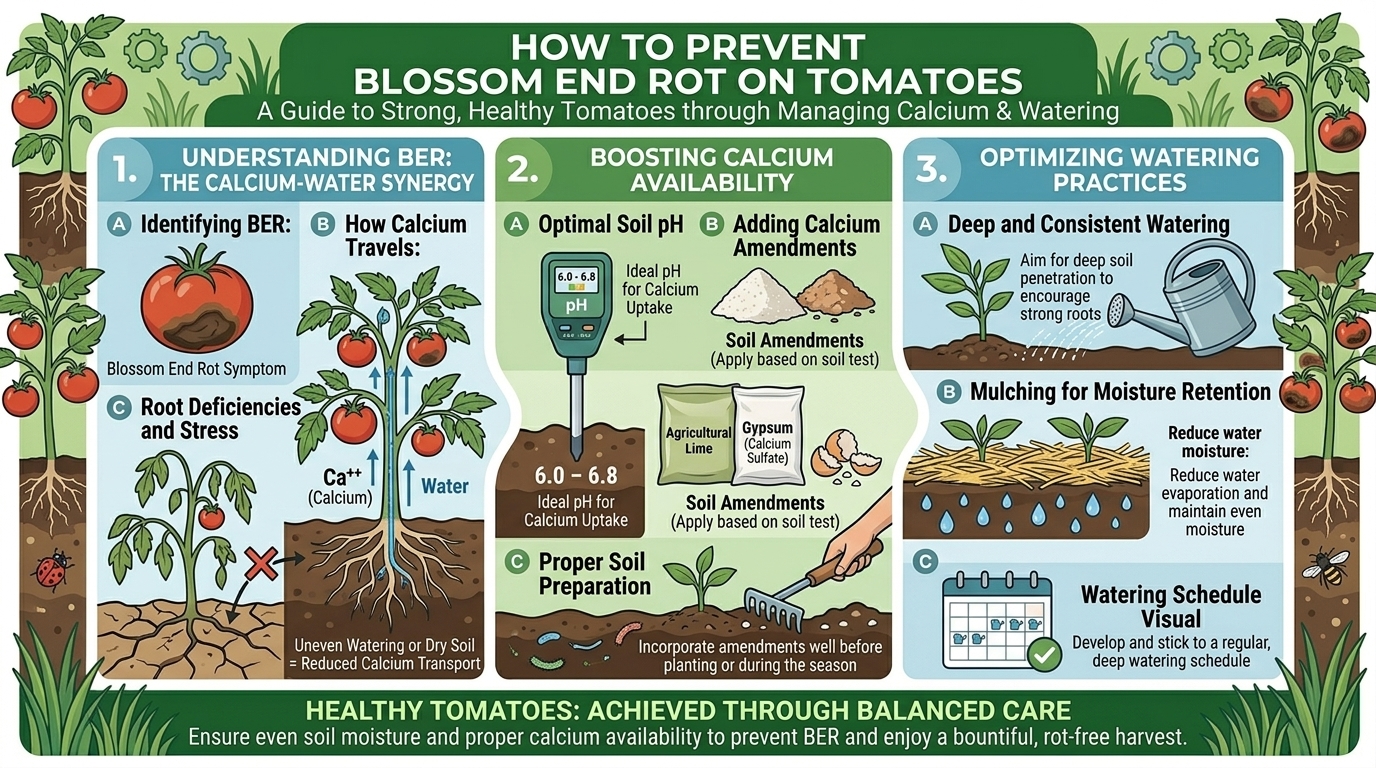
To conquer blossom end rot, you must understand what is happening inside the plant tissue. Blossom end rot is a physiological disorder, not a communicable fungal or bacterial disease. It manifests as a breakdown of cellular walls at the blossom end (the distal end opposite the stem) of the fruit.
+-----------------------------------------------------------------+
|             THE BLOSSOM END ROT PHYSIOLOGICAL CASCADE           |
|                                                                 |
|   [1. Rapid Early Fruit Development]                            |
|   - Young tomato fruits swell rapidly during their first two    |
|     weeks after pollination, demanding a steady stream of water |
|     and calcium to build strong new cell walls.                 |
|              |                                                  |
|              v                                                  |
|   [2. Moisture Stress & Vascular Shock]                         |
|   - Erratic watering (severe drought followed by heavy flooding)|
|     stunts the transpiration stream carrying nutrients upward.  |
|              |                                                  |
|              v                                                  |
|   [3. Calcium Starvation at Distal Cells]                       |
|   - Because calcium moves strictly via water flow (transpiration|
|     stream), it reaches leaves easily but fails to reach the    |
|     rapidly expanding tip of the fruit.                         |
|              |                                                  |
|              v                                                  |
|   [4. Cellular Collapse & Necrosis]                             |
|   - Starved of calcium, cell walls collapse upon themselves,    |
|     creating the classic sunken, leathery black patch.          |
+-----------------------------------------------------------------+
Why Calcium Matters
Calcium is the structural mortar of plant cell walls. Without adequate calcium ions binding pectin molecules together, cell walls rupture under internal hydraulic pressure, causing the tissue to blacken and die.
2. The Watering Paradox: Why Moisture Control Trumps Soil Calcium
In 90% of home gardens exhibiting blossom end rot, there is actually plenty of calcium present in the soil. The true culprit is erratic watering.
Water is the vehicle that transports calcium from the roots, up the stem, and into the developing fruit. If your watering schedule resembles a rollercoaster—drenching the soil one day, letting it bake dry for three days, and flooding it again—the plant’s vascular plumbing experiences severe stress.
The Transpiration Disconnect
When soil dries out completely, root uptake halts. When you suddenly dump a massive amount of water on dry soil, the plant surges water into its leaves (which have high surface transpiration rates) while ignoring the heavy, hanging fruit clusters. Consequently, the fruit experiences an acute calcium drought during its most critical growth window, triggering blossom end rot.
3. Mastering Irrigation: The Gold Standard for Water Management
Maintaining consistent soil moisture is your single most effective defense against blossom end rot.
+-----------------------------------------------------------------+
|             GOLDEN RULES FOR TOMATO WATER MANAGEMENT            |
|                                                                 |
|   [1. Deep, Consistent Soaking]                                 |
|   - Water deeply (1 to 2 inches per week) to saturate the entire|
|     root zone rather than giving frequent, shallow sprinkles.   |
|              |                                                  |
|              v                                                  |
|   [2. The Finger Test Standard]                                 |
|   - Stick your index finger 2 inches deep into the soil. If it  |
|     feels dry at your knuckle, it is time to water.             |
|              |                                                  |
|              v                                                  |
|   [3. Morning Irrigation Routine]                               |
|   - Water early in the morning (6 AM to 9 AM). This gives plants|
|     maximum hydration before afternoon heat and prevents damp   |
|     foliage that invites fungal diseases.                       |
+-----------------------------------------------------------------+
Automated Drip Irrigation
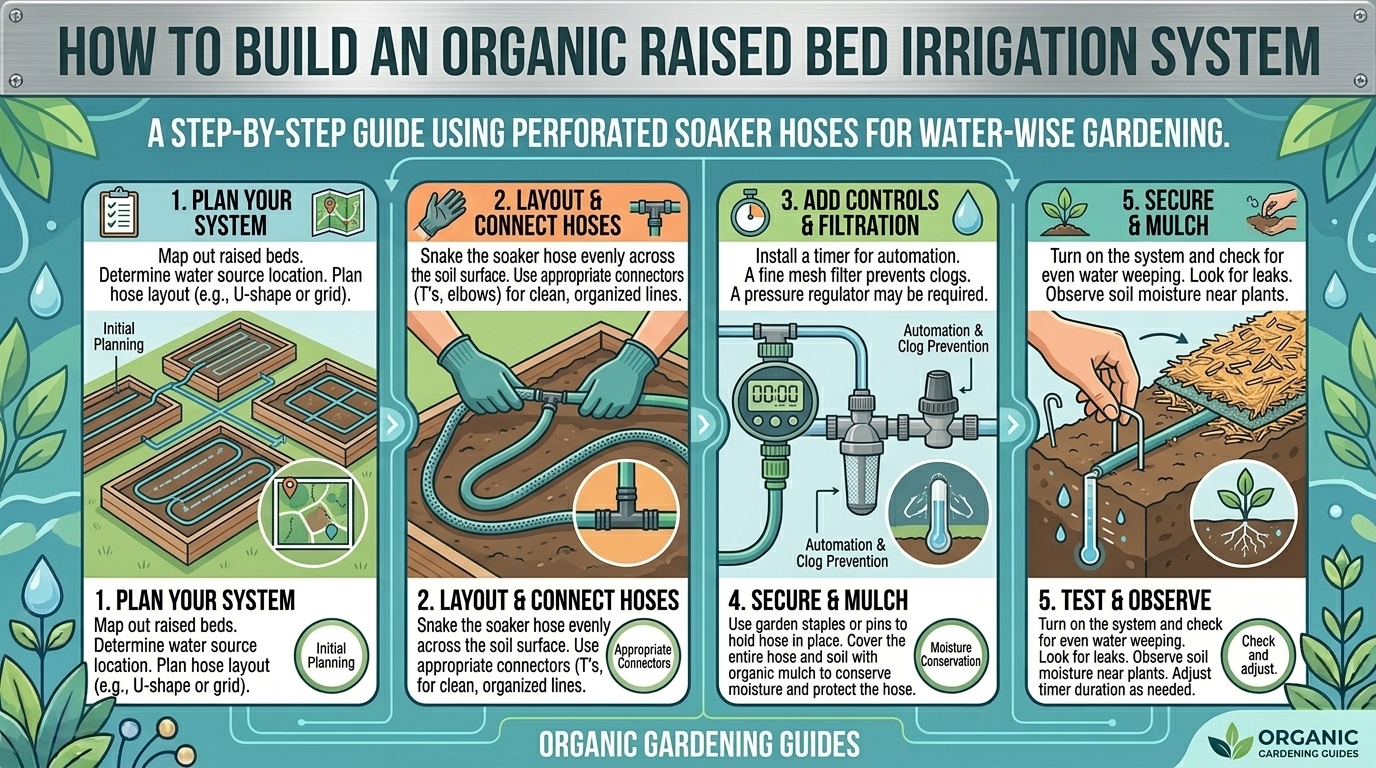
Installing a simple drip irrigation system connected to a smart hose timer takes the guesswork out of watering. Drip lines deliver slow, steady, metered drops of water directly to the root base over several hours, ensuring zero moisture shock.
4. Managing Soil Chemistry and Calcium Correctly
While watering is paramount, ensuring your soil chemistry supports calcium uptake is equally essential.
- The pH Balance Sweet Spot: Tomatoes absorb calcium most efficiently when soil pH is between 6.2 and 6.8. If your soil is too acidic (pH below 6.0), nutrients become locked out, and toxic aluminum or manganese levels can interfere with root function. Test your soil annually using an at-home kit or a local agricultural extension office.
- Amending with Agricultural Lime: If soil tests confirm a true calcium deficiency or low pH, amend your beds in early spring with agricultural limestone (calcitic limestone) or gypsum (calcium sulfate). Gypsum is particularly fantastic because it adds calcium without altering soil pH.
- Beware of Excess Nitrogen: Avoid over-fertilizing your tomatoes with high-nitrogen synthetic fertilizers early in the season. Excess nitrogen forces explosive, lush green vine growth that outpaces the root system’s ability to supply calcium, concentrating the available calcium in the leaves rather than the fruit.
5. Regional Climate Strategies Across the United States
Your local climate dramatically influences how quickly your tomato soil dries out and how vulnerable your plants are to moisture stress:
San Francisco and New York City
In San Francisco, cool coastal fog, summer winds, and microclimate shifts can trick gardeners into thinking soil is retaining moisture when surface evaporation and root competition are high. In New York, humid summer heatwaves combined with sudden torrential downpours create extreme soil moisture fluctuations. Use heavy organic mulches to stabilize soil moisture against sudden weather swings.
Texas and California
Arid, high-heat environments present severe challenges. In Texas and interior California, blistering summer temperatures exceeding 90°F to 100°F cause rapid evapotranspiration. Tomato plants shut down metabolic functions in peak afternoon heat, halting nutrient uptake. Provide 30% to 40% shade cloth during peak summer afternoons and heavy 3-inch straw mulches to insulate roots from solar baking.
Washington State
The Pacific Northwest features cooler, variable summers with sudden dry spells followed by rainstorms. Ensure your garden beds have excellent drainage; waterlogged soil suffocates roots, destroying their ability to absorb calcium just as effectively as dry soil.
6. Comprehensive Tomato Care Schedule for Preventing BER
| Timing | Action Item | Primary Objective |
| Early Spring (Pre-Planting) | Soil pH test & amend with gypsum/compost | Establish ideal pH (6.2–6.8) and baseline soil calcium |
| Late Spring (Planting) | Apply 3 inches of organic mulch (straw/leaves) | Lock in moisture and insulate soil temperature |
| Early Summer (Growth Phase) | Install drip irrigation and set consistent timers | Prevent moisture shock and ensure steady water delivery |
| Mid-Summer (Peak Fruit) | Monitor soil moisture daily; avoid high-nitrogen feeds | Maintain steady transpiration streams during rapid fruit swell |
7. Frequently Asked Questions (FAQs)
1. Can I still eat a tomato that has blossom end rot?
Yes. Blossom end rot is a physiological disorder, not an infectious disease or rot caused by pathogens. You can simply slice off the affected leathery black bottom portion of the tomato and consume the remaining healthy, unblemished flesh.
2. Does adding crushed eggshells to the planting hole prevent blossom end rot?
While eggshells are rich in calcium, they take months or years to break down and release bioavailable calcium into the soil. Dumping raw eggshells into a planting hole will not provide immediate calcium to a tomato plant experiencing active blossom end rot.
3. Why do my first tomatoes get blossom end rot while later fruit is fine?
The first fruit cluster (often set during cooler, erratic spring weather when root systems are still immature and soil moisture fluctuates wildly) is most commonly affected. As the plant’s root system expands deeper into the soil and weather stabilizes, later fruit often matures completely healthy.
4. Are certain tomato varieties more resistant to blossom end rot?
Yes! Roma and paste tomatoes (plum types like San Marzano) are notoriously sensitive to blossom end rot because of their rapid, dense fruit development. Cherry tomatoes are rarely affected. If BER is a constant battle in your garden, look for resistant slicing varieties.
5. Should I spray my tomato leaves with liquid calcium?
Foliar calcium sprays offer a minor, temporary Band-Aid, but they do not solve the root cause. Calcium moves upward through the plant via water from the roots; spraying leaves does little to transport calcium directly into the rapidly expanding distal end of hanging fruit.
6. How much water does a mature tomato plant need per week?
Generally, a healthy, producing tomato plant requires about 1 to 2 inches of water per week (roughly 1 to 2 gallons per plant), delivered deeply and consistently rather than through daily light sprinklings.
7. Can over-fertilizing cause blossom end rot?
Yes. Excessive use of high-nitrogen fertilizers causes rapid vegetative leaf growth. Furthermore, over-fertilizing with potassium or magnesium can chemically compete with and block calcium uptake by plant roots.
8. What is the difference between blossom end rot and late blight?
Blossom end rot affects only the distal (bottom) end of the fruit, creating a flat, leathery, dark patch. Late blight is a destructive fungal disease that causes large, greasy, firm brown-black lesions across leaves, stems, and the entire body of the fruit.
9. Does container-grown tomatoes suffer more from blossom end rot?
Yes. Potted tomatoes dry out significantly faster than in-ground garden beds due to limited soil volume and high sun exposure. Container tomatoes require daily monitoring and meticulous watering schedules to prevent moisture stress.
10. How long does it take for a tomato plant to recover from moisture stress?
Once consistent watering is restored, existing fruits that have already developed blossom end rot will not heal (you must pluck them off to encourage new growth). However, newly set fruit forming after 7 to 10 days of consistent moisture will develop normally without rot.
8. Conclusion
Blossom end rot is one of the most disheartening sights in a home garden, but it is entirely preventable once you shift your focus from chasing quick-fix calcium supplements to mastering consistent soil moisture management. By understanding the delicate physics of plant transpiration, maintaining steady, deep irrigation schedules, balancing your soil pH, and shielding your garden beds with rich organic mulch, you empower your tomato plants to absorb and distribute nutrients effectively.