Welcome to the ultimate guide by KCPlants, crafted specifically for vegetable growers across America’s diverse planting zones—from the intense summer heat of Texas and California to the cool, crisp garden beds of New York and Washington, and the unique coastal microclimates of San Francisco.
Growing tomatoes is a rite of passage for home gardeners. Whether you are planting classic slicing tomatoes, rich paste varieties, or sweet cherry tomatoes, watching your plants burst into vigorous green vines is deeply satisfying. However, left to their own devices, many tomato varieties will transform into dense, tangled thickets of foliage. This jungle of stems drains the plant’s energy, invites fungal diseases, and drastically reduces fruit size and yield.
The secret weapon of master gardeners? Strategic sucker pruning.
When done correctly using clean pruning shears, pruning suckers channels your tomato plant’s energy directly into the main stem and developing fruit clusters, resulting in healthier plants, better airflow, and a much heavier harvest.
This comprehensive, SEO-optimized guide will teach you everything you need to know about tomato suckers, when and how to remove them, tools to use, and how regional climates across the US influence your pruning strategy.
What Exactly Is a Tomato Sucker?
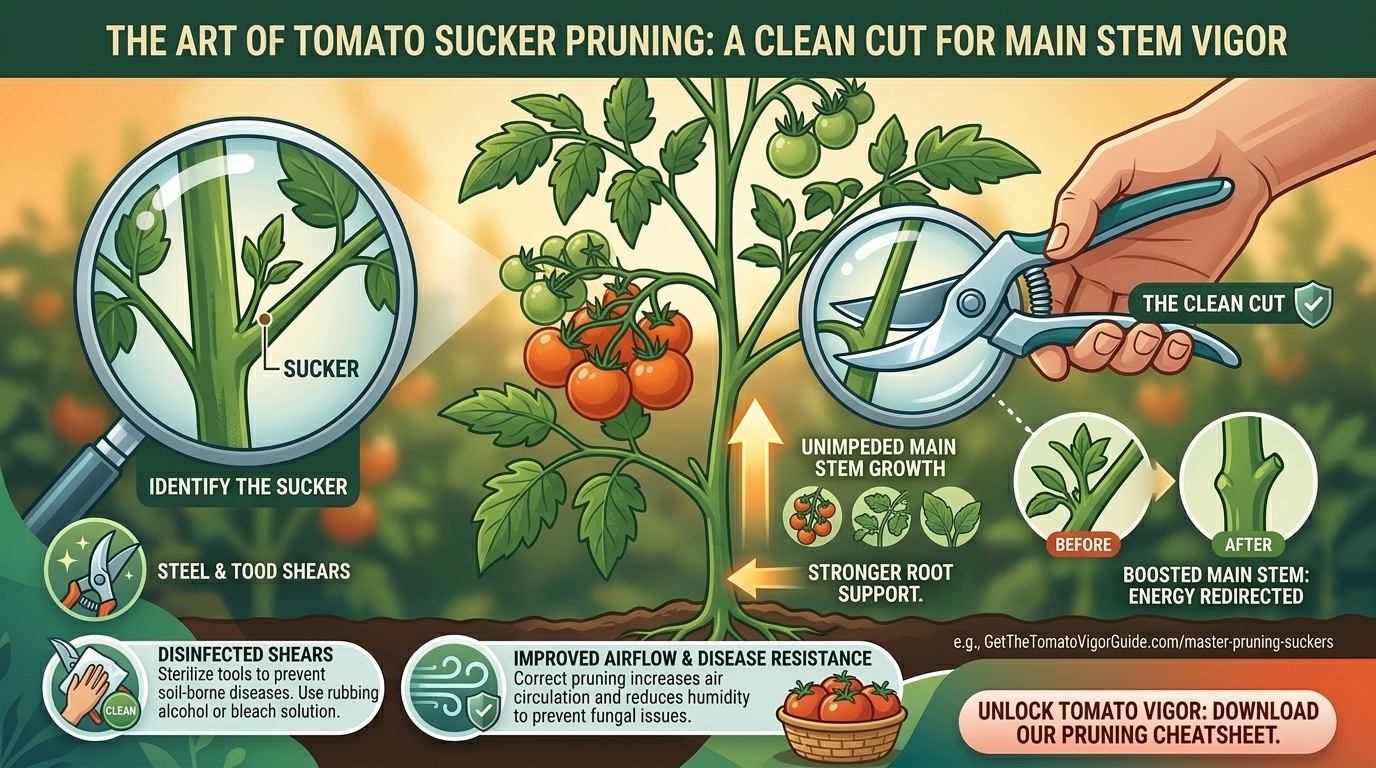
Before you step into the garden with your shears, it is essential to understand plant anatomy. A tomato sucker is a small, secondary shoot that develops in the “axil”—the precise junction where a leaf branch (petiole) meets the main vertical stem.
+--------------------------------------------------------+
                  THE TOMATO PLANT ANATOMY
+--------------------------------------------------------+
|                      [ Main Stem ]                     |
|                           |                            |
|       [Leaf Branch] ------+------ [ Leaf Branch ]      |
|                          / \                           |
|                         /   \                          |
|                  (Sucker)   (Sucker)                   |
|                  (Remove)   (Remove)                   |
+--------------------------------------------------------+
If left unpruned, a sucker grows into an entirely new branch that mimics the main stem, producing its own leaves, flowers, and fruit. While this sounds beneficial, it creates fierce competition for sunlight, water, and nutrients. By eliminating these secondary shoots, you transform a sprawling, chaotic vine into a disciplined, high-yielding powerhouse.
Indeterminate vs. Determinate Tomatoes: Do All Tomatoes Need Pruning?
Not all tomato plants grow the same way. Understanding your plant type is the first step toward successful pruning.
1. Indeterminate Tomatoes (The Vining Types)
- Growth Habit: These varieties grow continuously like vines, flowering and setting fruit all season long until frost kills them. They can easily reach heights of 6 to 10 feet or more.
- Pruning Requirement: Heavy Pruning Required. Indeterminate tomatoes must be pruned and trellised to keep them manageable, prevent disease, and maximize fruit quality. Varieties like Early Girl, Brandywine, and Sweet Million fall into this category.
2. Determinate Tomatoes (The Bush Types)
- Growth Habit: These varieties grow to a fixed, predetermined height (usually 3 to 4 feet), set all their fruit within a short 2-to-3-week window, and then finish their life cycle.
- Pruning Requirement: Minimal to No Pruning. Pruning suckers off determinate tomatoes actually reduces your overall harvest, because their fruit clusters develop at the ends of those shoots. Simply prune the lowest leaves touching the soil to prevent disease.
Why Prune Tomato Suckers? (The Top Benefits)
Pruning isn’t just about making your garden look neat; it triggers profound physiological benefits for the plant:
- Boosts Main Stem Energy: By removing competing side-shoots, the plant concentrates its root nutrients and photosynthesis power directly into the main stem and primary fruit clusters.
- Improves Air Circulation: Dense foliage traps humidity and moisture. Pruning opens up the interior canopy, allowing wind to dry the leaves quickly after morning dew or rain.
- Reduces Fungal Disease: Improved airflow and sunlight penetration drastically cut down the incidence of common tomato blights, powdery mildew, and fungal spots.
- Larger, Sweeter Fruit: Fewer fruit clusters mean the plant pours more sugars and resources into the remaining tomatoes, resulting in bigger, higher-quality yields.
- Easier Harvest and Management: A pruned, staked tomato plant is far easier to harvest, weed around, and manage throughout the growing season.
The Golden Rule: Use Clean Pruning Shears
The title of this guide emphasizes a vital detail: using clean pruning shears.
Tomato plants are remarkably delicate despite their vigorous appearance. Using dull, dirty, or contaminated tools can spell disaster for your garden.
Why Sterilization Matters
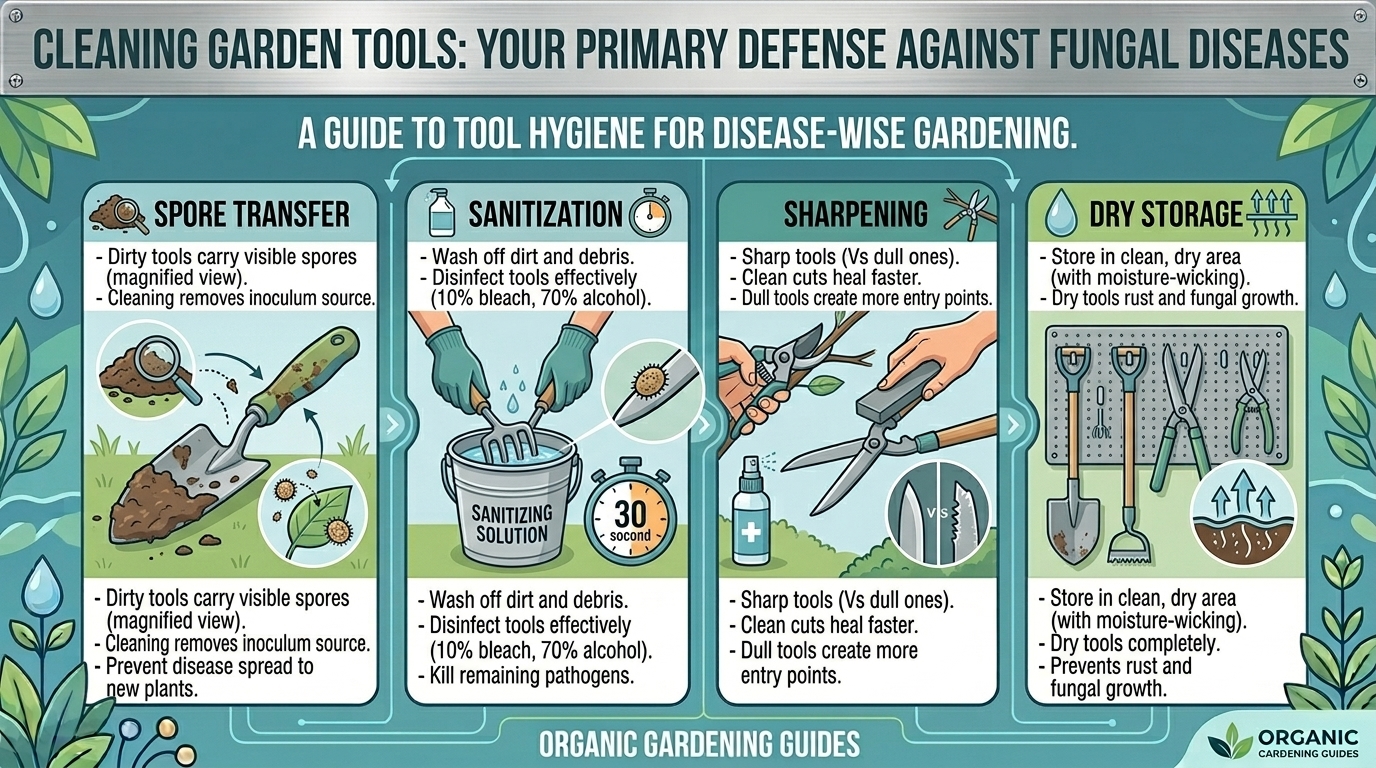
Tomato plants are susceptible to devastating viral and bacterial pathogens, including Tobacco Mosaic Virus (TMV), Tomato Spotted Wilt Virus, and bacterial canker. If you use a pair of shears that previously clipped an infected plant, you will instantly transmit that pathogen to every healthy plant you touch.
How to Clean and Sanitize Your Shears Properly:
- Before You Start: Wipe your bypass pruning shears down with isopropyl rubbing alcohol (70% or higher) or a household disinfectant spray.
- Between Plants: If you suspect any plant in your garden is showing early signs of stress or disease, dip or wipe your shears in alcohol between every single plant to avoid cross-contamination.
- Keep Them Sharp: Use sharp blades to make clean, crisp cuts. Dull blades crush plant tissue, creating jagged wounds that take longer to heal and act as open invitations for spores and bacteria.
Step-by-Step Guide: How to Prune Suckers Correctly
Pruning tomatoes is an ongoing weekly ritual throughout the spring and summer. Follow these steps for flawless execution:
+--------------------------------------------------------+
                 THE PRUNING WORKFLOW
+--------------------------------------------------------+
| 1. Inspect the Plant Weekly (Catch them early)         |
| 2. Identify True Suckers vs. Flower Clusters           |
| 3. Select Your Clean, Sharp Bypass Shears              |
| 4. Make a Clean Cut Close to the Main Stem             |
| 5. Dispose of Debris Away from the Garden              |
+--------------------------------------------------------+
Step 1: Inspect Your Plants Weekly
Walk your garden beds at least once a week. Suckers grow astonishingly fast—what was a tiny bump on Monday can turn into a thick, woody branch by next month. Catching them when they are small (under 2 to 4 inches) makes pruning effortless and minimizes plant stress.
Step 2: Differentiate Suckers from Flower Clusters
Beginners sometimes accidentally snip off flower clusters (which turn into tomatoes) thinking they are suckers.
- The Tell: Flower clusters emerge directly from the main stem between nodes, and they do not have surrounding small leaves at their base initially. Suckers always sprout precisely in the “V” notch between the main stem and a leaf branch.
Step 3: Pinch Small Suckers or Shear Large Ones
- For tiny suckers (under 2 inches): You can pinch them cleanly off using your thumb and index finger with a quick sideways snap.
- For larger suckers (over 2 inches): Always use your clean pruning shears. Never rip or tear large suckers off by hand, as this creates a long, vertical strip of torn skin down the main stem, exposing the plant to infection.
Step 4: Cut Cleanly Without Leaving Stubs
Position your shears close to the main stem, making a clean cut. Do not leave a long stub (which can rot), but take care not to gouge or cut into the main stem itself.
Step 5: Clean Up Garden Debris
Never leave pruned tomato leaves and suckers lying around the base of your plants on the soil. Decaying plant matter attracts pests and harbors fungal spores. Toss them into your compost bin (if disease-free) or dispose of them away from the garden beds.
Regional Pruning Strategies Across the US
Climate dictates how aggressively you should prune your tomatoes. The local environment changes how plants handle heat, sunscald, and moisture.
☀️ Texas & California (Intense Heat & Sunscald Risks)
- The Challenge: In regions like Central Texas or California’s interior valleys, summer temperatures soar past 95°F to 100°F. Pruning too heavily can expose developing fruit to harsh, direct sunlight, leading to sunscald (leathery, white patches on tomatoes).
- Pruning Strategy: Adopt a modified pruning approach. While you should still remove lower suckers and interior growth for airflow, leave some upper foliage canopy intact to shield your fruit from the scorching afternoon sun.
🌉 San Francisco (Coastal Fog & Marine Microclimates)
- The Challenge: San Francisco’s famous summer fog, damp air, and cool breezes create high humidity right around the plant canopy, which is a breeding ground for fungal spores.
- Pruning Strategy: Prune aggressively to maximize airflow. Remove all lower suckers and leaves up to 12 to 18 inches off the ground. Keeping the lower stems bare prevents soil-borne fungi from splashing up onto the leaves during watering or coastal mist.
🌲 Washington & New York (Cool Springs & Shortened Seasons)
- The Challenge: Northern climates have shorter growing seasons. Gardeners need to speed up fruit ripening before autumn chills arrive.
- Pruning Strategy: Focus on a “single-leader” or “two-leader” system for indeterminate varieties. By the time late summer arrives (around August), “top” or “stop” your main vines by cutting off the growing tip of the main stem 4 to 6 weeks before your expected first fall frost. This forces the plant to stop vertical growth and put 100% of its remaining energy into ripening the existing fruit clusters.
Advanced Training Systems: Single-Stem vs. Multi-Stem
Depending on your garden space, you can customize your pruning strategy:
- The Single-Stem System: Remove all suckers, leaving only the single main vertical stem tied securely to a stake or trellis. This method produces the earliest, largest fruit and fits well in tight spaces, urban balconies, or raised beds.
- The Two-Stem System: Allow the main stem to grow, and let only one vigorous lower sucker (usually the one right below the first flower cluster) develop into a second main stem. Prune away all other suckers. This doubles your fruit production while keeping the plant manageable.
Frequently Asked Questions (FAQ)
1. What happens if I accidentally cut off the main growing tip of my tomato plant?
Don’t panic! While your plant will stop growing vertically from that specific stem, you can easily recover. Select a vigorous upper sucker just below the cut and let it take over as the new main stem by training it upward with twine or a stake.
2. Can I propagate tomato suckers to grow new plants?
Yes, absolutely! Tomato suckers make incredible free cuttings. Simply place a healthy 4-to-6-inch sucker in a glass of clean water or moist potting mix. Within 7 to 14 days, roots will sprout from the node, giving you an entirely new, genetically identical tomato plant for free.
3. How often should I prune my tomato suckers?
You should inspect and prune your indeterminate tomato plants once a week during the peak spring and summer growing season. Catching them when they are small makes the job fast and keeps plant stress to an absolute minimum.
4. Is it okay to prune tomato suckers with my bare hands?
For very tiny, tender suckers (under 2 inches), pinching them off with your fingers is fine. However, for anything larger or woody, you must use clean pruning shears. Tearing large shoots by hand rips the main stem bark, opening up the plant to disease.
5. Do determinate (bush) tomatoes need sucker pruning?
No! Determinate varieties are bred to produce all their fruit at once on a bush-like structure. Pruning their suckers will actually lower your total harvest yield. Only prune diseased or yellowing lower leaves touching the soil on determinate plants.
6. Why is tool sterilization so important when pruning tomatoes?
Tomato plants are vulnerable to aggressive systemic viruses and bacterial blights (such as Tobacco Mosaic Virus). If you clip an infected plant and move to a healthy one without sanitizing your shears, you will instantly spread the infection across your entire garden.
7. Should I prune my tomatoes during wet or rainy weather?
No. Avoid pruning when your plants are wet from rain, heavy dew, or overhead watering. Moisture droplets act as transport vehicles for fungal spores to enter fresh pruning wounds. Always prune on a dry, sunny morning after the dew has evaporated.
8. What causes “sunscald” on tomatoes, and how does pruning affect it?
Sunscald occurs when tomatoes receive too much direct, intense midday sunlight, causing pale, blistered patches on the fruit skin. If you live in hot regions like Texas or California and prune away all the leaf canopy, your fruit becomes vulnerable. Balance airflow with adequate leaf shade.
9. Should I apply anything to the cut wounds after pruning?
In general, no. Tomato plants heal and callous over naturally and quickly on their own, provided you used clean, sharp shears. Applying wound paints, sealants, or home remedies can actually trap moisture and bacteria inside the cut, causing rot.
10. How late in the season should I continue pruning suckers?
Continue pruning indeterminate suckers throughout the summer. However, stop heavy pruning about 4 to 6 weeks before your local region’s expected first autumn frost date. At that point, “top” the plant by cutting the main growing tip to force final fruit ripening.
Conclusion
Mastering the art of pruning tomato suckers with clean pruning shears is one of the most effective ways to elevate your home gardening game. Whether you are battling the intense Texas sun, navigating San Francisco’s foggy microclimates, or maximizing a short Washington growing season, strategic pruning ensures your plants stay disease-free, well-ventilated, and heavily laden with delicious fruit.