If you live near the coast, you have likely walked past piles of beach-cast seaweed shimmering in the sun, smelling faintly of the ocean. While many beachgoers view these botanical heaps as a nuisance or a barrier to a clean shoreline, savvy gardeners recognize them for what they truly are: free, nutrient-dense organic gold.
Using seaweed as a natural mulch and mineral fertilizer is an ancient agricultural tradition practiced for centuries by coastal communities from Ireland to Maine, and across the Pacific. Today, as home gardeners increasingly seek sustainable, organic, and cost-effective ways to enrich their soil, beach-collected seaweed is experiencing a massive resurgence.
Whether you are gardening under the intense sun of California, battling the clay-heavy soils of New York, managing the temperate, moisture-rich climate of Washington State, or adapting to micro-climates in San Francisco and Texas, incorporating seaweed into your garden regimen can completely transform your plant health.
1. The Nutritional Profile of Seaweed: Why Plants Love It
Seaweed is vastly superior to traditional land-based mulches and manures when it comes to trace mineral diversity. Because the ocean acts as a vast sink for eroded minerals from the earth, marine plants absorb and concentrate a staggering array of elements.
Macro and Micro-Nutrients
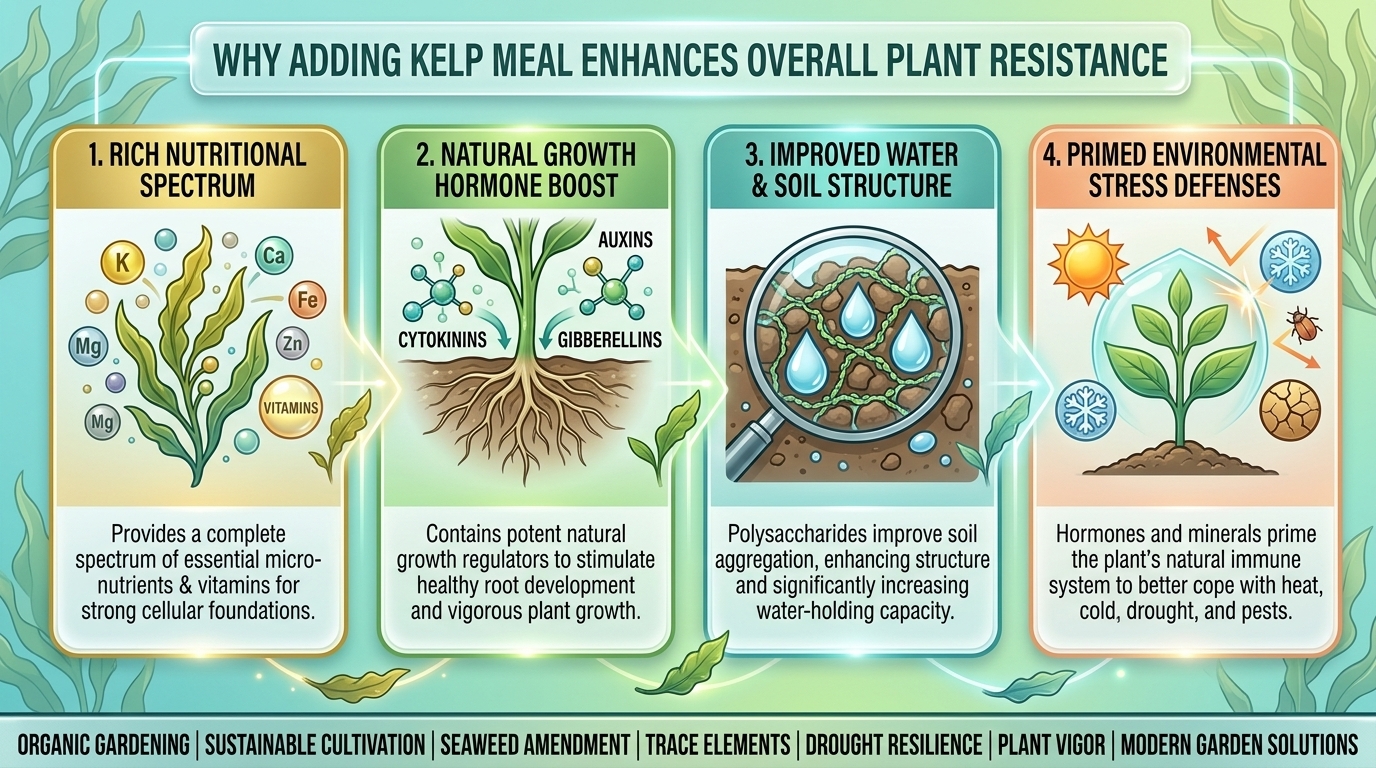
Unlike standard chemical fertilizers that typically focus only on Nitrogen (N), Phosphorus (P), and Potassium (K), seaweed delivers a complete package:
- Major Nutrients: Moderate levels of nitrogen and phosphorus, with a notably high concentration of potassium, which encourages robust root systems, flower development, and fruit production.
- Trace Minerals: Over 60 trace elements, including calcium, magnesium, sulfur, iodine, iron, zinc, copper, and boron. These micronutrients are often depleted in domestic garden soils but are essential for enzymatic functions in plants.
Growth Hormones and Bio-Stimulants
Perhaps the most remarkable property of seaweed is its natural abundance of plant growth regulators, including auxins, cytokinins, and gibberellins. These compounds stimulate cell division, enhance root mass, improve chlorophyll concentration, and build systemic plant resistance against environmental stressors like drought, frost, and pest pressures.
Alginates and Soil Structure
Seaweed contains complex carbohydrates called alginates. When these compounds break down in the soil, they feed beneficial soil microbes and fungi. These microbes secrete sticky substances that bind soil particles together into aggregates, significantly improving soil structure, water retention, and aeration—making it a lifesaver for heavy clay or loose, sandy soils alike.
2. Safety First: Sourcing and Preparing Beach Seaweed
Before you load your trunk with coastal kelp, you must follow strict harvesting protocols to protect your garden from pollutants, excessive salt, and legal restrictions.
Legal and Environmental Considerations
- Check Local Regulations: In many regions (particularly across state parks in California, Washington, and New York), regulations govern the removal of natural materials from beaches. Some areas prohibit commercial harvesting entirely, while others allow small amounts for personal garden use. Always verify local ordinances before collecting.
- Gather Driftwood and Drift Algae Only: Never rip living seaweed off rocks in the intertidal zone. This disrupts marine ecosystems and coastal food webs. Only collect drift seaweed that has washed ashore naturally.
The Salt Myth: Does Seaweed Salt Out Your Garden?
A common fear is that seaweed will introduce harmful levels of sodium chloride to garden beds. While fresh seaweed does contain sea salt, the concern is largely exaggerated:
- Rain and Irrigation: Natural rainfall or a quick soak with a garden hose easily washes away the surface salt.
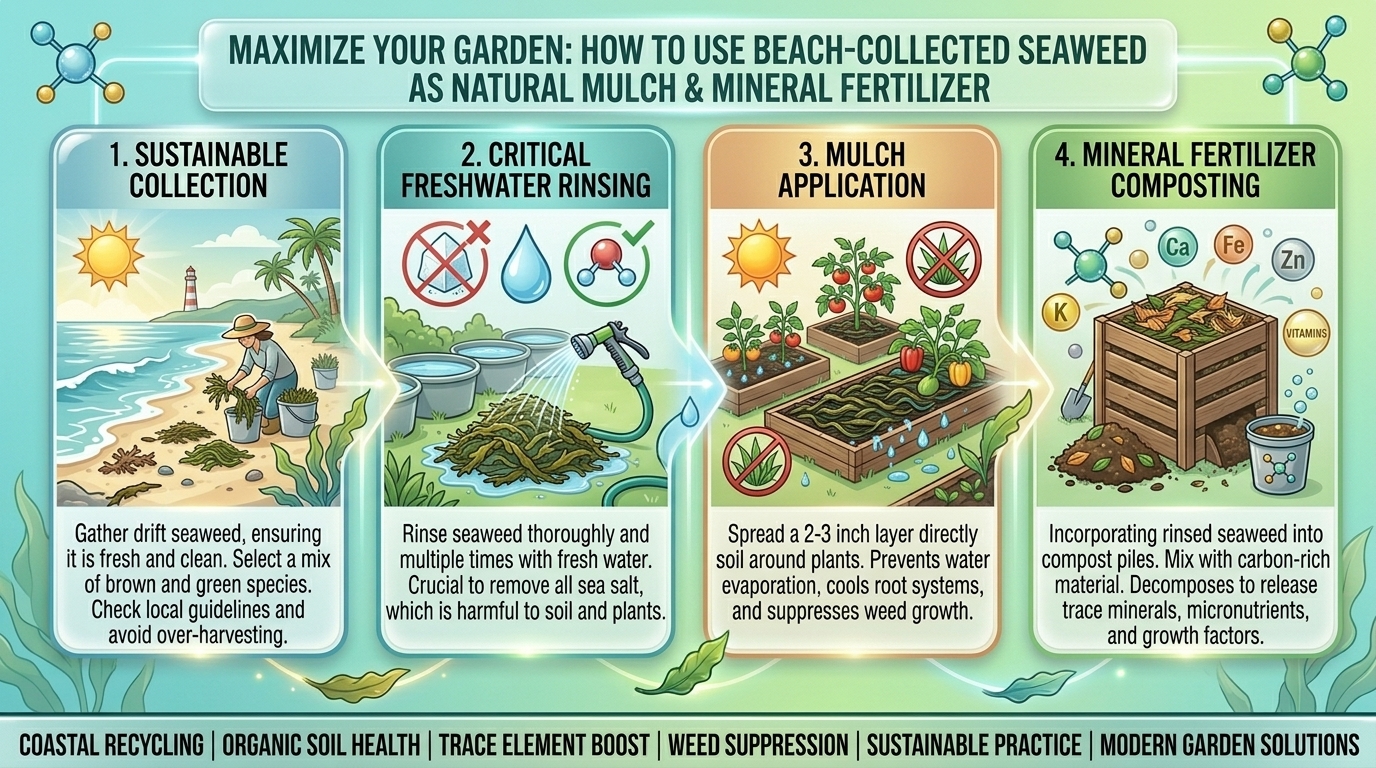
- Rinsing Protocol: A thorough rinse is all it takes to remove up to 90% of the surface sodium, leaving the beneficial internal minerals untouched.
3. Step-by-Formulated-Step: How to Process Seaweed
Depending on whether you intend to use your harvest as a moisture-retaining mulch or a rapid-release liquid fertilizer, processing varies slightly.
[ Beach Collection ]
       │
       ├──> Option A: Rinse & Apply Direct (Surface Mulch)
       │
       ├──> Option B: Compost Layering (Slow Integration)
       │
       └──> Option C: Seaweed Tea (Liquid Fertilizer)
Method A: Direct Application as a Surface Mulch
- Rinse Thoroughly: Place your collected seaweed in a wheelbarrow or mesh bag and hose it down vigorously to remove excess sand and salt.
- Chop or Shred: Large kelp fronds (like giant bull kelp found on the Pacific coast) can take a while to break down. Chop them roughly with a spade or shears.
- Apply Around Established Plants: Lay a 2-to-3-inch layer around established perennials, shrubs, fruit trees, or heavy feeders like tomatoes and squashes. Keep the mulch a few inches away from the direct stems to prevent moisture rot.
Method B: Composting with Seaweed
Seaweed is a “green” nitrogen-rich material, but its high moisture content means it should be balanced with “brown” carbon sources (straw, shredded dry leaves, cardboard, or wood chips).
- Layering: Alternate 4-inch layers of rinsed seaweed with 6-inch layers of dry browns.
- Aeration: Turn the pile every couple of weeks. Because seaweed breaks down rapidly, you will notice a faster decomposition cycle and an exceptionally rich, dark compost finish.
Method C: Brewing Seaweed Liquid Fertilizer (“Seaweed Tea”)
If you want an immediate nutrient boost for seedlings or potted plants:
- Fill a 5-gallon bucket roughly halfway with rinsed seaweed.
- Top the bucket with water, cover it loosely, and let it steep for 3 to 4 weeks, stirring occasionally.
- Strain the resulting dark liquid.
- Dilute: Mix the concentrate with water at a ratio of 1 part seaweed tea to 10 parts water until it looks like weak tea, then apply it directly to the root zone.
4. Regional Adaptation Guide: Coastal to Inland Gardening
Different climates and soil types react uniquely to marine amendments. Here is how to tailor your seaweed strategy across diverse regions:
California & San Francisco
- Climate Challenge: Mediterranean dry summers, drought restrictions, and alkaline soils.
- Seaweed Solution: Use thick seaweed mulches around drought-tolerant Mediterranean herbs and fruit trees. The alginates lock in precious soil moisture, drastically cutting down irrigation needs while buffering soil pH.
Texas
- Climate Challenge: Intense heat, heavy clay soils (“Blackland Prairie”), and occasional soil salinity stress.
- Seaweed Solution: Work chopped seaweed deeply into clay beds alongside compost. The microbial activity stimulated by the seaweed breaks up heavy clay particles over time, creating a crumbly, well-draining matrix.
New York
- Climate Challenge: Freeze-thaw winter cycles, acidic woodland soils, and humid summers.
- Seaweed Solution: Apply seaweed as a late-spring mulch once the soil has warmed up. Its mineral profile helps balance overly acidic garden beds, providing a steady supply of calcium and magnesium for vegetable gardens.
Washington State
- Climate Challenge: Abundant rainfall, acidic soils, and damp conditions that can encourage fungal pathogens.
- Seaweed Solution: Ensure seaweed is thoroughly rinsed and applied in thin, breathable layers. Avoid piling wet, matted kelp directly against soft-stemmed crops to prevent slug habitats and collar rot.
5. Frequently Asked Questions (FAQ)
1. Will seaweed attract pests or rodents to my garden?
Rinsing seaweed to remove fish oils and organic debris minimizes unwanted animal attention. However, because it creates a damp microclimate underneath, it can occasionally harbor slugs or snails. Keep the mulch a few inches away from plant stems and monitor your beds closely.
2. Can I use seaweed on indoor houseplants?
Directly applying raw seaweed indoors is not recommended due to potential odors and pests. However, properly strained and heavily diluted seaweed tea makes an exceptional monthly tonic for potted houseplants, providing vital micronutrients.
3. Do I need to cook or boil the seaweed before use?
No! Boiling seaweed destroys the heat-sensitive growth hormones, vitamins, and beneficial enzymes that make it so valuable. Simple rinsing and physical breakdown are all that is required.
4. How long does seaweed mulch last in the garden?
Seaweed breaks down much faster than traditional bark mulch. A 3-inch layer will typically decompose into the soil within 2 to 3 months, actively feeding your earthworms and microbes during the peak growing season. You can reapply as needed.
5. Does seaweed contain weed seeds?
Unlike land-based manures or improperly cured compost, marine macroalgae (seaweed) does not harbor terrestrial weed seeds. You will not introduce invasive garden weeds by bringing beach seaweed home.
6. Can I use seaweed on acid-loving plants like blueberries?
Yes, but with caution. Seaweed contains trace amounts of sodium and has a relatively balanced pH, but it does not significantly acidify soil like pine needles or peat. It is safe for most fruits, vegetables, and ornamentals when rinsed.
7. Is brown kelp better than green or red seaweed?
All seaweeds are beneficial, but large brown seaweeds (like kelps and rockweeds) are generally favored by gardeners because they are larger, easier to collect in volume, and exceptionally rich in growth hormones and potassium.
8. What should I do if my seaweed smells too strong?
A fresh ocean scent is normal, but if your soaking bucket or compost pile develops a foul anaerobic sulfur smell, it means it lacks oxygen. Stir the mixture vigorously or add dry carbon materials (like shredded cardboard) to restore aerobic decomposition.
9. Will heavy metals from ocean pollution affect my vegetables?
In most open-ocean coastal regions, seaweed is safe for edible gardens. However, avoid collecting seaweed from heavily industrialized shipping lanes, stagnant harbors, or areas immediately adjacent to urban runoff pipe outlets.
10. Can I mix seaweed directly into the soil instead of using it as a top mulch?
Absolutely. Trough-digging or trench-composting fresh or chopped seaweed a few inches beneath the soil surface in autumn allows it to break down completely over the winter, priming your beds for an explosive spring planting season.
Conclusion
Harnessing the power of beach-collected seaweed bridges the gap between wild marine ecosystems and domestic horticulture. It is a zero-cost, highly sustainable practice that replaces synthetic chemical fertilizers, locks in vital soil moisture, and delivers an unmatched spectrum of minerals and growth hormones to your landscape.