What Are the Best Natural Barriers to Prevent Slugs and Snails from Eating Your Tender Lettuce Seedlings?
Welcome back to kcplants.com, your ultimate digital greenhouse for sustainable, thriving garden spaces. Whether you are carving out urban raised beds on a rooftop in San Francisco or New York, cultivating a backyard vegetable patch in sunny California or fertile Texas, or managing cool-season greens through the damp, misty climate of Washington, there is one heartbreak every gardener faces at least once: walking out to inspect your morning garden and finding your rows of tender, buttery lettuce seedlings chewed down to jagged, slimy stubs.
Slugs and snails are notorious night-shift marauders. Equipped with thousands of microscopic, razor-sharp teeth arranged on a ribbon-like tongue called a radula, a small army of these gastropods can obliterate an entire tray of delicate seedlings in a single evening. While chemical baits exist, many modern gardeners—especially those growing food crops meant for the kitchen table—prefer safe, non-toxic, eco-friendly natural barriers that protect delicate greens without harming beneficial soil microbes, family pets, or visiting pollinators.
This comprehensive guide explores the best, scientifically backed natural barriers to stop slugs and snails in their tracks, how to install them effectively, and how to create a multi-layered defense strategy for a pristine, pest-free harvest.
Part 1: Understanding the Enemy (Why Lettuce Seedlings?)
To outsmart slugs and snails, you first need to understand their behavior. Slugs and snails are nocturnal or crepuscular feeders, meaning they prefer the cool, damp cover of night or overcast, drizzly days. They travel via a muscular foot that secretes a lubricating trail of mucus, allowing them to glide smoothly over rough terrain—until they encounter specific physical textures or chemical deterrents they despise.
Why Lettuce is Their Primary Target
- High Moisture Content: Tender green lettuce varieties (like Butterhead, Romaine, and loose-leaf types) feature high water content and ultra-thin cell walls. They require virtually zero effort for a slug to rasp through.
- Low Fiber: Unlike mature brassicas or tough woody herbs, young seedlings lack lignin and tough epidermal layers, making them a literal all-you-can-eat buffet.
- Low-to-the-Ground Growth: Seedlings sit right at soil level, requiring minimal travel time for ground-dwelling pests.
Part 2: The Best Physical and Natural Barriers
Physical barriers act as fortresses around your lettuce bed, utilizing texture, electrical charge, or natural aversion to block access entirely.
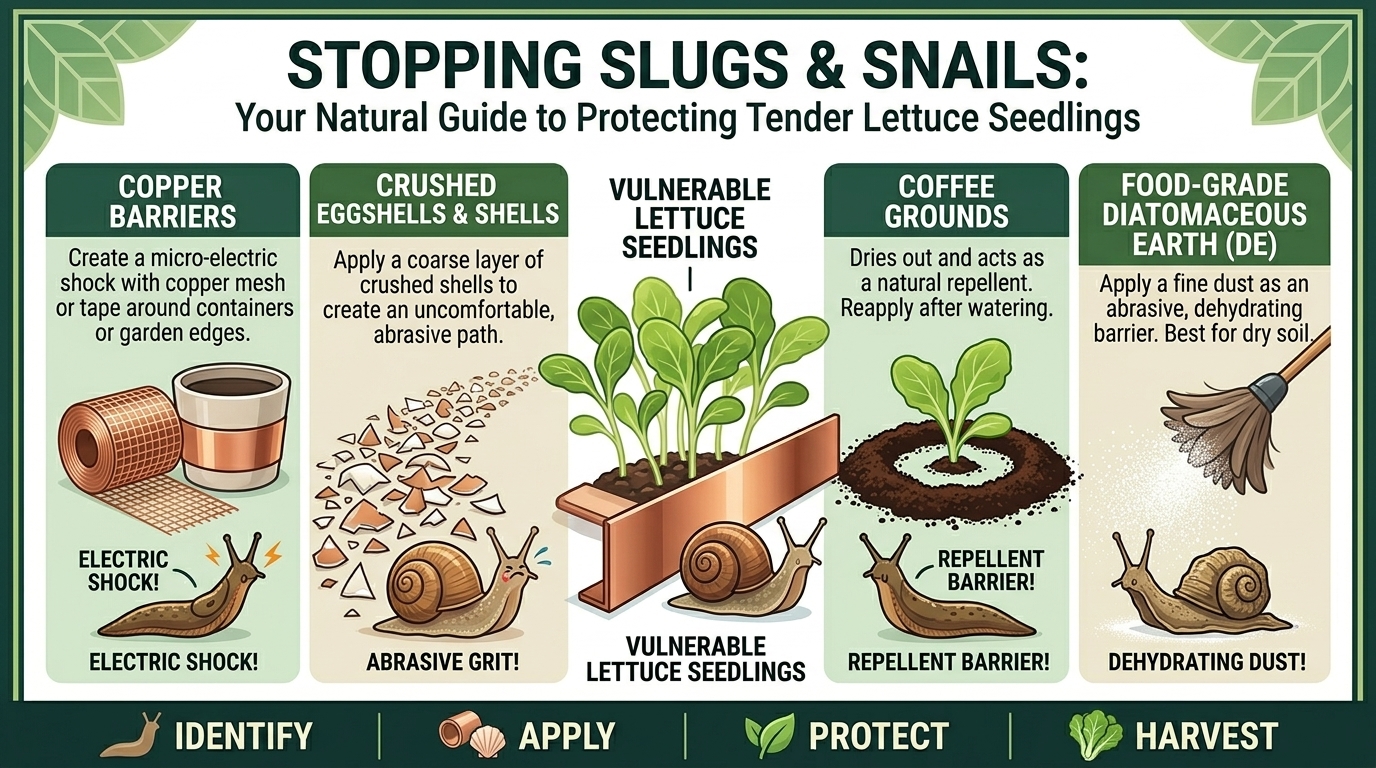
1. Copper Tape (The Gentle Electrical Shock)
- How It Works: When a slug or snail’s moist slime trail bridges the surface of copper tape, it reacts with the metal to create a mild, harmless, but startling electrical charge or chemical taste sensation. The pest instantly turns around and slithers away.
- Best Application: Buy self-adhesive copper foil tape (preferably 1 to 2 inches wide) and wrap it in a continuous, unbroken loop entirely around the perimeter of your raised beds, planters, or individual containers. Ensure no weeds or mulch bridge over the tape, as pests will use them as a ladder.
- Pro Tip: Clean the wood or plastic surface with rubbing alcohol before sticking the copper tape down to ensure it stays securely fastened through rain and watering.
2. Diatomaceous Earth (DE) – Food Grade Only
- How It Works: Diatomaceous earth consists of the fossilized remains of microscopic aquatic organisms called diatoms. To a soft-bodied slug or snail, crawling over DE is like dragging your belly across broken glass. The sharp microscopic edges pierce their outer membrane, causing dehydration.
- Best Application: Sprinkle a thick, ring-shaped barrier of food-grade DE around your lettuce seedlings.
- Crucial Limitation: DE completely loses its efficacy when wet. Rain, heavy overhead watering, or morning dew turns it into useless mud. Reapply dry DE after every rainstorm.
3. Crushed Eggshells
- How It Works: Much like DE, crushed eggshells provide sharp, jagged edges that soft gastropods prefer to avoid.
- Preparation & Application: Save your kitchen eggshells, rinse them clean, bake them at 200°F (93°C) for 20 minutes to make them brittle, and crush them into sharp flakes (not a fine powder). Create a protective moat around your lettuce rows.
- Note from the Field: While popular in gardening lore, raw eggshells are only moderately effective on their own because large slugs can stretch across small gaps. They work best when combined with other barrier methods.
4. Volcanic Ash and Pumice
- How It Works: Similar to crushed stone or sharp sand, fine-to-medium grade volcanic ash or horticultural pumice creates an abrasive, dry surface zone that slugs hate traversing.
- Best Application: Lay a 2-inch wide, 1-inch deep band of horticultural pumice around individual plant stems or garden beds. It retains less moisture than standard soil, keeping the perimeter dry and unappealing.
5. Sawdust and Wood Shavings
- How It Works: Dry, coarse sawdust absorbs moisture rapidly from a slug’s slime trail, severely dehydrating them and making forward movement difficult.
- Best Application: Create a wide ring of dry, untreated cedar or pine sawdust around your lettuce plot. Ensure the wood is completely natural and free from chemical treatments, pressure-treating agents, or glues.
Part 3: Companion Planting and Botanical Deterrents
In addition to physical barricades, you can leverage plant chemistry to create biological border zones that repel slugs naturally.
- Allium Borders: Slugs deeply dislike the pungent sulfur compounds found in garlic, chives, onions, and leeks. Planting a dense border of chives around your lettuce beds acts as a living chemical fence.
- Aromatic Herbs: Strong-scented herbs like rosemary, lavender, mint, and sage release volatile oils that mask the sweet scent of tender lettuce.
- Strategic Trap Crops: Plant inexpensive sacrificial greens (like extra mustard greens or clover) a few feet away from your prized lettuce. Slugs will often flock to the nearest, easiest meal, sparing your main harvest.
Part 4: Step-by-Step Installation of an Invincible Lettuce Bed
To maximize your success, combine these barriers into a comprehensive defense matrix:
- Clear the Perimeter: Remove all weeds, thick mulch, and damp debris within a 12-inch radius of your lettuce bed. Slugs love to hide under debris right next to food sources.
- Install Your Primary Barrier: Apply copper tape around the rim of your raised bed or container, ensuring a tight, continuous seal.
- Establish a Secondary Ring: Lay down a band of food-grade DE or sharp volcanic grit just inside the bed perimeter.
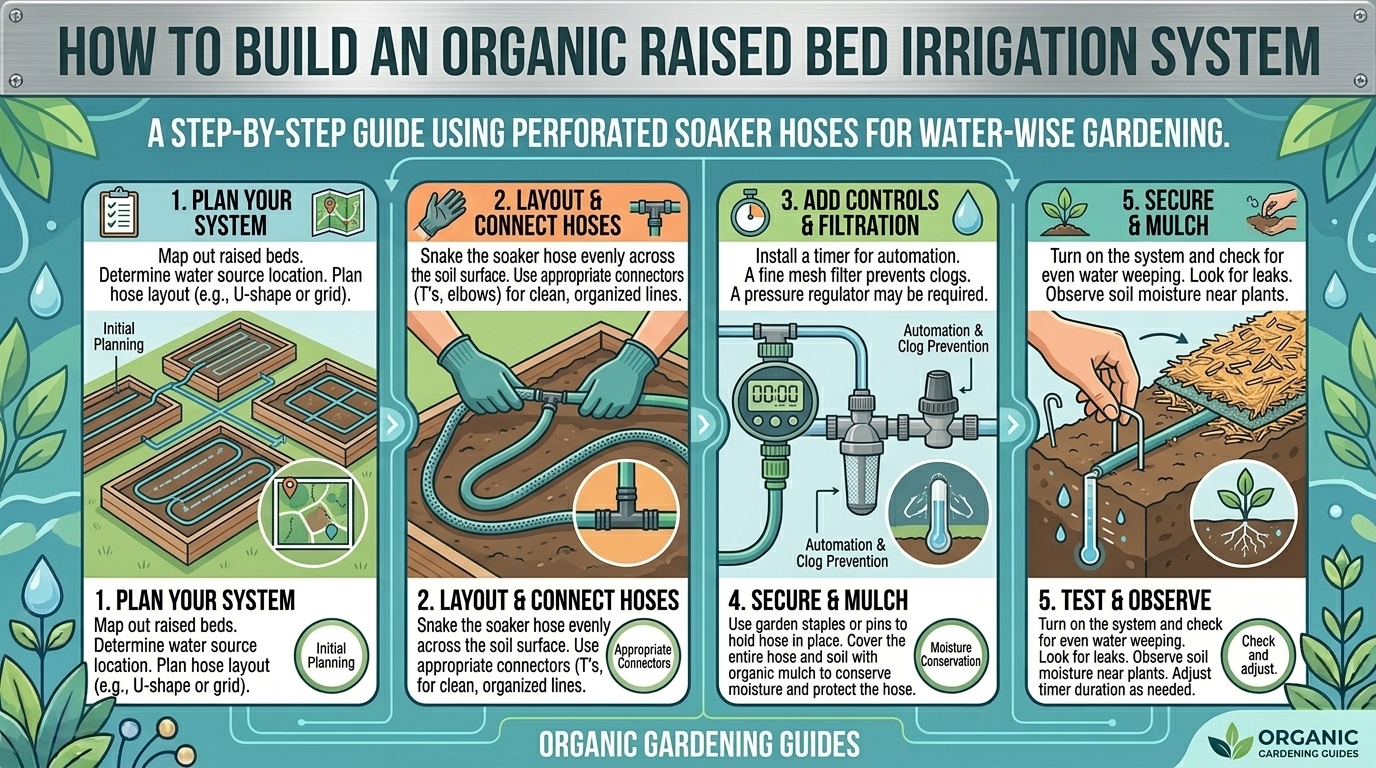
- Water Wisely: Switch from overhead sprinklers to drip irrigation orsoaker hoses. Keeping the soil surface immediately surrounding your lettuce dry drastically reduces slug activity.
Part 5: Frequently Asked Questions (FAQ)
1. Will regular table salt work as a barrier against slugs?
Never use table salt around your garden plants. While salt instantly dehydrates and kills individual slugs on contact, it will ruin your soil chemistry, raise sodium levels, and burn the delicate roots of your tender lettuce seedlings.
2. Does beer actually trap slugs, and how do I use it?
Yes, beer is a classic, highly effective trap. Yeast fermentation odors attract slugs, and they crawl into the container and drown. Sink a small shallow cup or container flush with the soil line, fill it with cheap beer, and leave an inch of rim exposed. Slugs slide in and cannot escape.
3. Can I eat lettuce after using diatomaceous earth on it?
Yes, absolutely. Food-grade diatomaceous earth is entirely non-toxic to humans and pets. However, you should give your harvested lettuce a thorough wash in cold water to rinse away any residual chalky dust before eating.
4. Why are my copper tape barriers failing after a few months?
Copper tape can oxidize over time when exposed to outdoor weather, forming a dull brown patina that reduces its electrical conductivity. Wipe your copper tape down with a cloth and mild vinegar solution once a season to restore its bright, conductive shine.
5. Are slugs active during the day if it is cloudy and raining?
Yes. On dark, heavily overcast, or rainy days—especially common during spring in Washington or autumn in New York—slugs will actively feed during daylight hours because the lack of direct sun prevents them from drying out.
6. Do raised beds stop slugs completely?
Raised beds significantly reduce slug pressure because they elevate plants away from ground-level dampness. However, slugs are surprisingly agile climbers and can easily scale wood, brick, or metal bed walls unless you install copper tape or a physical barrier on the edges.
7. Are coffee grounds effective against slugs?
Studies have shown that caffeine can act as a deterrent or toxin to slugs at high concentrations, but sprinkling wet coffee grounds around plants often provides damp hiding spots that slugs actually enjoy. It is better to use dry coffee chaff or stick to proven barriers like copper and DE.
8. What is the safest organic bait to use if barriers fail?
If physical barriers aren’t enough during heavy rainy seasons, use iron phosphate-based baits (such as Sluggo). Iron phosphate is safe to use around pets, wildlife, and children, and causes feeding slugs to crawl away underground and die harmlessly.
9. How do I protect container-grown lettuce on a balcony?
Container gardening is the easiest way to avoid slugs. Elevate your pots on pot feet or bricks to keep drainage holes clear of the ground, and wrap a ring of copper tape around the circumference of the pot.
10. Can chickens or ducks help control garden slugs?
Yes! If you keep backyard poultry, letting ducks or chickens scratch around your garden beds in the off-season or early spring is one of the most efficient organic pest control methods available. Ducks, in particular, consider slugs absolute delicacies.
Conclusion
Protecting your tender lettuce seedlings from slugs and snails does not require harsh chemical pesticides. By combining physical marvels like copper tape, abrasive rings of diatomaceous earth or pumice, and smart watering techniques, you can build an impenetrable fortress around your garden. Take control of your urban or backyard oasis today, and enjoy crisp, unblemished, homegrown salads all season long.