What Are the Best Organic Treatments for Getting Rid of Black Spot Fungus on Climbing Roses?
Welcome back to kcplants.com, your definitive digital resource for expert gardening advice, plant pathology, and organic landscape care. Whether you are training stunning climbing roses up a sunny patio trellis in California or Texas, managing urban container-grown climbing varieties on a breezy terrace in New York or San Francisco, or battling high relative humidity and damp spring showers in Washington, there is one relentless fungal disease that every rose lover dreads: Black Spot.
Few garden afflictions test a gardener’s patience quite like black spot fungus (Diplocarpon rosae). It starts subtly—a scattering of dark, purplish-black spots with feathered, irregular margins appearing on your rose’s lower leaves. Within weeks, the infection spreads upward, causing the surrounding foliage to turn bright yellow and drop prematurely. Left unchecked, a severe black spot outbreak can defoliate an entire climbing rose bush by mid-summer, severely weakening the plant, destroying its magnificent floral display, and leaving it vulnerable to winter kill.
While chemical fungicides line the shelves of traditional garden centers, many modern gardeners prefer safe, eco-friendly, and organic solutions that protect beneficial pollinators, soil microbes, and family pets. This comprehensive guide explores the biology of black spot fungus, top-tier organic treatments, preventative cultural practices, and step-by-step eradication protocols.
Part 1: Understanding the Enemy (How Black Spot Spreads)
To successfully treat and prevent black spot, you must understand how this fungal pathogen operates. Black spot is not just an aesthetic blemish; it is a living organism that relies heavily on moisture and warmth to reproduce.
The Fungal Life Cycle
- Overwintering: The fungus survives the winter months resting inside fallen, infected rose leaves on the soil surface, or as microscopic spores (conidia and ascospore structures) embedded directly in the bark of dormant canes.
- The Splash Zone: When spring arrives and temperatures warm up alongside rain or overhead watering, water droplets splash fungal spores upward from the soil onto the lowest leaves of your climbing roses.
- The Water Requirement: This is the most critical vulnerability in the fungus’s lifecycle: a black spot spore cannot germinate unless the leaf surface remains wet for a minimum of 6 to 7 hours.
- Penetration and Spread: Once the spore germinates, it penetrates the plant’s epidermal cell wall, feeding on nutrients and producing the characteristic black lesions, which soon release secondary spores to infect neighboring leaves.
Part 2: The Best Organic Treatments for Black Spot
When black spot strikes, you need fast-acting, non-toxic organic treatments that stop fungal germination in its tracks without scorching sensitive rose tissue.
1. Potassium Bicarbonate Sprays
- How It Works: Potassium bicarbonate is a powerful, safe, and organic contact fungicide. When sprayed onto rose foliage, it raises the pH surface level of the leaf. Fungi despise alkaline environments; this sudden pH shift disrupts cellular walls and instantly kills fungal spores.
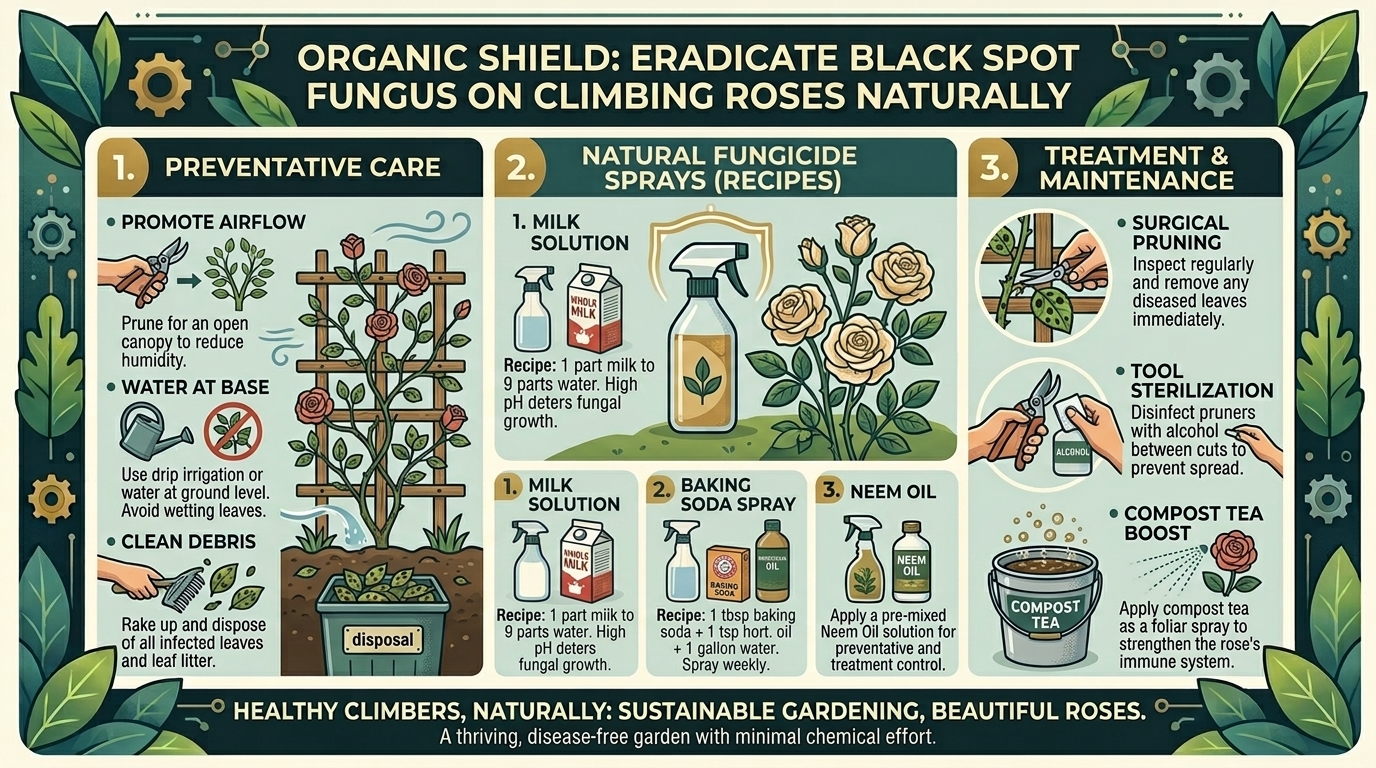
- DIY Recipe: Mix 1 tablespoon of potassium bicarbonate (baking soda works in a pinch, but potassium bicarbonate is gentler on plant tissue and provides potassium nutrient benefits), 1 teaspoon of liquid castile soap (as a surfactant/sticker), and 1 gallon of water. Spray thoroughly, covering both sides of every leaf.
2. Pure Cold-Pressed Neem Oil
- How It Works: Neem oil contains azadirachtin and clarified hydrophobic extracts of neem seed. It acts as both a suffocant for soft-bodied insects and a fungistatic agent that prevents fungal spores from germinating and establishing new infections on leaf surfaces.
- Application: Mix 2 tablespoons of cold-pressed neem oil and a few drops of mild dish soap per gallon of warm water. Apply every 7 to 14 days as a preventative or early curative treatment. Crucial warning: Never spray neem oil when temperatures exceed 85°F (29°C), as hot sun combined with oil will fry rose foliage.
3. Liquid Copper Fungicides (Organic-Approved Formulations)
- How It Works: Copper is a classic, heavy-duty organic fungicide. Copper ions disrupt enzyme systems within fungal cells, stopping spore germination dead in their tracks.
- Application: Look for copper octanoate or fixed copper sprays certified for organic gardening. Copper is particularly effective as a dormant spray applied to bare canes in early spring before new leaf buds emerge.
4. Bio-Fungicides (Bacillus subtilis or Bacillus amyloliquefaciens)
- How It Works: These commercial bio-fungicides contain living, beneficial bacterial strains that colonize the surface of rose leaves. These friendly bacteria actively outcompete fungal pathogens for space and nutrients, while producing natural lipopeptides that destroy fungal cell walls.
- Application: Safe to use throughout the growing season, even on blooming roses, with zero risk of chemical leaf burn.
Part 3: Step-by-Step Eradication and Management Protocol
Treating black spot requires a strict, multi-phase routine combining direct organic sprays with rigorous garden hygiene.
Step 1: Sanitation (The Non-Negotiable First Step)
Fungal spores overwinter in fallen debris.
- Rake and Clear: Immediately remove and destroy all fallen leaves lying beneath your climbing roses.
- Prune Infected Foliage: Inspect your climbing rose canes from bottom to top. Clip off any leaves showing active black spot lesions. Never toss infected leaves into your home compost bin, as standard compost piles rarely reach temperatures high enough to kill fungal spores; instead, bag them tightly and discard them in the trash.
Step 2: Prune for Maximum Air Circulation
Climbing roses often develop dense, tangled thickets of canes that trap high humidity and block airflow.
- Open up the center of the climbing framework by removing crossing, weak, or dead canes.
- Tie canes horizontally along your trellis or fence when possible; horizontal training stimulates lateral side-shoots to break dormancy and encourages better sun exposure and air movement through the entire canopy.
Step 3: Execute a Timed Spray Regimen
Apply your chosen organic fungicide (such as potassium bicarbonate or bio-fungicide) every 7 to 10 days, and immediately re-apply after heavy rainstorms wash off previous residue. Always spray in the early morning so that foliage dries quickly under the rising sun.
Part 4: Proactive Prevention Tips for Healthy Roses
True victory over black spot comes down to proactive environmental management:
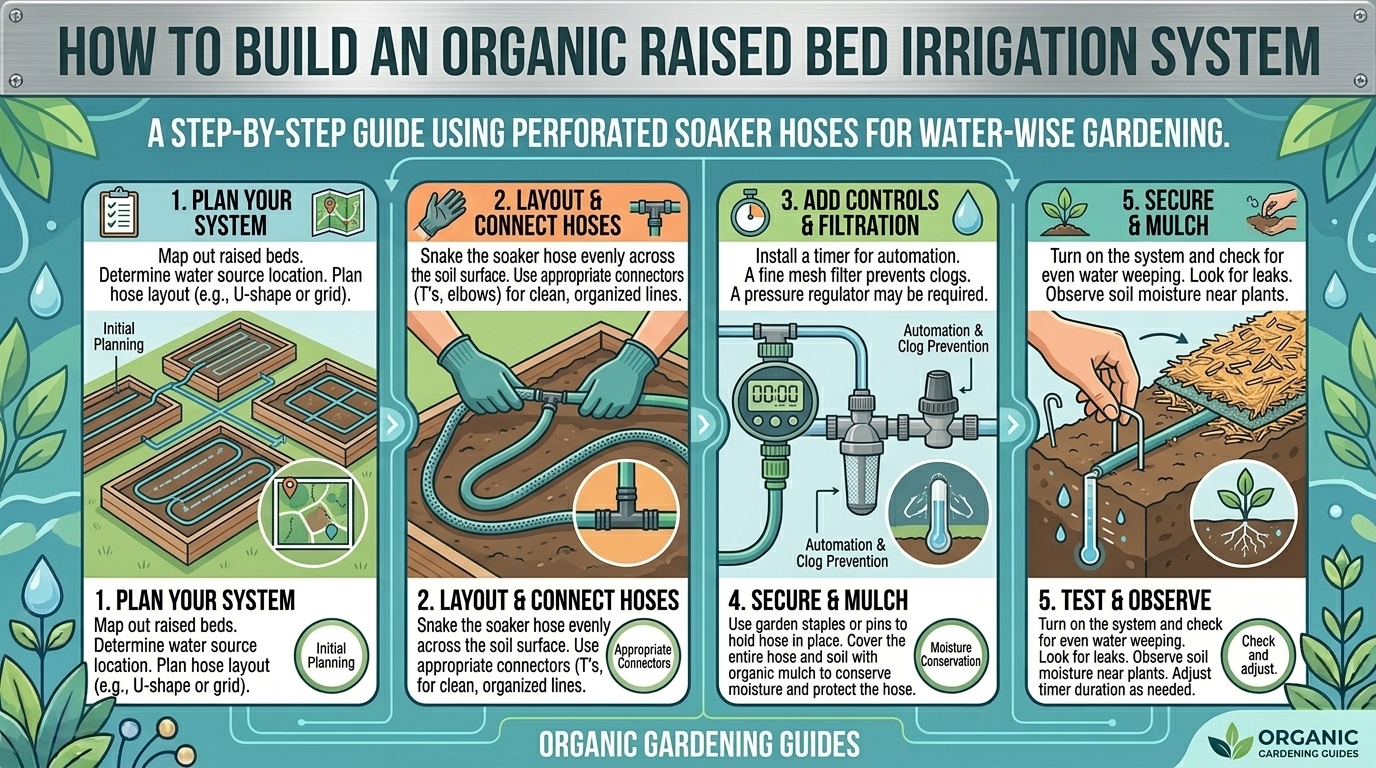
- Water at the Soil Level: Never use overhead sprinklers to water your roses. Install drip irrigation or soaker hoses at the base of the plant to keep foliage completely bone dry.
- Morning Watering Only: If you must hand-water with a hose, do it at dawn. This gives any accidental water splashed onto the leaves hours of sunlight and warmth to evaporate before nightfall, falling well short of the 6-hour wetness threshold required for spore germination.
- Plant Resistant Cultivars: If you live in high-humidity or high-rainfall regions (like Washington or parts of New York), choose modern disease-resistant climbing rose varieties (such as ‘Knock Out’ climbers, ‘Don Juan’, or disease-resistant David Austin selections) that naturally shrug off black spot.
- Provide Full Sunlight: Plant your climbing roses in locations that receive a minimum of 6 to 8 hours of direct morning sunlight. Morning sun rapidly dries dew from the leaves, starving black spot of its required moisture.
Part 5: Frequently Asked Questions (FAQ)
1. Can baking soda cure an existing black spot infection?
Baking soda (sodium bicarbonate) can alter surface pH and suppress fungal spore germination, making it a decent preventative spray. However, it cannot cure leaves that are already heavily infected with black spot. Furthermore, overuse of sodium bicarbonate can accumulate sodium in the soil and burn tender rose roots; potassium bicarbonate is always the safer, superior choice.
2. Does removing infected leaves kill the climbing rose?
No. While stripping infected leaves can temporarily make your climbing rose look bare and sparse at the base, removing diseased foliage stops millions of spores from spreading to healthy upper leaves and new canes. Roses readily push out fresh, healthy foliage once the fungal cycle is broken.
3. Why is my climbing rose getting black spot even though I sprayed it?
Fungicides are protectants and contact inhibitors, not systemic magic potions. If you spray your rose but fail to cover the undersides of leaves, or if a heavy rainstorm washes the organic soap/bicarbonate off before it sets, new spores can easily land and infect the plant. Consistent reapplication after rain is essential.
4. Can I use milk as an organic spray for black spot?
Yes! A diluted spray mixture of 1 part milk to 9 parts water sprayed onto rose foliage in full sun has been shown in studies to exhibit strong antifungal properties due to amino acids and proteins interacting with sunlight. However, it can produce a sour dairy odor in warm weather, so outdoor application requires moderation.
5. When is the best time of year to apply dormant sprays?
Apply a heavy copper fungicide or horticultural dormant oil spray in late winter or early spring just before new leaf buds swell and break. This kills overwintering fungal spores resting on the woody canes before the growing season even begins.
6. Are climbing roses more susceptible to black spot than bush roses?
Not inherently, but because climbing roses produce massive, dense frameworks of foliage and wood that are often trained against damp walls, fences, or trellises, poor air circulation in those microclimates can trap moisture longer, making them prone to fungal outbreaks if not pruned properly.
7. Will mulch spread black spot fungus to my roses?
Fresh organic mulch (like wood chips) does not harbor black spot fungus itself. However, if you leave old, diseased rose leaves on the ground beneath the mulch, splashing rain can kick up spores from the soil through the mulch. Always clear old debris before applying a fresh layer of mulch.
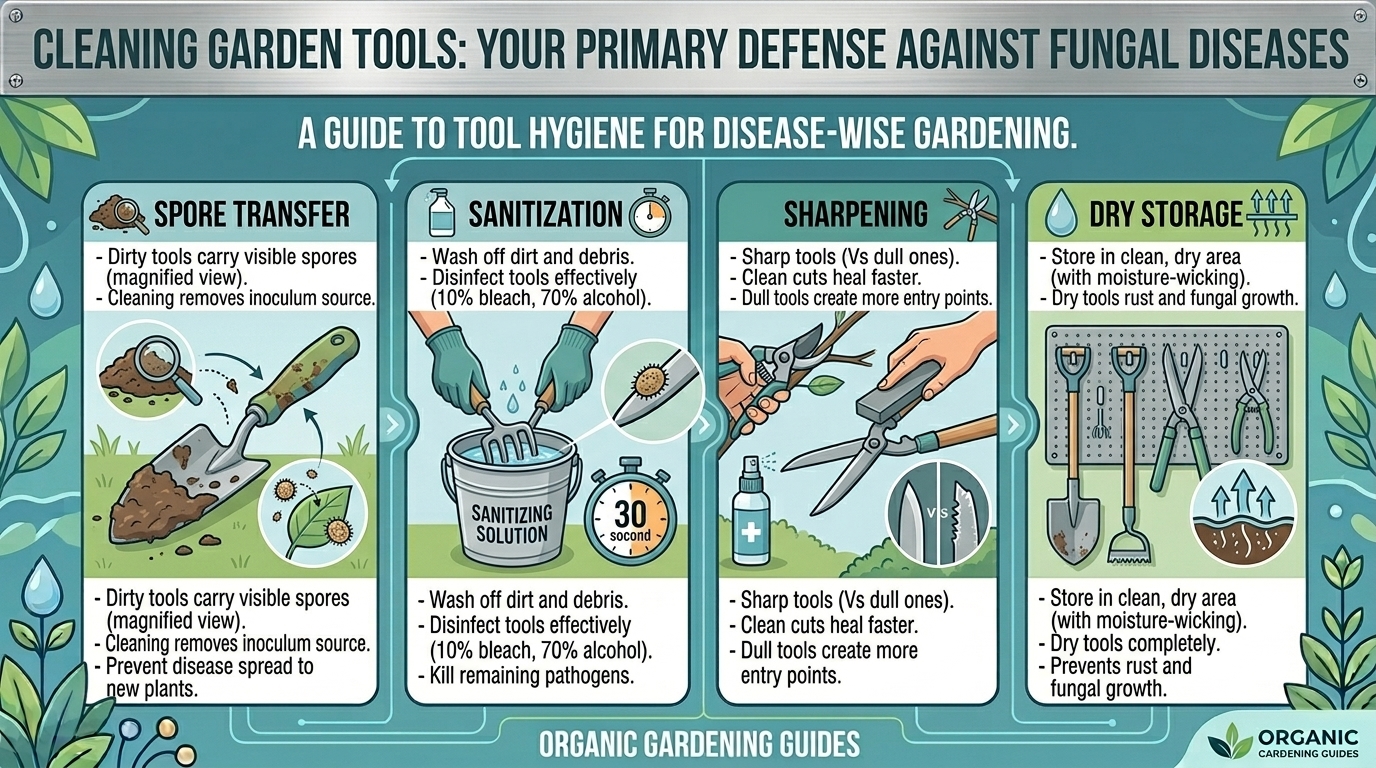
8. How do I sterilize my pruning shears between cuts?
Dip your pruners in a 10% bleach solution, 70% isopropyl alcohol, or wipe them down with disinfectant wipes for at least 30 seconds between every single cut when pruning diseased wood. This prevents you from accidentally transmitting black spot spores from infected canes to healthy canes.
9. Do yellow leaves on a rose always mean black spot?
Not always. While black spot causes characteristic dark spots surrounded by yellow halos, yellow leaves can also indicate overwatering, underwatering, nitrogen deficiency, or natural aging of older, lower foliage. Look closely for the distinct black lesions to confirm a fungal infection.
10. Can I plant companion plants near climbing roses to deter black spot?
While companion plants like garlic, chives, and marigolds help deter insect pests, no companion plant emits a chemical vapor that cures fungal plant diseases. Proper spacing, open trellising, and organic fungicide sprays remain the only proven ways to manage black spot.
Conclusion
Battling black spot fungus on climbing roses can feel like a relentless uphill battle, but you do not need to rely on harsh synthetic chemicals to keep your trellis blooming brilliantly. By practicing rigorous garden sanitation, opening up your canopy for maximum airflow, keeping foliage dry with smart watering habits, and applying safe organic treatments like potassium bicarbonate, neem oil, or bio-fungicides, you can conquer black spot and enjoy pristine, vibrant roses from coast to coast.