Every dedicated home gardener eventually faces the silent crisis of soil exhaustion. You till, plant, water, and fertilize your backyard vegetable beds season after season, only to notice a steady decline in your yields. The tomatoes are smaller, the leafy greens turn chlorotic faster, and the soil feels increasingly dense, lifeless, or powdery.
Across regions as diverse as Texas, New York, California, Washington, and San Francisco, intensive vegetable gardening takes a heavy toll on the earth. When you harvest crops, you strip away minerals and organic carbon that took years to accumulate. Left unmanaged, your backyard plots slide into nutrient bankruptcy.
For growers committed to sustainable horticulture on kcplants.com, the ultimate remedy is not found in a bag of synthetic chemical fertilizer. Instead, the true secret to restoring depleted soil lies in nature’s oldest regenerative technology: green manures and cover crops. This comprehensive guide explores the soil science behind soil depletion, the mechanics of cover cropping, regional application strategies, and a step-by-step masterclass on how to revive your vegetable plots.
1. The Anatomy of Soil Depletion in Backyard Vegetable Plots
To understand why cover crops are essential, we must first diagnose why backyard garden beds become depleted in the first place.
The Harvest Extraction Cycle
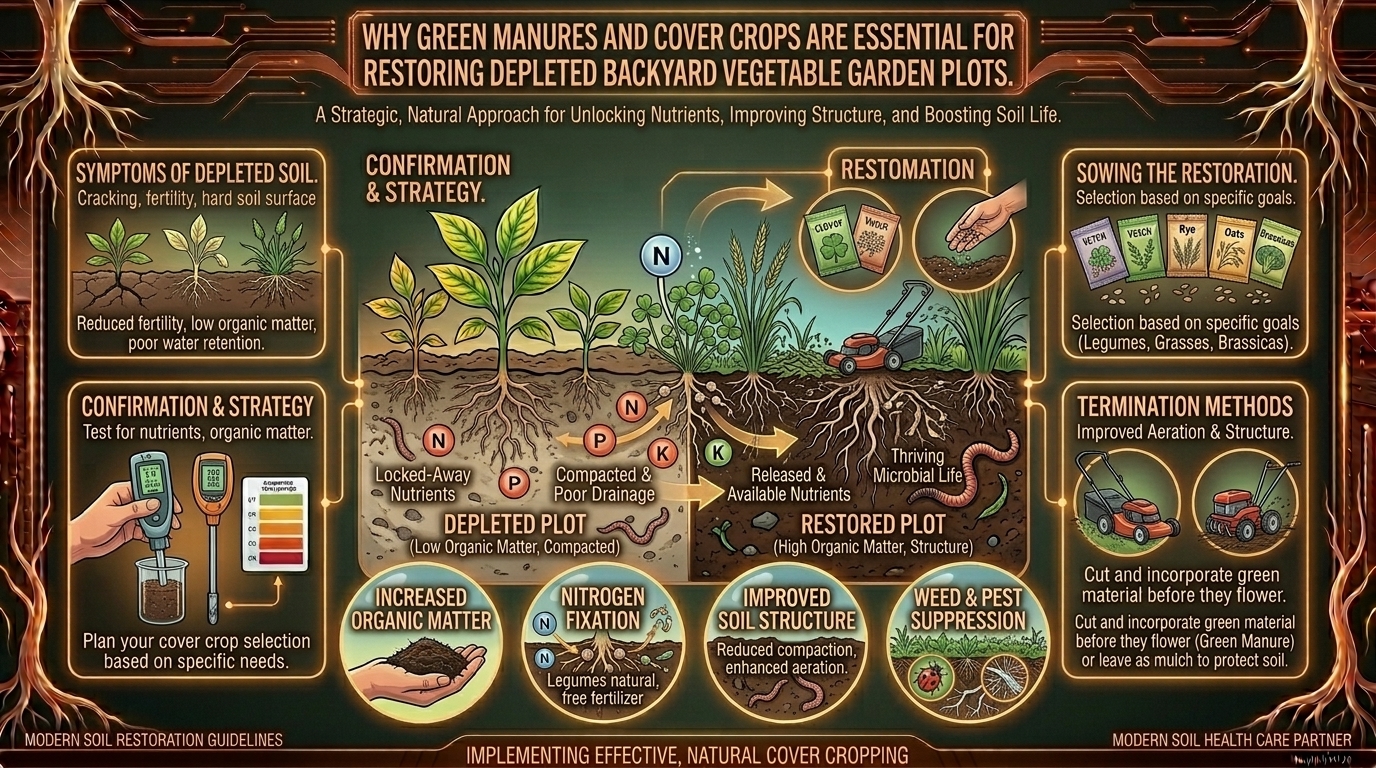
Every time you pull a heavy-yielding vegetable—such as a prize-winning tomato, a massive head of broccoli, or a basket of zucchini—out of your garden, you are permanently removing the macronutrients, trace minerals, and carbon that plant absorbed from the soil. In natural ecosystems, plants die and decompose right where they grew, recycling their nutrients back into the earth. In a backyard vegetable garden, we break this cycle by harvesting the produce and throwing away or composting the residues off-site, steadily draining the soil’s bank account.
The Destruction of Soil Structure
Traditional gardening often relies on frequent tilling. While tilling temporarily loosens the earth, it exposes buried organic matter to oxygen, causing soil microbes to burn through it rapidly. Over time, tillage shatters delicate fungal hyphae and destroys stable soil aggregates. Without aggregates, heavy rains compact the soil into a dense brick, choking off oxygen and preventing roots from exploring deep for water and nutrients.
2. What Are Green Manures and Cover Crops?
While the terms are often used interchangeably, they represent two sides of the same regenerative coin:
- Cover Crops: Plants grown primarily to cover and protect bare soil from wind erosion, water runoff, and nutrient leaching during off-seasons.
- Green Manures: Specific cover crops grown with the explicit intent of being chopped down and incorporated (or left on the surface) while still green and succulent, releasing a massive wave of organic fertility back into the soil.
Together, these living soil builders perform miracles that synthetic fertilizers can never match: they build physical structure, fix atmospheric nitrogen, mine deep subsoil minerals, and fuel the subterranean soil food web.
3. The Power Players: Legumes vs. Non-Legumes
Choosing the right cover crop depends entirely on what your depleted plot needs most:
A. Nitrogen Fixers (Legumes)
Nitrogen is the most commonly depleted nutrient in vegetable gardens. Legumes—such as hairy vetch, crimson clover, field peas, and fava beans—form a symbiotic partnership with Rhizobium soil bacteria. These bacteria pull inert nitrogen gas out of the atmosphere and convert it into bio-available plant food, storing it directly in root nodules. When you terminate the legume crop, that nitrogen is released into the soil for your next round of vegetables.
B. Biomass Builders and Nutrient Scavengers (Grains and Grasses)
Cereal grains like winter rye, annual ryegrass, and oats produce immense quantities of organic carbon (biomass). They sweep up leftover soluble nutrients in the autumn before heavy rains can leach them away.
- Winter Rye: An indestructible powerhouse that survives sub-zero winters, growing a massive root network that physically shatters compacted subsoil.
- Daikon Radish (Tillage Radish): Features a thick, fleshy taproot that plunges deep into heavy clay soils. When winter freezes kill the radish, it rots rapidly underground, leaving large vertical shafts that aerate the soil and improve drainage.
4. Regional Adaptations Across the U.S.
Soil restoration strategies must be tailored to your local climate and seasonal weather patterns:
Texas
- Climate Challenge: Scorching summers, heavy alkaline clay soils, and erratic winter temperatures.
- Restoration Strategy: Plant heat-tolerant cowpeas or sunn hemp as a summer cover crop during dormant mid-summer months to build organic matter. In autumn, switch to cold-hardy crimson clover and oats to loosen heavy clay and protect soil through mild winters.
New York & Washington
- Climate Challenge: Freezing winters, heavy snowpacks, and high spring rainfall that leaches nutrients.
- Restoration Strategy: Sow winter rye and hairy vetch in September. These cold-hardy species withstand harsh northern winters, resume aggressive growth in early spring, and provide a massive injection of nitrogen and biomass before spring planting.
California & San Francisco
- Climate Challenge: Mediterranean climate with wet winters, dry summers, and diverse urban microclimates.
- Restoration Strategy: Plant a lush mix of bell beans (fava beans), field peas, and oats right before the autumn rains arrive. The winter rains trigger vigorous growth, creating lush green manure to chop down ahead of spring vegetable planting.
5. Step-by-Step Masterclass: Restoring a Depleted Plot
Follow this chronological roadmap to bring a exhausted, low-yielding vegetable garden back to life using cover crops:
Step 1: Assess and Clean the Plot
Clear out diseased plant debris, old roots, and persistent weeds from your depleted plot. Gently rake the surface to create loose seedbed conditions, but avoid deep tilling, which accelerates organic matter loss.
Step 2: Select a Tailored Cover Crop Blend
For a depleted plot, a multi-species mix is superior to a single crop. Combine a legume (to fix nitrogen), a grain (to build carbon biomass), and a taproot (to break up compaction).
Step 3: Broadcast and Establish
Broadcast your seeds evenly across the garden bed. Rake them lightly into the top quarter-inch of soil so birds cannot feast on them. Water the bed thoroughly to trigger germination. Once established, let the cover crop grow undisturbed through the off-season.
Step 4: Termination (The Green Manure Magic)
Approximately 3 to 4 weeks before you plan to plant your spring vegetable crops, you must terminate your cover crop.
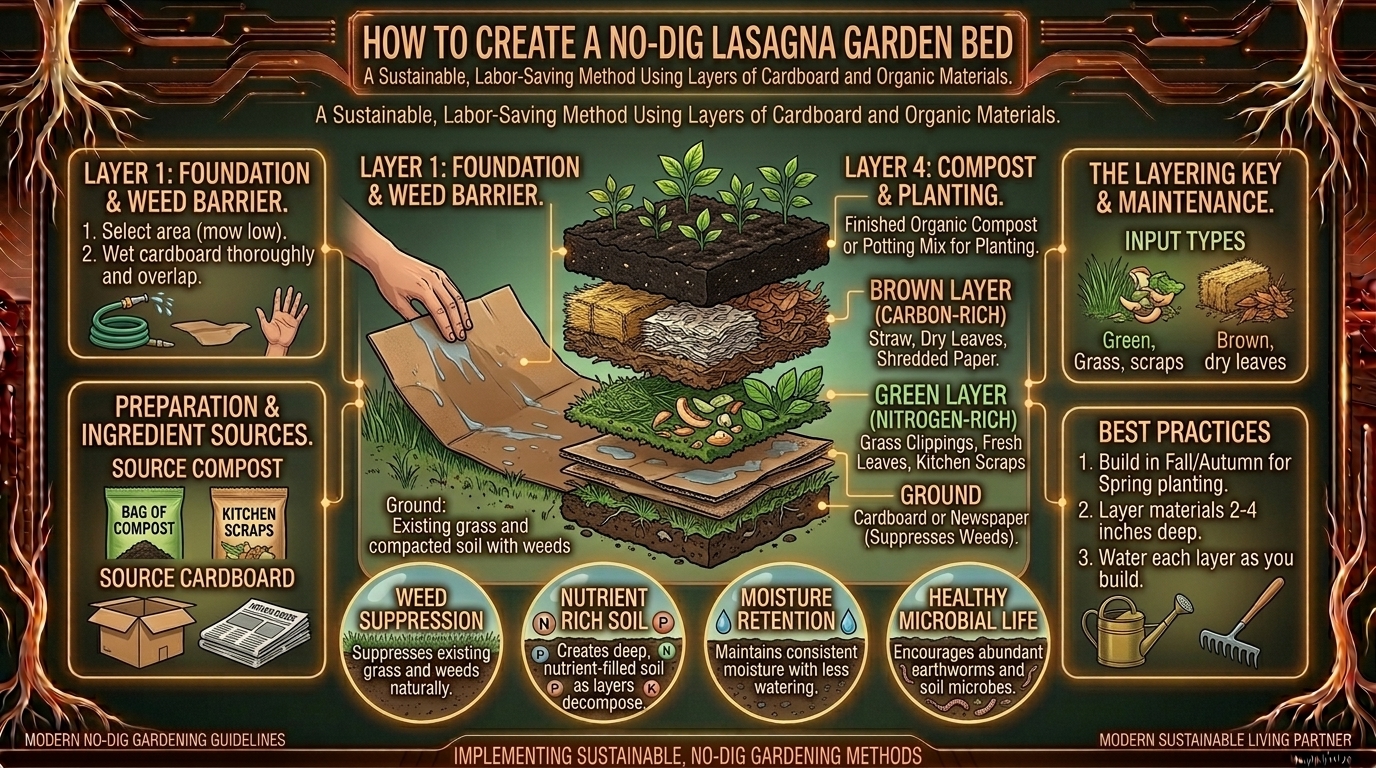
- Cut the plants down to ground level using a weed whacker, shears, or a sharp spade while they are still tender and before they set seed.
- Leave the chopped foliage on the surface as a nutrient-rich mulch (no-till method) or turn it into the top few inches of soil.
Step 5: The Planting Window
Wait 2 to 3 weeks after termination for soil microbes to break down the green manure. Once the residue decomposes into rich, dark humus, your soil is fully restored, brimming with active biology, and primed to produce a record-breaking vegetable harvest!
6. Comprehensive FAQ: Everything You Need to Know
1. Can cover crops completely replace commercial fertilizers in a vegetable garden?
Over time, a robust cover-cropping program can supply nearly all the nitrogen and organic matter your vegetables require, dramatically reducing or eliminating the need for synthetic fertilizers. However, certain heavy-feeding minerals (like phosphorus or potassium) may occasionally need supplemental organic amendments if your native soil is severely deficient.
2. What happens if I let my cover crop grow too long in the spring?
If you let cover crops (especially cereal grains like winter rye) mature past the flowering stage, their stems become woody, fibrous, and difficult to break down. Woody residues tie up soil nitrogen temporarily as microbes struggle to digest them. Always terminate your cover crops while they are tender and vegetative.
3. Can I use cover crops in small raised garden beds?
Yes! Cover crops excel in raised beds. For small spaces, choose manageable, non-woody species like crimson clover, field peas, or oats rather than towering grains or aggressive deep taproots, making spring termination easy with hand pruners.
4. Do I need to till my cover crop into the soil, or can I practice no-till?
You do not have to till. Many regenerative gardeners practice “no-till cover cropping” by crimping, tarping, or chopping the cover crop to kill it, leaving the root systems intact underground to decompose naturally while planting directly into the resulting mulch blanket.
5. Will cover crops attract pests or rodents to my backyard garden?
A healthy stand of living green cover crops does not attract household pests. In fact, by maintaining living roots in the soil, they attract beneficial predatory insects and earthworms while discouraging subterranean pests that thrive in bare, lifeless dirt.
6. How long before spring planting should I terminate my cover crop?
You should terminate your cover crops roughly 3 to 4 weeks before planting your spring vegetable crops. This gives soil microbes enough time to digest the green manure and release locked-up nutrients without competing with your new seedlings for available nitrogen.
7. What is the single best cover crop for fixing nitrogen?
Hairy vetch and crimson clover are widely considered the gold standards for nitrogen fixation. Their roots host billions of rhizobial bacteria that pump astonishing amounts of natural nitrogen directly into the soil.
8. Can I plant cover crops in the middle of summer?
Yes! In regions with warm summers (like Texas and inland California), you can plant warm-season cover crops like buckwheat, cowpeas, or sudangrass during a mid-summer fallow period to suppress weeds and build organic matter between your spring and autumn crops.
9. Will cover crop seeds sprout and become weeds in my vegetable garden?
As long as you terminate your cover crops before they flower and set mature seeds, they will not become weeds. They will simply die, break down, and enrich your soil.
10. How many years does it take to fully restore a severely depleted garden plot?
While you will notice a dramatic improvement in soil texture and plant vigor after just one season of cover cropping, heavily depleted soils typically require 2 to 3 consecutive seasons of strategic cover cropping to fully restore deep biological vitality and structural integrity.
Conclusion
Restoring a depleted backyard vegetable garden plot does not require harsh chemicals or expensive synthetic inputs. By harnessing the biological power of green manures and cover crops, you work in harmony with nature to rebuild soil structure, fix natural nitrogen, and reactivate the dormant food web beneath your feet.