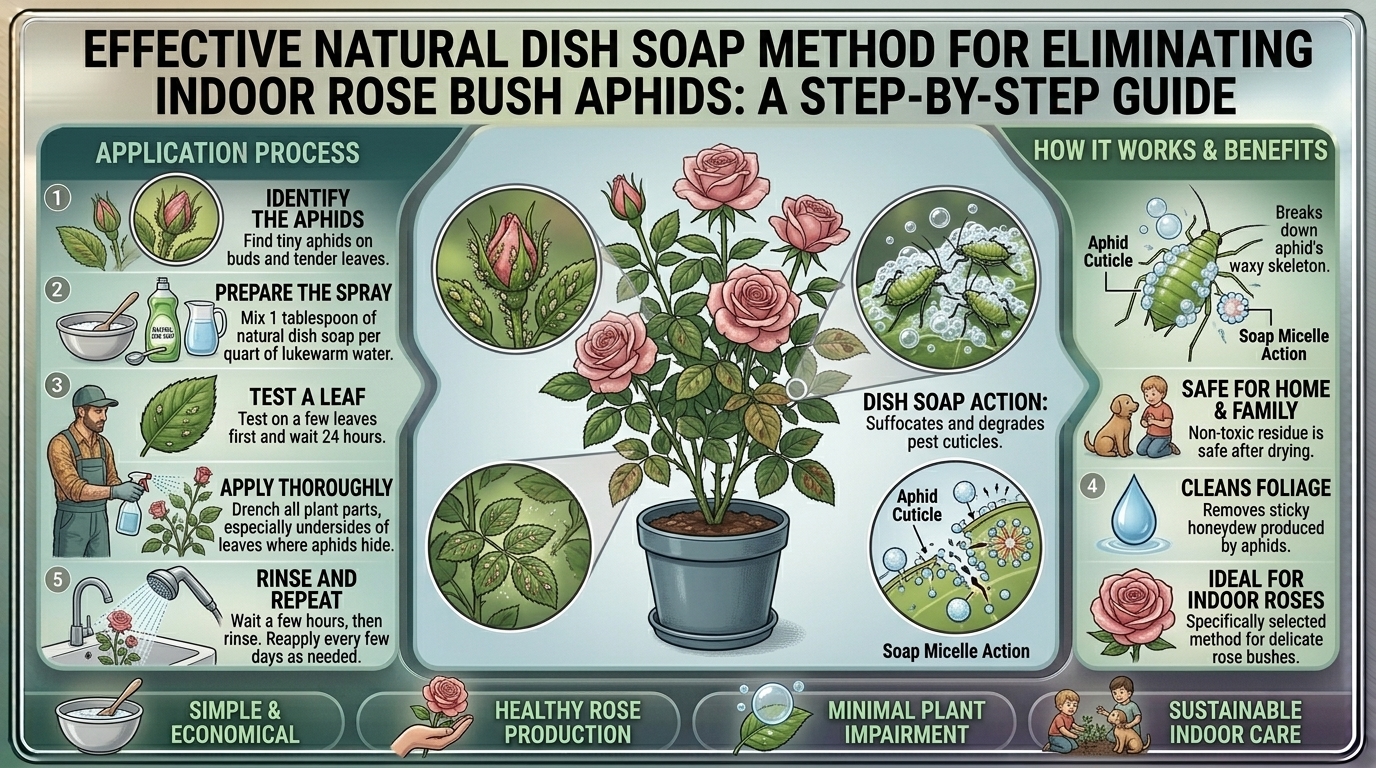
Every backyard gardener knows the sinking feeling of stepping out to inspect their prized vegetable garden, fruit trees, or floral borders, only to discover clusters of tiny, pear-shaped insects swarming over tender new stem tips. Whether they are green, black, pink, or yellow, aphids are among the most persistent and destructive sap-sucking pests in the horticultural world.
When aphid populations explode, they secrete sticky “honeydew,” distort delicate leaves, stunt flower buds, and transmit destructive plant viruses. For decades, the conventional reflex was to grab a bottle of synthetic chemical insecticide and blast the garden. Today, modern regenerative gardeners know that chemical sprays destroy beneficial soil life, kill pollinators like bees, and trigger chemical-resistant super-pests.
Instead of turning to toxic chemicals, experienced organic gardeners rely on nature’s most iconic beneficial insect: the predatory ladybug (ladybird beetle).
Whether you are managing intense garden heat in Texas, balancing urban courtyard containers in San Francisco, tackling suburban plots in New York, or working with fertile soils across Washington State and California, this comprehensive guide explores why introducing ladybugs to your backyard is the ultimate natural weapon for eradicating aphid infestations.
1. The Natural Predator: Why Ladybugs Are Aphid-Eating Machines
To appreciate why ladybugs are legendary in organic pest control, you must understand their voracious appetite and life cycle.
A Consuming Appetite
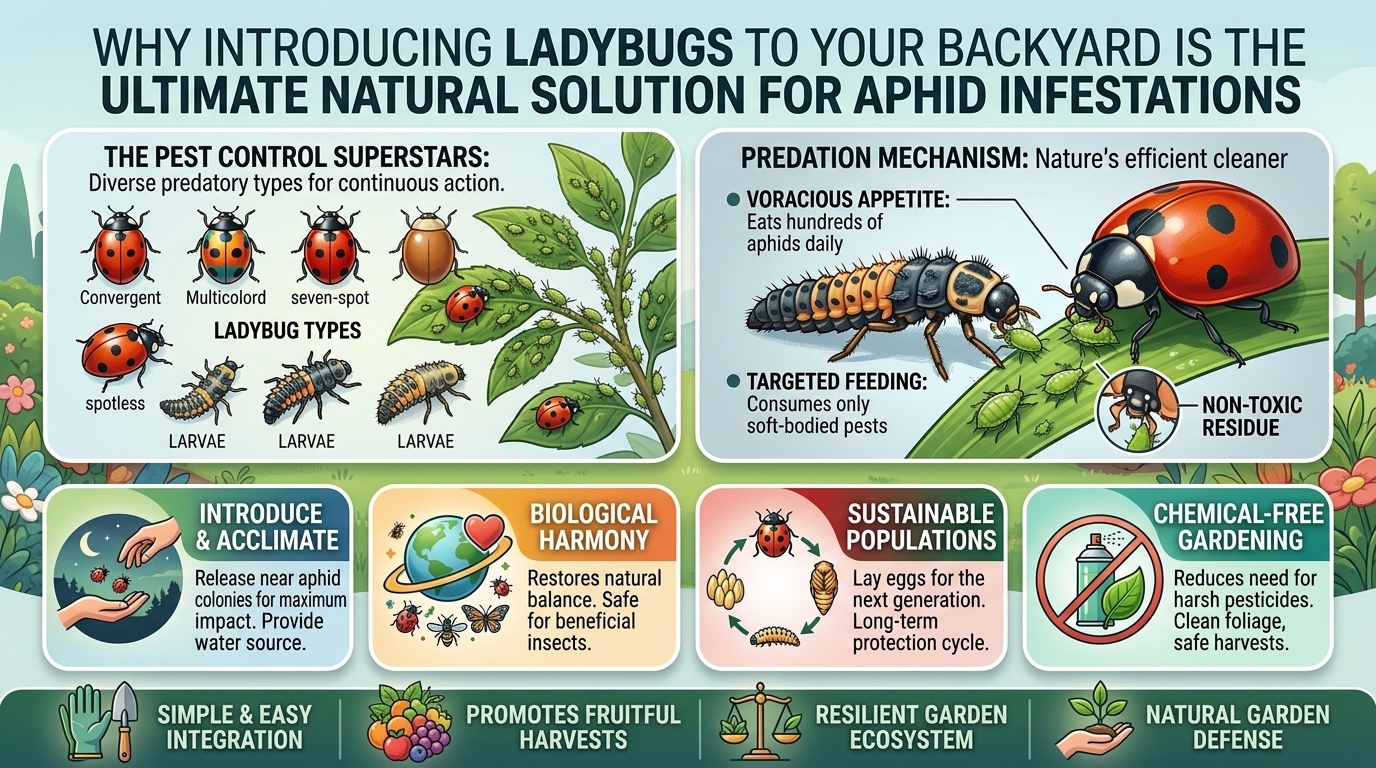
While adult ladybugs are charming garden visitors, their larval stage is where the real work happens. An adult ladybug can consume up to 50 aphids a day, but a single ladybug larva—which resembles a tiny, spiky, black-and-orange alligator—can devour up to 400 aphids before pupating.
- Biological Efficiency: Ladybugs are non-selective predatory specialists. Their entire biological drive is locked onto hunting soft-bodied pests like aphids, scale insects, whiteflies, and spider mites.
2. The Step-by-Step Guide to Releasing Ladybugs Successfully
Simply purchasing a bag of ladybugs and tossing them into your yard will not solve your aphid problem. If released incorrectly, 90% of the beetles will simply fly away to your neighbor’s yard within an hour. You must follow a strategic release protocol.
[ Strategic Ladybug Release Protocol ]
       │
       ├──> Step 1: Purchase Healthy, Dormant Beetles
       │
       ├──> Step 2: Store in the Refrigerator (Keep Calm)
       │
       ├──> Step 3: Evening Hydration & Mist Pre-Treatment
       │
       └──> Step 4: Release at Dusk Directly on Aphid Colonies
Step 1: Purchase and Storage
Purchase live ladybugs from a reputable nursery or online supplier. When your mesh bag arrives, keep them cool and calm. Store them in your refrigerator (35°F to 40°F) for a few hours before release. Cold temperatures keep their metabolic rate low, preventing them from exhausting their energy stores while trapped in packaging.
Step 2: The Golden Rule — Release at Dusk
Never release ladybugs at noon in the bright sun. Bright daylight combined with flight readiness will trigger immediate mass dispersal. Always release ladybugs at dusk or on an overcast, cool day.
Step 3: Pre-Water and Hydrate
Ladybugs are desperately thirsty when they emerge from refrigeration packaging. Spray your aphid-infested plants thoroughly with water right before releasing the beetles. The moisture provides immediate hydration, anchoring them to your plants so they stay to drink and hunt rather than flying away.
Step 4: Direct Placement
Instead of tossing the bag into the air, open the mesh sack and gently deposit clusters of ladybugs directly onto the stems and leaves heavily infested with aphids. Give them an immediate food source under their feet, and they will go straight to work.
3. Regional Realities: Managing Ladybugs Across U.S. Climates
Regional weather and geographic environments shape how ladybugs behave in your backyard:
California & San Francisco
- Climate Challenge: Coastal San Francisco offers mild maritime weather, but dry inland valleys and urban microclimates can cause ladybugs to wander off if water is scarce.
- Release Strategy: Maintain moist garden microclimates using drip irrigation and shallow bee-watering dishes so resident ladybugs have access to fresh water sources.
Texas
- Climate Challenge: Blistering summer heat causes ladybugs to estivate (go dormant) or fly off in search of cooler shade.
- Release Strategy: Release ladybugs early in spring before peak summer temperatures arrive, or focus releases in shaded understories and dense vegetable canopies.
New York
- Climate Challenge: Humid summer rainstorms and fluctuating spring weather can dislodge newly released insects.
- Release Strategy: Time your ladybug releases during stable, dry evening weather windows following a spring rain to maximize aphid predation on roses and fruit trees.
Washington State
- Climate Challenge: Cool, damp spring weather slows insect activity, requiring careful timing to match emerging aphid hatches.
- Release Strategy: Release ladybugs in sheltered backyard greenhouses or south-facing raised bed zones where ambient temperatures remain warm enough to keep beetles active.
4. Frequently Asked Questions (FAQ)
1. Will purchased ladybugs fly away immediately after I release them?
Some dispersal is natural, but you can minimize it by releasing them at dusk, pre-watering your plants so they are thirsty, and placing them directly onto heavy aphid colonies where food is abundant.
2. Do ladybugs bite humans?
Ladybugs do not possess stingers and are completely harmless to humans and pets. Very rarely, an adult beetle might pinch human skin with its tiny mandibles if it mistakes sweat for moisture, but it does not break the skin or inject venom.
3. How many ladybugs do I need for an average backyard garden?
A standard mesh bag containing 1,500 ladybugs is ideal for an average residential backyard garden or several raised vegetable beds. For large commercial orchards or expansive acreage, professional growers release tens of thousands.
4. Can I feed ladybugs sugar water or milk to keep them around?
While some gardeners spray diluted sugar water or soda water to make plant surfaces sticky and trap/feed insects, it is generally discouraged. Sticky residue can attract ants (which actually protect aphids to harvest their honeydew) and promote fungal mold. Rely on natural water mists instead.
5. Why do ants protect aphids from ladybugs?
Ants farm aphids like dairy cows, stroking them to harvest their sugary honeydew excretions. In exchange, aggressive ants will attack and try to drive ladybugs away from aphid colonies. If you have an ant problem on your plants, control the ants first before releasing ladybugs.
6. Will ladybugs eat my vegetable crops or flowers?
No. Adult and larval ladybugs are strict carnivores. They do not feed on plant tissue, leaves, roots, or fruit. Their sole diet consists of soft-bodied garden pests.
7. How long will released ladybugs stay in my yard?
Ladybugs are wild beneficial insects, not domestic pets. Once they completely clean out your aphid infestation, most will naturally fly away in search of new hunting grounds elsewhere. You can encourage them to linger longer by providing flowering umbel herbs like dill, fennel, and cilantro.
8. Can I store ladybugs in the freezer if I can’t release them right away?
Never freeze ladybugs! Freezing temperatures will kill them instantly. Always store them in the standard refrigerator crisper drawer (35°F to 40°F) for no more than 3 to 5 days before release.
9. Are native ladybugs different from purchased convergent lady beetles?
Yes. Most commercial insectaries sell the North American Hippodamia convergens (convergent lady beetle), harvested from mountain aggregation sites. While highly effective, they have a natural instinct to migrate after release, which is why proper dusk release techniques are essential.
10. How can I create a permanent ladybug sanctuary in my backyard?
To turn transient ladybugs into permanent backyard residents, avoid broad-spectrum chemical insecticides entirely, provide shallow watering stations with pebbles, and plant diverse flowering companion plants (like sweet alyssum, yarrow, and cosmos) that supply nectar and pollen alternatives when pest populations are low.
Conclusion
Introducing ladybugs to your backyard is the ultimate, time-tested natural solution for conquering destructive aphid infestations without resorting to toxic chemical sprays. By harnessing the voracious appetites of these iconic spotted beetles and their spiky larvae, you restore biological balance to your garden ecosystem.