Why Letting Potting Soil Dry Out Completely Between Waterings Prevents Fungus Gnats Indoors
If you have ever walked past your indoor houseplants only to be swarmed by a cloud of tiny, annoying flying bugs buzzing around your living room, you are dealing with one of the most common and frustrating pests in indoor gardening: fungus gnats.
Whether you are maintaining an urban plant collection in a San Francisco high-rise, an apartment in New York, a sunlit home in Texas, or vibrant residences across California and Washington, fungus gnats can quickly turn your peaceful indoor oasis into an annoying nuisance. While adult gnats do not bite humans or damage mature plant foliage, their presence indicates an underlying soil management issue that can severely harm your plants.
The single most effective, natural, and foolproof way to eliminate and prevent fungus gnats is deceptively simple: letting your potting soil dry out completely between waterings.
Brought to you by kcplants.com, this comprehensive, expert-led masterclass explores the fascinating life cycle of fungus gnats, explains why constant soil moisture is their ultimate breeding ground, and provides actionable strategies to keep your indoor jungle completely bug-free.
Part I: Understanding the Fungus Gnat Life Cycle
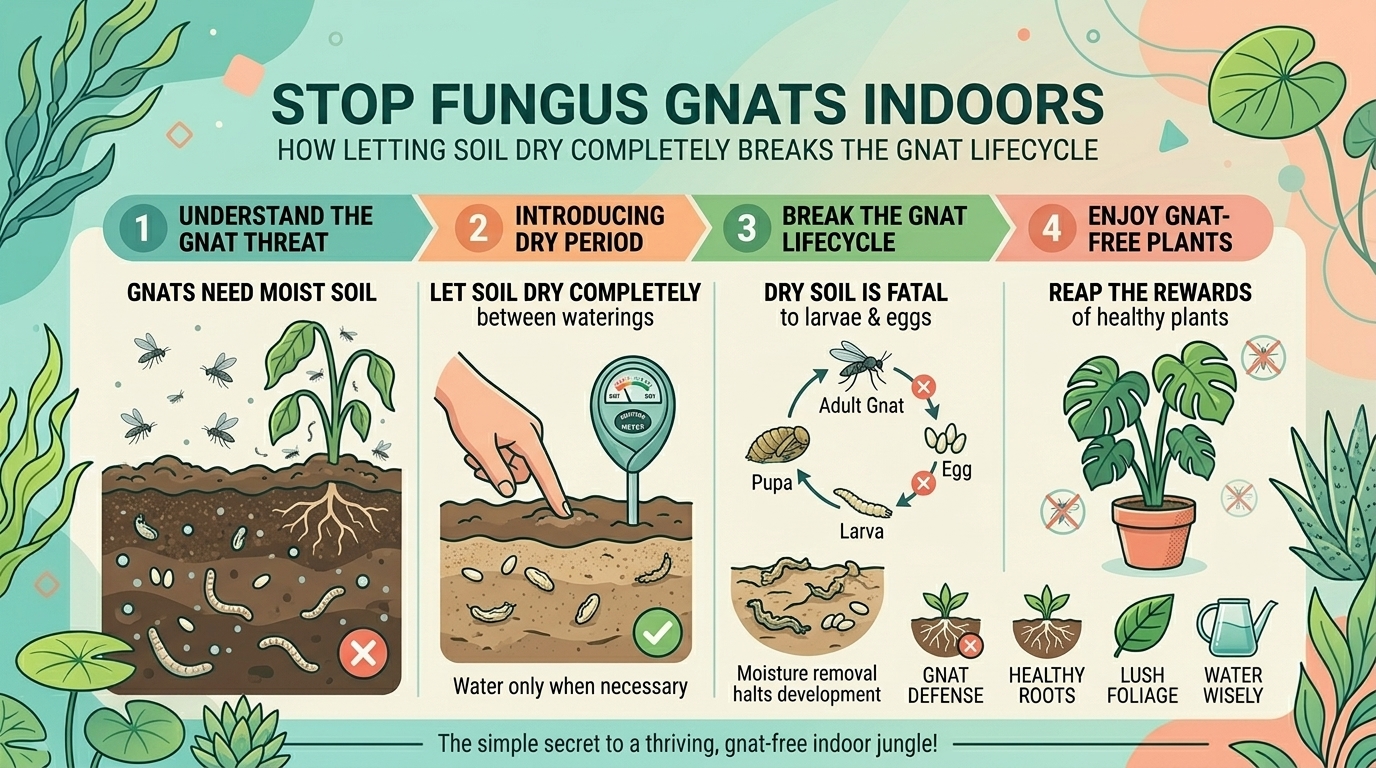
To defeat an enemy, you must first understand how it operates. Fungus gnats (Sciaridae family) are tiny, delicate, dark-colored flying insects that look like miniature mosquitoes. However, their lifecycle holds the key to total eradication:
- The Adult Stage (The Nuisance): Adult fungus gnats have very short lifespans (about a week). Their primary goal is not to eat your plants, but to find damp, organic-rich potting soil to lay eggs. A single female can lay up to 200 eggs in her lifetime.
- The Egg and Larval Stage (The Real Damage): Within a few days, eggs hatch into translucent, worm-like larvae with distinct black heads. This is where the damage happens. Fungus gnat larvae feed on decomposing organic matter, fungi, and algae in the soil—but when their population explodes or food is scarce, they ruthlessly chew on tender young plant roots and root hairs.
- The Pupa Stage: After feeding for roughly two weeks, the larvae spin silk cocoons in the soil to pupate before emerging as winged adults, restarting the entire cycle.
Part II: Why Constant Moisture Fuels Infestations
Why do fungus gnats thrive indoors, and what role does your watering habit play?
- The Attraction to Dampness: Fungus gnat females are genetically programmed to seek out high moisture and decaying organic material. If the top 2 to 3 inches of your potting soil remain perpetually wet, soggy, or damp, it acts as a beacon, signaling that conditions are perfect for egg-laying.
- The Fungal Food Source: Constantly damp soil breeds microscopic fungi, molds, and algae. This microscopic layer of fungi serves as a gourmet buffet for newly hatched gnat larvae.
- The Dry Soil Solution: When you allow your potting soil to dry out completely between waterings, two vital things happen:
- Desiccation of Eggs and Larva: Gnat eggs and fragile first-stage larvae require high moisture to survive. Devoid of water, they dry up and perish within hours.
- Disruption of the Food Chain: Without moisture, soil fungi and algae die off, starving any surviving larvae of their primary food source.
Part III: Step-by-Step Protocol to Dry Out Soil Safely
Transitioning your watering habits to combat fungus gnats requires a structured approach that targets pests without stressing your houseplants:
Step 1: Switch from Calendar Watering to the “Finger Test”
- Never water your plants on a rigid calendar schedule (e.g., every Tuesday). Instead, push your index finger 2 inches deep into the soil. If the soil feels damp or cool, do not water. Only water when the soil feels completely dry and crumbly down to your knuckle.
Step 2: Bottom Watering for Top-Dry Soil
- To keep the upper surface of your soil bone-dry (discouraging adult gnats from laying eggs) while still nourishing your plant, try bottom watering. Place your nursery pot in a basin of water for 20 minutes. The root ball drinks moisture upward via capillary action, leaving the top 2 inches of soil completely dry and inhospitable to gnats.
Step 3: Layer with Gnat Barrier Toppings
- Add a 1/2-inch layer of horticultural sand, pumice, or expanded clay pebbles across the top of your soil. Sharp horticultural sand creates an abrasive barrier that adult gnats cannot burrow through to lay eggs.
Part IV: Regional Climate Factors and Indoor Moisture
Depending on where you live across our key regions, indoor humidity and heating play a massive role in soil drying times:
- San Francisco & New York: Urban apartments often feature poor ventilation or fluctuating indoor heating that keeps soil damp longer than expected. Ensure your rooms have adequate air circulation using oscillating fans to speed up surface soil drying.
- Texas, California, & Washington: Expansive sunrooms in Texas and California naturally dry out potting soil much faster due to warmth and light, making fungus gnat prevention much easier. In Washington’s damp winter climate, lower ambient evaporation rates mean soil stays wet longer—requiring extra vigilance and wider watering intervals.
Part V: Pro Tips for Total Gnat Eradication
- Yellow Sticky Traps: Place yellow sticky stake cards directly into your potted plants. Adult gnats are naturally attracted to the bright yellow color and become trapped instantly, stopping the breeding cycle.
- Introduce Beneficial Nematodes: For severe infestations, water your soil with Steinernema feltiae—microscopic, beneficial roundworms that actively hunt down and consume fungus gnat larvae in the soil without harming your plants.
10 Frequently Asked Questions (FAQ)
1. Do fungus gnats harm my indoor houseplants?
Adult gnats do not harm plants, but their larvae feed on organic matter and delicate root hairs, which can stunt growth, especially in young seedlings and smaller potted plants.
2. Why does letting soil dry out kill fungus gnats?
Fungus gnat eggs and larvae require continuous moisture and high humidity to survive. Allowing the top 2 to 3 inches of soil to dry out completely desiccates and kills them.
3. How deep should the soil dry before I water my plants?
For most common houseplants, let the top 2 inches of soil dry out completely before giving the plant another thorough drink.
4. Can I use hydrogen peroxide to kill fungus gnat larvae in the soil?
Yes! Mix 1 part 3% hydrogen peroxide with 4 parts water and pour it over the soil. It will fizz on contact, safely killing larvae on contact before turning into harmless water and oxygen.
5. Why do my plants get fungus gnats even when I don’t overwater?
Fungus gnats are often introduced via contaminated bags of commercial potting soil stored outdoors at garden centers, or flying in through open windows.
6. Are yellow sticky traps effective against fungus gnats?
Yes, they are fantastic for catching and eliminating flying adult gnats, but you must combine them with soil-drying or larvicides to eliminate the larvae underground.
7. What is bottom watering and how does it prevent gnats?
Bottom watering involves placing your pot in a tray of water so roots absorb moisture upward. This leaves the topsoil completely dry, preventing adult gnats from laying eggs.
8. Are commercial potting soils pre-infested with fungus gnats?
Sometimes. Cheap or improperly stored bags of soil can contain dormant gnat eggs. To prevent this, store soil bags tightly sealed or bake small batches of soil to sterilize them.
9. Can I use mosquito dunks or bits to kill gnat larvae?
Yes! Bacillus thuringiensis israelensis (BTI), found in Mosquito Dunks, contains natural bacteria that kill fungus gnat larvae when watered into the soil. It is 100% safe for plants and pets.
10. How long does it take to completely get rid of a fungus gnat infestation?
With a strict routine of letting soil dry out, using yellow sticky traps, and applying BTI or hydrogen peroxide, you can break the lifecycle and clear an infestation within 2 to 3 weeks.
Conclusion
Fungus gnats are an annoying pest, but eradicating them doesn’t require toxic chemical sprays. By understanding their life cycle and mastering the simple practice of letting your potting soil dry out completely between waterings, you strip away their breeding grounds and food sources naturally. Visit kcplants.com regularly for expert plant care guides, pest prevention tips, and inspiration to help your indoor jungle thrive!