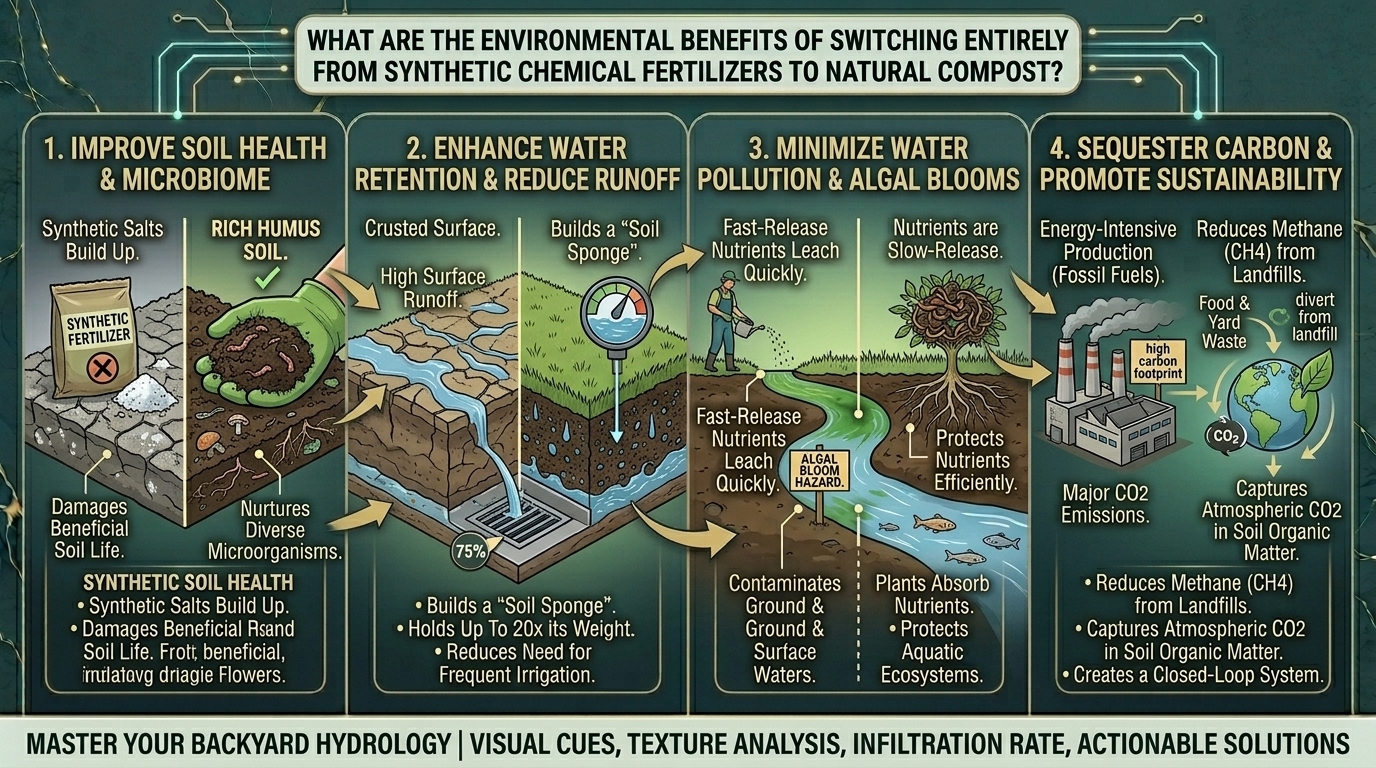
What Are the Environmental Benefits of Switching Entirely from Synthetic Chemical Fertilizers to Natural Compost?
- Author: KC Plants Editorial Team
- Published For Gardeners & Landscapers In: Texas, New York, California, Washington, and San Francisco
- Estimated Read Time: 25-30 Minutes (Definitive Environmental Masterclass)
Introduction: The Modern Ecological Crossroads of Soil Management
Modern horticulture and agriculture stand at a profound crossroads. For decades, the mainstream approach to plant nutrition relied heavily on synthetic, petroleum-derived chemical fertilizers. Promising rapid growth and high yields through instant, highly concentrated doses of nitrogen, phosphorus, and potassium (NPK), these chemical inputs became the default choice for commercial agriculture and residential gardening alike.
However, a heavy environmental price tag has accompanied this convenience. The large-scale manufacturing and widespread application of synthetic fertilizers have triggered widespread ecological degradation, including massive aquatic dead zones, accelerated greenhouse gas emissions, and the steady sterilization of vital soil microbiomes.
Enter natural compost—frequently celebrated by ecologists as “black gold”. Switching entirely from synthetic chemical formulas to natural compost is far more than a simple gardening trend; it is a regenerative paradigm shift. By returning recycled organic matter back to the earth, gardeners can repair damaged ecosystems, lock away atmospheric carbon, and foster living soils.
This comprehensive, data-driven guide explores the profound environmental benefits of making a complete transition to natural compost, examining how this shift impacts everything from local watersheds to global climate systems.
Chapter 1: The Manufacturing and Carbon Footprint Dilemma of Synthetics
To understand the environmental advantages of compost, we must first look at the industrial lifecycle of synthetic fertilizers.
1. The Energy-Intensive Haber-Bosch Process
Almost all synthetic nitrogen fertilizers are manufactured using the Haber-Bosch process, a chemical breakthrough developed in the early 20th century that extracts inert nitrogen gas from the atmosphere and combines it with hydrogen under extreme heat and pressure.
- Fossil Fuel Dependency: The hydrogen required for this reaction is typically derived from natural gas or coal. Consequently, the production of synthetic nitrogen is responsible for a massive percentage of global fossil fuel consumption and carbon dioxide ($CO_2$) emissions.
- The Carbon Cost: Every bag of synthetic fertilizer purchased off a shelf carries an invisible backpack of heavy industrial emissions, mining extraction footprints (for phosphorus and potassium rock), and long-distance global transport logistics.
2. The Carbon-Negative Loop of Compost
In stark contrast, natural compost is rooted in a circular economy. It is manufactured locally by recycling what would otherwise be discarded waste: autumn leaves, kitchen food scraps, agricultural leftovers, and yard trimmings.
- Landfill Diversion: When organic waste breaks down in the anaerobic environment of a landfill, it produces methane ($CH_4$)—a greenhouse gas with a warming potential significantly more potent than carbon dioxide over a 20-year timeline.
- Aerobic Composting: Composting diverts these materials into an aerobic (oxygen-rich) decomposition process. Instead of creating atmospheric pollution, the process transforms waste into a stable, life-giving humus that sequesters carbon directly into the earth.
Chapter 2: Rebuilding the Soil Microbiome and Living Ecosystems
Soil is not merely an inert physical anchor meant to hold plants upright; it is a living, breathing biological frontier teeming with billions of microscopic organisms per handful.
[Synthetic Fertilizers] -> High Salt/Acidity -> Kills Soil Microbes -> Soil Sterilization & Dependency
[Natural Compost]        -> Organic Matter    -> Feeds Bacteria/Fungi -> Thriving, Self-Sustaining Soil Web
1. How Synthetics Sterilize the Soil
Synthetic chemical fertilizers are essentially concentrated salts. When applied repeatedly or in excess:
- Osmotic Shock: The high salt index draws moisture out of microbial cell membranes, causing massive die-offs of beneficial bacteria, mycorrhizal fungi, protozoa, and earthworms.
- Biological Dependency: Stripped of its natural microbial workforce, the soil loses its innate ability to cycle nutrients. Plants grown in synthetically managed soil become chemically dependent, requiring ever-increasing doses of fertilizer to achieve the same growth.
2. How Compost Restores Biodiversity
Natural compost introduces billions of diverse microorganisms directly into the landscape while providing the complex carbon structures they need to thrive:
- Mycorrhizal Symbiosis: Fungi establish symbiotic networks with plant roots, trading water and hard-to-reach minerals (like phosphorus) in exchange for plant-derived sugars.
- Natural Disease Suppression: A biologically active compost-amended soil suppresses plant pathogens naturally. Beneficial microbes outcompete harmful fungi and bacteria, reducing the need for chemical fungicides and pesticides.
Chapter 3: Protecting Watersheds and Preventing Eutrophication
One of the most immediate environmental catastrophes linked to synthetic fertilizers is water pollution.
1. Leaching and Runoff Dynamics
- Water Solubility: Synthetic fertilizers are engineered for immediate water solubility. If a heavy rainstorm occurs shortly after application, a large percentage of these chemicals bypass root zones entirely.
- Groundwater Contamination: Nitrates leach downward through the soil profile, infiltrating local aquifers and contaminating drinking water supplies with compounds dangerous to human and animal health.
2. The Nightmare of Eutrophication
When surface runoff carries excess agricultural and residential nitrogen and phosphorus into local rivers, lakes, bays, and coastal oceans, it triggers a destructive chain reaction called eutrophication:
- Algal Blooms: Massive influxes of nutrients cause explosive, suffocating blooms of microscopic algae.
- Light Blockage: The dense surface algae blanket blocks sunlight from reaching underwater aquatic plants.
- Hypoxia (Dead Zones): When the algae dies off, aerobic bacteria consume massive amounts of dissolved oxygen to decompose it. This creates oxygen-depleted dead zones where fish, crabs, and aquatic life cannot survive.
3. The Slow-Release Buffer of Compost
Natural compost operates on a completely different chemical timeline. Its nutrients are bound within complex organic molecules and microbial biomass.
- Gradual Mineralization: Nutrients are released slowly over weeks and months as soil microbes break down the organic matter, closely matching natural plant uptake curves.
- High Cation Exchange Capacity (CEC): Compost acts like a chemical sponge, holding onto vital nutrients like calcium, magnesium, potassium, and ammonium, preventing them from washing away into local waterways during heavy downpours.
Chapter 4: Climate Change Mitigation and Carbon Sequestration
Switching entirely to natural compost plays a vital, active role in drawing down atmospheric carbon and cooling the planet.
1. Turning Soil into a Carbon Sink
Atmospheric carbon dioxide is captured by plants through photosynthesis and converted into carbon compounds. When plants shed roots or organic debris, or when compost is tilled or top-dressed into the soil, this carbon is stored underground as stable organic matter (humus).
- Enhanced Sequestration Rates: Soils rich in organic matter possess superior structural stability, allowing them to store massive quantities of carbon safely away from the atmosphere for decades or even centuries.
2. Climate Resilience Through Water Retention
Climate change brings extreme weather volatility—alternating between severe, prolonged droughts and intense, flash-flood rainfall events.
- The Sponge Effect: Every 1% increase in soil organic matter via compost allows the soil to retain thousands of gallons of water per acre.
- Erosion Control: By improving soil aggregation and structure, compost-amended soils absorb heavy rainfall rather than allowing it to wash away topsoil, preventing landscape erosion and downstream siltation.
Chapter 5: Regional Environmental Realities: Texas, New York, California, Washington, and San Francisco
Environmental preservation is deeply regional. The ecological impact of transitioning from synthetic fertilizers to compost manifests differently across the diverse landscapes of our core communities.
1. Texas (Protecting Aquifers and Mitigating Heavy Clay Runoff)
- The Environmental Context: Texas spans vast agricultural belts and rapidly expanding urban centers like Austin, Dallas, and Houston. Heavy storm events across North and Central Texas frequently wash urban lawn fertilizers directly into local rivers and sensitive limestone-fed aquifers (such as the Edwards Aquifer).
- The Compost Impact: Applying natural compost improves the structure of dense Texas clay, increasing infiltration rates so that rainwater sinks in rather than rushing across pavement and carrying pollutants into municipal watersheds.
2. New York (Combating Urban Runoff and Long Island Sound Degradation)
- The Environmental Context: From suburban Westchester lawns to urban community gardens in Brooklyn, New York faces intense nutrient management challenges. Runoff from regional lawns and agricultural zones feeds nutrient pollution into the Hudson River estuary and the Long Island Sound, contributing to periodic summer hypoxia.
- The Compost Impact: Municipal organics recycling programs (such as NYC’s curbside composting initiatives) turn city food scraps into local soil amendments, keeping materials out of landfills while replacing synthetic lawn care inputs that threaten coastal marine habitats.
3. California (Water Conservation and Drought-Resilient Soils)
- The Environmental Context: California faces chronic water scarcity, recurrent droughts, and strict water conservation mandates. In dry, sandy southern soils or compacted interior valley farm belts, synthetic fertilizers often trigger high salt build-up, requiring frequent “leaching” irrigations that waste precious water.
- The Compost Impact: Compost increases the water-holding capacity of California soils dramatically. Gardens and farms utilizing compost require significantly less irrigation, conserving state water supplies while eliminating chemical runoff into fragile coastal ecosystems.
4. Washington (Guarding Pacific Northwest Salmon Streams)
- The Environmental Context: Western Washington is renowned for pristine evergreen forests and vital salmon-bearing rivers. Agricultural runoff and urban chemical fertilizer use introduce pollutants that disrupt delicate aquatic food webs and damage cold-water fisheries critical to native salmon populations.
- The Compost Impact: Transitioning to compost eliminates toxic chemical wash-off during heavy Pacific Northwest winter rains, protecting delicate stream ecosystems and keeping river water clean and oxygen-rich.
5. San Francisco (Leading the Zero-Waste and Bay Protection Movement)
- The Environmental Context: San Francisco operates under stringent environmental goals, featuring mandatory composting ordinances that set a gold standard for municipal sustainability. Protecting the San Francisco Bay from heavy metal and synthetic nutrient pollution is an ongoing regional priority.
- The Compost Impact: Utilizing locally produced high-grade compost closes the nutrient loop completely—transforming city restaurant waste into rich soil amendments that protect the Bay from toxic runoff while regenerating urban green spaces.
Chapter 6: Practical Steps for Transitioning from Synthetics to Compost
Making a complete lifestyle or horticultural switch from synthetic bottles and bags to natural compost requires a simple shift in technique and mindset.
1. Phase Out Synthetic Inputs Gradually
- Stop purchasing new chemical fertilizers. If you have leftover synthetic products, dispose of them safely through local household hazardous waste programs rather than dumping them down the drain.
- Allow your plants a brief adjustment window. Synthetic fertilizers act like an intravenous sugar rush; transitioning to compost means shifting plants to a steady, wholesome diet mediated by soil microbes.
2. Implement the “Top-Dressing” Method
- Rather than digging or tilling deeply every season (which disrupts delicate fungal networks), apply a 1-to-2-inch layer of finished, high-grade compost directly over the soil surface around your plants and lawn.
- Earthworms and soil microbes will naturally pull the organic matter down into the root zone, aerating the soil without damaging the ecosystem.
3. Source Local and Certified Organic Compost
- Look for certified organic compost or locally sourced municipal compost that is free from persistent chemical herbicide residues (aminopyralids) and weed seeds.
- If you have the space, start a backyard compost bin using a balanced mix of “greens” (nitrogen-rich kitchen scraps and green garden waste) and “browns” (carbon-rich dried leaves, shredded cardboard, and twigs).
Chapter 7: 10 Frequently Asked Questions (FAQs)
1. Does natural compost work as fast as synthetic chemical fertilizers?
No. Synthetic fertilizers are engineered for instant water-soluble delivery, producing rapid, short-term growth spurts. Compost works as a biological soil builder; it releases nutrients gradually through microbial breakdown, resulting in slower initial top growth but vastly superior long-term plant health and resilience.
2. Can switching to compost completely eliminate my need for chemical fertilizers?
Yes. Finished compost contains a balanced spectrum of primary macronutrients (NPK), secondary macronutrients (calcium, magnesium, sulfur), and essential micronutrients, alongside vital humic acids that sustain healthy plant growth indefinitely without synthetic additions.
3. How does synthetic fertilizer production contribute to global warming?
The most common synthetic nitrogen fertilizers rely on the energy-intensive Haber-Bosch process, which burns vast amounts of natural gas and fossil fuels under extreme pressure and heat, releasing millions of tons of carbon dioxide into the atmosphere annually.
4. What is eutrophication, and how does compost prevent it?
Eutrophication occurs when chemical fertilizer runoff floods water bodies with excess nitrogen and phosphorus, creating suffocating algae blooms that kill aquatic life. Compost prevents this because its nutrients are organically bound and released slowly, drastically reducing leaching into watersheds.
5. Will switching to compost help my garden survive droughts?
Absolutely. Compost increases soil organic matter, dramatically improving the soil’s moisture-holding capacity. Compost-amended soil acts like a sponge, holding water during dry spells and reducing overall irrigation requirements.
6. Can I make my own compost at home, or do I need to buy it?
You can easily make high-quality compost at home by combining carbon-rich “browns” (leaves, paper, straw) with nitrogen-rich “greens” (vegetable scraps, grass clippings) and maintaining adequate moisture and oxygen. For larger landscape projects, purchasing bulk certified organic compost is efficient.
7. Do synthetic fertilizers actually kill earthworms and soil microbes?
Yes. The high salt concentration and chemical acidity of synthetic fertilizers create osmotic shock and chemical burns that kill beneficial soil microbes, fungi, and earthworms, ultimately degrading natural soil structure over time.
8. How long does it take for compost to improve poor or depleted soil?
While you will notice immediate improvements in surface moisture retention and texture, true biological transformation takes time. A noticeable shift in soil structure, earthworm populations, and microbial diversity typically occurs within one to three seasons of consistent compost application.
9. Is municipal compost safe to use on vegetable gardens?
Most certified municipal compost programs screen, test, and pasteurize compost thoroughly to kill pathogens and weed seeds, making it safe for ornamental and vegetable gardens. Always verify that your municipal supplier tests for heavy metals and persistent herbicide contaminants.
10. How does compost help sequester carbon in the ground?
Compost contains stable organic carbon compounds (humus). When applied to soil, it stimulates plant growth and root biomass, which pumps carbon deeper into the ground while building stable soil aggregates that lock carbon away from the atmosphere for the long term.
Conclusion: Cultivating a Greener Future from the Ground Up
Switching entirely from synthetic chemical fertilizers to natural compost is one of the most powerful environmental commitments a gardener, property owner, or agriculturalist can make. It transforms waste into wealth, cleanses local watersheds, slashes carbon footprints, and brings lifeless earth back into a vibrant, self-sustaining biological balance.
At KC Plants (kcplants.com), we champion sustainable horticultural practices that honor our local ecosystems across Texas, New York, California, Washington, San Francisco, and beyond. Ditch the synthetic bags, embrace natural compost, and build a thriving, eco-friendly landscape that nourishes the earth for generations to come.