When autumn leaves fall and the first hard frost hardens the ground, most gardeners assume their raised bed gardens are going to sleep for the winter. Above ground, stems turn brittle, foliage dies back, and perennials enter dormancy. But beneath the surface lies a bustling, microscopic metropolis that dictates the success of your entire upcoming growing season: the soil microbiome.
Billions of beneficial bacteria, mycorrhizal fungi, protozoa, nematodes, and earthworms inhabit every handful of healthy garden soil. These invisible workers are the architects of plant nutrition. They break down organic matter, convert minerals into bio-available plant food, suppress root diseases, and forge physical soil structures that hold moisture and air.
However, severe winter freezes, freezing-thawing cycles, and winter rains can devastate this delicate subterranean workforce if left unprotected. Raised beds are particularly vulnerable because they are elevated above ground level, exposing the soil column to freezing temperatures from the bottom, top, and all four sides.
Whether you are gardening through the sub-zero winters of New York, managing the chilly, wet winter storms of Washington, navigating dipping winter lows in North Texas, or protecting coastal urban beds in San Francisco and California, keeping your soil biology alive and protected through the cold months is the ultimate secret to a thriving spring garden.
Chapter 1: The Secret Life of Soil Microbes in Winter
To protect your soil life, you first need to understand how microorganisms respond to dropping temperatures.
1. How Microbes React to Cold
Microbes do not necessarily vanish when winter arrives; rather, their metabolism slows down dramatically.
- The Stasis Threshold: Most beneficial soil bacteria and fungi become dormant or semi-dormant when soil temperatures drop below 40°F (4.4°C).
- The Freeze Danger: When water inside soil pores freezes into jagged ice crystals, it can rupture cell membranes—not only of plant roots, but also of unprotected soil microorganisms. Furthermore, bare, freezing soil suffers from severe wind chill and erosion, stripping away the upper layer where biological activity is densest.
2. Why Raised Beds Are Extra Vulnerable
In-ground garden beds benefit from the insulating thermal mass of the surrounding earth. Raised beds, conversely, act like giant refrigerators. Exposed on all sides to ambient air, raised bed soil freezes faster, stays frozen longer, and experiences wilder temperature fluctuations during winter thaws. Without active management, an unprotected raised bed can lose up to 80% of its beneficial microbial diversity by spring.
Chapter 2: The Four Pillars of Winter Microbial Preservation
Maintaining active, resilient microbial life through the freeze requires focusing on four foundational strategies: insulation, nutrition, moisture regulation, and structural protection.
[Winter Soil Strategy]
  ├── 1. Heavy Organic Mulching (Insulates & Protects)
  ├── 2. Cover Cropping (Feeds Exudates & Living Roots)
  ├── 3. Inoculation & Organic Feeding (Sustains Biology)
  └── 4. Moisture Balance (Prevents Freezing/Drowning)
Pillar 1: Thick Organic Mulch as a Thermal Blanket
Just as you pull a heavy comforter over your bed on a freezing night, your raised beds need heavy organic insulation.
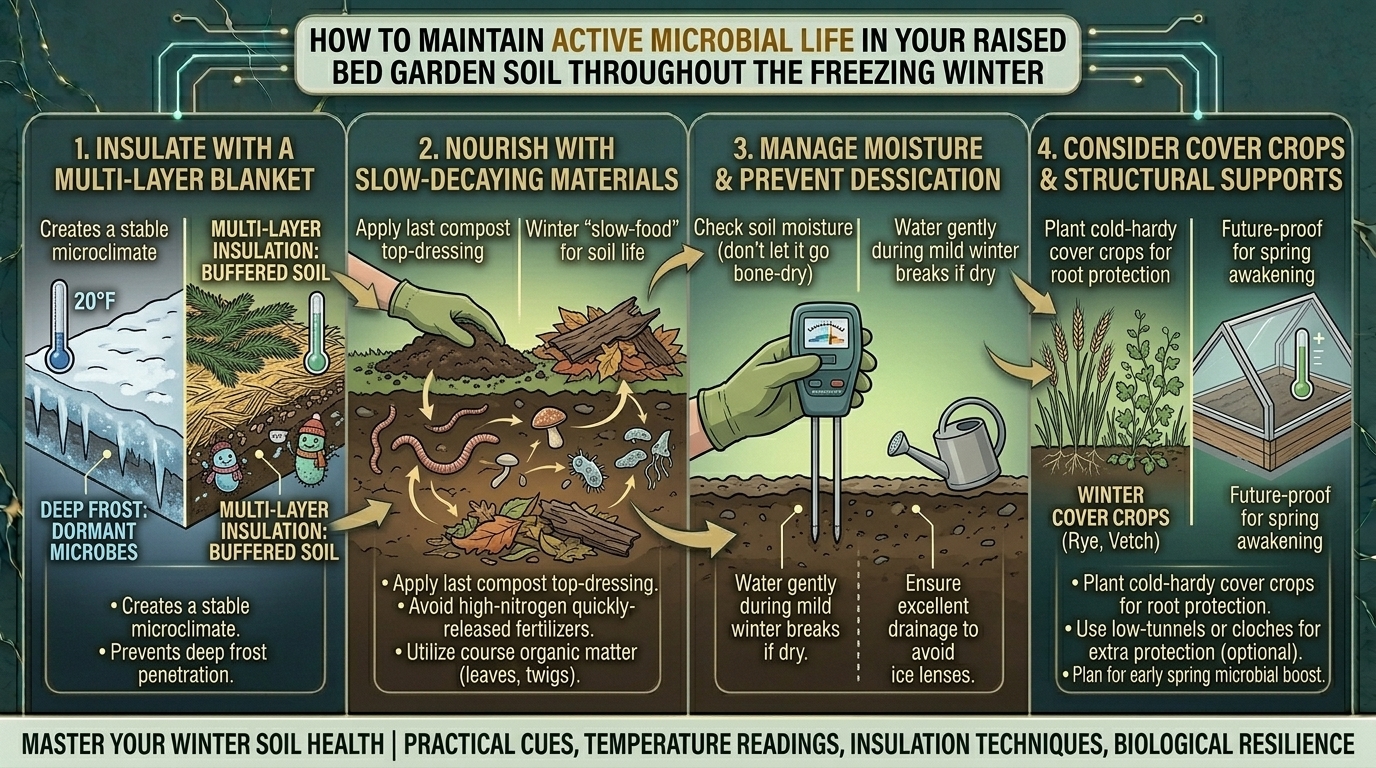
- The 4-to-6-Inch Rule: Apply a thick layer of organic mulch across your raised beds as soon as your summer crops are cleared. Use shredded autumn leaves, clean straw, chopped pine needles, or aged wood chips.
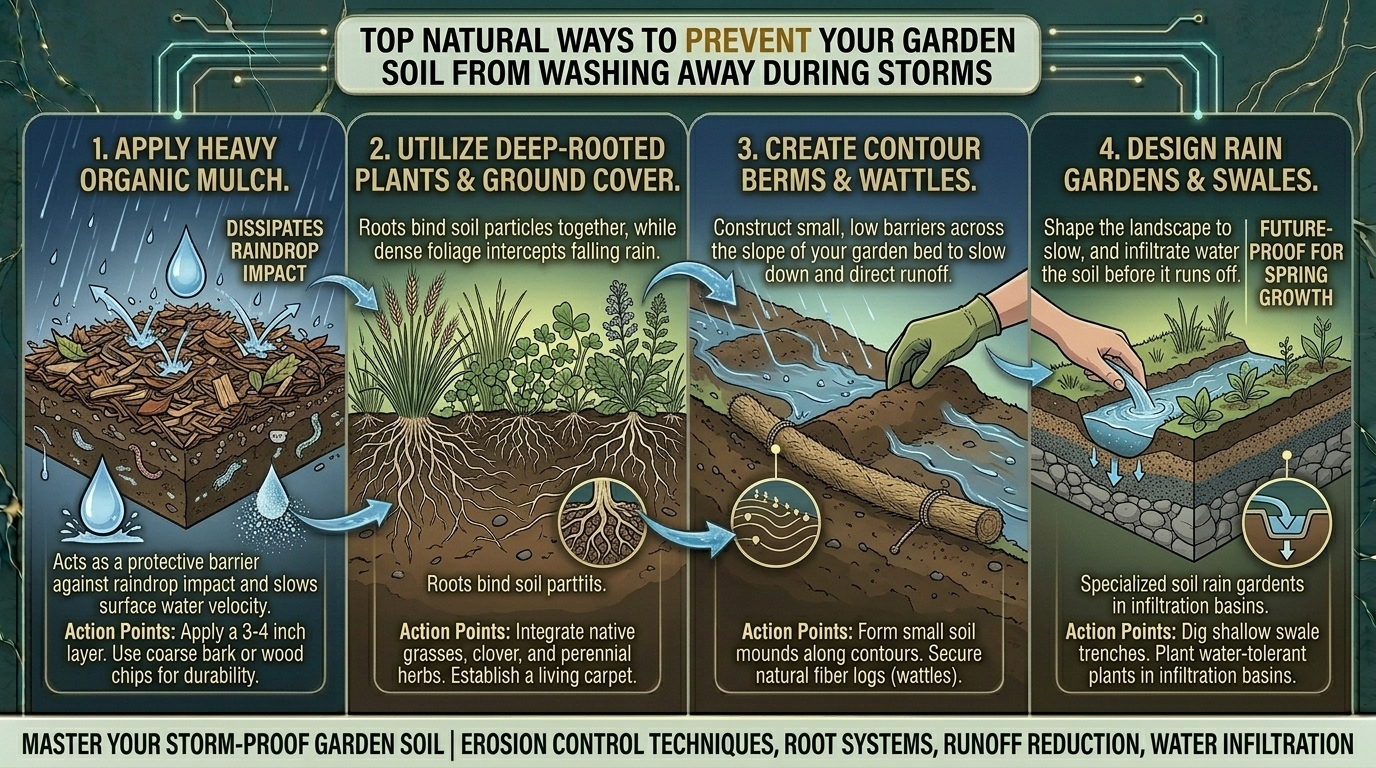
- Thermal Buffer: This blanket traps geothermal heat radiating from the ground while shielding the topsoil from biting winds, frost penetration, and heavy rain compaction.
Pillar 2: Feeding the Underground Food Web
Microbes cannot survive on bare dirt; they need a continuous source of carbon and organic compounds to maintain basal metabolism.
- Root Exudates: Living roots pump liquid carbon (exudates) into the soil, feeding friendly bacteria. Even in winter, certain cold-hardy cover crops keep this biological loop active.
- Decomposer Fuel: Coarse organic matter tucked beneath the mulch gives saprophytic fungi and bacteria something slow and steady to feed on all winter long without burning through their energy reserves too quickly.
Pillar 3: Maintaining Proper Winter Moisture
- The Dry Freeze Risk: Frozen soil that is completely dry is lethal to microbes and destroys soil crumb structure.
- The Waterlogged Risk: Conversely, stagnant, freezing water suffocates the few active microbes left by cutting off remaining oxygen. Your goal is a moist, sponge-like soil consistency before the ground freezes solid.
Pillar 4: Avoiding Unnecessary Tillage
- Tillage is an Ecological Catastrophe: Turning or tilling your raised bed soil in late autumn or winter shatters fungal hyphae networks (mycorrhizae), exposes delicate soil microbes to freezing air, and accelerates organic matter burnout. Practice no-till winter management to preserve subterranean architecture.
Chapter 3: Regional Winter Strategies: Texas, New York, California, Washington, and San Francisco
Winter looks entirely different depending on your geographic region. Tailoring your microbial preservation tactics to your local climate ensures success.
1. Texas (Managing Rapid Temperature Swings and Winter Drying)
- The Regional Climate: Texas winters feature mild stretches interrupted by sudden, violent Arctic blasts (blue northers) that can plunge temperatures from 70°F to 15°F overnight. North and Central Texas raised beds also face intense drying winter winds.
- Microbial Protection Strategy: Apply a 4-inch layer of shredded hardwood mulch or composted leaves. Because Texas winters rarely stay frozen for months, soil microbes remain partially active all winter. Keep beds lightly watered during dry spells to prevent soil from baking and cracking in winter winds.
2. New York (Surviving Deep Sub-Zero Freezes and Frost Heaving)
- The Regional Climate: New York experiences prolonged sub-zero temperatures, heavy snowpack, and severe freeze-thaw cycles that cause “frost heaving”—where expanding ice pushes shallow soil layers upward, tearing microbial networks and plant roots.
- Microbial Protection Strategy: Maximize insulation with a 6-inch layer of straw or chopped leaves topped with evergreen boughs. Consider using low tunnels or frost blankets over raised beds to moderate extreme temperature drops and protect the upper soil horizon from deep frost penetration.
3. California (Preserving Moisture and Soil Life in Mild Winters)
- The Regional Climate: California’s diverse climate zones—from the Central Valley to Southern California—experience mild winters with occasional overnight frosts. However, winter is often the primary rainy season, bringing heavy downpours that can leach nutrients and drown soil biology in poorly draining beds.
- Microbial Protection Strategy: Focus heavily on drainage and cover cropping. Plant winter cover crops like crimson clover or field peas to keep living roots in the soil, preventing winter rains from washing away valuable microbial biomass and nutrients.
4. Washington (Guarding Against Pacific Northwest SOG and Saturation)
- The Regional Climate: Western Washington winters are characterized by persistent, weeks-long rainy spells, overcast skies, and chilly, damp conditions. Soil rarely freezes solid for long periods, but it becomes heavily saturated.
- Microbial Protection Strategy: Prevent waterlogging by ensuring your raised beds have excellent drainage channels at the base. Top-dress with a layer of coarse arborists’ wood chips or straw to prevent torrential winter rains from compacting the soil surface and washing away beneficial bacteria.
5. San Francisco (Leveraging Marine Microclimates for Year-Round Activity)
- The Regional Climate: San Francisco enjoys a remarkably temperate marine microclimate. Winter temperatures rarely drop below freezing, though nights are chilly, foggy, and damp.
- Microbial Protection Strategy: Because ground freezes are virtually non-existent, your soil microbes remain active all year long! Focus on continuous organic feeding with compost applications and light cover cropping to sustain high biological activity through the damp winter months.
Chapter 4: Step-by-Step Action Plan to Prep Raised Beds for Winter
Follow this chronological checklist to winterize your raised beds and protect your soil microbiome.
Step 1: Clear Diseased Debris Only
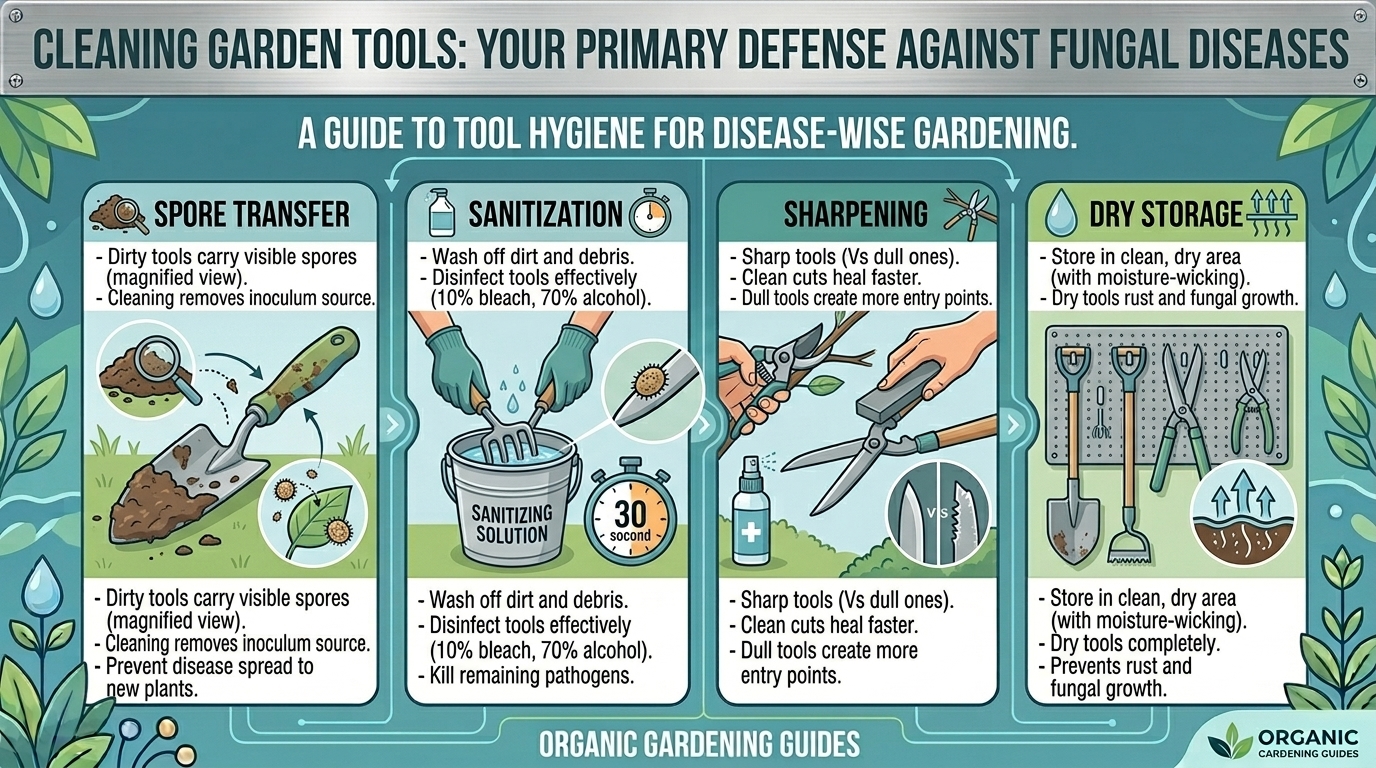
Remove any spent vegetable plants that showed signs of fungal disease (like powdery mildew, blight, or wilt) and dispose of them safely. Leave healthy, non-diseased roots in the soil; as they decompose underground, they provide rich organic channels and food for beneficial microbes.
Step 2: Apply a Layer of Finished Compost
Spread a 1-to-2-inch layer of high-grade, living compost directly across the surface of your raised bed. Compost is packed with active beneficial bacteria and fungi that will seed your soil and feed the existing population as temperatures drop.
Step 3: Plant a Winter Cover Crop (Optional but Recommended)
If your winters aren’t permafrozen solid, broadcast cover crop seeds:
- Hairy Vetch & Crimson Clover: Fix atmospheric nitrogen in the soil while maintaining living root exudates.
- Winter Rye: Produces massive fibrous root systems that anchor soil and shelter microbes.
Step 4: Layer on Heavy Organic Mulch
Cover your compost or cover crop seeds with 4 to 6 inches of carbon-rich mulch (shaved straw, shredded leaves, or clean pine needles). This insulates the soil against temperature extremes and retains optimal moisture levels.
Chapter 5: 10 Frequently Asked Questions (FAQs)
1. Do all soil microbes die when raised bed soil freezes?
No. While some transient microbes perish, the vast majority of beneficial bacteria and fungi simply enter a dormant, stasis state when soil freezes. They revive rapidly as the soil warms up in the spring.
2. Should I cover my raised beds with plastic for the winter?
Generally, no. While plastic keeps rain out, non-porous plastic sheets prevent essential gas exchange (oxygen and carbon dioxide), suffocating aerobic microbes and creating a stagnant, anaerobic swamp beneath. Use