Living in a vibrant, bustling metropolis—whether in a compact apartment in Manhattan (New York), a high-rise loft in downtown Dallas (Texas), a chic studio in the Mission District (San Francisco), a trendy rental in Seattle (Washington), or a dynamic urban hub in Los Angeles (California)—doesn’t mean you have to give up your passion for organic gardening.
Even if your “garden” consists of a sunny windowsill, a collection of balcony container pots, or thriving indoor houseplants, you can still produce the highest-grade organic fertilizer on earth right inside your living space.
Enter vermicomposting: the art and science of composting with worms.
Unlike traditional outdoor hot composting piles that require massive amounts of yard waste, heavy turning forks, and wide-open spaces, indoor worm bins are odorless, compact, and remarkably low-maintenance. By enlisting the help of specialized composting worms, you can turn daily kitchen scraps—coffee grounds, vegetable peelings, and fruit cores—into nutrient-dense “black gold” worm castings.
This comprehensive masterclass guide explores everything you need to know to design, build, and maintain a high-performance indoor worm composting bin tailored specifically for small-apartment organic gardening.
Chapter 1: The Biology of Vermicomposting (Meet Your Workers)
Before buying supplies, you must understand the unique mechanics of vermicomposting. It is entirely different from standard bacterial composting.
1. Red Wigglers vs. Earthworms
Never dig up common garden earthworms (nightcrawlers) for an indoor bin. Earthworms are deep-burrowing, solitary creatures that prefer cool, deep native soil and will quickly die or crawl out of a shallow indoor container.
- The Chosen Champions: You need Eisenia fetida, commonly known as Red Wigglers (or Red Earthworms).
- Why They Excel: Red wigglers are surface-dwellers that naturally thrive in decaying organic matter, leaf litter, and manure piles. They tolerate a wide temperature range, reproduce rapidly in captivity, live in high-density communities, and consume up to their body weight in organic waste every single day.
2. How Vermicomposting Works
Red wigglers do not have teeth. They rely on a muscular gizzard containing tiny grains of sand or rock dust to grind up organic material, which is then digested by internal microbes. The resulting excretion—known as worm castings—is a dark, crumbly, odorless fertilizer packed with beneficial bacteria, plant hormones, and water-soluble plant nutrients.
Chapter 2: Anatomy of the Perfect Indoor Apartment Worm Bin
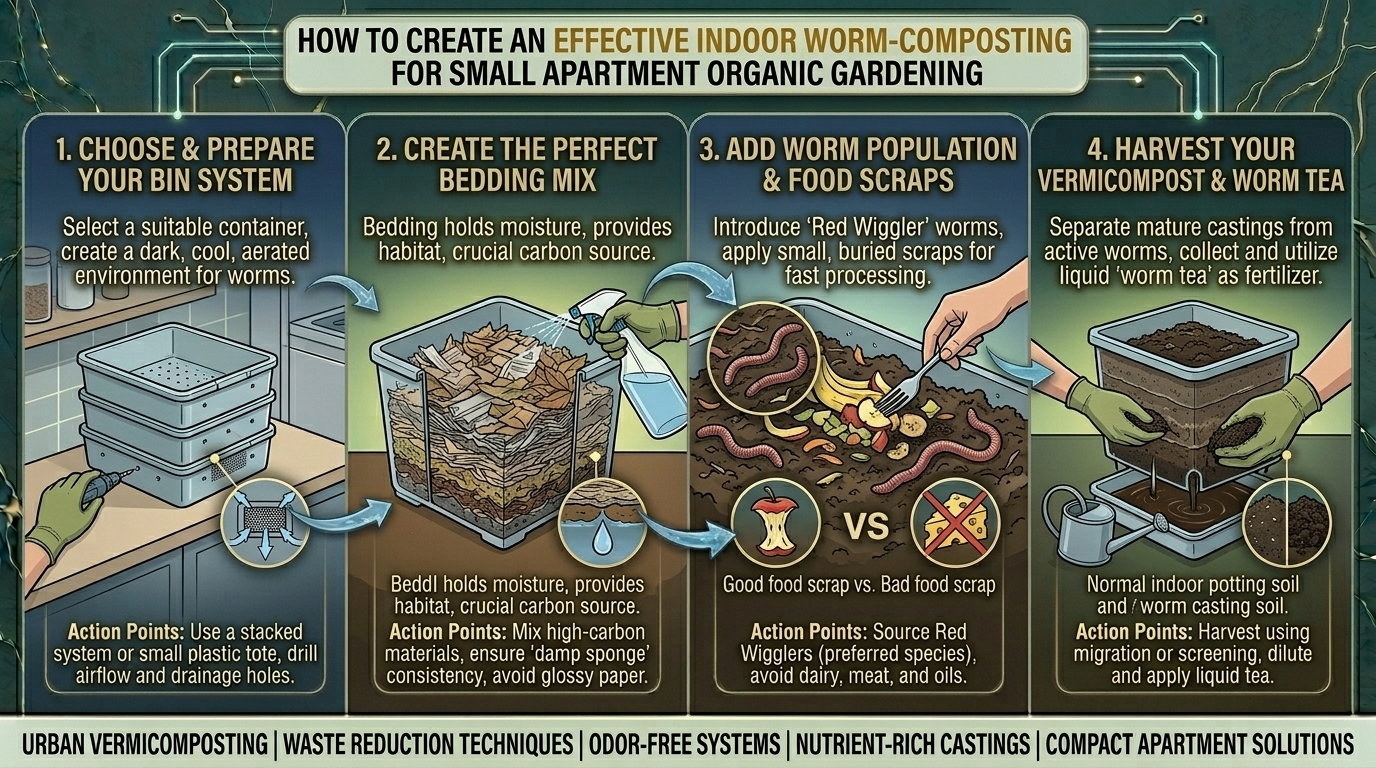
An indoor worm bin must meet three strict criteria for apartment living: zero odor, zero escaping pests, and 100% aesthetic discretion.
[Ideal Indoor Worm Bin Structure]
  ├── Top Layer: Breathable Lid & Air Circulation Holes
  ├── Upper Level: Active Feeding Zone (Bedding + Food Scraps)
  ├── Lower Level: Worm Population & Mature Castings
  └── Base Unit: Moisture Collector / Leachate Tray (Optional)
1. Choosing Your Bin Style
- Plastic Storage Totes (The DIY Route): A pair of opaque 10-to-18-gallon plastic storage totes (stacked one inside the other) makes an exceptional, inexpensive DIY worm bin. Opaque containers are essential because red wigglers hate bright light.
- Commercial Tiered Stackable Bins (The Sleek Route): Systems like the Worm Factory 360 or Hot Frog use vertical stacking trays. As worms finish eating the food in the lower tray, you add a new tray on top with fresh food, and the worms migrate upward through perforated bottoms, leaving clean castings behind for easy harvesting.
2. Ventilation and Drainage
- Airflow is Life: Worms breathe through their moist skin. Drill small 1/8-inch holes around the upper rim of your bin (and on the lid) to ensure steady cross-ventilation.
- Managing Moisture: If your bin is balanced properly, you will rarely have liquid runoff. However, drilling a few tiny drainage holes in the bottom tray (placed over a shallow collection tray) ensures your worms never drown during accidental over-watering.
Chapter 3: Setting Up Your Bin: Bedding, Moisture, and Feeding
Once you have your container, setting up the internal environment correctly is the secret to avoiding fruit flies, bad smells, and dying worms.
1. The Foundation: Perfect Worm Bedding
Bedding mimics the natural forest floor, providing a carbon-rich habitat where worms can burrow, hide, and regulate moisture.
- Best Bedding Materials: Shredded unbleached cardboard, black-and-white newspaper strips (avoid glossy color ink inserts), finely shredded brown paper bags, and aged leaf mold.
- Preparation: Soak your shredded paper or cardboard in water for 15 minutes, then wring it out thoroughly like a damp sponge. It should feel like a wrung-out towel—moist to the touch, but not dripping wet (aim for roughly 70-80% moisture content). Fill your bin about 3/4 full with this fluffed bedding.
2. Introducing Your Red Wigglers
- Gently introduce your pound of red wigglers (roughly 1,000 worms) onto the damp bedding surface. Leave a small desk lamp or overhead light on in the room for the first 24 hours; because worms dislike bright light, this gentle encouragement will prompt them to burrow down into their new home rather than trying to explore your apartment floor.
3. What to Feed (and What NEVER to Feed)
Feed your worms gradually. Start by burying small quantities of chopped scraps beneath the bedding.
- Green Materials (Nitrogen-Rich Foods):
- Vegetable peelings, fruit cores, and overripe produce.
- Coffee grounds (and paper filters) and loose-leaf tea leaves.
- Crushed eggshells (crucial for providing grit for their gizzards and maintaining neutral soil pH).
- Red Lines (What NEVER to Put in an Indoor Bin):
- Meat, fish, bones, and dairy products: These attract rodents, maggots, and create putrid, foul-smelling anaerobic rot.
- Oils, grease, and butter: Coats the worms’ skin and suffocates them.
- Citrus peels and onions in excess: Highly acidic oils can irritate worms and drive them out of the bin.
- Pet waste: Carries harmful pathogens and parasites dangerous to humans.
Chapter 4: Regional Indoor Considerations: Texas, New York, California, Washington, and San Francisco
While indoor bins are shielded from outdoor weather, your apartment’s indoor climate control (heating, air conditioning, and humidity) is heavily influenced by your region.
1. Texas (Beating the Indoor Air Conditioning & Summer Heat)
- The Challenge: Blistering Texas summers mean air conditioning runs constantly, pulling heavy humidity out of apartment air. This can rapidly dry out an indoor worm bin, turning bedding into parchment.
- Management Tip: Check moisture levels weekly. Cover the top of the bedding with a damp piece of burlap or an old cotton t-shirt to lock in humidity. Keep bins away from drafty AC vents or sun-baked south-facing windows.
2. New York (Balancing Radiator Heat and Winter Dryness)
- The Challenge: New York winter heating (steam radiators) creates bone-dry indoor apartment air. Furthermore, compact spaces mean bins must be stored discreetly in closets or under sinks where ventilation can be limited.
- Management Tip: Mist your bin’s bedding lightly with a spray bottle during winter months. If storing your bin inside a dark kitchen cabinet, ensure the cabinet door is left cracked open periodically for fresh air exchange.
3. California (Managing Southern/Central Heat Waves and Fruit Flies)
- The Challenge: Warm California apartments can trigger sudden fruit fly (Drosophila) outbreaks if fruit scraps are left exposed on top of the bedding rather than buried deeply.
- Management Tip: Always bury food scraps at least 2 inches deep beneath carbon bedding, or cover the feeding zone with a layer of dry shredded paper. Fruit flies cannot lay eggs on buried food!
4. Washington (Controlling Excess Humidity in Damp Winters)
- The Challenge: Pacific Northwest dampness can sometimes cause indoor apartment bins to retain too much moisture, leading to soggy, anaerobic conditions and earthy odors.
- Management Tip: If your bin starts smelling earthy or swampy, stop adding watery foods (like melons and cucumbers), fluff the bedding thoroughly with a hand cultivator, and add a generous handful of dry shredded cardboard to soak up excess moisture.
5. San Francisco (Leveraging Ideal Year-Round Ambient Temps)
- The Challenge: San Francisco’s famously temperate marine climate makes indoor apartment temperatures ideal for red wigglers almost year-round—rarely getting freezing cold or sweltering hot.
- Management Tip: Capitalize on your ideal climate by keeping your bin in a pantry, laundry nook, or kitchen corner, and harvest your rich castings twice a year to feed your indoor container herbs and balcony plants.
Chapter 5: Harvesting Castings and Using Them in Apartment Gardening
After 3 to 6 months, your original bedding and food scraps will transform into a rich, dark, earthy-smelling substance: worm castings. It is time to harvest!
1. How to Harvest Worm Castings
- The Light Separation Method (Dump and Sort): Dump the contents of your bin onto a large plastic sheet or tray under a bright overhead light or sunlight. Wait 10 minutes; worms will instinctively burrow downward away from the light. Gently brush away the top layer of finished castings. Repeat this process every few minutes until you reach a writhing ball of worms at the bottom, then return them to fresh bedding.
- The Horizontal Migration Method (For Stacked Bins): Simply stop feeding one side of the bin (or the lower tray) and start placing fresh food exclusively in a new tray or side. Within two weeks, 90% of the worms will migrate to the new food source, allowing you to scoop out pure, weed-seed-free castings effortlessly.
2. Applying Castings to Your Apartment Garden
Worm castings are pure plant superfood. Because they are biologically rich and balanced, they will never burn plant roots, no matter how much you use.
- Top-Dressing Houseplants: Scrape away the top half-inch of soil in your potted houseplants or balcony containers and replace it with fresh worm castings. Water gently; nutrients will wash down to the roots with every watering.
- Worm Tea Brewing: Steep 1 cup of worm castings in a gallon of dechlorinated water with a splash of molasses for 24 hours using an aquarium air pump. Spray this liquid “worm tea” onto balcony vegetables or indoor herbs for an immediate, microbe-rich foliar feed.
Chapter 6: Troubleshooting Common Indoor Worm Bin Issues
| Issue | Root Cause | Corrective Action |
| Foul / Rotten Smell | Overfeeding or anaerobic conditions (too wet/lack of oxygen). | Stop feeding for 2 weeks, fluff bedding, add dry shredded paper, and leave lid open briefly. |
| Fruit Flies / Gnats | Exposed food scraps on the surface. | Always bury food scraps 2 inches deep under carbon bedding; cover with damp burlap. |
| Worms Crawling Up Walls | Too much moisture, acidic bedding, or toxic food (citrus/onion). | Check pH, add crushed eggshells, reduce watering, and leave a light on overhead. |
| Worms Shrinking / Dying | Dry bedding or lack of oxygen / extreme temperatures. | Mist bedding with water, check bin ventilation, and move away from extreme heat/cold. |
Chapter 7: 10 Frequently Asked Questions (FAQs)
1. Will an indoor worm bin smell bad in my apartment?
No. A properly managed indoor worm bin smells like a rich, clean forest floor after a gentle rain—completely odorless. If your bin smells foul or putrid, it is too wet or overfed with prohibited items (like meat or dairy).
2. Can I use regular earthworms from my backyard garden?
No. Common backyard earthworms are deep-burrowing species that cannot survive in shallow container environments and will quickly die or crawl out of your apartment bin. You must use surface-dwelling Red Wigglers (Eisenia fetida).
3. What temperature range is best for indoor worms?
Red wigglers thrive in temperatures between 55°F and 77°F (13°C to 25°C)—the exact temperature range of a comfortable apartment interior. Protect your bin from freezing winter drafts and extreme summer heat waves.
4. How much food can 1,000 worms eat per day?
1,000 red wigglers (roughly one pound) can consume approximately 1/2 pound to 1 pound of kitchen scraps per day. Start slowly with smaller amounts until your worm population adjusts to your household’s waste generation rate.
5. How do I prevent fruit flies in my apartment worm bin?
Always bury your kitchen scraps completely beneath at least 2 inches of carbon bedding (shredded paper, cardboard, or leaf mold). Never leave fruit peels exposed on the surface, and cover the top of the bedding with a damp burlap sheet.
6. Do I need to buy expensive commercial worm bins?
Not at all. While commercial stackable systems are sleek and convenient, two nested opaque 10-gallon plastic storage totes with drilled ventilation holes work just as well for a fraction of the cost.
7. Can I add citrus peels and onions to my worm bin?
In extreme moderation, yes, but it is best to avoid them. Citrus peels contain natural oils (d-limonene) and onions are pungent and acidic; large amounts will irritate the worms and cause them to attempt to escape.
8. How often do I need to harvest worm castings?
Most apartment worm bins are ready for a full harvest every 3 to 6 months. You will know they are ready when the original bedding and food scraps have transformed into a uniform, dark, crumbly, soil-like material with very few recognizable scraps left.
9. Will worm castings burn my delicate indoor potted plants?
Never. Unlike synthetic chemical fertilizers or fresh manures, worm castings are chemically neutral and organic. They cannot burn plant roots, making them 100% safe for delicate indoor houseplants and container herbs.
10. What should I do with my worm bin when I go on vacation?
Worms can easily go 1 to 2 weeks without feeding while you are away. Before leaving, feed them a slightly larger batch of chopped vegetables, bury it deep beneath damp bedding, mist the bin thoroughly, and secure the lid. They will be happy and waiting when you return!
Conclusion: Turn Kitchen Waste Into Garden Gold
Creating an indoor worm composting bin in your apartment is a rewarding, eco-friendly way to close the loop on household waste while fueling your organic container garden. With zero odor, minimal maintenance, and a tireless workforce of red wigglers, you can manufacture premium fertilizer right inside your living space.