Welcome back to kcplants.com, your definitive digital sanctuary for indoor gardening and urban jungle care. Whether you are curating a sunlit collection in a high-rise apartment in San Francisco or New York, managing sprawling tropicals through intense dry summers in California and Texas, or nurturing delicate humidity-loving specimens through damp winters in Washington, one microscopic enemy strikes fear into the heart of every plant parent: spider mites.
Few pests can decimate an indoor green collection as swiftly or silently as spider mites. Because they thrive in warm, climate-controlled indoor air, a single missed detection can quickly cascade into an ecosystem-wide crisis. When you spot fine webbing, stippled leaves, or sluggish growth on your prized Alocasia, Calathea, or Monstera, your instinct might be to reach for harsh chemical synthetic pesticides. However, when growing plants inside your living space, harsh chemicals pose health risks to family members, pets, and beneficial organisms.
The gold standard for safe, effective, and environmentally responsible indoor eradication is organic horticultural insecticidal soap. This comprehensive guide will teach you how spider mites operate, why insecticidal soap works like magic, and how to execute a foolproof treatment protocol to save your indoor collection.
Part 1: Anatomy of an Outbreak (Understanding Spider Mites)
To defeat your enemy, you must first understand it. Spider mites are not actually insects; they are tiny arachnids belonging to the same family as spiders, ticks, and scorpions.
Why Indoor Environments Are Breeding Grounds
- Low Humidity: Modern indoor heating and cooling systems strip moisture from the air, creating the dry, arid conditions that spider mites love most.
- Lack of Predators: Outdoors, rainstorms wash mites away, and predatory insects keep populations under control. Indoors, those natural checks and balances do not exist.
- Rapid Reproduction: Female two-spotted spider mites can lay up to 100 eggs in a lifetime. Under warm indoor conditions, eggs hatch in as little as 3 days, and mites reach maturity in 5 days. Populations can explode exponentially in a matter of weeks.
Visualizing the Damage
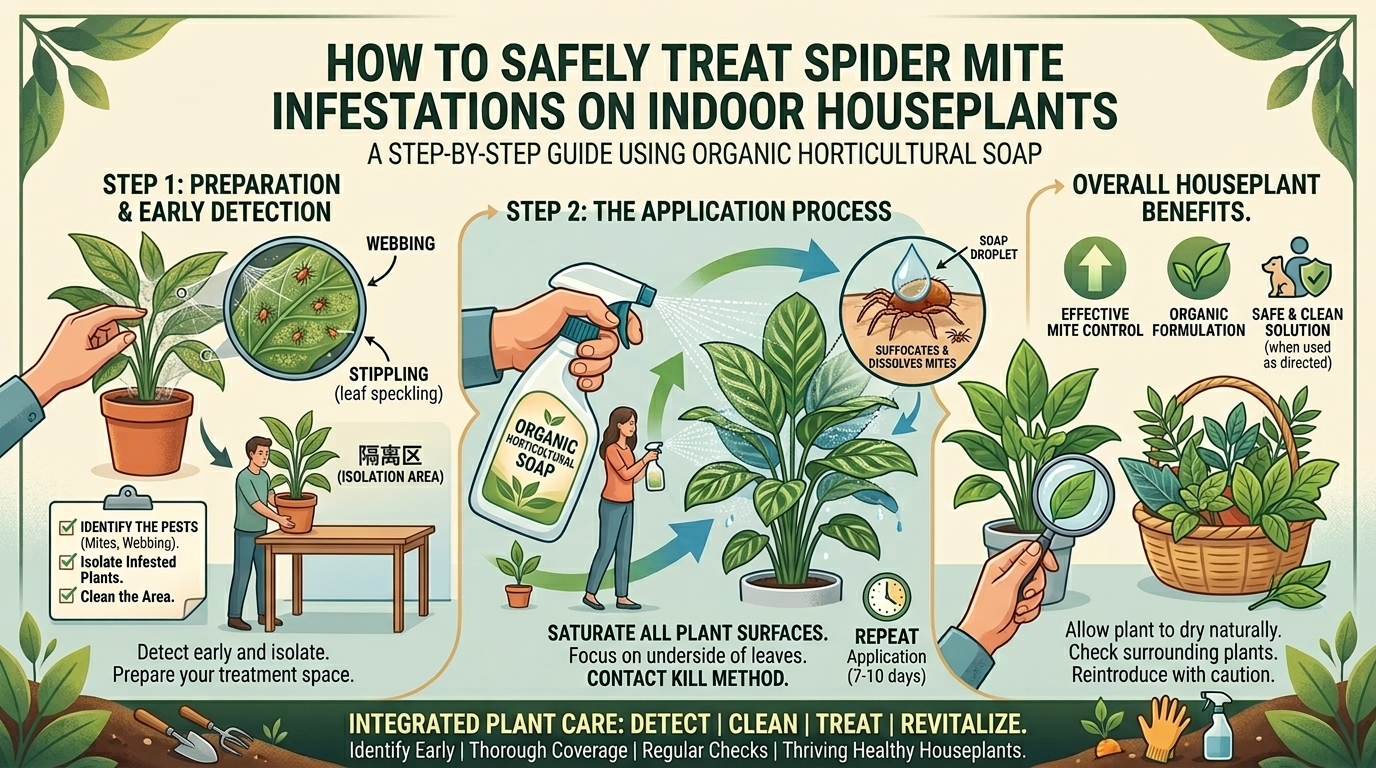
Spider mites possess piercing-sucking mouthparts. They puncture individual plant cells to drink the sap, leaving behind tiny drained cells that appear as white, yellow, or bronze specks (stippling) on the upper surface of the leaves. In advanced infestations, you will notice fine, silky webbing stretched across the undersides of leaves and petiole joints. Left untreated, leaves dry out, turn brown, and drop off entirely.
Part 2: The Science of Horticultural Insecticidal Soap
Unlike heavy synthetic neurotoxins that can linger on surfaces and harm pets or humans, high-quality organic insecticidal soaps are designed to break down rapidly and safely while targeting soft-bodied arthropods with pinpoint accuracy.
How Insecticidal Soap Works
- Disrupting Cell Membranes: Horticultural soaps are formulated from specific potassium salts of fatty acids. When sprayed directly onto a spider mite, the soap molecules penetrate and disrupt the insect’s protective outer cellular membrane.
- Suffocation: The soap coats the mite’s body and plugs its spiracles (the tiny respiratory openings along its body), effectively suffocating the pest.
- Zero Residual Toxicity on Plants: Once the soap dries (usually within a few hours), it completely loses its insecticidal properties, leaving no toxic chemical residue behind on your floors, furniture, or plant leaves.
Part 3: Step-by-Step Protocol to Eradicate Spider Mites with Insecticidal Soap
Achieving total eradication requires more than a single spray. Because spider mite eggs have a tough outer shell that protects them from soap, a multi-stage treatment plan is mandatory to break the life cycle.
Step 1: Immediate Quarantine and Inspection
- Isolate: Move the infected plant away from your main collection immediately. Place it in a bathroom, laundry room, or separate quarantine zone.
- Inspect Neighbors: Check all neighboring plants within a 6-foot radius. Spider mites can easily crawl or hitch a ride on air currents to adjacent pots.
Step 2: Physical Decontamination (The Pre-Wash)
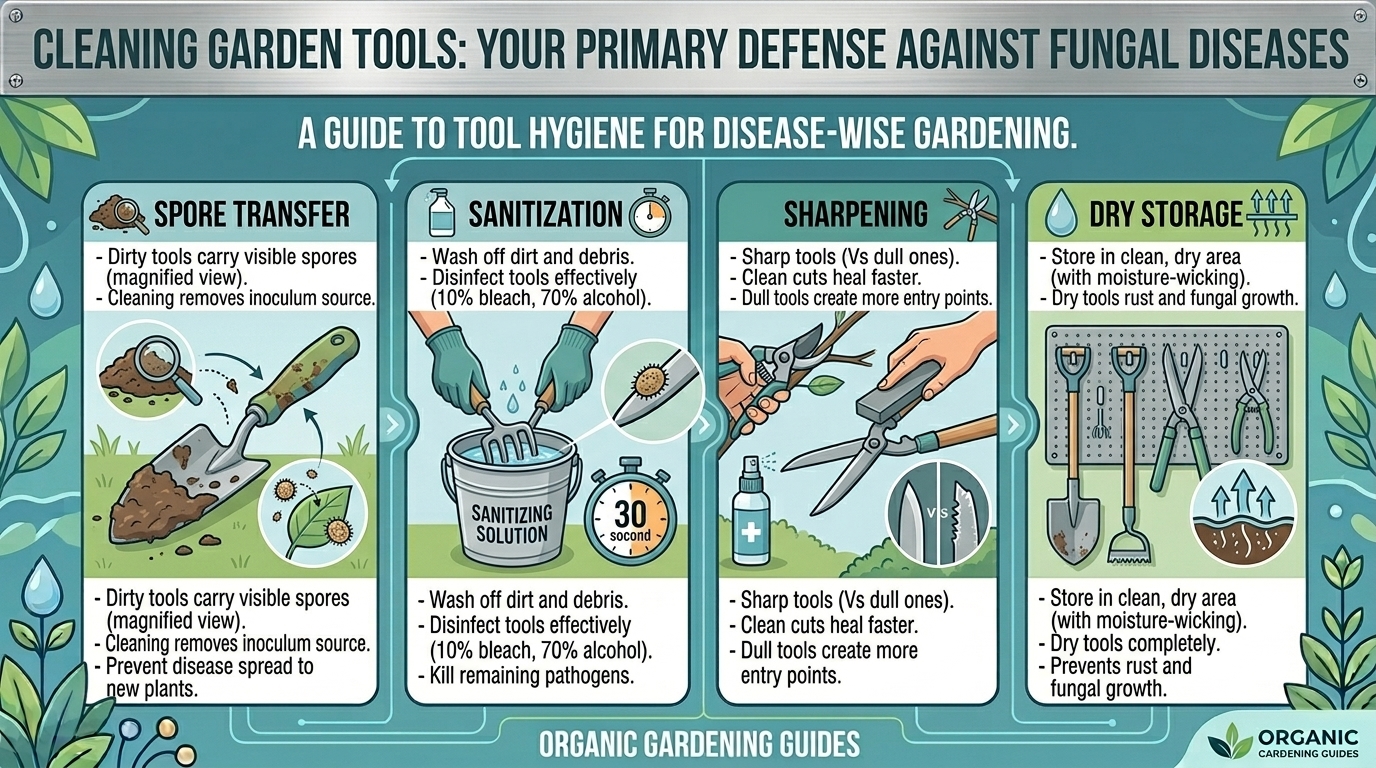
- Prune: Trim away severely damaged, dying, or heavily webbed leaves using sterilized shears. Seal the trimmings in a plastic bag and throw them in the trash.
- Shower: Take the plant to your shower or sink and give it a thorough rinse with lukewarm water. Use a strong stream of water directed primarily at the undersides of the leaves to wash away the majority of adult mites, nymphs, and loose webbing. Allow the foliage to dry before applying soap.
Step 3: Mixing and Applying Insecticidal Soap
- Choose Ready-to-Use or Dilute Correctly: You can purchase commercial ready-to-use organic insecticidal soap sprays or mix a concentrated horticultural soap according to the manufacturer’s exact label instructions. Avoid using DIY dish soap mixtures, as harsh household detergents lack proper potassium fatty acid balances and can easily strip and burn delicate plant leaves.
- Coat Every Surface: Spray the insecticidal soap liberally across all plant surfaces. Crucial rule: You must achieve 100% direct contact. Spray the tops of leaves, the stems, the leaf axils, and especially the undersides of the leaves where mites hide.
- Test First: If you are treating delicate plants like ferns or thin-leafed tropicals, test the soap on a single hidden leaf 24 hours in advance to ensure no leaf burn (phytotoxicity) occurs.
Step 4: Repeat the Cycle (The 3-Step Treatment Window)
- The 7-Day Rule: Spray your plant every 5 to 7 days for a minimum of 3 consecutive weeks. This schedule ensures that newly hatched nymphs are eliminated before they can mature and lay a new generation of eggs.
Part 4: Proactive Prevention Tips for a Mite-Free Indoor Jungle
Once your collection is clean, adopt these preventative habits to keep spider mites from staging a comeback:
- Boost Indoor Humidity: Run a cool-mist humidifier near your plant collection, or group humidity-loving plants together on pebble trays. Mites despise high humidity.
- Wipe Foliage Monthly: Regularly wipe down large leaves (like Monsteras and Fiddle Leaf Figs) with a damp microfiber cloth. This removes dust, debris, and stray microscopic pests before an infestation begins.
- Inspect New Additions: Treat every newly purchased plant or cutting as a potential pest carrier. Keep new arrivals in a quarantine room for at least two weeks before introducing them to your main collection.
- Provide Good Air Circulation: Use a small oscillating fan on low settings to keep indoor air moving gently. Stagnant air invites pest accumulation.
Part 5: Frequently Asked Questions (FAQ)
1. Can I use regular dish soap instead of commercial horticultural soap?
It is strongly advised against. Standard household dish soaps are formulated to cut grease and strip oils. They lack the specific potassium salts of fatty acids found in horticultural soaps and often contain harsh detergents that can strip the waxy epicuticular layer of plant leaves, causing severe chemical burn.
2. Does insecticidal soap kill spider mite eggs?
Most standard insecticidal soaps do not penetrate or kill dormant spider mite eggs. This is why a single application is never enough; you must repeat treatments every 5 to 7 days to eliminate newly hatched nymphs before they reproduce.
3. Will insecticidal soap harm my cats or dogs?
Organic potassium salt-based insecticidal soaps are considered very safe for household pets once dried. However, you should always keep pets out of the treatment room while spraying and allow the foliage to dry completely before letting cats or dogs sniff or brush against the plants.
4. Can I use insecticidal soap on all types of indoor houseplants?
While safe for most tropical foliage, you should exercise extreme caution with thin-leafed ferns, delicate herbs, and drought-adapted succulents/cacti. Always perform a 24-hour patch test on a single hidden leaf before treating the entire plant.
5. Why do my spider mites keep returning every winter?
Indoor heating systems drop relative humidity significantly while keeping rooms warm. This mimics an arid summer drought—the exact climate condition in which spider mites reproduce at exponential rates. Increasing humidity and regular leaf misting help prevent winter flare-ups.
6. Do I need to rinse the soap off after spraying?
No. Commercial organic insecticidal soap is designed to dry safely on the plant tissue. Rinsing it off immediately would neutralize its contact-killing efficacy. You can, however, give the plant a gentle water rinse a day after treatment if you notice any soap residue buildup.
7. How can I tell the difference between dust and spider mites?
Take a piece of white paper and hold it beneath a suspicious leaf, then gently tap the leaf. If tiny specks fall onto the paper and begin to slowly crawl around, you are looking at live spider mites rather than simple household dust.
8. Are beneficial insects an option for indoor spider mite control?
Yes! Many indoor gardeners successfully introduce microscopic predatory mites (such as Phytoseiulus persimilis or Neoseiulus californicus) into their indoor spaces. These beneficial insects hunt down spider mites and naturally die off once the pest population is exhausted.
9. Can I spray insecticidal soap in direct sunlight?
Never spray insecticidal soap on plants sitting in direct, intense sunlight. The combination of direct sun and wet soap can magnify light rays and scorch or fry the leaf tissue. Always treat plants in indirect light or in the evening.
10. How long should I keep my plant in quarantine?
Keep your treated plant isolated for a minimum of 3 to 4 weeks. Only return it to your main indoor jungle after you have completed your full series of soap sprays and verified through close inspection that no new webbing or stippling has appeared.
Conclusion
Managing spider mite infestations does not require toxic chemical pesticides or risky formulas. By utilizing organic horticultural insecticidal soap, following a strict multi-stage treatment schedule, and maintaining a humid, clean indoor environment, you can successfully protect your plant collection. Take control of your indoor oasis today, and enjoy vibrant, lush, and pest-free foliage from coast to coast.