Welcome to kcplants.com, your definitive online resource for advanced garden health, plant pathology, and sustainable urban agriculture. Whether you are cultivating high-yield backyard vegetable beds under the blazing sun of Texas and California, managing urban container gardens on a windy rooftop in New York or San Francisco, or nurturing cool-season crops through the damp, misty valleys of Washington, every dedicated grower will eventually face a silent and devastating adversary: plant viruses.
Unlike fungal infections (such as powdery mildew) or bacterial blights that can often be halted with copper sprays or organic fungicides, plant viruses have no cure. Once a plant contracts a systemic viral infection, the pathogen hijacks the plant’s cellular machinery, multiplying rapidly and spreading throughout every single cell, from the deepest root tips to the newest unfolding leaves.
Because viruses cannot be treated with chemical sprays, early and accurate identification is your single line of defense. Knowing the exact visual and structural warning signs allows you to quickly quarantine or destroy infected specimens before vectors like aphids or thrips can transmit the virus across your entire garden collection.
Part 1: How Plant Viruses Spread (The Invisible Invaders)
Plant viruses are sub-microscopic infectious agents composed of genetic material (RNA or DNA) enclosed in a protective protein coat. Because viruses cannot move on their own or penetrate a plant’s tough outer cuticle, they rely on vectors and mechanical transmission to spread.
1. Insect Vectors (The Primary Culprits)
- Aphids and Thrips: These sap-sucking insects act like microscopic hypodermic needles. When an insect feeds on an infected weed or neighboring plant, it ingests viral particles. When it flies over to feed on your prized tomatoes, peppers, or dahlias, it injects the virus directly into the plant’s vascular system (phloem).
- Whiteflies and Leafhoppers: Highly active in warm-weather regions like California and Texas, these flying pests are notorious carriers of devastating agricultural viruses like Tomato Yellow Leaf Curl Virus (TYLCV).
2. Mechanical Transmission (Human Hands and Tools)
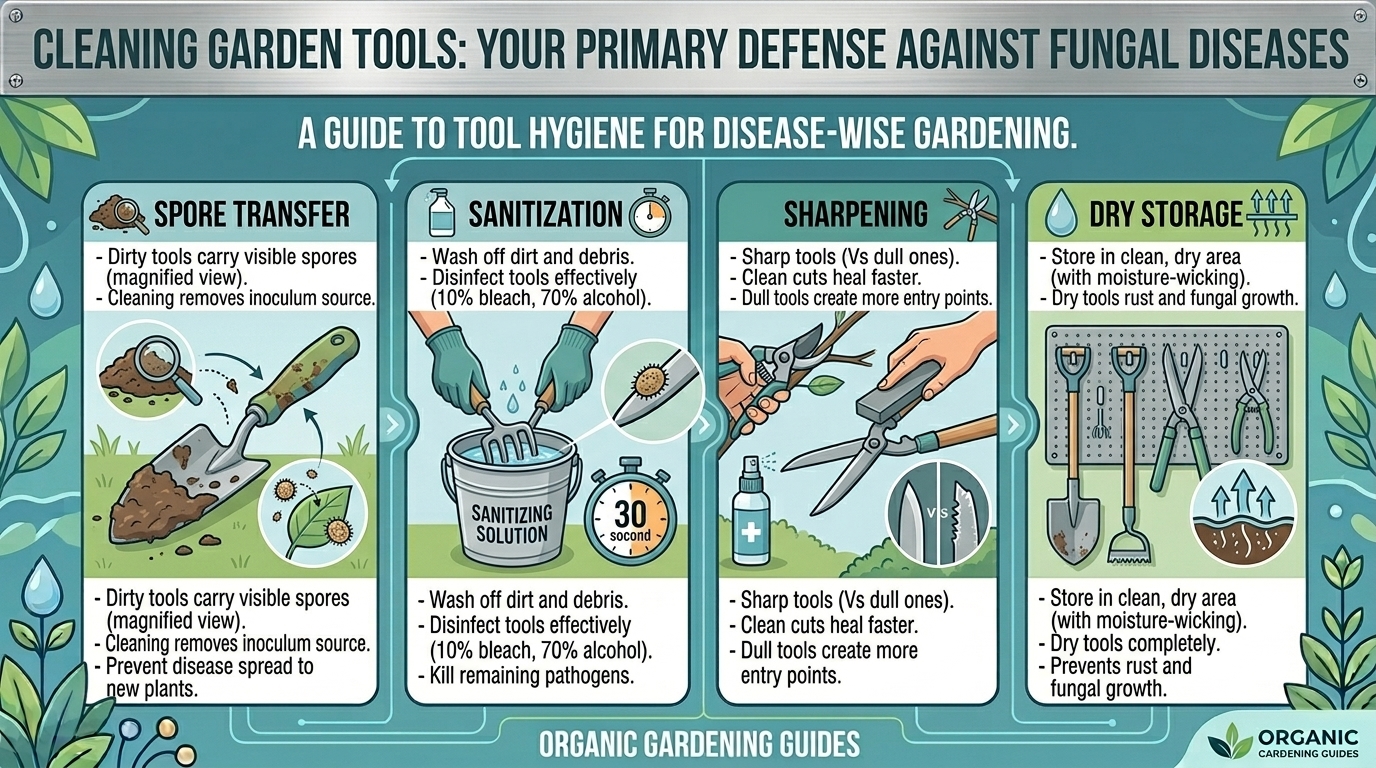
- Pruning Shears: If you prune an infected plant and immediately trim a healthy plant without sterilizing your blades, the sap transfer acts as a direct viral transmission route.
- Gardening Hands and Clothing: Touching an infected plant and rubbing against another can occasionally transmit robust viruses like Tobacco Mosaic Virus (TMV), which is remarkably stable and can survive on dry surfaces for decades.
3. Propagative Stock
Taking cuttings from a mother plant that carries a latent (hidden) viral infection guarantees that every new propagation will also be infected.
Part 2: Tell-Tale Signs of a Severe Viral Infection
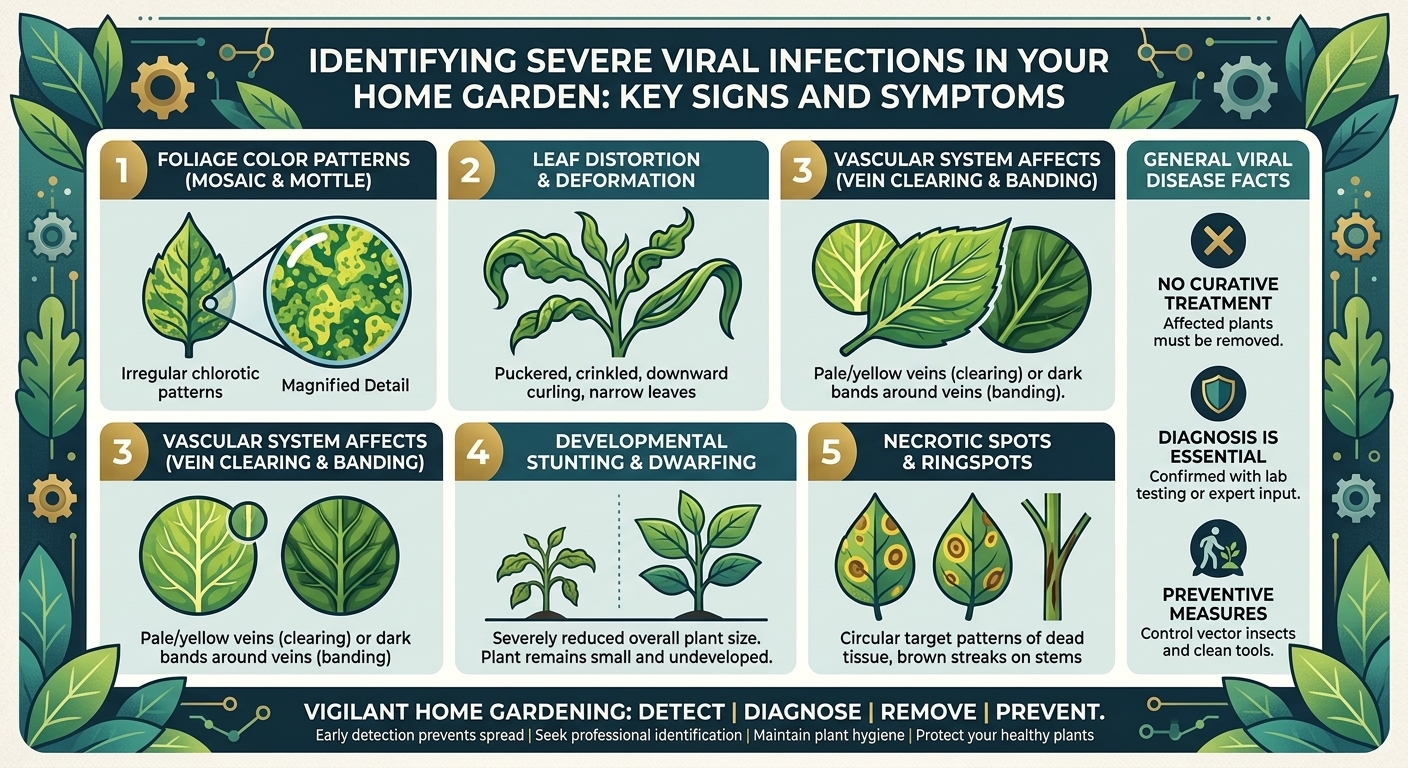
Plant viruses manipulate chlorophyll production, cell division, and hormone regulation, resulting in striking visual anomalies. Here are the primary diagnostic indicators to look for in your garden:
1. Mosaic Patterns and Chlorosis
- The Look: Leaves display a distinct, mottled patchwork of light green, yellow, and dark green areas, resembling a mosaic tile floor or a camouflage pattern.
- The Cause: The virus disrupts chloroplast development in specific cellular zones, preventing normal green pigmentation from forming.
2. Leaf Curling, Distortion, and Puckering
- The Look: Leaves curl sharply upward or downward, become thick and brittle, twist into distorted shapes, or develop a narrow, stringy, shoestring-like appearance (often seen in tomatoes infected with Cucumber Mosaic Virus).
- The Cause: Uneven cellular growth rates across the leaf blade force the tissue to buckle and warp.
3. Stunting and Dwarfing
- The Look: An infected plant stops growing, remaining a fraction of the size of its healthy neighbors. Internodes (the space between leaves on a stem) shorten drastically, giving the plant a cramped, bushy, or stunted rosette appearance.
- The Cause: The virus halts normal hormone production (such as auxins and gibberellins) responsible for vertical plant elongation.
4. Ring Spots and Necrotic Lines
- The Look: Concentric rings, circles, or bullseye patterns appear on leaves, stems, or even directly on ripening fruit (as seen in Tomato Spotted Wilt Virus). Over time, these rings turn brown, dry out, and die (necrosis).
- The Cause: A localized host immune response attempting to wall off the viral invasion, leaving rings of dead or discolored tissue behind.
5. Color Breaking in Flowers
- The Look: While sometimes artificially bred for unique aesthetics in historical tulips, unexpected streaks, stripes, or blotches of white or lighter colors appearing inside normally solid-colored flower petals are classic symptoms of a viral infection (such as Tulip Breaking Virus).
Part 3: Common Viruses Impacting Home Gardens
While hundreds of plant-infecting viruses exist, home gardeners most frequently encounter a few notorious strains:
- Tobacco Mosaic Virus (TMV): Affects solanaceous crops (tomatoes, peppers, eggplants) and ornamentals. Causes severe leaf mottling, stunting, and deformed, unmarketable fruit.
- Tomato Spotted Wilt Virus (TSWV): Transmitted primarily by tiny western flower thrips. Causes bronze-colored ring spots on leaves, stunted growth, and dieback.
- Cucumber Mosaic Virus (CMV): Despite its name, CMV infects over 1,000 plant species, including cucurbits, spinach, lettuce, and ornamentals, causing stunting and severe “shoestring” leaf distortion.
Part 4: Step-by-Step Management Protocol (When Infection Strikes)
Because antiviral medications do not exist for plants, your entire management strategy revolves around containment, sanitation, and eradication.
Step 1: Accurate Diagnosis vs. Nutrient Deficiency
Before ripping out a plant, rule out environmental stressors. Nitrogen deficiencies, iron chlorosis, herbicide drift, and severe mite damage can mimic viral symptoms. If yellowing is uniform across older leaves, it is likely a nutritional issue. If the mottling is sharply defined, geometric, or accompanied by twisted new growth, suspect a virus.
Step 2: Immediate Removal and Destruction
If you confirm a systemic viral infection, do not place the plant in your home compost bin, as composting temperatures are rarely high enough to break down viral RNA/DNA, and you risk reintroducing the virus next season.
- Seal the entire plant (roots, soil, and foliage) tightly inside a heavy-duty plastic garbage bag and discard it in your outdoor municipal trash.
Step 3: Sterilize Tools and Hands
Wash your hands thoroughly with soap and water after handling infected plants. Dip all pruning shears, knives, and stakes in a 10% bleach solution or 70% isopropyl alcohol for at least 60 seconds before using them on other plants.
Step 4: Eradicate Vectors
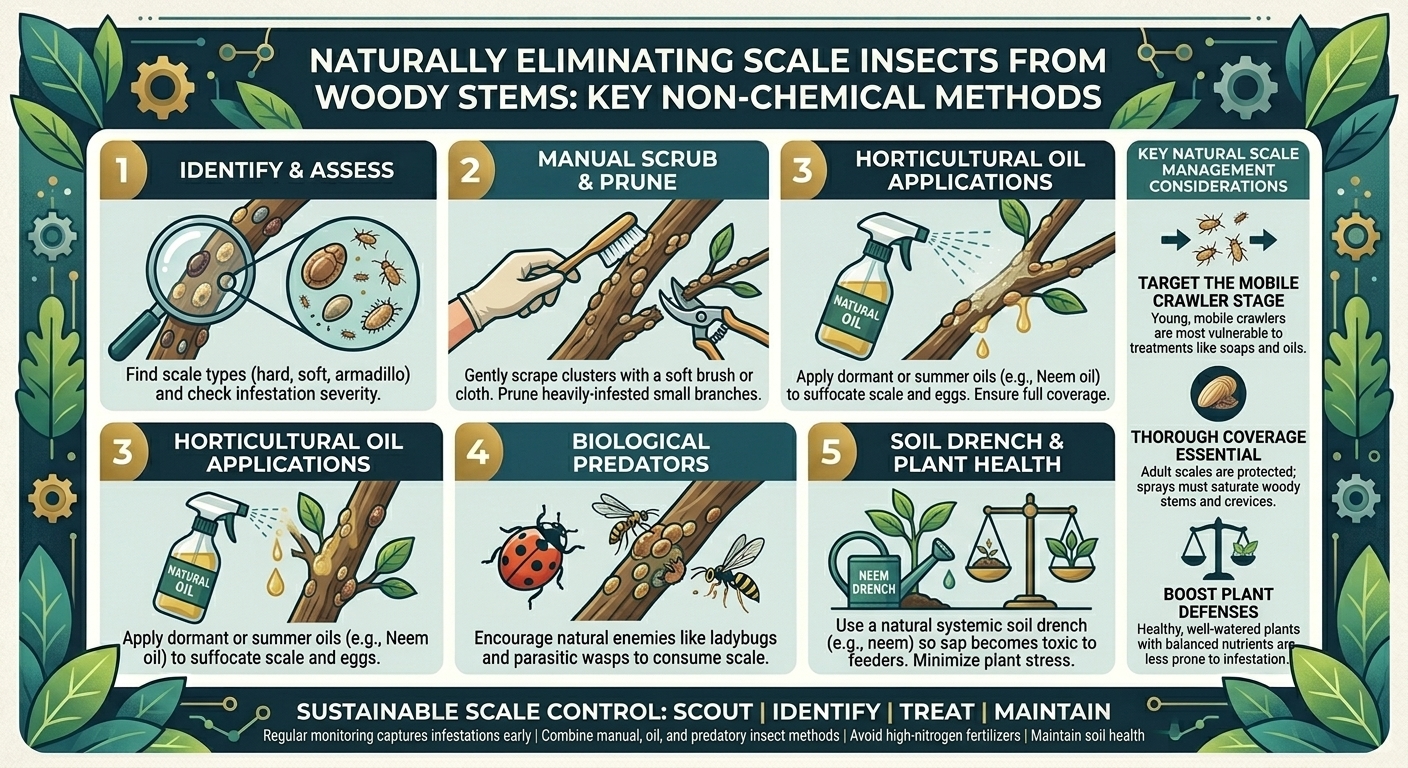
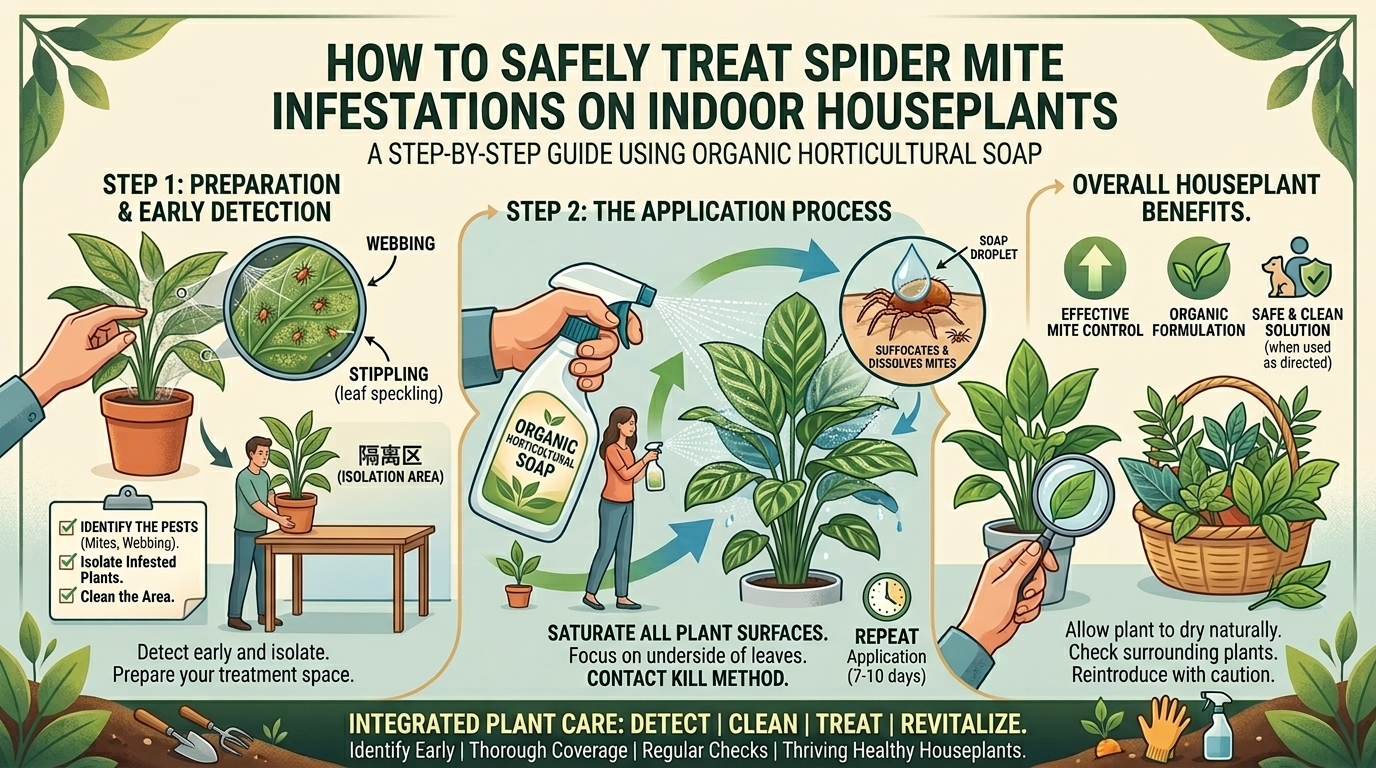
Control the insects spreading the virus. Use floating row covers on young vegetable crops to physically block aphids and thrips, release beneficial predatory insects, or apply organic horticultural insecticidal soap to keep vector populations under control.
Part 5: Frequently Asked Questions (FAQ)
1. Can a virus-infected plant recover on its own?
No. Once a plant is systemically infected with a virus, the pathogen penetrates every living cell. There is no recovery, and no fertilizer, watering schedule, or organic spray can cure it.
2. Is it safe to eat vegetables harvested from a virus-infected plant?
Yes. Plant viruses are biologically incapable of infecting humans or animals. If a tomato plant is infected with Tobacco Mosaic Virus, the fruit may look ugly, speckled, or deformed, but eating it poses zero health risk to you or your pets.
3. Can plant viruses live in the soil over winter?
Some viruses (like TMV) are remarkably resilient and can survive for years in dried plant debris, old roots, or contaminated soil. Other viruses require a living host plant or insect vector to survive through winter months.
4. How can I tell the difference between viral mosaic and nutrient deficiency?
Nutrient deficiencies (like magnesium or iron deficiency) typically cause a general, uniform yellowing between the veins on older or lower leaves. Viral mosaic symptoms display erratic, sharp, asymmetric mottled patterns that heavily affect the new, emerging growth at the top of the plant.
5. Do resistant plant varieties really work?
Yes! Modern plant breeding has produced incredible disease-resistant cultivars. When buying seeds or starts, look for labels indicating resistance codes—such as TMV (Tobacco Mosaic Virus resistance) or TSWV (Tomato Spotted Wilt Virus resistance)—especially if you live in high-risk regions like Texas or California.
6. Can my houseplants contract viruses from my outdoor garden?
Yes, if insect vectors like thrips or fungus gnats move between indoor and outdoor collections, or if you handle outdoor plants and touch your indoor houseplants without washing your hands first.
7. Why are my dahlias showing weird color streaks?
Dahlias are notoriously prone to Dahlia Mosaic Virus (DMV). Symptoms include stunted growth, chlorotic vein-banding, and brittle, cupped leaves. Infected tubers will pass the virus on to next year’s growth, so infected clumps should be discarded.
8. Does seed saving spread plant viruses?
Yes. Certain plant viruses (including TMV and bean common mosaic virus) can be transmitted internally through the seed coat or embryo. Never save seeds from plants that showed viral symptoms during the growing season.
9. Can I use milk to prevent or treat plant viruses?
Protein solutions (such as diluted non-fat dry milk sprays) have been shown in scientific studies to inhibit the mechanical transmission of certain viruses like TMV on tools and hands before infection occurs. However, milk does not cure an already infected plant.
10. How can I protect my greenhouse or indoor grow space from viruses?
Install fine insect mesh screens on all ventilation windows and intake fans, enforce strict hand-washing protocols before entering the grow room, and quarantine any new plant additions for at least three weeks before placing them near your primary collection.
Conclusion
Plant viruses are among the most frustrating challenges a gardener can face, largely because they operate silently and offer no second chances. By learning to recognize the distinct patterns of chlorosis, leaf distortion, and stunting early on, you can make the hard choice to remove infected plants before they threaten your entire ecosystem. Prioritize disease-resistant varieties, practice strict tool hygiene, and keep insect vectors under control to ensure a healthy, thriving garden from coast to coast.