There is a distinct heartbreak familiar to every indoor plant enthusiast: walking over to your prized monstera, fiddle-leaf fig, or peace lily, only to find its once-glossy leaves drooping, yellowing, and weeping moisture. With a sinking feeling, you touch the soil. It is damp, heavy, and cold. You realize too late that your instinct to “love them with water” has crossed the line into plant parenthood’s most feared nightmare: root rot.
Root rot is the single most common cause of indoor houseplant mortality. It is a stealthy, destructive condition that works entirely out of sight in the dark underworld of your pot before displaying catastrophic symptoms above ground.
For passionate indoor gardeners managing green spaces across diverse regional landscapes—from drafty high-rise apartments in New York and San Francisco to sunny urban and suburban sunrooms in Texas, California, and Washington State—recognizing the early warning signs of root rot can mean the difference between saving your botanical collection and tossing it into the compost bin. This comprehensive guide explores plant pathology, early visual symptoms, soil microbiology, revival protocols, and expert tips to safeguard your indoor potted jungle.
1. The Pathology of Root Rot: What Happens Below the Soil Line?
To understand root rot, you must first understand why overwatering is lethal. In healthy soil, roots require a delicate 50/50 balance of moisture and oxygen pockets. Roots are living organs that “breathe” oxygen to fuel cellular growth and nutrient uptake.
+-----------------------------------------------------------------+
|             THE ROOT ROT PATHOGENESIS CYCLE                     |
|                                                                 |
|   [1. Chronic Overwatering & Oxygen Starvation]                 |
|   - Excess water fills all pore spaces in potting soil, trapping|
|     carbon dioxide and starving roots of vital oxygen.          |
|              |                                                  |
|              v                                                  |
|   [2. Root Suffocation & Cellular Death]                        |
|   - Deprived of oxygen, root cells suffocate, die, and stop     |
|     absorbing water, leaving the root tips soft and defenseless.|
|              |                                                  |
|              v                                                  |
|   [3. Pathogen Invasion (Pythium, Phytophthora, Rhizoctonia)]   |
|   - Opportunistic, soil-borne water molds (oomycetes) and       |
|     fungi attack the dying, decaying root tissue aggressively.  |
|              |                                                  |
|              v                                                  |
|   [4. Systemic Collapse]                                        |
|   - The root system rots away entirely, cutting off all water   |
|     and nutrient transport to the upper plant foliage.          |
+-----------------------------------------------------------------+
2. Early Above-Ground Warning Signs (Before It’s Too Late)
Because roots are hidden inside ceramic or plastic pots, your plant will communicate its internal distress through subtle physical changes in its foliage and stems. Look for these early warning flags:
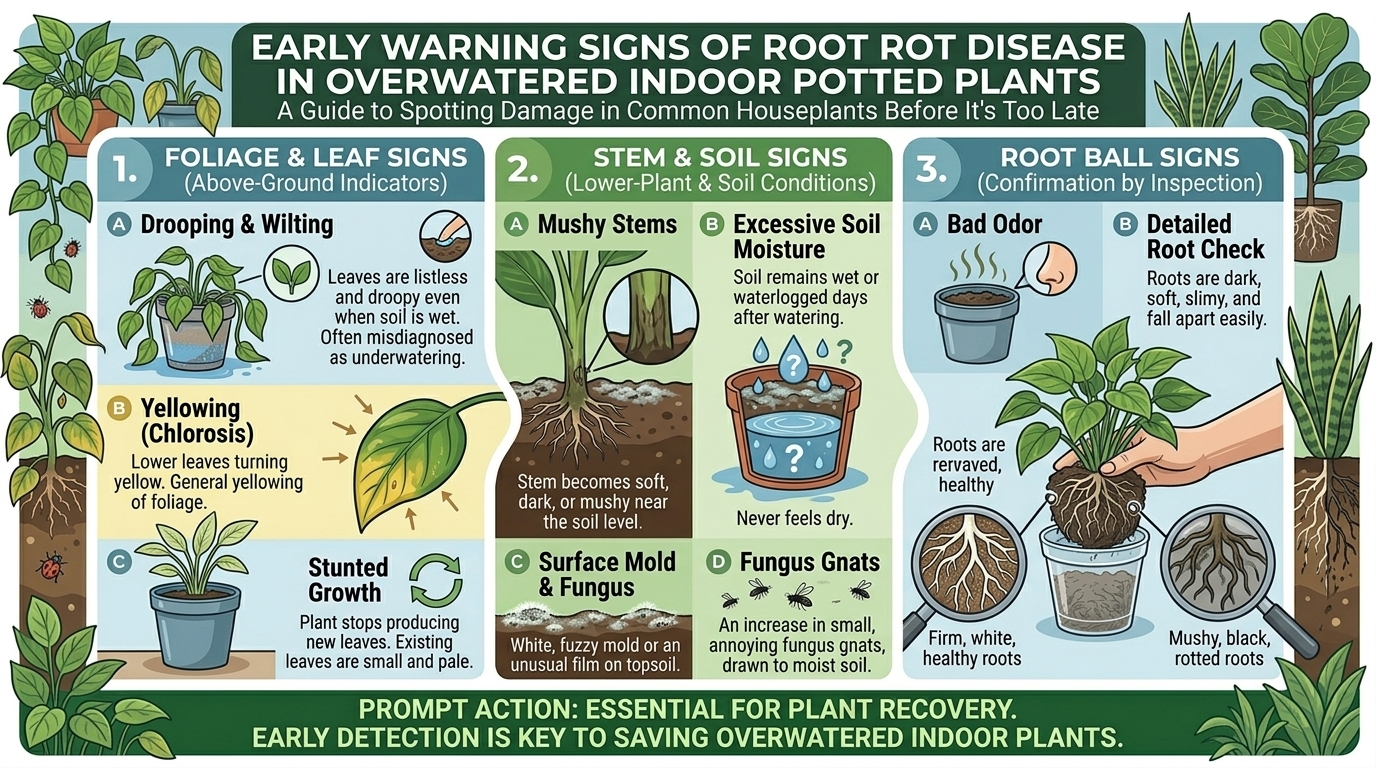
A. The Paradoxical “Wilting Despite Wet Soil”
This is the ultimate hallmark of root rot. When an underwatered plant wilts, the soil is bone dry, and watering immediately perks it up. When a root-rotting plant wilts, the soil is soaking wet, yet the plant still sags. This occurs because the rotted roots can no longer transport moisture upward to the thirsty leaves, tricking owners into watering more and accelerating the rot.
B. Chlorosis (Yellowing of Lower Leaves)
Older, lower leaves turn a pale, sickly yellow and drop off prematurely. The plant redirects its dwindling energy to keep new top growth alive, sacrificing its base foliage.
C. Leaf Edge Necrosis (Brown, Crispy Margins)
Even though the soil is wet, the leaves develop dark brown, crispy tips or margins. Without functional roots to regulate water pressure, cells at the extreme edges of the leaves dehydrate and die.
D. Stunted New Growth and Bud Drop
If your plant is actively producing new leaves or flower buds that suddenly turn black, shrivel, and drop off before opening, the root system is failing to supply the necessary macronutrients.
3. Below-Ground Warning Signs: Inspecting the Root Ball
If you suspect root rot, you must be brave enough to gently unpot the plant and inspect the roots directly.
+-----------------------------------------------------------------+
|             HEALTHY VS. ROTTED ROOT COMPARISON                  |
|                                                                 |
|   [Healthy Roots]                                               |
|   - Firm, plump, and resilient texture.                         |
|   - Bright white, cream, or light tan coloration.               |
|   - Earthy, fresh smell resembling rich forest soil.            |
|              |                                                  |
|              v                                                  |
|   [Rotted Roots]                                                |
|   - Mushy, slimy, or hollow texture (outer sheath slips off).   |
|   - Dark brown, grey, or pitch-black coloration.                |
|   - Foul, sour, or rotting-garbage odor.                        |
+-----------------------------------------------------------------+
If you pull gently on a black, mushy root and the outer sheath slides off like a wet sock—leaving behind a thin, stringy inner thread—you are looking at advanced root rot.
4. Why Indoor Environments Exacerbate Root Rot Risk
Your geographic location and indoor climate control systems directly influence how quickly your potting soil dries out:
New York City and San Francisco
Urban apartments in New York and San Francisco often feature historic steam heat in winter or dense, shaded microclimates. During winter heating seasons, indoor air becomes desert-dry, yet ambient room temperatures drop near windowsills. Plants consume water much slower in cooler indoor microclimates, meaning standard watering schedules that worked in July will drown plants in January.
Washington State
The Pacific Northwest features long, overcast, low-light winters. Reduced natural daylight drastically slows down plant photosynthesis and transpiration. Indoor plants consume a fraction of the water they use in summer; keeping them on a rigid weekly watering schedule during Seattle winters is a primary trigger for root rot.
Texas and California
While sunny southern sunrooms promote rapid growth during spring and summer, indoor air conditioning units can create erratic airflow and deceptive surface drying. The top inch of soil may bake dry under an AC vent while the bottom of the pot remains a soggy, anaerobic swamp.
5. Step-by-Step Emergency Root Rescue Protocol
If you catch root rot in its early stages, you can save your plant by performing “root surgery.”
+-----------------------------------------------------------------+
|             THE 4-STEP ROOT RESCUE SURGERY                      |
|                                                                 |
|   [Step 1: Gentle Unpotting & Soil Removal]                     |
|   - Slide the plant out of its pot and gently massage away old,   |
|     soggy potting mix from the root ball under lukewarm water.  |
|              |                                                  |
|              v                                                  |
|   [Step 2: Sterilized Pruning]                                  |
|   - Using shears sterilized in rubbing alcohol, trim away every |
|     single mushy, black, or foul-smelling root until you reach  |
|     firm, white, healthy tissue.                                |
|              |                                                  |
|              v                                                  |
|   [Step 3: Sterilizing the Root System]                         |
|   - Dip the remaining healthy roots into a mild antifungal      |
|     solution (such as 1 part 3% hydrogen peroxide to 3 parts    |
|     water) for 60 seconds to kill lingering spores.             |
|              |                                                  |
|              v                                                  |
|   [Step 4: Repotting in Fresh, Fast-Draining Medium]            |
|   - Repot into a clean container with fresh, sterile, well-     |
|     aerated soil (adding perlite, orchid bark, and pumice).     |
+-----------------------------------------------------------------+
6. Comprehensive Indoor Plant Watering & Soil Checklist
| Preventive Action | Recommended Standard | Primary Objective |
| Drainage Check | Ensure every pot has active drainage holes | Prevent perched water tables at the base of the container |
| Soil Composition | Blend 50% standard potting soil with 50% perlite/bark | Maximize aeration and create rapid water drainage |
| Testing Moisture | Use a moisture meter or the “finger test” (2 inches deep) | Confirm soil is dry before administering water |
| Watering Technique | Soak thoroughly until water runs out, then empty saucer | Eliminate standing water in collection trays |
7. Frequently Asked Questions (FAQs)
1. What is root rot and what causes it?
Root rot is a destructive condition caused by soil-borne pathogens (Pythium, Phytophthora) that attack plant roots suffocated by chronic overwatering and compacted, oxygen-starved soil.
2. Can a plant recover from root rot once it starts?
Yes, if caught early. If you trim away all infected mushy roots, sterilize the remaining root ball, and repot the plant in fresh, sterile, well-draining soil, many resilient houseplants will make a full recovery.
3. Why is my plant wilting even though the soil is soaking wet?
This is the classic symptom of root rot. Rotted roots are destroyed and can no longer transport water and nutrients upward to the leaves, causing the plant to wither despite wet dirt.
4. Should I use hydrogen peroxide to treat root rot?
Yes. Rinsing trimmed roots in a mild solution of 3% hydrogen peroxide and water helps oxidize and kill lingering fungal spores and provides a burst of oxygen to surviving root tissue.
5. Does the type of flower pot matter in preventing root rot?
Yes. Porous pots (like unglazed terracotta) allow moisture to evaporate outward through the clay walls, protecting against overwatering. Non-porous pots (plastic, glazed ceramic) retain moisture much longer.
6. How do I know when my indoor plant actually needs water?
Never water on a rigid calendar schedule. Instead, stick your index finger 2 inches into the soil. If it feels dry and crumbly at your knuckle, it is time to water. If it feels damp, wait.
7. What is “perched water table” in indoor pots?
A perched water table occurs at the bottom of a pot where drainage meets dense soil, creating a zone of saturation. Adding gravel to the bottom of a pot does not fix this; using a well-aerated potting mix does.
8. Can root rot spread from one potted plant to another?
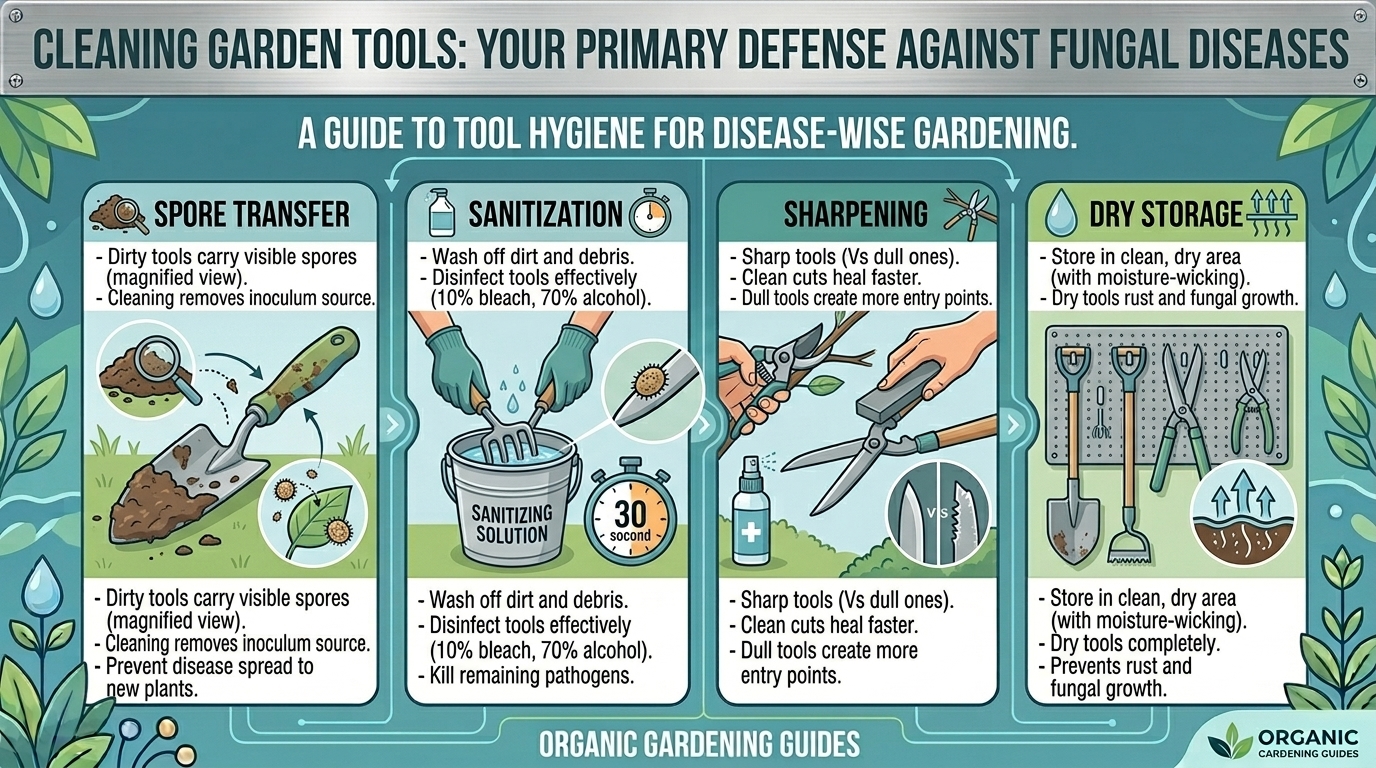
Directly, no. However, if you reuse unsterilized potting pots or tools (like shears or watering cans) that touched infected root systems, you can easily transmit fungal spores to healthy plants.
9. Why do lower leaves turn yellow when a plant is overwatered?
When roots begin to rot and die, the plant can no longer support its entire canopy. It strategically sacrifices its older, lower leaves to conserve nutrients and energy for new growth.
10. What soil amendments work best to prevent root rot?
Incorporate coarse perlite, horticultural charcoal, pine bark chips, and pumice into your indoor potting mix to create large air pockets that guarantee rapid drainage and root oxygenation.
8. Conclusion
Root rot is a formidable enemy for indoor gardeners, but it is entirely preventable and, in many cases, treatable when caught early. By paying close attention to subtle above-ground warning signs—such as wilting despite wet soil, yellowing lower leaves, and stunted growth—you can intervene before the damage becomes irreversible.