There are few sights more heartbreaking for a dedicated gardener than stepping out onto your patio or strolling through your backyard landscape on a crisp morning, only to find that your prized hostas—which spent weeks unfurling lush, vibrant, architectural leaves—have been cleanly chewed down to bare, pathetic stems. To a hungry white-tailed or black-tailed deer, a pristine bed of hostas and high-end flower arrangements functions as a gourmet salad bar served on a silver platter.
For passionate landscape designers and home growers cultivating gardens across diverse environments—from compact urban courtyard plots in San Francisco and New York to expansive suburban properties in Texas, Washington State, and California—managing deer pressure is an ongoing challenge.
While heavy wire fencing or commercial synthetic chemicals can keep wildlife at bay, many property owners prefer eco-friendly, organic methods that protect their plants without contaminating the soil or endangering household pets and beneficial pollinators. This comprehensive guide explores deer behavior, powerful DIY organic taste and scent deterrents, strategic companion planting, and expert tips to permanently protect your expensive hostas and flower arrangements naturally.
1. Understanding the Enemy: Why Deer Love Hostas and Flowers
To outsmart deer, you must understand their browsing habits. Deer are selective browsers rather than grazers; instead of eating grass continuously, they seek out nutrient-dense, high-moisture vegetation that is easy to digest.
- The Hosta Attraction: Hostas are packed with succulent water, tender cellular structures, and high sugar content during their active spring and summer growth phases. To a deer, they are the botanical equivalent of a decadent pastry.
- Tender Flower Arrangements: Tulips, daylilies, roses, hydrangeas, and fresh container arrangements feature soft petals and nitrogen-rich buds that provide vital protein and calories, particularly for does nursing fawns.
2. Top DIY Organic Repellents You Can Mix at Home
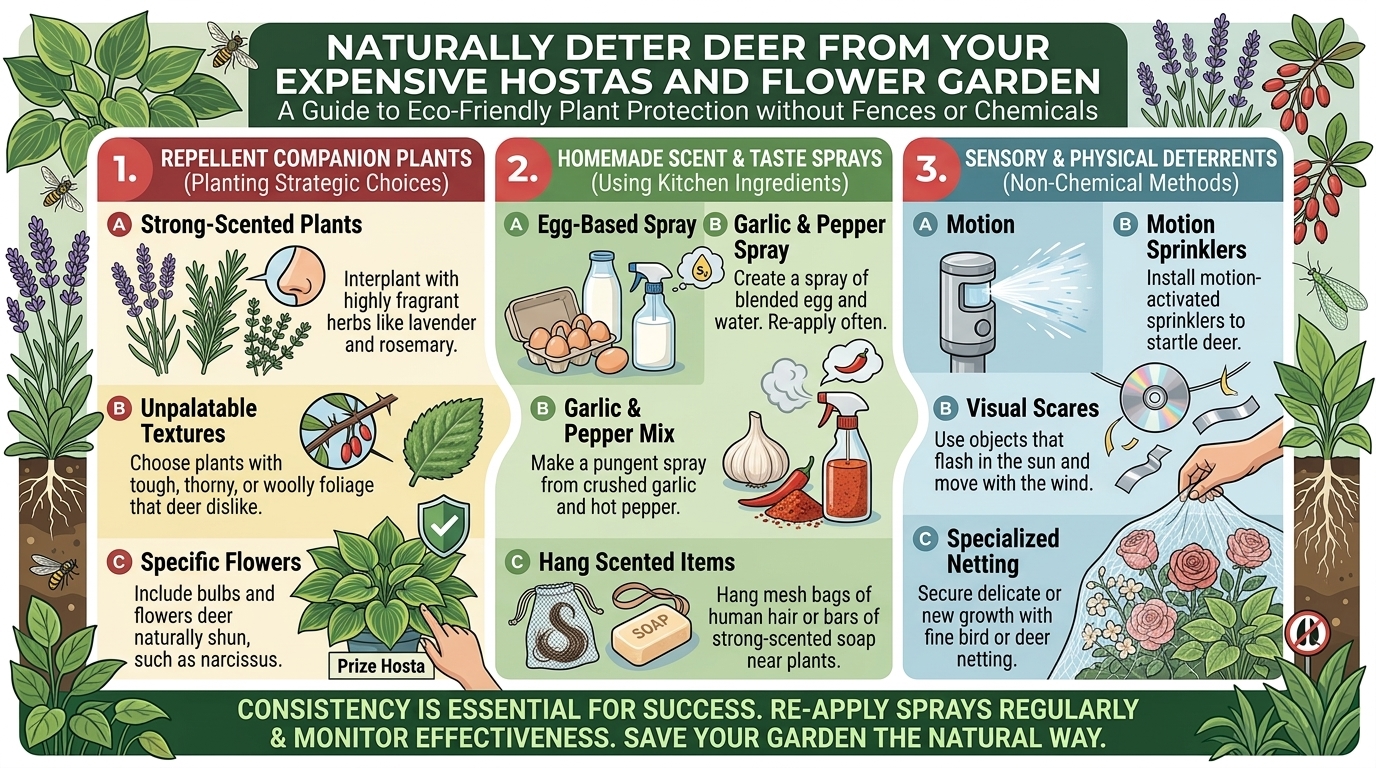
Commercial organic repellents can be expensive, but you can easily craft powerful, highly effective barrier sprays in your own kitchen using natural ingredients that overwhelm a deer’s acute sense of smell and taste.
+-----------------------------------------------------------------+
|               HOMEMADE ORGANIC DEER REPELLENT RECIPES           |
|                                                                 |
|   [Recipe 1: The Putrescent Egg Barrier (Scent-Based)]          |
|   - Blend 3 whole raw eggs with 1 gallon of water and a squirt |
|     of liquid dish soap. The rotting protein smell mimics dead  |
|     decay, triggering an intense biological fear response.      |
|              |                                                  |
|              v                                                  |
|   [Recipe 2: Spicy Garlic Fire Spray (Taste-Based)]             |
|   - Puree 1 whole head of garlic and 3 tablespoons of cayenne   |
|     pepper flakes in 1 gallon of water. Strain the liquid, add |
|     a squirt of dish soap (to help it stick to waxy hosta leaves),|
|     and spray directly on foliage.                  |
+-----------------------------------------------------------------+
Application Strategy
Apply these homemade sprays on a dry, calm day. Reapply every 7 to 10 days, or immediately after a heavy rainstorm or automated sprinkler cycle washes the protective coating away.
3. Strategic Companion Planting: The Deer-Resistant Shield
One of the most sustainable, low-maintenance ways to protect your delicate hostas and high-end flowers is to surround them with defensive “companion plants” that deer despise due to strong essential oils, fuzzy textures, or toxic compounds.
+-----------------------------------------------------------------+
|             DEFENSIVE PERIMETER PLANTING STRATEGY               |
|                                                                 |
|   [1. The Outer Perimeter Layer]                                |
|   - Plant heavily aromatic herbs and bulbs like lavender,       |
|     rosemary, alliums (garlic/chives), and daffodils to form  |
|     an olfactory wall that masks the sweet scent of hostas.     |
|              |                                                  |
|              v                                                  |
|   [2. The Texture and Flavor Buffer]                            |
|   - Interplant fuzzy or prickly species like Russian sage,      |
|     lamb's ear, and marigolds directly among your vulnerable flower |
|     beds. Deer hate brushing against prickly textures.            |
+-----------------------------------------------------------------+
4. Regional Climate Strategies Across the United States
Your local geography, native wildlife populations, and regional weather patterns dictate how aggressive your deer-deterrence strategy needs to be:
San Francisco and New York City
In suburban enclaves surrounding New York or urban-adjacent green spaces in San Francisco (such as park borders or wooded hillsides), deer have adapted closely to human presence and lost much of their natural fear of people. In these zones, scent-based deterrents must be rotated frequently because local deer become desensitized to single odors quickly.
Washington State
The lush Pacific Northwest boasts dense black-tailed deer populations that forage heavily year-round due to mild winters. Because Washington experiences frequent winter and spring rainfall, water-fast commercial or DIY sticking agents (such as liquid agricultural latex or specialized anti-desiccants mixed into your organic sprays) are essential to prevent heavy rain from washing away your defenses.
Texas and California
In drought-prone regions of Texas and California, natural wild forage dries up and turns brown during scorching summer months. Desperate deer will push deep into residential neighborhoods searching for irrigated, water-rich landscape plants like hostas and container flowers. During peak dry seasons, combine scent barriers with motion-activated water sprinklers to reinforce boundaries.
5. Multi-Sensory Deterrence: Engaging Fear and Confusion
Because deer are cautious, intelligent prey animals, relying on a single deterrent method rarely works long-term. Combining multiple sensory disruptions creates an environment of perceived danger:
- Motion-Activated Sprinklers: Devices like solar-powered motion-activated sprinklers deliver a sudden burst of water and mechanical clicking noise when a deer approaches, startling them away before they can take a bite.
- Scent Rotation: Rotate your deterrent strategy every 3 to 4 weeks. Switch from an egg-based spray to a hot pepper spray, and scatter bags of human hair or predator urine granules along the perimeter. If the scent profile changes constantly, deer never feel secure enough to browse.
- Reflective Visual Barriers: Hang old holographic CDs, metallic ribbons, or small spinning pie pans near prized flower arrangements; the erratic flashes of reflected sunlight disorient grazing deer.
6. Comprehensive Seasonal Deer Management Schedule
| Timing | Action Item | Primary Objective |
| Early Spring (Hostas Emerging) | Apply systemic or heavy organic spray barriers | Protect tender, sugar-rich new shoots as they break soil |
| Late Spring (Flower Bud Formation) | Set up motion-activated sprinklers & perimeter herbs | Defend developing flower buds and high-value arrangements |
| Summer (Peak Drought / Forage Drop) | Rotate scent deterrents weekly (Eggs, Garlic, Pepper) | Combat increased browsing pressure when native brush dries out |
| Autumn & Winter (Hard Frost) | Clean up garden debris; apply final protective sprays | Prevent late-season foraging on remaining root crowns |
7. Frequently Asked Questions (FAQs)
1. Do hostas ever grow back after deer eat them to the ground?
Yes. Hostas are remarkably resilient perennials. If deer devour your hostas down to the soil line in spring or summer, the root system will usually push out a second flush of leaves. However, repeated grazing year after year will exhaust the plant’s energy reserves and eventually kill it.
2. What is the absolute best smell to keep deer away?
Deer are most strongly repelled by putrescent organic odors (like rotting eggs) and pungent sulfur compounds (like crushed garlic and capsaicin pepper oils) that signal decay or intense chemical irritation to their sensitive noses.
3. Do coffee grounds actually deter deer from flower beds?
No. While coffee grounds are fantastic nitrogen amendments for soil compost, they do not repel deer effectively. Deer will comfortably walk across coffee ground mulches to reach tasty hostas.
4. Will human hair or Irish Spring soap really stop deer?
While traditional folklore suggests hanging bars of scented soap or stockings filled with human hair, field tests show these methods have limited effectiveness. Deer may initially hesitate, but once they grow hungry, they quickly acclimate to human scents. Always pair them with taste-based deterrents.
5. Are homemade deer sprays safe for edible vegetable gardens?
Yes! DIY organic recipes featuring garlic, cayenne pepper, dish soap, and eggs are 100% food-safe and organic, meaning they will not leave toxic synthetic residues on your edible crops or flowers.
6. Why do deer ignore certain flowers while destroying others?
Deer selectively avoid plants featuring strong aromatic foliage (lavender, rosemary, mint), toxic sap (daffodils, foxgloves), fuzzy leaf hairs (lamb’s ear), or woody, prickly stems that irritate their sensitive mouths.
7. How often should I reapply organic deer repellent sprays?
You should reapply organic sprays every 7 to 10 days during active growth periods, or immediately following heavy rainfall or overhead lawn irrigation that washes the active ingredients off the foliage.
8. Can urban deer in cities like San Francisco or New York be deterred naturally?
Urban deer are habituated to humans and cars, making them bolder. Natural scent barriers and motion-activated sprinklers work best in urban yards, though physical fencing remains the only 100% foolproof guarantee in high-density zones.
9. Do motion-activated deterrents annoy household pets?
Motion-activated sprinklers will startle dogs or cats if placed directly in their primary pathways, but when pointed strictly at garden bed boundaries, pets quickly learn to steer clear while intruder wildlife is effectively chased away.
10. What is the most permanent solution for severe deer damage?
If deer pressure is severe and natural repellents fail, installing an 8-foot-tall black mesh deer fence around your property or garden perimeter is the only permanent, fail-safe method to protect high-value hostas and flower gardens.
8. Conclusion
Protecting your expensive hostas and delicate flower garden arrangements from ravenous deer does not require drenching your landscape in toxic synthetic chemicals. By combining powerful homemade organic sprays (like putrescent egg and spicy garlic barriers), strategically planting aromatic and prickly companion buffers, rotating your sensory deterrents, and installing motion-activated defenses, you can successfully reclaim your yard.