Why the Leaves on My Indoor Potted Fiddle Leaf Fig Tree Keep Turning Brown and Dropping
Few houseplants command a room quite like the Fiddle Leaf Fig (Ficus lyrata). With its architectural stature, glossy violin-shaped leaves, and dramatic presence, it has become a staple for interior styling across homes and offices from New York and San Francisco to Texas, Washington, and California.
However, despite their popularity, Fiddle Leaf Figs have earned a notorious reputation as “treenagers.” They are exceptionally sensitive plants that broadcast their unhappiness loudly and clearly through two main distress signals: brown spots, crispy margins, and sudden leaf drop.
If you are watching your prized indoor tree shed healthy green or brown-speckled leaves onto your floor, you are likely feeling a mix of frustration and panic. This comprehensive guide breaks down the precise biological and environmental root causes behind brown leaves and dropping foliage, offering actionable, step-by-step solutions to rescue your plant.
1. Decoding the Symptoms: Where and How Is the Browning Happening?
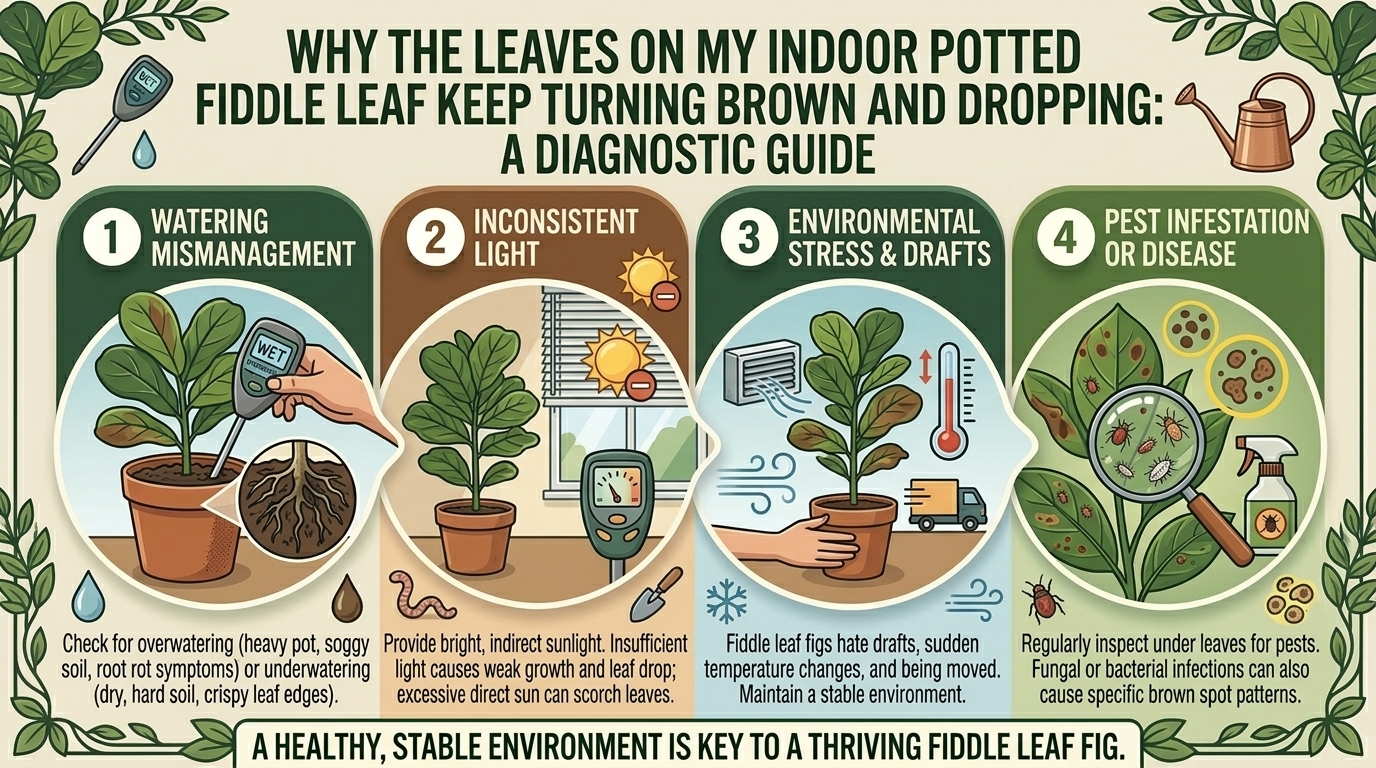
Before treating a sick plant, you must diagnose the pattern of damage. A Fiddle Leaf Fig tells different stories depending on where the browning occurs on the leaf and how fast it spreads.
- Tips and Edges Turning Brown/Crispy: Usually points to environmental dehydration, low humidity, erratic watering habits, or mineral accumulation from tap water.
- Dark Brown to Black Spots Starting Near the Veins or Lower Leaves: This is the classic signature of root rot caused by overwatering or compacted, poorly draining soil.
- Bleached, Papery Light-Brown Patches: Typically indicates sunburn from sudden exposure to harsh, direct sunlight.
- Sudden Leaf Drop with No Prior Discoloration: Usually triggered by environmental shock—such as a sudden draft, a drastic shift in temperature, or being moved to a completely new room.
2. The Top 5 Culprits Behind Brown Leaves and Leaf Drop
I. Improper Watering Mechanics (The #1 Killer)
Fiddle Leaf Figs originate from the tropical rainforests of West Africa, where they experience torrential downpours followed by rapid drainage and drying cycles. Indoor environments rarely mimic this natural rhythm.
- Overwatering: Saturated soil starves roots of oxygen, causing them to suffocate, turn brown, and rot. Once roots die, they cannot transport water to the leaves, resulting in dark brown spots and rapid leaf drop.
- Underwatering & Inconsistent Cycles: Giving your plant tiny sips of water means moisture only hits the top layer of soil, leaving the root ball bone-dry. Alternatively, letting the plant dry out completely for too long causes root cells to shrivel. When you finally water it heavily, the sudden rush of moisture bursts the dehydrated cells, causing rapid edge browning.
II. Low Ambient Humidity and Dry Indoor Air
Indoor heating systems, air conditioning units, and dry regional climates (especially during winter in northern states or dry seasons out west) drop indoor relative humidity below 30%. Ficus lyrata thrives in 50% to 60% humidity. When the air is too dry, moisture evaporates from the massive surface area of the leaves faster than the roots can supply it, leading to crispy brown tips and margins.
III. Tap Water Mineral Toxicity
Fiddle Leaf Figs are sensitive plants that accumulate salts, chlorine, chloramines, and heavy minerals (like fluoride) from standard municipal tap water. Over months of watering, these minerals build up in the soil and act as a toxin. Because leaves function as the plant’s metabolic filters, the excess ions concentrate at the outermost edges, causing severe marginal necrosis (browning edges) that slowly creeps inward.
IV. Light Shock and Sunburn
Lighting changes can severely stress your tree:
- Too Little Light: Causes sluggish growth, pale lower leaves, and gradual, painless leaf drop as the plant sacrifices older foliage to conserve energy.
- Too Much Direct Sun: Moving a plant abruptly into a blazing south-facing window without acclimation causes the delicate cellular structure of the leaves to scorch, leaving bleached, papery brown patches.
V. Environmental Stress and Relocation Shock
Fiddle Leaf Figs despise change. Moving the plant from a bright nursery greenhouse to a dim living room corner, or placing it near a drafty doorway, air conditioning vent, or heating register, induces rapid shock. The plant responds by shutting down cellular communication to lower branches, causing leaves to snap off cleanly from the stem.
3. Step-by-Step Triage: How to Save a Failing Fiddle Leaf Fig
If your tree is actively dropping leaves and showing widespread browning, execute this step-by-step recovery plan:
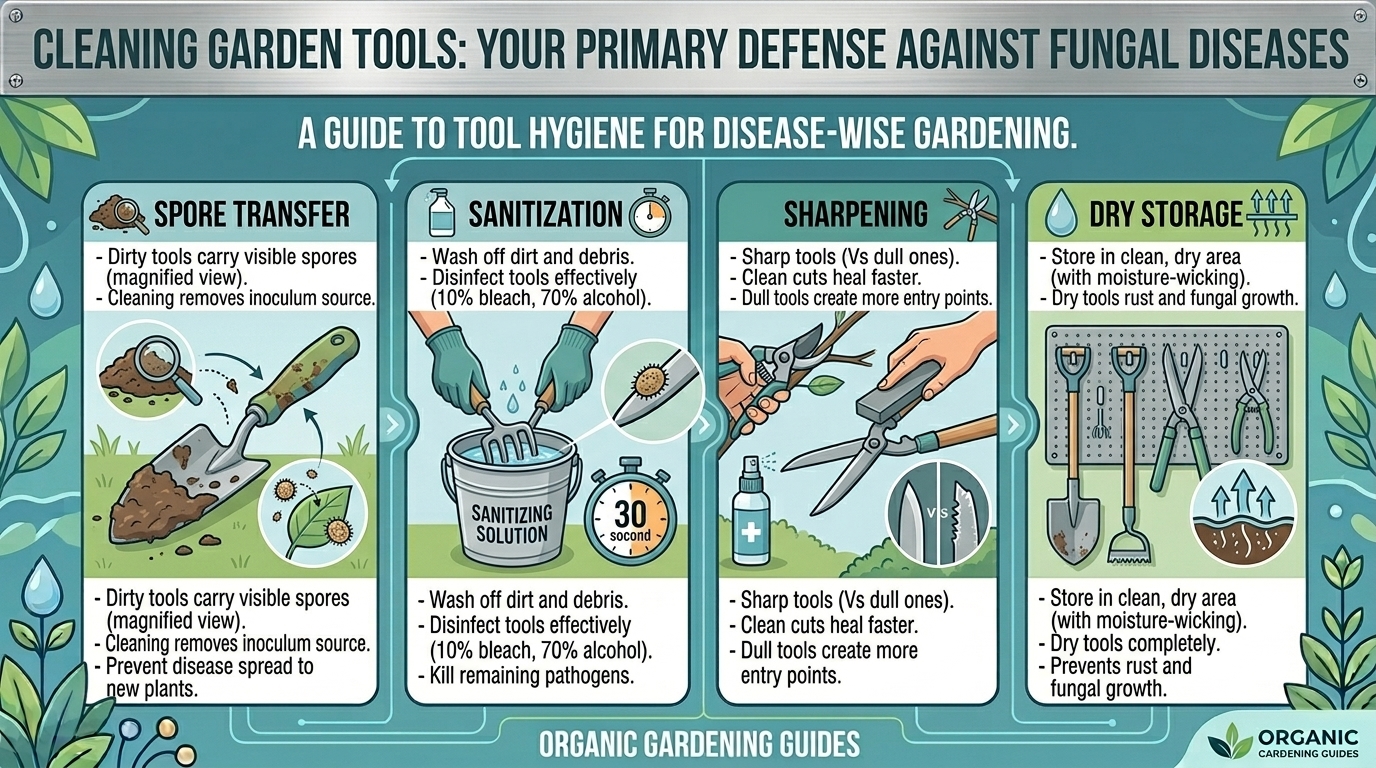
- Perform a Root Check: Gently ease the plant out of its pot. Healthy roots are firm, light-colored, and earthy-smelling. If the root ball is black, mushy, or foul-smelling, you are dealing with advanced root rot. Use sterile shears to trim away all decayed roots, and repot the plant into fresh, well-aerated potting mix blended with perlite or cactus soil.
- Adopt the Deep Soak-and-Dry Method: Never water on a rigid calendar schedule. Instead, check the soil depth using your finger or a wooden chopstick. Water thoroughly only when the top 2 to 3 inches of soil are completely dry. Pour water over the soil until it runs freely out of the drainage holes, ensuring the entire root ball is saturated. Never let the pot sit in standing water in a saucer.
- Upgrade Your Water Source: If you notice chronic browning edges despite proper watering, switch from straight tap water to filtered, reverse-osmosis, or collected rainwater for a few months to flush out accumulated mineral salts.
- Stabilize Placement and Climate: Position your tree in a bright spot receiving plenty of indirect light (such as a few feet back from an east- or filtered south-facing window). Keep it away from active HVAC vents, and commit to leaving it in that exact spot so it can acclimate.
- Clean the Foliage Regularly: Dust blocks microscopic stomata, inhibiting photosynthesis and transpiration. Wipe large leaves monthly with a damp microfiber cloth to keep them breathing efficiently.
Frequently Asked Questions (FAQ)
1. Should I cut off leaves that have brown spots or crispy edges?
You can trim away dead or entirely brown tissue using clean shears, leaving a tiny margin of brown so you don’t wound the healthy green cells. However, if a leaf is only partially damaged, leave the remaining green portion attached—it is still photosynthesizing and providing energy for plant recovery.
2. Can a fiddle leaf fig recover after dropping almost all of its leaves?
Yes, provided the root system and main stem are still firm and healthy. If you correct the underlying environmental stressors (such as overwatering or draft exposure), dormant nodes along the woody stem will eventually activate, pushing out new branch shoots.
3. How often should I actually water my indoor fiddle leaf fig?
There is no universal timeline because indoor humidity, pot size, and temperature dictate drying speed. On average, mature trees in medium-to-large pots require watering every 7 to 14 days, but always verify by checking that the top 2 to 3 inches of soil are dry first.
4. Why are the new, emerging baby leaves turning black and dropping off?
New growth turning dark or black is typically a sign of severe root stress or inconsistent watering. When roots are damaged, they cannot supply the steady hydration required by delicate new tissue, causing young leaves to abort before they fully unfurl.
5. Do fiddle leaf figs need pebble trays or misting to increase humidity?
Misting provides only a temporary spike in humidity (lasting mere minutes) and can actually encourage fungal leaf spot diseases if water sits on the foliage. Instead, place a digital hygrometer near the plant and use a dedicated cool-mist room humidifier to maintain a steady 50% to 60% relative humidity.
6. What kind of potting soil is best to prevent root rot?
Standard heavy topsoil retains too much moisture. Use a fast-draining tropical potting mix blended with 25% to 30% perlite, orchid bark, or cactus soil to ensure maximum aeration and prevent moisture compaction around the roots.
7. Is it normal for lower leaves to turn yellow and drop off over time?
As a fiddle leaf fig matures into a tree shape, it naturally sheds its lowest, oldest leaves to channel energy into upward vertical growth. However, if multiple leaves yellow and drop simultaneously, it indicates overwatering or nutrient deficiency rather than normal aging.
8. Can I place my fiddle leaf fig outdoors during the summer?
Yes, provided outdoor temperatures remain consistently above 65°F and the plant is placed in a shaded, protected patio spot out of harsh direct midday sun and heavy wind gusts, which can tear its massive leaves.
9. How do I know if my plant has root rot or just a cosmetic browning issue?
Cosmetic browning stays localized to tips or edges due to dry air or water minerals, and the plant remains firm and stable. Root rot causes widespread, irregular spotting across the leaf body, accompanied by a soft, drooping stem, mushy soil, and foul-smelling roots.
10. How does kcplants support healthy indoor gardening?
At kcplants.com, we provide expert-backed horticultural guides and practical care frameworks designed to help plant parents diagnose environmental stressors, optimize indoor growing conditions, and keep their botanical collections thriving year-round.
Conclusion
Seeing your fiddle leaf fig drop leaves and develop brown spots can be heartbreaking, but it is rarely a permanent tragedy. These symptoms are simply your tree’s precise diagnostic language communicating that its environment needs adjustment. By dialing in your watering cadence, protecting your plant from harsh drafts, managing humidity, and ensuring proper root health, you can halt leaf drop and encourage lush, vibrant new growth. Consistency is the ultimate secret to mastering indoor tree care.