How to Use Liquid Seaweed Extract to Fertilize Your Indoor Potted Plants During Growing Seasons
When spring arrives and daylight hours stretch longer, indoor houseplants awaken from their winter dormancy. Across sunny apartments in San Francisco, high-rise urban lofts in New York, spacious residences in Texas, and vibrant homes throughout California and Washington, plant parents notice a sudden burst of fresh, vibrant green growth.
To support this rapid seasonal expansion, plants require a reliable supply of energy, micronutrients, and minerals. While synthetic chemical fertilizers offer quick results, they frequently carry a hidden danger: over-fertilization can burn tender root systems, build up toxic mineral crusts in the soil, and shock your indoor ecosystem.
Enter the ultimate secret weapon of organic master gardeners: liquid seaweed extract.
Harvested from nutrient-dense marine kelp, liquid seaweed is a 100% organic, gentle, and powerhouse fertilizer that supercharges indoor potted plants without the risk of chemical burn. Brought to you by kcplants.com, this comprehensive, expert-led masterclass explores the fascinating botany of seaweed fertilizers, explains why your indoor plants crave marine nutrients during active growing seasons, and provides a step-by-step dilution and application guide.
Part I: The Botanical Magic of Liquid Seaweed Extract
What makes liquid seaweed extract so uniquely effective for potted indoor plants? It comes down to its incredible biochemical composition:
- Natural Plant Hormones (Cytokinins, Auxins, and Gibberellins): Unlike standard NPK (Nitrogen-Phosphorus-Potassium) synthetic fertilizers that only feed basic macronutrients, marine kelp is packed with natural growth hormones. These hormones stimulate rapid root cellular division, encourage lateral branching, and enhance overall plant vigor.
- A Rich Profile of Trace Micronutrients: Ocean kelp absorbs a staggering array of minerals directly from seawater. Liquid seaweed delivers iron, magnesium, zinc, copper, boron, and calcium—elements that are frequently depleted in confined indoor potting soils.
- Stress Resistance and Immunity Boosters: Alginic acid and natural compounds found in seaweed strengthen plant cell walls, making indoor houseplants significantly more resilient against environmental stress, dry indoor heating, and opportunistic pests.
Part II: Why Liquid Seaweed is Superior for Indoor Potted Plants
Container gardening creates a closed ecosystem. Unlike plants in the ground that can send roots outward in search of nutrients, potted houseplants rely entirely on whatever is inside their pots. Here is why liquid seaweed should be your go-to fertilizer during spring and summer:
1. Zero Risk of Chemical Fertilizer Burn
- Synthetic liquid fertilizers are intensely concentrated mineral salts. If applied to dry soil or used in excess, they scorch root hairs, turning them brown and crispy. Liquid seaweed is completely organic and gentle; even if you accidentally apply a slightly strong dose, it will not burn your plant’s roots.
2. Nourishing Beneficial Soil Microbes
- Healthy potting soil is alive with millions of beneficial bacteria and fungi that break down organic matter and feed plant roots. Synthetic fertilizers can sterilize or disrupt this microbiome. Liquid seaweed acts as a prebiotic feast for soil microbes, fostering a thriving, living root ecosystem.
3. Gentle, Balanced Macronutrients
- Liquid seaweed typically has a low N-P-K ratio (often around 0-0-1 or 1-0-4). Rather than forcing unnaturally fast, leggy green growth with heavy nitrogen, seaweed promotes balanced, sturdy, deep-rooted growth.
Part III: Step-by-Step Guide to Applying Liquid Seaweed to Indoor Plants
Using liquid seaweed extract is simple, but precision matters when feeding indoor potted plants. Follow this step-by-step protocol:
Step 1: Choose the Right Product
- Purchase a high-grade, cold-processed liquid seaweed extract or kelp meal concentrate. Cold processing is vital because heat treatment destroys the delicate natural plant hormones (cytokinins) inside the kelp.
Step 2: Calculate Your Dilution Ratio
- Always read the manufacturer’s back-label instructions, but as a general rule for indoor houseplants, dilution is key.
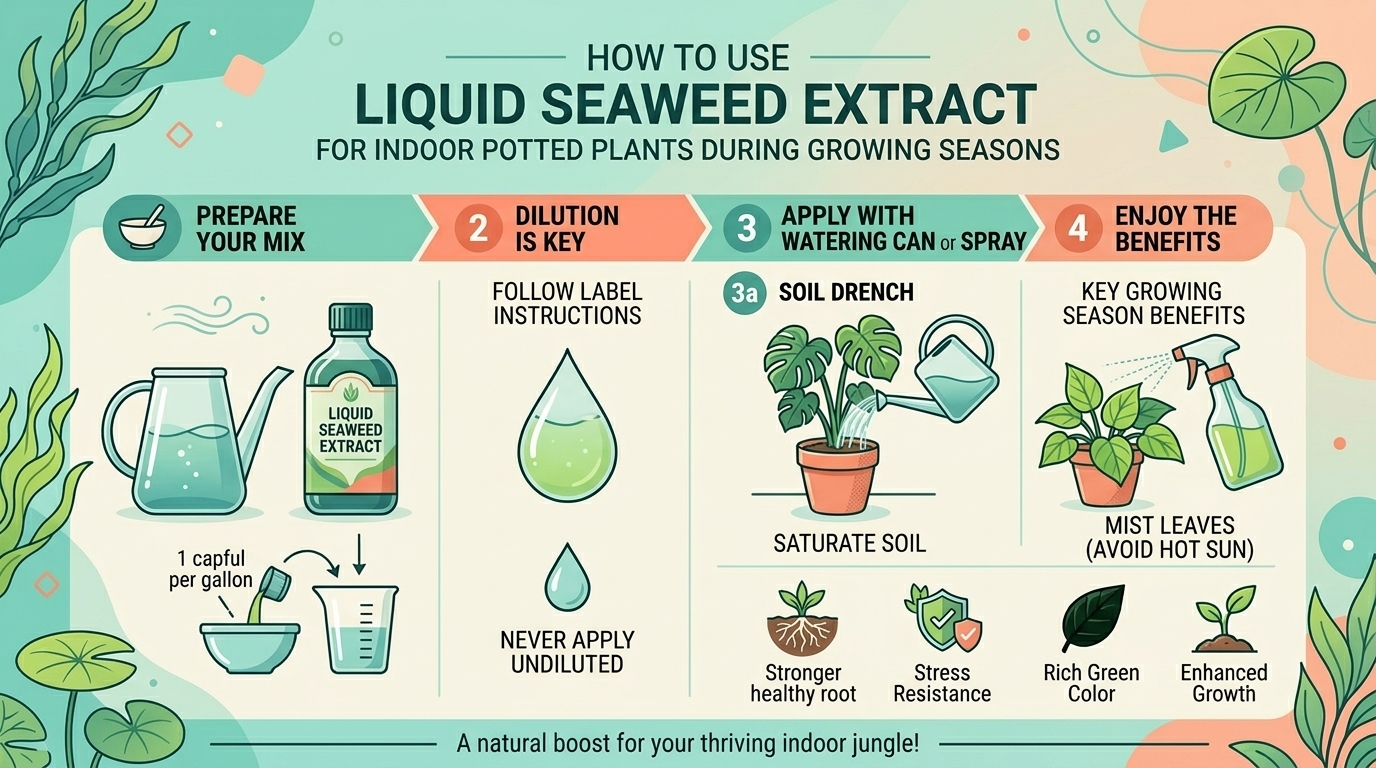
- Mix 1 teaspoon of liquid seaweed concentrate per 1 gallon of water (or roughly 1/4 teaspoon per quart spray bottle). The solution should look like weak, translucent tea.
Step 3: Water Your Plants First (Never Apply to Dry Soil)
- Before feeding with liquid seaweed, give your potted plants a light watering with plain water if the soil is bone-dry. Applying any fertilizer to parched, dry roots shocks the plant and concentrates nutrients unevenly.
Step 4: Apply Via Soil Drench or Foliar Spray
- The Soil Drench (Standard Method): Pour your diluted seaweed solution evenly over the topsoil until it runs out of the bottom drainage holes. This feeds the roots and soil microbiome directly.
- The Foliar Spray (Bonus Method): Pour a small amount into a clean spray bottle and mist the leaves of humidity-loving indoor plants. Stomata (leaf pores) absorb trace minerals directly through foliar feeding, giving plants an instant pick-me-up. (Note: Avoid foliar spraying fuzzy-leaved plants like African Violets).
Part IV: Regional Timing During Growing Seasons
When should you apply liquid seaweed across our key geographical regions?
- San Francisco & New York (Urban Apartments): Active indoor growing seasons typically run from March through September, coinciding with longer daylight hours. Feed your indoor plants once every 3 to 4 weeks during this window. Withhold feeding entirely from November through February when plants rest.
- Texas, California, & Washington: Warm southern and western sunlight in Texas and California can trigger active plant growth as early as February, extending feeding seasons well into October. In Washington, align your fertilizing schedule with the arrival of bright spring sunshine, tapering off as gray winter skies return.
Part V: Pro Tips for Maximizing Plant Nutrition
- Combine with Fish Hydrolysate for Ultimate Power: For heavy-feeder plants like Monsteras, Fiddle Leaf Figs, and Pothos, consider mixing liquid seaweed with liquid fish hydrolysate (often sold as Fish & Kelp fertilizer). Fish provides the heavy nitrogen boost, while seaweed provides micronutrients and hormones.
- Store Properly: Keep your concentrated liquid seaweed bottle tightly sealed in a cool, dark cabinet away from direct sunlight to preserve its active organic compounds.
10 Frequently Asked Questions (FAQ)
1. What is liquid seaweed extract made of?
Liquid seaweed is made from harvested marine kelp (such as Ascophyllum nodosum), which is concentrated into a liquid form packed with natural plant hormones, trace minerals, and vitamins.
2. Will liquid seaweed burn my indoor houseplant roots?
No! Unlike harsh synthetic chemical fertilizers, liquid seaweed is 100% organic and gentle. It will not burn delicate root systems, even if applied slightly over concentration.
3. How often should I fertilize my indoor plants with liquid seaweed during the growing season?
During active spring and summer growth (March to September), apply diluted liquid seaweed every 3 to 4 weeks. Stop fertilizing completely during fall and winter.
4. Can I use liquid seaweed as a foliar spray on indoor plants?
Yes. Misting diluted liquid seaweed onto the leaves allows plants to absorb trace minerals directly through their stomata, though soil drenching remains the primary application method.
5. Does liquid seaweed extract have a strong odor?
Some organic seaweed concentrates have a mild, earthy, ocean-like aroma when first opened, but the scent dissipates completely within minutes of watering your plants.
6. Can I use liquid seaweed on succulents and cacti?
Yes, but in very high dilution and less frequently—once every 6 to 8 weeks during summer. Succulents prefer lean soils, but they still benefit from trace micronutrients.
7. What is the difference between liquid seaweed and synthetic chemical fertilizers?
Synthetic fertilizers provide instant, high-dose macronutrients (NPK) that can burn roots and degrade soil microbes, whereas liquid seaweed provides natural hormones and micronutrients that build long-term plant health organically.
8. Can I mix liquid seaweed with other organic fertilizers?
Absolutely. It mixes exceptionally well with fish emulsion, worm casting tea, or organic liquid compost extracts for a well-rounded nutrient profile.
9. Why is cold-processed liquid seaweed recommended over heat-processed?
Heat processing destroys the beneficial natural plant hormones (cytokinins and auxins) present in kelp, rendering the fertilizer far less effective for stimulating growth.
10. Should I fertilize a newly repotted houseplant with liquid seaweed?
No. Wait at least 4 to 6 weeks after repotting before applying any fertilizer. Fresh potting mix already contains starter nutrients, and disturbed roots need time to recover first.
Conclusion
Fertilizing your indoor potted plants during active growing seasons is essential for lush, vibrant foliage, and liquid seaweed extract stands out as the ultimate organic choice. By harnessing the power of marine minerals and natural plant hormones without the risk of chemical root burn, you can elevate your indoor gardening game naturally. Visit kcplants.com regularly for expert organic plant care guides, tips, and inspiration to help your indoor jungle thrive!