Why Using a Moisture Meter Helps Eliminate Guesswork When Watering Indoor Potted Plant Collections
Welcome to kcplants, your premier digital sanctuary for indoor gardening enthusiasts, urban jungles, and plant parents alike. Whether you are curating a sunlit collection in a California or Texas home, managing humidity shifts in Washington, or keeping a thriving green oasis in a high-rise apartment in New York City or San Francisco, one universal challenge unites every grower: knowing exactly when to water.
Ask any experienced horticulturist what the number one killer of indoor houseplants is, and the answer is almost always the same: improper watering, specifically chronic overwatering leading to root rot. Traditional methods of checking soil moisture—such as the classic “finger test,” lifting heavy pots, or simply following a rigid weekly calendar—are notoriously unreliable.
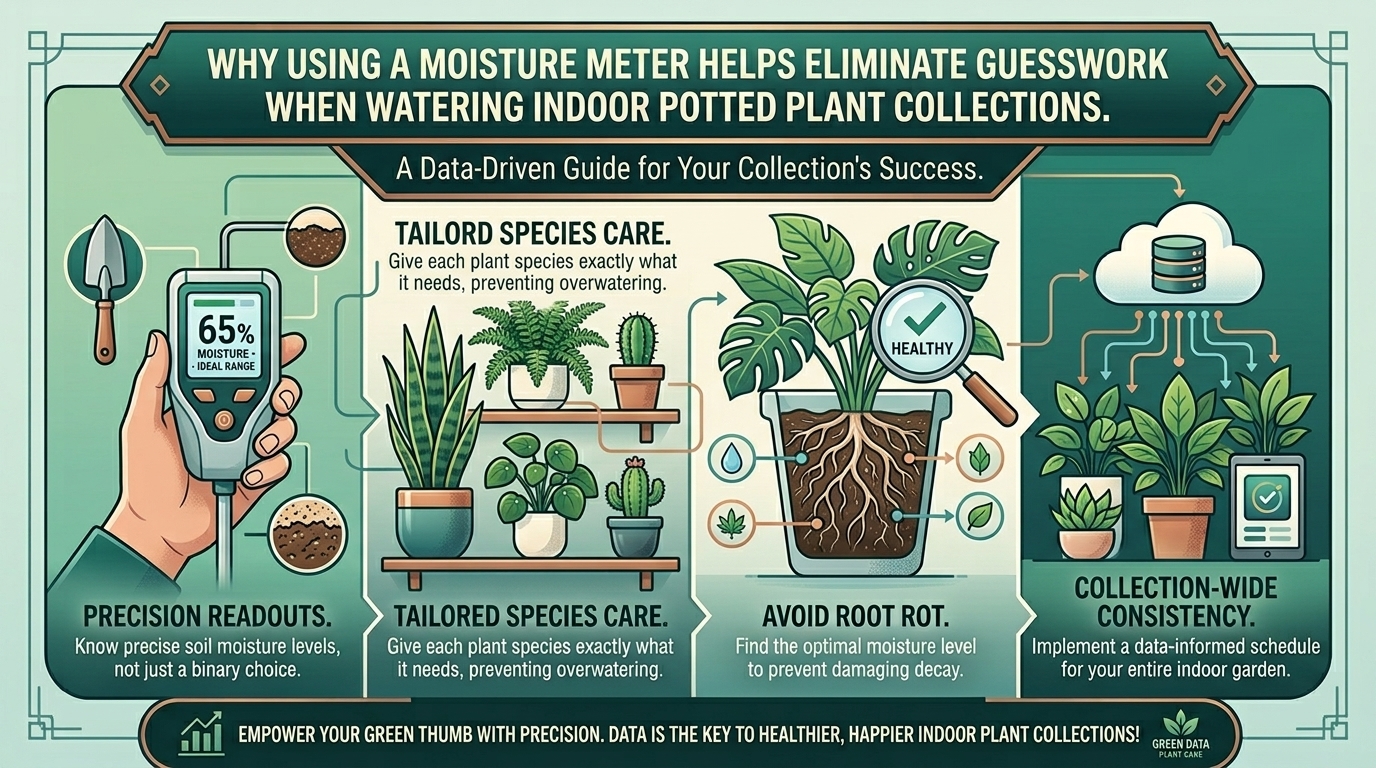
Enter the humble yet revolutionary soil moisture meter. By removing subjective guesswork and providing an objective, scientific reading of deep root-zone moisture, a moisture meter transforms your plant care routine from a stressful guessing game into an exact science.
Below is your definitive, master-level guide on how moisture meters work, why they protect your indoor collections, and how to use them effectively across diverse climates and potting setups.
1. The Perils of Guesswork: Why Traditional Watering Fails
Before exploring the mechanics of moisture meters, it helps to understand why traditional watering methods so frequently lead to plant decline.
The Flaw of the Finger Test
The finger test—sticking your index finger 1 to 2 inches into the soil—is the most common advice given to beginners. While it works well for small, shallow pots, it has severe limitations:
- Surface Bias: Your finger only tests the top crust of the soil.
- The Soil Stratification Trap: In many potted plants, the top inch of soil dries out rapidly due to indoor air movement and evaporation, tricking you into thinking the plant is thirsty. Meanwhile, 4 inches down at the bottom of the pot where the root ball actually sits, the soil remains a soggy, waterlogged swamp.
- Root Zone Blindness: Watering a plant based solely on how the topsoil feels often leads to watering an already saturated root system, suffocating the roots and sparking root rot.
The Danger of Strict Calendars
Watering every Sunday or every seven days ignores the dynamic nature of indoor plant care. Soil drying speed fluctuates wildly based on:
- Ambient room temperature and humidity
- Plant growth rate and seasonal metabolic shifts
- Pot material (terracotta breathes and dries fast; glazed ceramic and plastic retain moisture longer)
- Soil composition and compaction
Relying on a calendar rather than plant need is a fast track to either underwatering or drowning your collection.
2. How Soil Moisture Meters Work (The Science Inside)
A standard analog soil moisture meter is an elegant, battery-free instrument designed to measure the electrical conductivity or galvanic reaction within the soil matrix.
- The Probe Design: The device features a long metal probe composed of two different metals (usually copper and zinc or aluminum and steel).
- The Galvanic Cell: When you push the probe deep into the soil down to the root zone, moisture acts as an electrolyte solution bridging the two metals. This creates a tiny, self-generated electrical current.
- The Dial Reading: The meter measures this electrical potential and translates it onto a scale—typically ranging from 1 to 10 (where 1 is bone-dry and 10 is soaking wet), alongside a color-coded guide (Red for dry, Green for moist, Blue for wet).
Because it measures moisture levels deep where the roots live rather than on the surface, it provides an accurate, real-time diagnostic window into your plant’s hidden subterranean environment.
3. Climate Realities: Managing Indoor Collections in TX, NY, CA, WA, and SF
Your regional environment heavily impacts how your indoor plants consume water, making objective tools like moisture meters invaluable:
- San Francisco & Washington: Coastal fog, marine layers, and high ambient humidity mean indoor soil dries out at a much slower, more deceptive pace. A pot that feels dry on top in an SF apartment may hold heavy moisture deep down for weeks. A meter prevents premature, rot-inducing watering.
- New York: Winter indoor heating systems bake topsoil instantly while leaving lower root zones damp. New York growers frequently overwater during winter because they mistake crusty topsoil for total dryness. A moisture meter cuts through this illusion.
- Texas & California: Intense summer heat drives up indoor air-conditioning use, creating fluctuating microclimates. Plants can experience rapid metabolic shifts, drinking water voraciously one week and resting the next. Meters help track these changing hydration demands seamlessly.
4. Key Benefits of Integrating a Moisture Meter Into Your Routine
Adopting a moisture meter offers profound benefits that directly elevate the health and longevity of your plant collection:
1. Elimination of Root Rot Risk
By verifying that soil reads in the dry or low-moisture zone at the root level before you introduce water, you ensure that roots never sit in prolonged, suffocating wetness.
2. Tailored Care for Diverse Species
Not all plants have the same hydration preferences. A drought-tolerant Snake Plant or Zamioculcas Zamiifolia (ZZ Plant) wants its soil to drop to a 1 or 2 on the meter before receiving another drink. Conversely, tropical moisture-lovers like Calatheas or Peace Lilies prefer staying consistently moist, around a 4 or 5. A meter allows you to dial in specific thresholds for every unique species in your collection.
3. Time-Saving Efficiency
Instead of digging into dirt, lifting heavy pots, or guessing based on drooping leaves, you can walk through your indoor jungle with a moisture meter and check 20 plants in under two minutes.
5. Step-by-Step Guide: How to Use a Moisture Meter Correctly
Like any precision tool, a moisture meter must be used correctly to deliver accurate results. Follow these best practices:
- Step 1: Target the Root Zone. Insert the metal probe vertically (or at a slight angle) halfway between the edge of the pot and the main stem of the plant. Push it down so that the tip rests approximately two-thirds of the way down into the pot, right where the active root mass sits.
- Step 2: Avoid False Readings. Do not force the probe through dense, woody root balls or thick pebble layers at the bottom of a pot, as this can bend the metal or give erratic readings. Avoid hitting hard chunks of dry fertilizer.
- Step 3: Wait for the Needle to Stabilize. Leave the probe in the soil for 30 to 60 seconds to let the electrical reading settle before checking the dial.
- Step 4: Clean the Probe After Every Use. Wipe the metal prongs clean with a soft cloth or paper towel after checking your plants. Leaving damp, acidic soil residue on the metal can cause corrosion, rust, and inaccurate future readings. Pro tip: Never leave a moisture meter permanently poked inside a plant pot as a decoration; prolonged exposure to wet soil will degrade the internal sensors.
6. Interpreting Your Meter Readings: Actionable Thresholds
Once you check your plants, use this simple calibration guide to determine your next move:
- Readings 1 to 2 (Dry / Red Zone): The soil is dry through the root zone.
- Action: Time to water thoroughly until water runs out of the bottom drainage holes (unless working with extremely drought-sensitive succulents, which can often wait a few more days).
- Readings 3 to 5 (Moist / Green Zone): The soil contains balanced, moderate moisture.
- Action: Leave the plant alone! Most standard tropical houseplants (like Monsteras, Pothos, and Philodendrons) thrive in this sweet spot. Do not water yet.
- Readings 6 to 10 (Wet / Blue Zone): The soil is heavily saturated or waterlogged.
- Action: Step away from the watering can. If a plant reads a constant 9 or 10 for more than a week, inspect drainage holes for blockages or check for early root rot.
7. Advanced Tips for Maximizing Meter Accuracy
- Cross-Calibrate with Soil Types: Cheap meters can sometimes react differently to heavily amended organic potting mixes versus pure coco coir or mineral-heavy cactus soil. Test your meter in fresh dry soil and a glass of water initially to understand its baseline response range.
- Check Multiple Spots in Large Pots: For large monsteras or fiddle-leaf figs in 12-inch pots, check the moisture level in two or three different spots around the perimeter to ensure uniform drying.
- Understand What It Doesn’t Measure: Remember that standard inexpensive moisture meters measure moisture, not soil fertility or pH. They will not tell you if your soil lacks nutrients, only whether water is present.
8. Frequently Asked Questions (FAQ)
- Do soil moisture meters require batteries to operate? No! Standard analog moisture meters operate entirely via a passive galvanic electrochemical reaction between the two metal prongs. They are always ready to use without replacement batteries.
- Why is my moisture meter reading “wet” even though the topsoil is bone-dry? This is extremely common and highlights the exact value of the tool. It means moisture is trapped further down in the root zone, often due to poor pot drainage, lack of aeration, or overwatering earlier in the week. Wait to water!
- Can I use the same moisture meter for both indoor houseplants and outdoor garden beds? Yes, you can. However, ensure you thoroughly clean and dry the metal prongs between transitioning from outdoor dirt to indoor pots to prevent transferring soil-borne pests or fungal spores.
- Why isn’t my moisture meter needle moving when I stick it in the soil? If the soil is completely bone-dry, there is no electrolyte solution (water) to complete the electrical circuit, so the needle may not budge. Alternatively, the prongs may be dirty or corroded; wipe them down with fine sandpaper or a scouring pad.
- Are digital moisture meters better than analog dial meters? Digital meters often provide more granular numerical readings, but simple analog dial meters are durable, affordable, require no batteries, and offer clear color-coded zones that make quick spot-checks effortless.
- Can a moisture meter damage my plant’s roots? If forced carelessly into a tightly root-bound pot, the thick probe could puncture a thick root. To prevent this, slide the probe down gently through open pockets of soil near the edge of the pot rather than jamming it directly next to the stem.
- Should I leave my moisture meter stuck in the pot permanently? No. Leaving a meter in damp soil continuously causes premature oxidation, corrosion of the dissimilar metals, and permanent calibration failure. Insert, read, clean, and store.
- How do I know if my moisture meter is broken or inaccurate? Test it in two extremes: push it deep into a freshly watered, soaking wet pot (should read high/blue) and let it sit in dry air or dry loose sand (should read low/red). If it responds correctly to both, it is accurate.
- Can I use a moisture meter for delicate succulent propagation trays? Generally, no. Propagation trays and tiny starter cells are too shallow and delicate for chunky metal probes. It is better to rely on visual checks (spritzing dry soil) for tiny propagation leaves.
- Do moisture meters help prevent fungus gnats? Indirectly, yes! Fungus gnats thrive in constantly wet topsoil. By using a meter to ensure soil dries out properly between waterings, you break the breeding cycle of fungus gnats, keeping your indoor collection pest-free.
9. Conclusion
Eliminating guesswork when caring for indoor potted plant collections is the single most effective way to transition from a struggling hobbyist to a confident, successful plant parent. A moisture meter replaces subjective assumptions with objective data, protecting your plant’s delicate root system from the silent dangers of overwatering.