What Are the Best Cascading Indoor Plants for Hanging Baskets in High-Ceiling Living Rooms
Welcome back to kcplants.com! If you are a design-conscious plant parent decorating a stunning home with vertical architecture across Texas, New York, California, Washington, or San Francisco, you likely face one major interior styling challenge: high-ceiling living rooms.
Loft apartments with soaring ceilings, expansive windows, and architectural height bring incredible natural light and a majestic, airy feel to a home. However, high ceilings can also make a room feel cold, hollow, and top-heavy if the vertical space remains unadorned.
The ultimate interior design antidote? Hanging baskets filled with lush, cascading indoor trailing plants.
Hanging plants draw the human eye upward, soften sharp architectural angles, and create a breathtaking, organic indoor jungle that cascades gracefully down through mid-air. But not all trailing plants are suited for high-ceiling environments. You need vigorous, resilient species that tolerate variable air currents, handle vertical watering logistics, and cascade in long, dramatic curtains of foliage.
This comprehensive, highly informative guide explores the best cascading plants for high-ceiling living rooms, how to care for them at elevated heights, and regional tips tailored for diverse US climates.
1. The Engineering Challenge of High-Ceiling Plant Care
Before choosing your plant species, you must understand the unique microclimate that exists 10 to 15 feet above your living room floor.
The Stack Effect and Temperature Gradients
Physics dictates that hot air rises. In high-ceiling living rooms:
- Thermal Stratification: The air temperature near your ceiling is significantly warmer than the air down at couch level. During winter heating seasons in New York and Washington, or summer AC cycles in Texas, this upper thermal layer can dry out hanging baskets at an alarming rate.
- Air Movement: Ceiling fans and open loft layouts create constant air currents high up in the room, accelerating soil evaporation and testing a plant’s drought tolerance.
2. Top 6 Cascading Plants for High-Ceiling Living Rooms
To make a dramatic visual statement down a tall wall, you need powerhouse trailing plants that combine rapid growth, stunning foliage, and structural resilience.
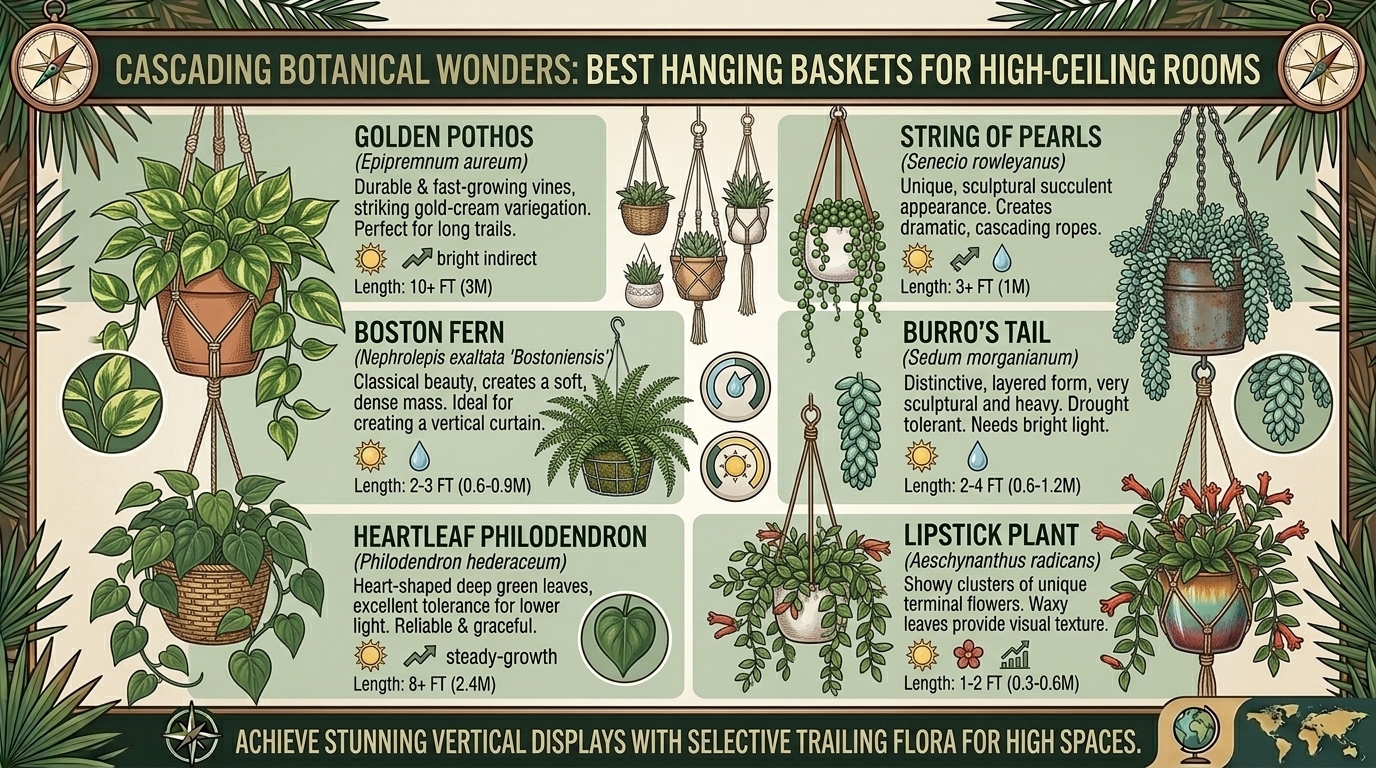
1. The Golden Pothos (Epipremnum aureum)
- Why it’s a high-ceiling champion: Pothos is the undisputed king of trailing indoor plants. Its heart-shaped leaves splashed in gold and cream catch the ambient light beautifully. It grows rapidly, throwing out vines that can easily cascade 10 feet or more down a wall.
- Care Level: Indestructible. It forgives erratic watering and thrives in low-to-bright indirect light.
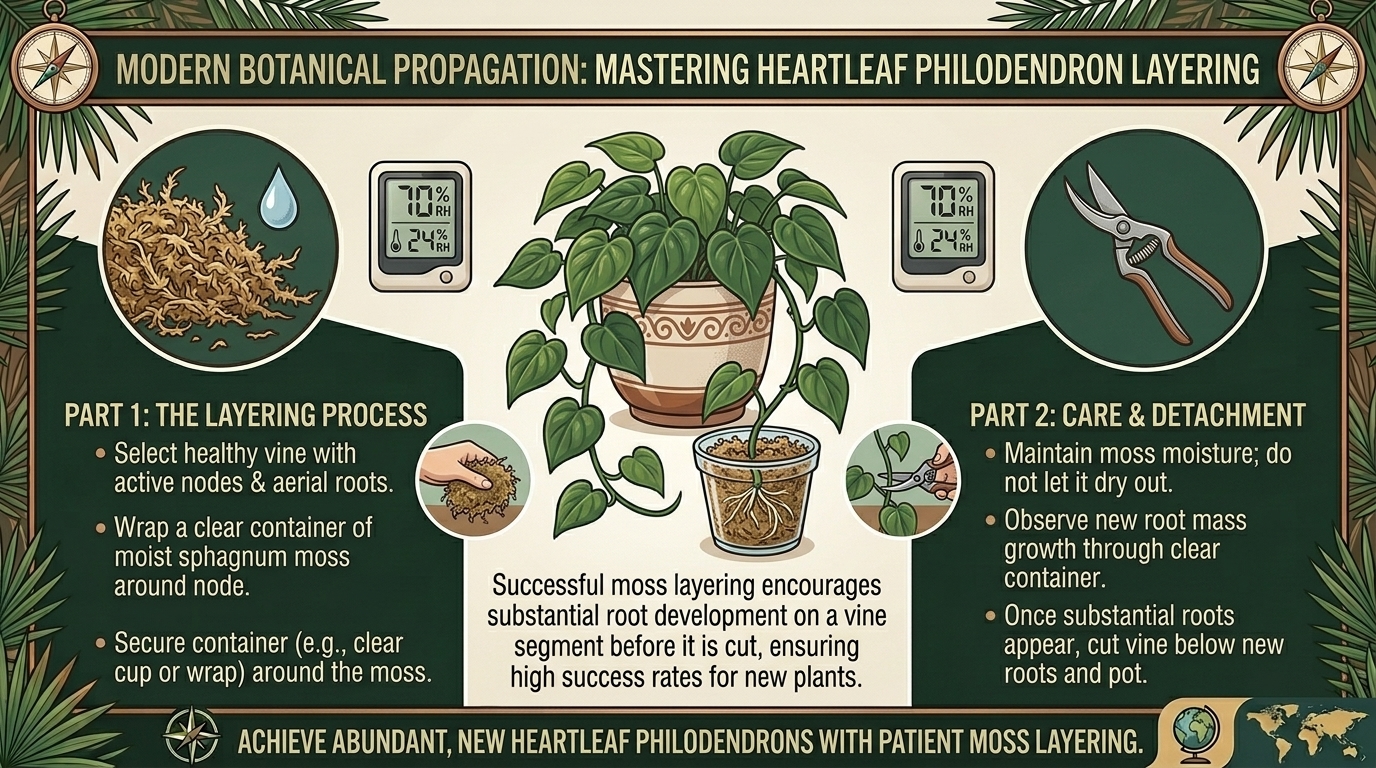
2. Heartleaf Philodendron (Philodendron hederaceum)
- Why it’s a high-ceiling champion: Featuring glossy, deep green, cascading heart-shaped leaves on delicate, flexible vines, the heartleaf philodendron creates a softer, more delicate curtain of green than pothos.
- Care Level: Exceptionally forgiving. It adapts brilliantly to indoor lighting and handles occasional underwatering with ease.
3. String of Hearts (Ceropegia woodii)
- Why it’s a high-ceiling champion: For a delicate, ethereal aesthetic, the String of Hearts features purple-tinted, succulent, silver-veined leaves shaped like tiny hearts trailing down thin, wire-like purple stems. In a high-ceiling room, it looks like a cascading waterfall of jewels.
- Care Level: Because it stores water in its tuberous roots and succulent leaves, it tolerates drought exceptionally well—ideal for pots hanging high out of arm’s reach.
4. The Boston Fern (Nephrolepis exaltata)
- Why it’s a high-ceiling champion: If you want voluminous, lush, explosion-of-green texture rather than skinny vines, the classic Boston fern creates a massive, theatrical, chandelier-like ball of cascading fronds that fills vertical space instantly.
- Care Level: Requires consistent moisture and high humidity, making it a stunner for bright, airy loft spaces.
5. English Ivy (Hedera helix)
- Why it’s a high-ceiling champion: English ivy features lobed, patterned leaves that trail densely in thick, lush ropes. It drapes dramatically over the edges of heavy cachepots, creating a classic, timeless botanical look.
- Care Level: Prefers cooler temperatures and bright, indirect light, thriving wonderfully in northern climates like Washington and New York.
6. The Burro’s Tail (Sedum morganianum)
- Why it’s a high-ceiling champion: A magnificent succulent hanging plant featuring heavy, braided ropes of plump, blue-green, water-filled leaves that cascade downward in striking geometric patterns.
- Care Level: Loves bright light (perfect for sun-drenched high-ceiling windows in California or Texas) and demands very little water.
3. Regional Considerations Across the US
Your local climate and regional architecture heavily influence how your high-ceiling hanging plants behave:
New York & Washington (Loft Living & Winter Drafts)
- The Challenge: Historic lofts in New York or modern glass-heavy apartments in Washington often feature large windows that create dramatic temperature swings between frosty winter glass and warm indoor heating.
- The Solution: Choose cold-tolerant trailers like English Ivy or resilient Pothos, and use pulley systems to easily lower plants for winter watering away from freezing window panes.
San Francisco & California (Soaring Sunlight & Coastal Lofts)
- The Challenge: California sunlight pouring through tall, multi-story living room windows can be intensely bright, scorching shade-loving ferns.
- The Solution: Match your plant placement to the window orientation. Place sun-loving succulents like Burro’s Tail near high southern windows, and keep delicate philodendrons slightly recessed in indirect ambient zones.
Texas (Vaulted Ceilings & Continuous AC)
- The Challenge: Soaring vaulted ceilings in Texas homes trap rising heat during long summers, causing hanging baskets near the ceiling to dry out in a fraction of the time ground-level plants do.
- The Solution: Install a pulley watering system so you can effortlessly lower your baskets to check soil moisture twice a week during peak summer AC cycles.
4. Practical Tips for Maintaining High-Ceiling Hanging Plants
Caring for plants suspended 12 feet in the air requires a bit of logistical strategy:
- Install Heavy-Duty Ceiling Anchors: High-ceiling plants soaked with water weigh significantly more than you think. Always anchor your hanging hooks directly into wooden ceiling joists or use heavy-duty toggle bolts in drywall.
- Invest in Retractable Pulley Hooks: Ceiling plant pulleys allow you to pull a hanging basket down to eye level with one hand for easy watering, pruning, and fertilizing, then push it right back up into the architectural heights.
- Prevent Water Spillover: When watering high baskets, use a long-spout watering can or a portable watering wand, and always pair your nursery pot with a sealed cachepot or a deep saucer to catch drips before they stain your living room floor or furniture.
- Prune to Maintain Shape: As trailing vines cascade down, lower sections can occasionally look bare near the top rim. Regular pruning of the tips encourages branching, keeping the top of the hanging basket full and lush.
5. Frequently Asked Questions (FAQ)
1. What is the absolute fastest-growing cascading plant for high ceilings?
The Golden Pothos and Heartleaf Philodendron tie for speed. In favorable indoor conditions, their vines can easily grow several feet per year, creating a dramatic trailing curtain in a short amount of time.
2. How do I water plants hanging 12 feet high without a ladder?
The easiest solution is installing a retractable pulley hanging hook, which lets you lower the plant to the floor with a gentle pull. Alternatively, you can use a long-reach watering wand attached to a lightweight hose or watering container.
3. Do high-ceiling plants get more light than ground-level plants?
Yes! Because light intensity increases the closer you get to windows and upper architectural spaces, plants hung high up often receive much stronger ambient light—though you must ensure they don’t get scorched by direct, unshaded glass.
4. Why are the leaves at the top of my hanging basket dying while the long trailing vines look fine?
This usually happens because water and nutrients are channeling primarily down the long vines, or because the top soil is drying out too rapidly in the warm air layer near the ceiling. Water thoroughly, and trim the tips to encourage growth at the crown.
5. Can I use artificial trailing plants for high-ceiling rooms if I travel frequently?
While high-ceiling faux plants require zero maintenance, real plants offer unmatched air purification, natural texture, and aesthetic life. Resilient species like ZZ plants (in hanging forms) or Pothos require very little upkeep even at heights.
6. Are trailing succulents like String of Pearls good for high ceilings?
Yes, they look stunning, but be cautious: String of Pearls requires high, bright overhead light to thrive. If hung too far back in a dark corner of a high-ceiling room, they will stretch and die off.
7. How do I prevent water from dripping onto my living room furniture when watering?
Always use a cachepot or a plastic saucer beneath your hanging nursery pot. When lowering the plant to water it, let it drain completely in a sink or basin for 30 minutes before hoisting it back up to the ceiling.
8. What kind of potting soil is best for hanging baskets?
Hanging baskets need a lightweight, airy soil mix that retains moisture without becoming heavy and compact. Combine 60% organic potting soil, 20% perlite, and 20% coco coir or orchid bark for an ideal high-altitude mix.
9. Why is my Boston Fern dropping dry brown leaves all over my living room floor?
Boston ferns demand high humidity. If hung high up near a warm ceiling fan or heating vent, the dry air will cause fronds to crisp up and drop needles. They are better suited for lower levels or rooms with active humidifiers.
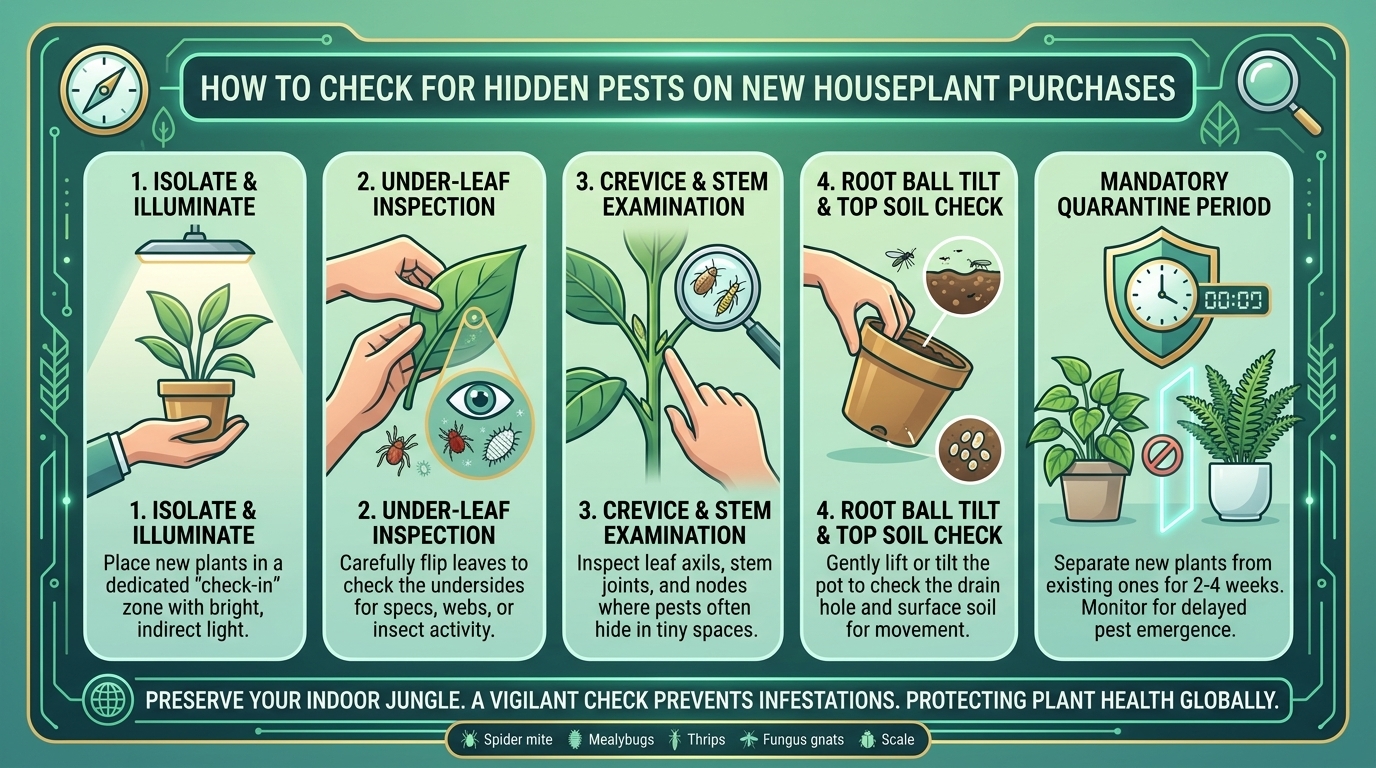
10. How do I handle pest inspections on plants hanging high in the air?
Because high-ceiling plants are harder to inspect daily, make it a habit to check them whenever you lower them for watering. Look closely along the vines and undersides of leaves for common pests like spider mites or mealybugs.
Conclusion
Transforming a high-ceiling living room with cascading indoor plants is one of the most effective ways to blend interior architecture with lush, living design. By selecting vigorous, adaptable trailers like Pothos, Heartleaf Philodendrons, and String of Hearts, and equipping yourself with smart tools like pulley hooks, you can create a breathtaking botanical masterpiece overhead.