How to Check for Hidden Pests on New Indoor Houseplant Purchases Before Placing Them Home
Welcome back to kcplants.com! If you are an enthusiastic plant collector adding to your indoor jungle across Texas, New York, California, Washington, or San Francisco, you know the thrill of visiting a local nursery, boutique plant shop, or online retailer to purchase a stunning new green addition.
You bring the pristine plant home, admire its glossy leaves, and immediately place it right next to your prized, mature Monstera or rare Alocasia.
Fast forward two weeks later: your entire collection is covered in sticky residue, fine webbing, or crawling white bugs. A single unchecked retail purchase has launched a full-scale indoor pest infestation.
Bringing home a new houseplant without a thorough pest inspection is the #1 way houseplant collections become compromised. Commercial greenhouses are warm, humid, and packed tightly together—the absolute paradise for pests.
This comprehensive, highly informative guide breaks down how to perform a clinical pest inspection, identify the most common hitchhiking bugs, and quarantine new arrivals safely across every US climate zone.
1. The Danger Zone: Why New Plants Harbor Pests
Before examining inspection techniques, it helps to understand why retail plants almost always carry hidden passengers.
The Commercial Greenhouse Ecosystem
- Ideal Breeding Grounds: Mass-production commercial nurseries maintain warm, humid conditions year-round. While great for plant growth, these environments also accelerate the life cycles of sap-sucking insects.
- Close Quarters: When hundreds of plants sit frond-to-frond on greenhouse benches, crawling and flying insects migrate effortlessly from plant to plant.
- Invisible Eggs: Many pests (like thrips and spider mites) lay microscopic eggs inside plant tissue or soil layers that are virtually invisible to the casual shopper’s eye.
2. The 5 Most Common Retail Plant Pests
To inspect a plant effectively, you need to know what you are looking for. Here are the top five hitchhikers hiding on new houseplant purchases:
1. Spider Mites
- What they look like: Tiny, spider-like arachnids (smaller than a pinhead) that range in color from red and yellow to translucent.
- Where they hide: The deep undersides of leaves, especially near the main veins.
- The Tell-Tale Sign: Fine, delicate silk webbing stretched across leaf joints or leaf undersides, accompanied by a stippled, speckled yellowing on the upper leaf surface.
2. Thrips
- What they look like: Slender, microscopic insects that look like tiny black or golden dashes. Adults have fringed wings, while larvae are pale yellow or white.
- Where they hide: Inside unfurling new leaf sheaths, flower buds, and across leaf surfaces.
- The Tell-Tale Sign: Silvery, papery patches on leaves, tiny black dots of frass (insect waste), and distorted, stunted new growth. Thrips are notoriously destructive and spread rapidly.
3. Mealybugs
- What they look like: Small, soft-bodied insects covered in a white, powdery, cottony wax filament. They look like tiny pieces of fluffy white lint clinging to stems.
- Where they hide: Deep in leaf axils (where stems meet leaf petioles), under leaf nodes, and along the soil line.
- The Tell-Tale Sign: Sticky honeydew residue dripping down stems and white cottony clusters.
4. Scale Insects
- What they look like: Immobile, dome-shaped brown, black, or tan bumps that look like tiny scabs or armor plating glued to stems and leaf ribs.
- Where they hide: Hard woody stems, the undersides of rigid leaves, and along leaf veins.
- The Tell-Tale Sign: Sticky, varnish-like residue on the leaves and pot surface, and raised brown bumps that can be scraped off with a fingernail.
5. Fungus Gnats
- What they look like: Tiny, dark, mosquito-like flies that dart around the topsoil when disturbed.
- Where they hide: The top 1 to 2 inches of damp potting soil (both as flying adults and translucent larvae in the dirt).
- The Tell-Tale Sign: Swarming tiny flies every time you water or brush against the plant.
3. Regional Indoor Factors Across the US
Your local climate and indoor environment influence how aggressively a new pest outbreak can spread:
New York & Washington (Sealed Winter Apartments)
- The Challenge: During winter, closed windows and dry indoor heating create static, sealed environments where pests like spider mites multiply exponentially without natural outdoor predators.
- The Solution: Strict isolation protocols are mandatory. Never introduce a new plant straight into a warm living room without a 2-week quarantine.
San Francisco & California (Mild Year-Round Breeding)
- The Challenge: Mild coastal temperatures mean pests remain active year-round, and outdoor garden insects can easily hitchhike indoors through open windows or sliding doors.
- The Solution: Inspect local nursery purchases before they enter your home—inspect them right on your porch or balcony first.
Texas (AC-Controlled Microclimates)
- The Challenge: Continuous indoor AC cycles keep homes comfortable, but tightly sealed houses allow pests like thrips or spider mites to move silently from a new purchase to your entire indoor jungle.
- The Solution: Wipe down all new foliage with insecticidal soap as a universal baseline preventative measure upon arrival.
4. Step-by-Step Quarantine and Inspection Protocol
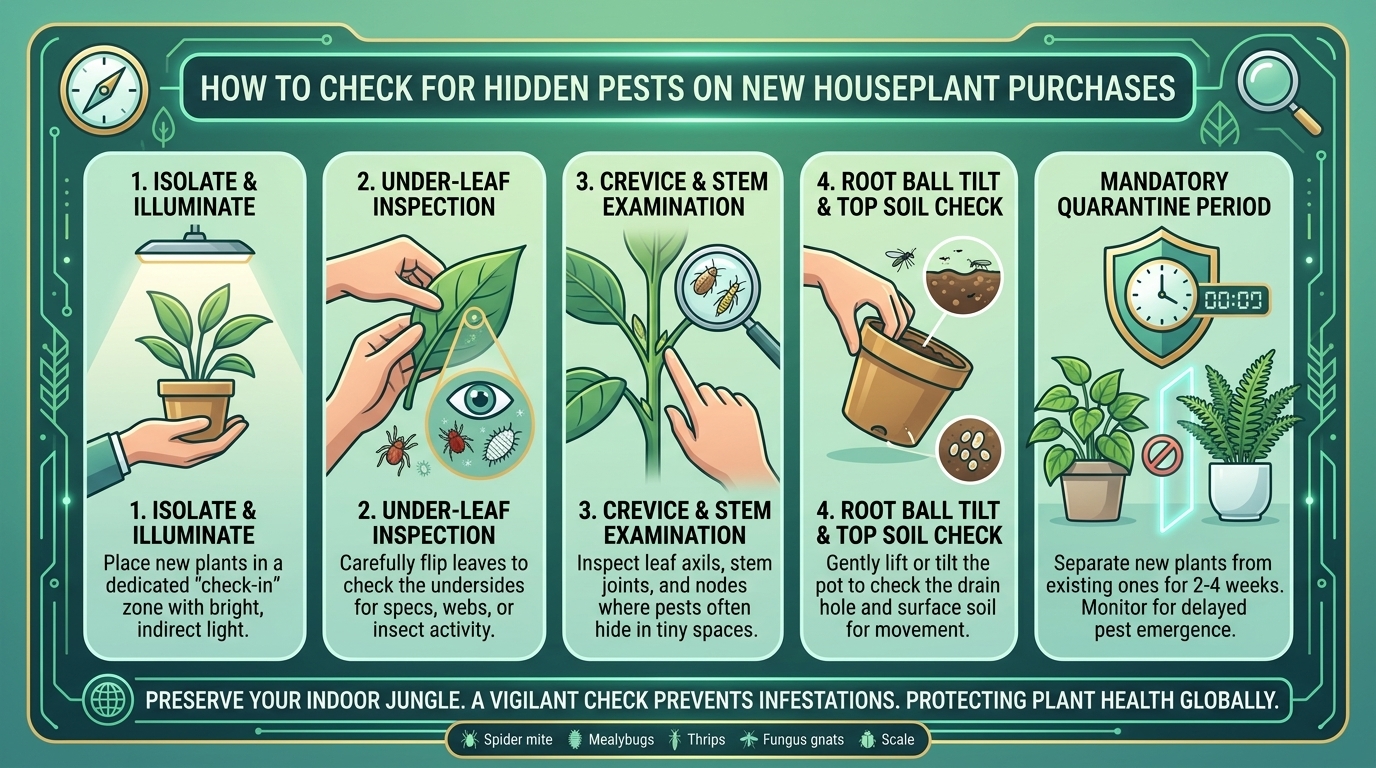
Follow this clinical 4-step checklist every single time you buy a new houseplant.
Step 1: The Porch or Outdoor Inspection (Pre-Entry)
Never carry a brand-new plant straight to your living room plant shelf. Stop at the front porch, balcony, or a dedicated staging table.
- Bring Tools: Grab a bright flashlight and a 10x jeweler’s loupe or magnifying glass.
- Shake Gently: Give the plant a gentle shake. If a cloud of tiny black flies bursts upward, you have fungus gnats.
Step 2: The Deep Forensic Examination
Inspect the plant methodically from top to bottom:
- Leaf Surfaces: Examine both the top and underside of every single leaf, checking for webbing, discoloration, or sticky residue.
- Stems and Nodes: Peel back loose leaf sheaths and check leaf joints for cottony mealybugs or hard scale armor.
- New Growth Tips: Inspect unfurling baby leaves with your magnifying glass for microscopic thrips larvae.
- Soil and Pot Rim: Check the soil surface for crawling bugs, mold, or larvae.
Step 3: The Preventative Wash Down
Even if you don’t spot pests with the naked eye, microscopic eggs could be hiding.
- Take the plant to a sink, shower, or outdoor hose.
- Give the entire foliage canopy, stems, and topsoil surface a thorough, high-pressure rinse with lukewarm water.
- Spray down the plant with organic insecticidal soap, neem oil, or horticultural oil, ensuring every surface is coated. Let it dry out of direct sunlight.
Step 4: The 14-Day Quarantine Period
- Isolate the new plant in a separate room (like a bathroom, kitchen counter, or office) away from your main plant collection for at least 2 weeks.
- Monitor it every few days. If eggs hatch during this quarantine window, you will catch them before they spread to your jungle. Once the 2-week mark passes with zero pest activity, your new plant is safe to join the main collection!
5. Frequently Asked Questions (FAQ)
1. Are plants from big-box stores more prone to pests than local boutique nurseries?
Mass-volume big-box retail stores handle high turnover and tight spacing, which can occasionally increase pest exposure risks. However, any plant from any source can carry pests. Always inspect every purchase regardless of where it came from.
2. Can I skip quarantine if I buy a plant from a reputable high-end nursery?
No. Even the most prestigious, expensive plant boutiques source from commercial greenhouses where pests like thrips and spider mites can hitchhike undetected. Quarantine is a non-negotiable rule for experienced collectors.
3. What is the fastest way to get rid of fungus gnats on a new plant?
Let the top 2 inches of potting soil dry out completely between waterings to kill larvae, and top-dress the soil with a layer of horticultural sand or mosquito dunks (Bacillus thuringiensis israelensis) dissolved in your watering can.
4. How do I know if sticky residue on leaves is nectar or pest waste (honeydew)?
Some plants (like Hoyas or citrus) secrete harmless extrafloral nectary sap. However, if the sticky residue is widespread across leaves and accompanied by shiny trails, black soot mold, or crawling bugs, it is pest honeydew.
5. Can I use rubbing alcohol to spot-treat mealybugs on a new plant?
Yes! Dip a cotton swab in standard 70% isopropyl alcohol and dab it directly onto mealybugs or scale insects. The alcohol dissolves their waxy protective coating instantly on contact.
6. Why are thrips considered the worst indoor houseplant pest?
Thrips are devastating because adult females insert microscopic eggs directly inside plant tissue where sprays cannot reach, and adults possess wings, allowing them to fly and colonize neighboring plants quickly.
7. Should I repot a newly purchased houseplant immediately to get rid of soil pests?
It is usually best not to repot immediately, as the plant is already dealing with transition shock from the nursery to your home. Treat soil pests with systemic granules or hydrogen peroxide drenches first, and wait until spring to repot.
8. What magnification tool should I use for checking houseplant pests?
A pocket 10x or 30x jeweler’s loupe or a magnifying glass with built-in LED lighting is ideal for spotting microscopic spider mites and thrips larvae that normal human vision misses.
9. What should I do if my quarantine plant tests positive for pests?
Immediately treat the plant with insecticidal soap, systemic granules, or neem oil. Keep it isolated in quarantine for an extended 4-week period until two consecutive inspections confirm 100% eradication.
10. Do succulents and cacti get pests just like tropical houseplants?
Yes! Succulents are particularly vulnerable to mealybugs and root aphids, which love hiding tightly packed between fleshy leaves and succulent rosettes. Always inspect succulents with the same rigor as tropicals.
Conclusion
Checking for hidden pests on new indoor houseplant purchases is the single most effective way to safeguard your indoor jungle from devastating infestations. By combining a meticulous porch inspection, a thorough preventative wash with insecticidal soap, and a strict 14-day quarantine protocol, you can welcome new green additions with absolute confidence.