Step into any thriving, abundant home garden—whether you are managing a sun-drenched raised bed in Austin, Texas, cultivating a community plot in Washington state, tending a rooftop container garden in New York City, or working with native earth in California and San Francisco—and lift a handful of dark, crumbly soil.
If your garden is healthy, you will almost always spot one of nature’s hardest-working master engineers wriggling out of sight: the earthworm.
For centuries, gardeners and farmers have recognized earthworms as a sign of good soil. But modern soil science reveals that earthworms are not just a side effect of healthy dirt—they are the primary biological foundation that creates and sustains it. Charles Darwin spent over forty years studying earthworms, famously concluding that there are few animals which have played such an important part in the history of the world as these lowly creatures.
If your garden soil is devoid of earthworms, your plants will struggle, nutrients will remain locked away, and your soil structure will compact. This comprehensive, expert-backed guide breaks down why earthworms are the most vital biological creatures for your garden ecosystem, how they work underground, and how you can attract and protect them.
1. The Underground Workforce: What Earthworms Actually Do
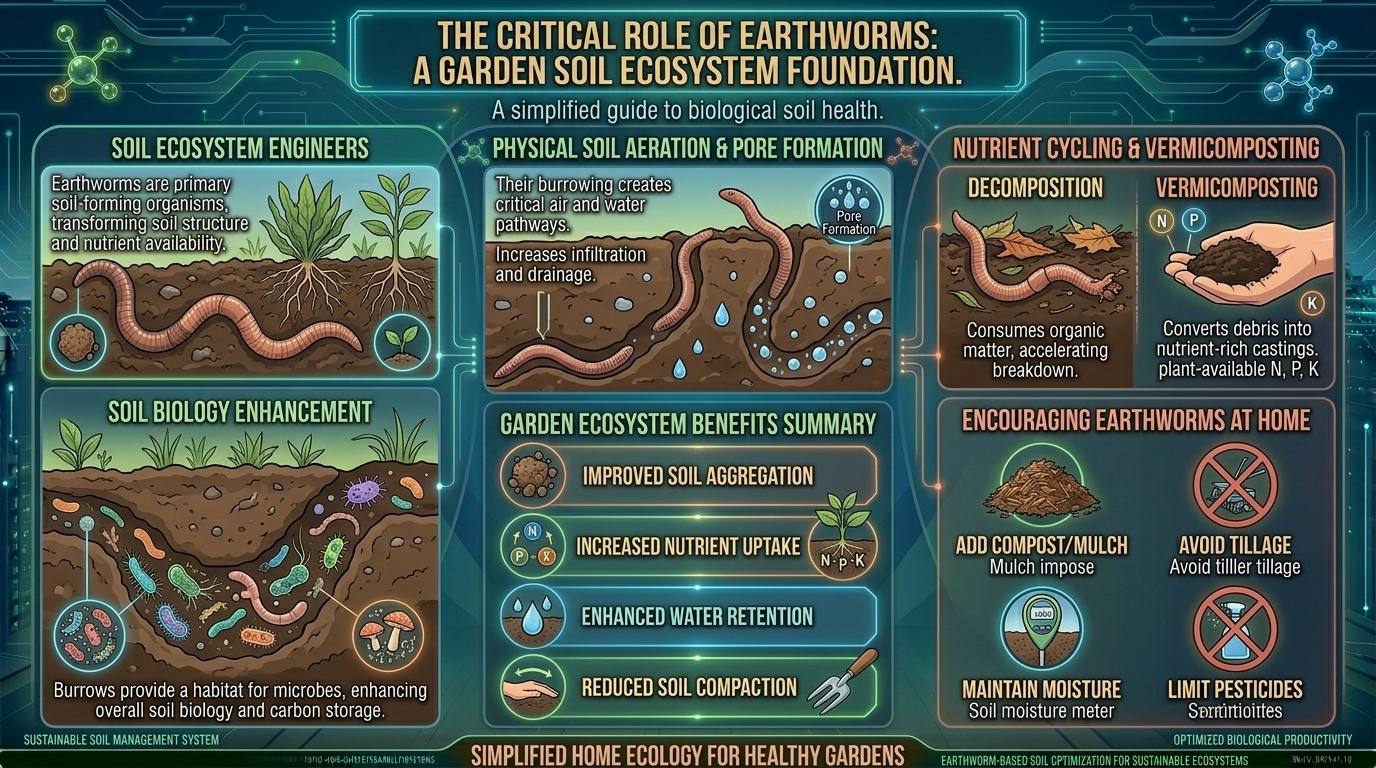
Earthworms are essentially living tillage machines, nutrient processing plants, and soil engineers rolled into one. As they tunnel through the earth, they perform several critical functions that no mechanical rototiller can replicate:
A. Biological Tillage and Aeration
As earthworms burrow through dense soil, they eat their way forward, consuming mineral particles and organic matter. Their underground tunnels act as a vast network of breathing tubes.
- The Result: These burrows allow oxygen to penetrate deep into the root zone, ensuring plant roots can breathe. They also create natural channels for rainwater to infiltrate deep into the soil rather than pooling or running off the surface.
B. The Ultimate Nutrient Upcycler (Worm Castings)
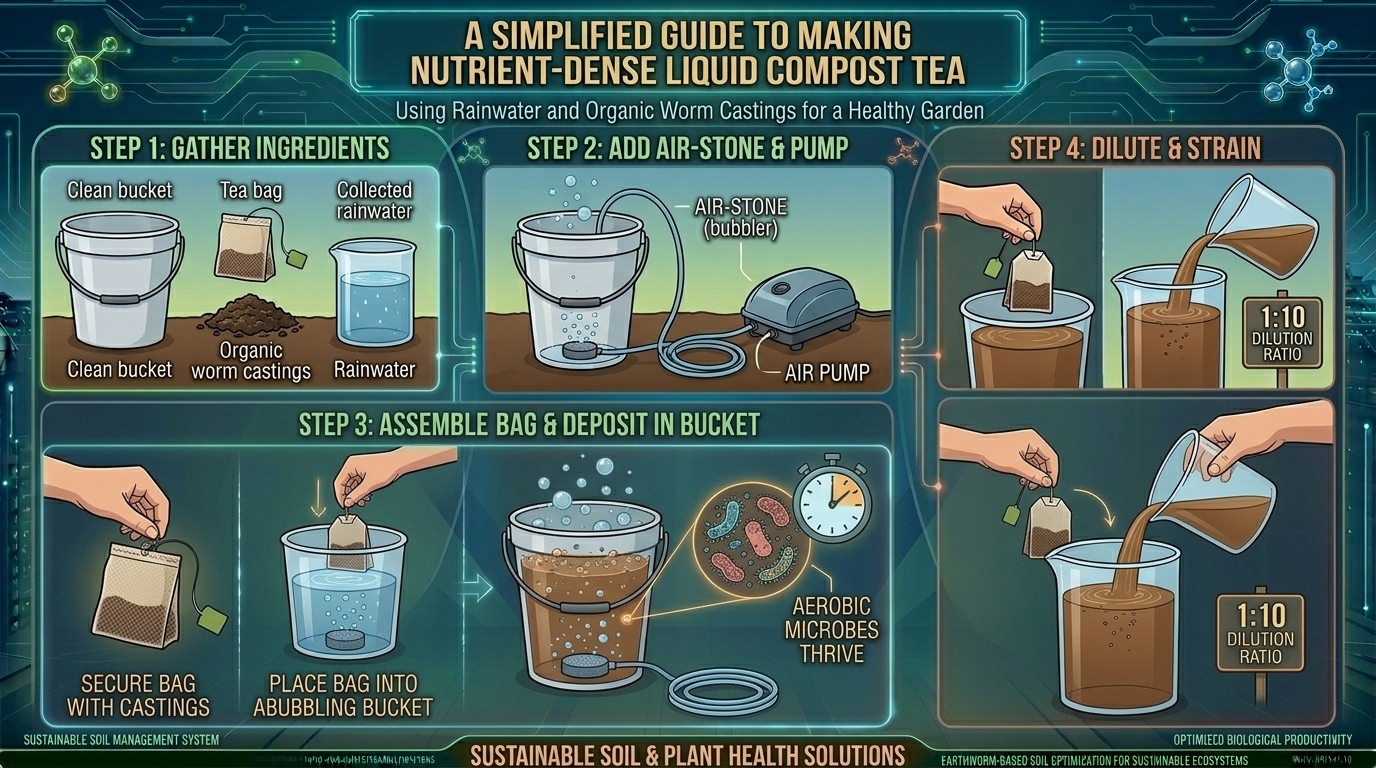
As organic matter and soil pass through an earthworm’s specialized gizzard and digestive tract, beneficial bacteria break it down rapidly. What comes out the other end is vermicompost (worm castings).
- The Result: Worm castings are nature’s most balanced organic fertilizer. Compared to surrounding un-ingested soil, worm castings contain up to 5 times more available nitrogen, 7 times more phosphorus, and 11 times more potassium, all packed in a gentle, water-soluble form that will never burn plant roots.
C. Creating Stable Soil Aggregates
Earthworms secrete mucus lining inside their burrows and digestive tracts that binds microscopic soil particles together into stable crumbs (aggregates). This crumbly structure prevents the soil from washing away during heavy downpours or baking hard like concrete under the summer sun.
2. The Soil Food Web: Why Worms Indicate Ecosystem Health
In organic gardening, we focus heavily on the Soil Food Web—the complex ecological community of bacteria, fungi, protozoa, nematodes, arthropods, and earthworms living beneath our feet.
Earthworms sit near the top of this foundational web as ecosystem engineers:
- They feed on decaying organic debris, fungi, and bacteria, breaking large pieces of carbon down into smaller fragments that microscopic bacteria and fungi can further digest.
- Their slimy trails provide an energetic feast for beneficial soil bacteria, multiplying microbial populations exponentially wherever a worm travels.
- By transporting organic matter from the surface deep down into the subsoil, earthworms distribute nutrients evenly throughout the entire root zone.
3. What Drives Earthworms Away? (Common Garden Mistakes)
If your garden soil has few or no earthworms, your management practices are likely hostile to their survival. Earthworms are sensitive creatures that require specific living conditions. Avoid these common gardening mistakes:
1. Excessive Tilling and Digging
Deep mechanical tilling shatters earthworm burrows, exposes them to predatory birds and baking sunlight, and chops their bodies. No-till gardening is the single best way to protect earthworm populations.
2. Synthetic Chemical Pesticides and Fertilizers
Harsh chemical fertilizers (especially high-salt synthetic nitrogen formulas) and chemical pesticides (like broad-spectrum insecticides and fungicides) burn earthworm skin, disrupt their nervous systems, and kill off the beneficial microbes they eat.
3. Bare, Unprotected Soil
Leaving your garden soil bare under the blazing sun dries out the topsoil, destroys organic matter, and forces earthworms to burrow deep underground or perish. Always keep your soil covered with organic mulch.
4. How to Attract and Multiply Earthworm Populations Naturally
If your native soil currently lacks earthworms, you do not need to buy mail-order nightcrawlers and dump them into dry dirt. If you build a hospitable habitat, they will come naturally. Follow these steps to turn your garden into an earthworm paradise:
- Feed Them Organic Matter: Earthworms live to eat decaying leaves, compost, grass clippings, and organic mulches. Lay down a thick 3-to-4-inch blanket of organic mulch or compost across your beds every season.
- Maintain Soil Moisture: Earthworms breathe through their skin, which must remain moist to absorb oxygen. Keep your soil consistently damp (like a wrung-out sponge) through proper irrigation and mulching.
- Eliminate Synthetic Chemicals: Transition entirely to organic gardening methods. Use compost, kelp meal, and worm castings instead of synthetic chemical fertilizers.
- Maintain a Neutral pH: Earthworms thrive in a comfortable soil pH range between 6.0 and 7.0. Highly acidic or extremely alkaline soils inhibit their reproduction and survival.
5. Frequently Asked Questions (FAQ)
1. Are all earthworms in my garden beneficial?
In North America, many common garden earthworms are actually non-native European or Asian species. However, in typical home vegetable gardens and agricultural plots, these non-native earthworms are overwhelmingly beneficial for aeration and decomposition. (In certain undisturbed northern native forests, however, certain invasive jumping worms can disrupt forest leaf litter; but in domestic garden beds, standard earthworms are a gardener’s best friend).
2. Can I add fishing bait worms directly to my raised garden beds?
Yes, standard European Nightcrawlers or Red Wigglers purchased from a bait shop or worm farm can be released into moist, compost-rich garden beds or worm bins, where they will quickly adapt and multiply.
3. Why did I find dead earthworms on top of my soil after a heavy rain?
This is a common sight during heavy rainstorms. When soil water-logging fills every underground air pore, earthworms can suffocate if they stay submerged. They crawl to the surface to move across wet ground, but if trapped on hot concrete or baking sun once the rain stops, they dry out. Ensuring your garden has good drainage prevents this.
4. Do earthworms eat living plant roots?
No! Normal garden earthworms are strictly detritivores; they feed on decaying organic matter, dead leaves, fungi, bacteria, and decomposing roots. They never attack or eat healthy, living plant roots.
5. How deep into the soil do earthworms travel?
While most earthworms and their activity concentrate in the top 6 to 12 inches of rich topsoil, certain deep-burrowing species (like nightcrawlers) can tunnel down 6 feet or more into the subsoil, creating drainage channels and bringing mineral nutrients upward.
6. Can I have too many earthworms in my potted plants?
In small indoor pots or containers, introducing large earthworms is generally unnecessary because containers lack the space and endless organic food supply required to sustain them. Stick to micro-herd bacteria and fungi for indoor pots, reserving earthworms for large outdoor beds, raised beds, and large patio containers.
7. Do earthworms hibernate during winter?
When freezing winter temperatures arrive, earthworms burrow deep below the frost line (often several feet down into the earth), curl into a tight knot, and enter a state of metabolic dormancy (diapause) until spring warmth awakens them.
8. How do earthworms reproduce?
Earthworms are hermaphrodites (possessing both male and female reproductive organs). After mating, they secrete a slimy cocoon around their clitellum, which slides off their body, fertilizes eggs in the soil, and hatches tiny baby worms a few weeks later.
9. Will adding coffee grounds to my soil hurt earthworms?
In moderation, earthworms love coffee grounds! Red wigglers and garden earthworms consume coffee grounds enthusiastically, provided the grounds make up only a small percentage (under 15%) of the organic mix so the soil doesn’t become overly acidic.
10. How can I check if my garden has a healthy earthworm population?
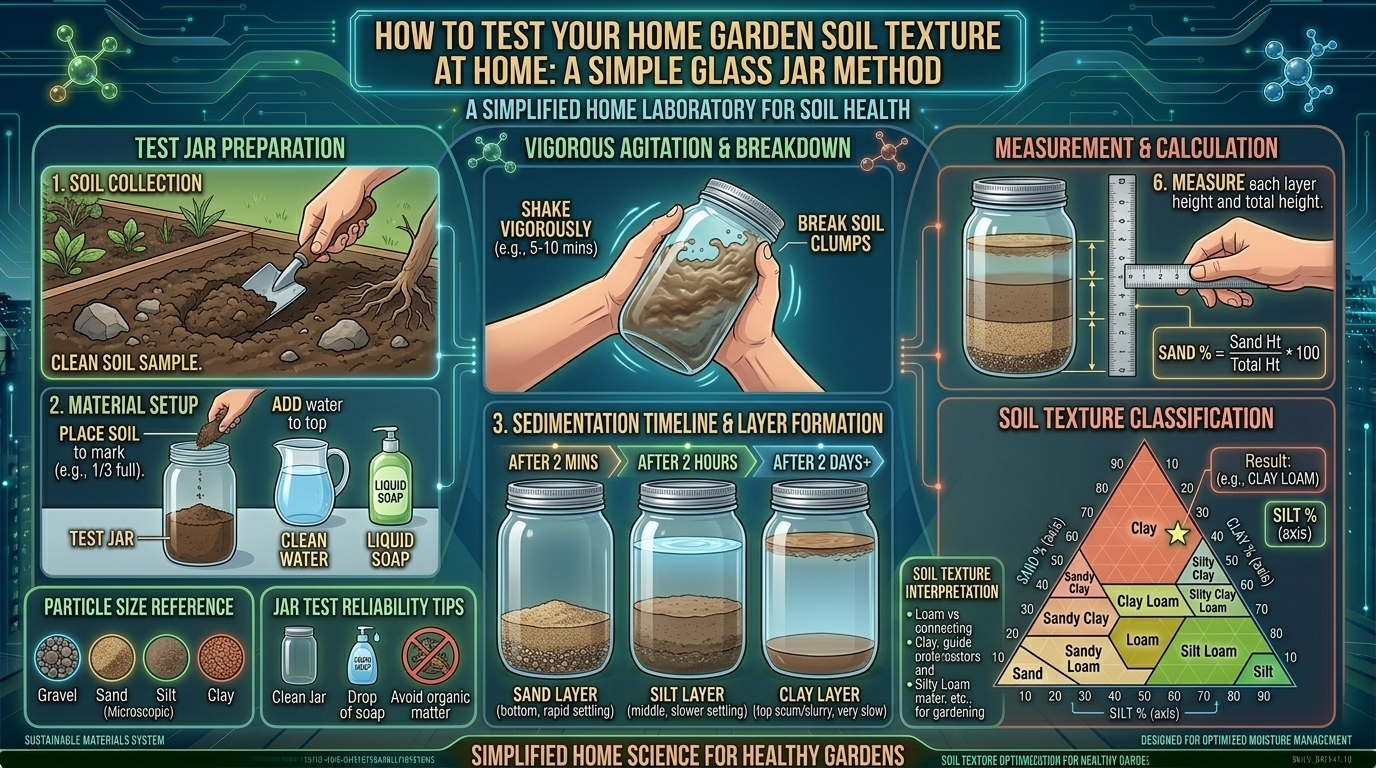
The classic “shovel test” is easiest: dig a 1-foot cube of soil from your garden bed in spring, place it on a tarp, and gently break it apart, counting the number of earthworms you find. Finding 10 to 15 healthy worms in a single cubic foot of garden soil indicates a thriving, biologically active ecosystem.
Conclusion
Earthworms are not merely passive inhabitants of your garden; they are the essential biological engine driving soil fertility, structural integrity, and plant health. By abandoning harsh synthetic chemicals, stopping destructive tilling, and continuously feeding your soil with organic compost and protective mulch, you invite these master engineers to build a self-sustaining underground ecosystem.