As autumn arrives across regions like New York, Washington, California, and Texas, suburban and urban yards transform under a brilliant canopy of falling foliage. For many property owners, the annual leaf drop is viewed as a burdensome chore—a weekend lost to raking, bagging, and hauling yard waste to the curb. However, seasoned horticulturists and regenerative gardeners recognize this seasonal bounty for what it truly is: black gold in the making.
Incorporating shredded autumn leaves directly into your garden beds is one of the most powerful, cost-effective, and ecologically sound investments you can make for your soil. Whether you are dealing with the heavy, compacted clay of North Texas, the naturally acidic and variable soils of the Pacific Northwest, the dense urban allotments of San Francisco, or the depleted suburban plots of New York and California, shredded leaves offer a universal remedy.
This comprehensive guide explores the profound science behind autumn leaves, how they transform long-term soil structure, practical application techniques tailored to diverse climates, and answers to your most pressing gardening questions.
1. The Science of Soil Structure and Organic Matter
To understand why shredded leaves are so effective, we must first look at what constitutes healthy soil. Soil is not merely dirt; it is a complex, living ecosystem composed of mineral particles (sand, silt, and clay), water, air, and organic matter.
The Foundation of Soil Health
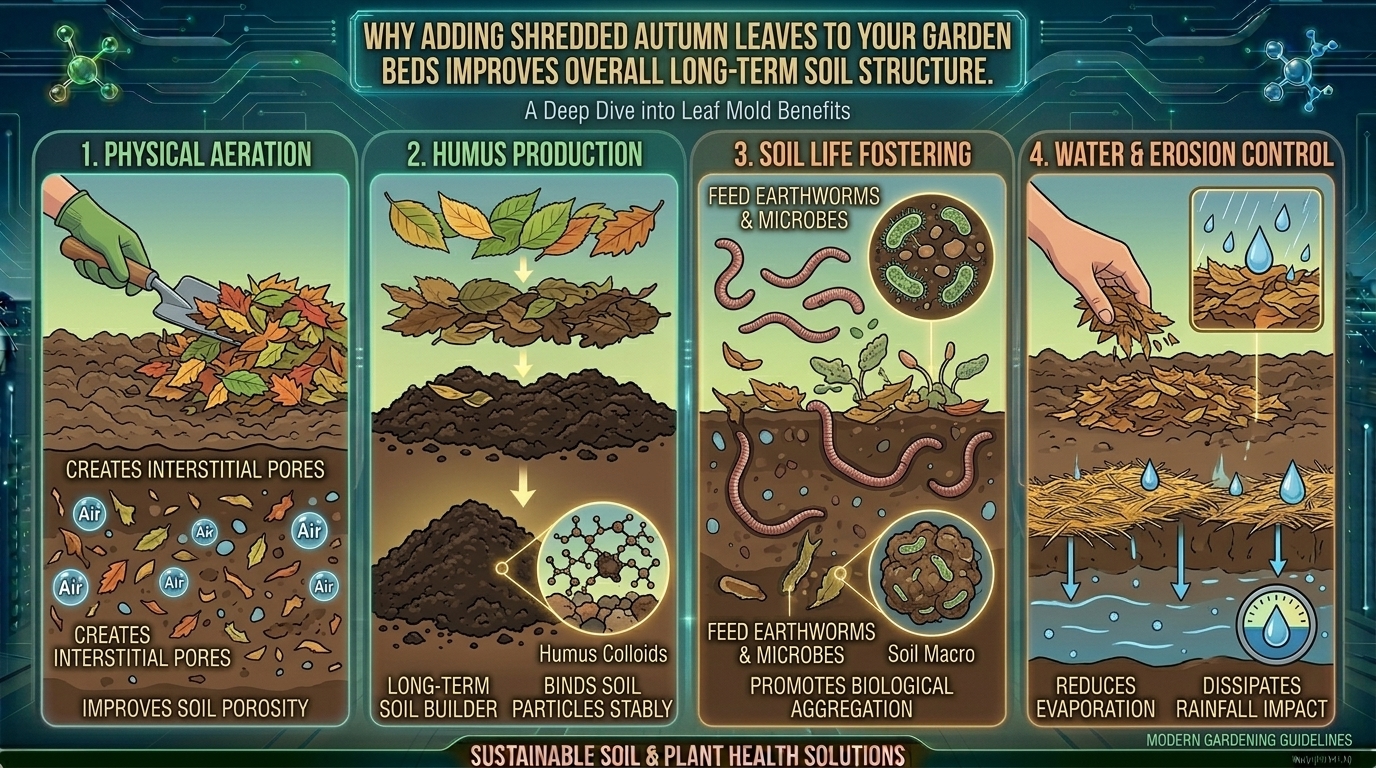
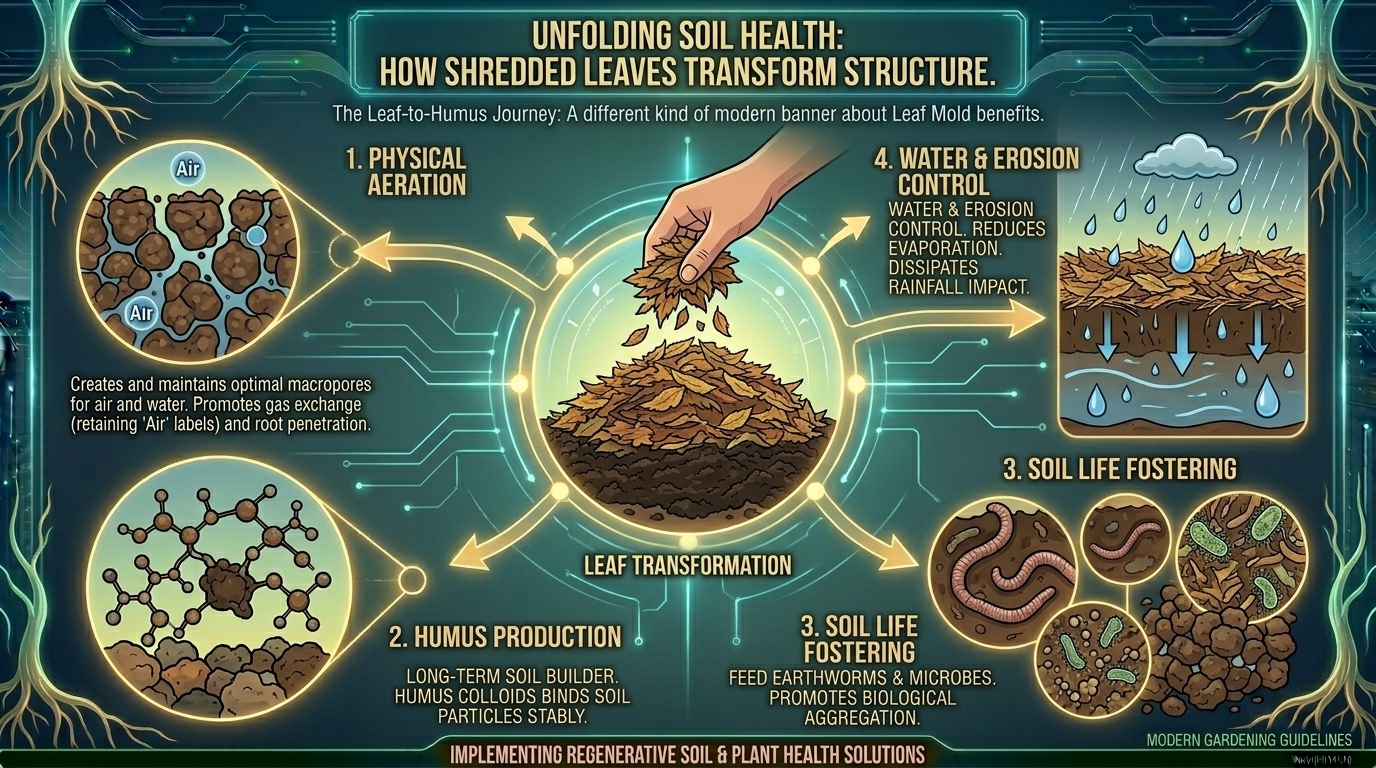
Long-term soil structure refers to the arrangement of these mineral particles into aggregates (crumbs or clumps). Good structure creates a network of pore spaces that allow for:
- Water Infiltration and Retention: Water can easily soak in during heavy rains, yet moisture is held securely for plant roots during dry spells.
- Gas Exchange: Plant roots and beneficial soil microbes require oxygen to respire and survive.
- Root Penetration: Loose, aggregated soil allows delicate roots to expand effortlessly, searching deep for nutrients.
The Role of Organic Matter
Organic matter acts as the glue that binds mineral particles together into stable aggregates. Without a continuous supply of organic matter, soils degrade, compact, and lose their biological vitality.
While compost and aged manures are popular amendments, fallen leaves are nature’s original soil builder. As trees grow, their deep root systems mine subsoils for essential minerals like calcium, magnesium, potassium, and trace elements, concentrating them in their foliage. When those leaves fall and decompose in your garden beds, they return these vital nutrients right back to the topsoil in a bio-available form.
2. Why Shredding Leaves is Non-Negotiable
If you have ever tossed whole leaves into a garden pile, you may have noticed they tend to mat together into a slimy, impermeable barrier that sheds water and suffocates the soil underneath. Shredding is the vital bridge between yard waste and rich soil amendment.
- Increased Surface Area: Shredding breaks leaves into thousands of tiny pieces, dramatically increasing the surface area exposed to moisture, air, and soil microbes. This accelerates the decomposition process from years to mere months.
- Prevention of Matting: Unlike whole leaves, shredded leaves (often called “leaf mold” when partially decomposed or fine mulch when applied directly) maintain a loose, fluffy texture. They allow air and water to pass through freely while shielding the soil surface.
- Aesthetic Appeal: Finely shredded leaves have a uniform, dark-brown, natural woodland appearance that instantly elevates the look of ornamental beds and vegetable plots alike.
3. Long-Term Benefits of Shredded Leaves for Garden Beds
Adding shredded autumn leaves year after year triggers a compounding positive feedback loop in your garden. Here is how they permanently alter and improve soil over time:
A. Alleviating Soil Compaction
In regions with heavy clay soils—such as sections of Texas and parts of the Northeast—soil particles pack tightly together, leaving virtually no room for air or water. Shredded leaves introduce fibrous carbon material that physically separates tight clay particles. Over time, as soil fauna digest this organic matter, stable pore networks form, transforming rock-hard dirt into crumbly, workable loam.
B. Buffering Sandy Soils
Conversely, in regions with light, sandy soils (common in coastal California and parts of the South), water and nutrients leach away rapidly before plants can use them. Shredded leaves act like a sponge, dramatically increasing the soil’s cation exchange capacity (CEC) and water-holding capacity, ensuring nutrients stay put.
C. Fueling the Soil Food Web
Soil is teeming with billions of bacteria, fungi, actinomycetes, earthworms, and arthropods. Shredded leaves serve as a massive buffet for these microscopic and macroscopic workers. Fungi, in particular, thrive on the high-carbon content of leaves. They form extensive underground mycorrhizal networks that help plants absorb water and phosphorus while warding off soil-borne pathogens.
D. Regulating Soil Temperature and Moisture
Applied as a surface mulch, shredded leaves insulate the soil against extreme temperature swings. In hot summers (like those in Texas and inland California), leaf mulch keeps root zones cool and drastically cuts down on evaporation. In freezing winters (such as those in New York and Washington), it shields perennial roots from the damaging freeze-thaw cycles that can heave plants out of the ground.
4. Regional Adaptations: Making It Work Across Diverse Climates
Gardening conditions vary wildly across the United States. Here is how to adapt the use of shredded leaves depending on your local environment:
Texas
- Climate Challenge: Intense summer heat, alkaline soils, and periodic droughts or sudden torrential downpours.
- Application Strategy: Use a generous 3-to-4-inch layer of shredded leaves as a surface mulch around shrubs, flower beds, and native plants. This drastically reduces moisture evaporation during scorching months. Because most Texas soils are alkaline, decomposing leaves add a mild, natural acidity that helps balance high pH levels over time.
New York & Washington
- Climate Challenge: Freezing winters, heavy autumn/spring moisture, and naturally acidic forest soils.
- Application Strategy: Pile shredded leaves heavily over perennial beds in late autumn to protect against deep freezes. In vegetable gardens, work a layer of shredded leaves into the top few inches of soil in autumn so they break down completely by spring planting time. If your local soil is already quite acidic, you can offset extreme drops in pH by adding a light dusting of agricultural lime if growing heavy-feeding vegetables.
California & San Francisco
- Climate Challenge: Mediterranean climate with wet winters and long, dry summers; varying microclimates from coastal fog to inland heat.
- Application Strategy: In the Bay Area and coastal zones, use shredded leaves as a clean, organic mulch beneath native plants, fruit trees, and roses. It keeps weed seeds from germinating during winter rains and preserves vital moisture during the dry summer months without relying heavily on municipal water supplies.
5. Step-by-Step Guide: How to Process and Apply Autumn Leaves
Transforming backyard leaves into elite garden amendments is a straightforward, rewarding process.
Step 1: Gather and Sort
Collect fallen leaves using a rake, leaf blower, or lawn vacuum. Avoid diseased foliage (such as rose leaves with black spot or fruit tree leaves with severe fungal rust) and stick to healthy deciduous varieties like maple, oak, birch, fruit trees, and beech. Note: Avoid walnut leaves if possible, as they contain juglone, a natural chemical that inhibits the growth of certain garden plants like tomatoes and peppers.
Step 2: Shred the Leaves
Spread dry leaves in a thin layer across your lawn and run over them a few times with a standard rotary lawnmower equipped with a bagging attachment. Alternatively, you can pile them into a large trash can and use a string trimmer inside the bin to chop them down quickly.
Step 3: Apply to Beds
- As a Mulch: Spread a 2-to-3-inch layer around established perennials, trees, and shrubs. Keep the mulch a couple of inches away from actual plant stems and tree trunks to prevent moisture buildup and rotting.
- As a Soil Amendment (Tilling or Sheet Composting): Layer 4 to 6 inches of shredded leaves directly onto vegetable plots in late autumn. You can turn them into the topsoil or layer them with a bit of green waste (like grass clippings or kitchen scraps) and let nature do the work over the winter.
6. Comprehensive FAQ: Everything You Need to Know
1. Will shredded autumn leaves make my garden soil too acidic?
Most deciduous tree leaves decompose into a neutral or only mildly acidic pH (typically ranging from 6.0 to 6.8). While oak leaves have a reputation for being highly acidic, the actual leaf tissue itself is not intensely acidic once broken down by soil microbes. In most standard gardens, the minor pH shift is negligible and easily buffered by existing soil minerals.
2. Do I need to add extra nitrogen when using shredded leaves?
If you are simply using shredded leaves as a surface mulch, no extra nitrogen is required because the decomposition happens slowly on top of the soil, drawing very little nitrogen from the root zone. However, if you are digging or tilling large quantities of shredded leaves directly into the soil, soil microbes will temporarily consume available nitrogen to fuel their breakdown process. Counteract this by adding a light dusting of organic nitrogen sources like blood meal, feather meal, or fresh grass clippings.
3. Can I use leaves from any type of tree?
Most deciduous tree leaves (maple, ash, birch, oak, fruit trees) are fantastic for gardens. Exercise caution with thick, waxy evergreen leaves (like southern magnolia or live oak), as they take an exceptionally long time to break down and should be shredded very finely or composted separately. Also, avoid heavy amounts of black walnut leaves due to the juglone compound.
4. How long does it take for shredded leaves to decompose in the soil?
When shredded into fine pieces and kept moist, autumn leaves typically break down significantly within 3 to 6 months. When tilled directly into garden soil in October or November, they are usually fully integrated and converted into rich humus by the time spring planting arrives.
5. Will shredded leaves attract pests or rodents to my garden?
Properly shredded leaves do not attract pests any more than standard wood mulch or compost does. In fact, by creating a healthy habitat for beneficial predatory insects, spiders, and earthworms, leaf mulch helps establish a balanced ecosystem that naturally keeps pest populations in check. Ensure you keep mulch a few inches away from plant bases to prevent mice or voles from nesting near stems during winter.
6. Can I put shredded leaves directly into raised garden beds?
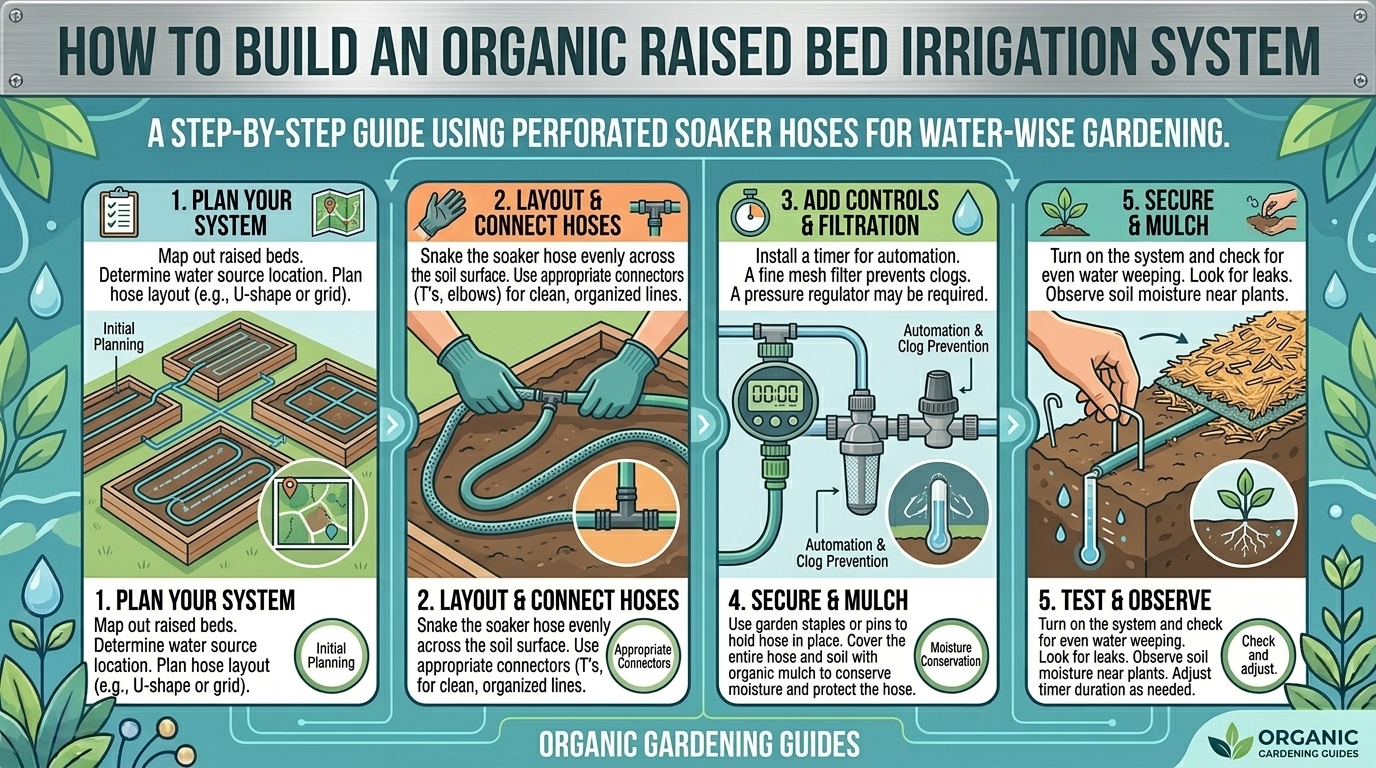
Yes! Shredded leaves are exceptional for raised beds. They provide lightweight volume that prevents raised beds from packing down over time. Layer them at the bottom of a new raised bed as part of a “hugelkultur” or lasagna gardening approach, or mix them into existing soil at the end of the growing season.
7. Do I need to water leaf mulch after applying it?
Giving your newly laid leaf mulch a gentle watering after application is a great practice. This settles the material, keeps it from blowing away in heavy autumn winds, and introduces the initial moisture required for beneficial soil microbes and fungi to begin their work.
8. What is “leaf mold” and how is it different from shredded leaf mulch?
Leaf mold is simply autumn leaves that have been piled up, moistened, and allowed to decompose completely into a crumbly, earthy-smelling substance over 1 to 2 years (primarily driven by fungi rather than bacteria). While shredded leaf mulch is applied immediately for surface protection and slow amendment, leaf mold is a premium, nutrient-rich soil conditioner that feels like woodland topsoil.
9. How do I stop shredded leaves from blowing away on windy days?
Because shredded leaves are lightweight, high winds can occasionally scatter them. To prevent this, lightly mist the bed with water immediately after spreading, or top the leaves with a thin layer of heavier compost, a light sprinkling of heavier wood chips, or evergreen boughs. Once the autumn rains or irrigation settle the material, it locks firmly into place.
10. Are there any garden plants that dislike leaf mulch?
Most garden plants thrive under a leaf mulch blanket. However, plants that require exceptionally sharp, dry drainage or rock-garden alpines can suffer if heavy organic matter sits directly against their crowns, keeping them too moist. For these specific plants, substitute leaf mulch with gravel, decomposed granite, or coarse sand.
Conclusion
Embracing the annual fall of leaves is one of the smartest ecological shifts a gardener can make. Instead of viewing autumn foliage as waste to be discarded in plastic bags, treat it as a premier organic resource provided freely by nature. By taking a few moments to shred your autumn leaves and apply them to your garden beds, you actively replicate the rich, fertile floor of a thriving forest. Over time, you will watch your soil transform into a dark, crumbly, moisture-retaining sanctuary that produces exceptionally vigorous plants, vibrant blooms, and bountiful harvests year after year.