How to Identify and Fix Overly Acidic Garden Soil Using Natural Agricultural Limestone Powder Safely
Every dedicated home gardener eventually encounters a frustrating paradox: your plants receive plenty of water, your climate is ideal, your fertilizer routine is rigorous, and yet your vegetables and ornamentals look stunted, chlorotic, and weak. Often, the culprit is invisible to the naked eye. The issue does not lie in what you are adding to the soil, but in the chemical pH balance of the earth itself.
Across diverse growing regions—from the naturally acidic forest soils of New York and Washington to the variable urban plots of San Francisco and localized pockets of California and Texas—overly acidic soil can silently sabotage your gardening efforts. When soil pH drops too low, essential nutrients become chemically locked up, rendering them completely unavailable to plant roots.
For gardeners seeking to optimize their plots on kcplants.com, the time-tested, safest remedy for correcting soil acidity is natural agricultural limestone powder. This comprehensive, expert-level guide explores the science of soil pH, how to accurately test your earth, and a step-by-step masterclass on how to apply agricultural limestone safely to restore your garden’s vitality.
1. The Science of Soil pH and Nutrient Lockout
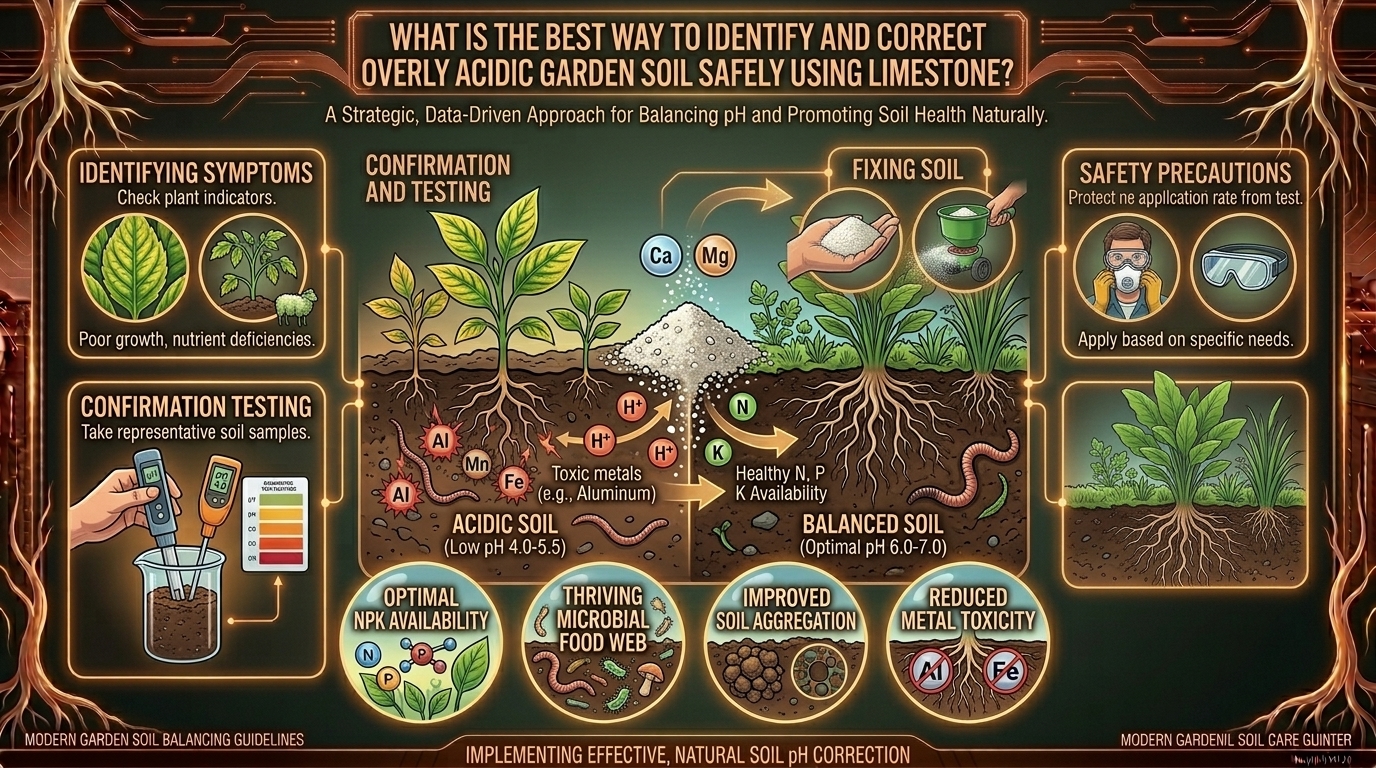
To understand why acidic soil causes plant failure, we must first look at the pH scale. Soil pH is measured on a scale from 0 (extremely acidic) to 14 (extremely alkaline), with 7.0 being neutral. Most common garden vegetables, fruit trees, and flowering ornamentals thrive in a slightly acidic to neutral sweet spot ranging from 6.0 to 7.0.
What Happens When Soil Becomes Too Acidic?
When soil pH drops below 6.0, the chemical balance shifts dramatically.
- Nutrient Inavailability: Macronutrients like nitrogen, phosphorus, potassium, calcium, and magnesium bind tightly to soil particles in acidic environments. Even if these nutrients are abundant in your fertilizer, plant roots cannot absorb them.
- Aluminum Toxicity: At very low pH levels (below 5.0), naturally occurring aluminum in the soil dissolves into a form that is toxic to plant roots, burning root tips and severely stunting growth.
- Microbial Die-Off: Beneficial soil bacteria and earthworms—which break down organic matter and feed your plants—struggle to survive in overly acidic conditions, slowing down biological activity to a crawl.
2. How to Identify Overly Acidic Soil
You cannot judge soil pH by appearance alone, but nature provides several telltale signs that should prompt you to test your garden beds:
Visual Plant Symptoms
- Stunted Growth: Plants fail to reach their expected size despite adequate watering and fertilizing.
- Interveinal Chlorosis: Leaves turn yellow while the veins remain green, a classic sign of magnesium or calcium lockout caused by low pH.
- Poor Yields: Blossom drop, low fruit set, and weak root development.
Weed Indicators
Certain wild weeds actively thrive in sour, acidic soils. If your garden is repeatedly overrun by sorrel (dock), moss, horsetail, dandelions, or plantain, it is a strong biological indicator that your soil pH has plummeted.
The Ultimate Diagnostic: Testing
Never apply amendments blindly. Before spreading a single pound of lime, test your soil using a reliable at-home chemical test kit, a digital pH meter, or by sending a sample to your local agricultural extension office. Testing tells you precisely how far off your pH is and how much lime your specific soil requires.
3. What is Agricultural Limestone and How Does It Work?
When your soil test confirms high acidity, agricultural limestone (commonly called ag lime) is the gold standard for correction.
What is Ag Lime?
Agricultural limestone is simply quarried limestone rock (calcium carbonate, or calcium and magnesium carbonate in the case of dolomitic lime) that has been mechanically crushed into a fine powder.
How It Neutralizes Acid
Ag lime is not a chemical fertilizer; it is a natural base mineral. When mixed into damp soil, it reacts with soil acids, neutralizing excess hydrogen ions and releasing beneficial calcium (and magnesium) ions back into the soil solution. This chemical reaction slowly raises your soil pH toward the neutral target, simultaneously unlocking bound nutrients so your plants can feed freely.
4. Regional Soil Realities Across the U.S.
Soil acidity varies drastically depending on local geography, parent rock materials, and annual rainfall:
New York & Washington
- Soil Profile: Naturally acidic forest soils. High annual rainfall and decomposing conifer needles continuously leach basic minerals out of the topsoil, driving pH down (often hovering between 4.8 and 5.8).
- Application Strategy: Regular, moderate applications of agricultural lime are practically a seasonal necessity for vegetable gardeners wanting to grow heavy feeders like brassicas, tomatoes, and beans.
Texas & California
- Soil Profile: Highly variable. While many western and southern soils lean alkaline, high-rainfall regions, coastal zones, and heavily fertilized suburban plots can experience localized acidification over time.
- Application Strategy: Always test before applying. If your specific raised bed or garden plot tests low (below 6.0), light applications of ag lime will restore balance.
San Francisco
- Soil Profile: Urban microclimates with imported topsoils, sandy coastal stretches, and varied native clays.
- Application Strategy: Urban gardens often fluctuate based on past amendments. Test your soil annually; use fine agricultural lime carefully in targeted beds where acid-loving plants (like blueberries or rhododendrons) are not growing.
5. Step-by-Step Masterclass: Applying Ag Lime Safely
Correcting soil pH requires patience and precision. Sudden, massive swings in pH can shock soil microbes and harm plants. Follow this step-by-step process for safe application:
Step 1: Determine Your Soil Type and Application Rate
Consult the instructions on your agricultural lime bag or extension office guidelines based on your soil test.
- Sandy Soils: Require very little lime to raise pH significantly.
- Clay and Loam Soils: Require much higher quantities of lime because clay has a high “buffer capacity” that resists pH changes.
Step 2: Choose Between Calcitic and Dolomitic Lime
- Calcitic Lime: Composed primarily of calcium carbonate. Best used when your soil test shows a calcium deficiency alongside acidity.
- Dolomitic Lime: Composed of both calcium carbonate and magnesium carbonate. Use this if your soil is deficient in both calcium and magnesium. (Avoid dolomitic lime if your soil already tests high in magnesium to prevent nutrient imbalances).
Step 3: Select Finely Pulverized or Pelleted Lime
Raw agricultural lime powder can be dusty and difficult to spread evenly on windy days. Pelleted ag lime consists of the same fine powder bound together with a water-soluble binder into small pellets, making it clean and easy to broadcast with a drop spreader. Once watered, the pellets dissolve instantly back into reactive powder.
Step 4: Timing is Everything
- Best Time to Apply: Autumn or late winter. Ag lime reacts slowly, taking anywhere from 2 to 6 months to fully neutralize soil acidity. Applying it several months before spring planting gives the minerals time to integrate.
Step 5: Incorporate and Water In
Broadcast the lime evenly across your garden beds and gently work it into the top 4 to 6 inches of soil using a rake or cultivator. Give the bed a thorough watering to activate the chemical neutralization process.
6. Comprehensive FAQ: Everything You Need to Know
1. Can I use powdered chalk or crushed eggshells instead of agricultural lime?
Finely powdered eggshells and chalk are also forms of calcium carbonate and can raise pH on a very small scale. However, for large garden beds with significant acidity, eggshells dissolve too slowly and in quantities too small to provide the heavy correction needed, making commercial ag lime much more efficient.
2. What happens if I accidentally add too much lime to my garden?
Over-liming raises your soil pH too high (above 7.5), locking up vital micronutrients like iron, manganese, and phosphorus, which leads to severe yellowing (chlorosis) in plants. If you over-lime, you can lower the pH back down over time by incorporating organic matter like peat moss, aged compost, or elemental sulfur.
3. Do all plants want neutral soil?
No! While most vegetables, fruit trees, and lawn grasses prefer a pH between 6.0 and 7.0, acid-loving plants—such as blueberries, raspberries, azaleas, rhododendrons, hydrangeas, and potatoes—thrive in acidic soil (pH 4.5 to 5.5). Never apply lime to beds where these specific species are growing.
4. How long does agricultural lime take to work?
Ag lime is not an overnight fix. Depending on soil moisture, temperature, and texture, it typically takes 2 to 3 months to begin noticeably shifting soil pH, and up to 6 months for full integration.
5. Do I need to reapply agricultural lime every year?
Usually, no. Soil pH remains relatively stable once corrected. Retest your garden soil every 2 to 3 years. Only reapply agricultural lime if a new test confirms that the pH has drifted back down into the acidic range.
6. Can I apply ag lime at the same time as my regular fertilizer?
It is best to separate lime applications from high-nitrogen chemical fertilizers (especially ammonium-based fertilizers) by at least two weeks. Applying them simultaneously can cause a chemical reaction that releases nitrogen gas into the air, wasting your fertilizer.
7. Is agricultural lime safe for pets and earthworms?
Yes. Agricultural limestone is a natural, non-toxic mined mineral. Once watered into the soil, it poses no danger to domestic pets, wildlife, or beneficial earthworms. In fact, by restoring a healthy pH, you create a much friendlier habitat for soil earthworms.
8. Why is pelleted lime often recommended over raw powder?
Raw ag lime powder is extremely fine, dusty, and prone to blowing away in the wind during application, making accurate dosing difficult and irritating to breathe. Pelleted lime eliminates dust while offering the exact same chemical neutralizing power once dissolved by water.
9. Can I use hydrated lime (slaked lime) from the hardware store in my garden?
No! Hydrated lime (calcium hydroxide) is chemically altered and intensely caustic. It reacts violently with soil moisture and can instantly burn plant roots, scorch foliage, and kill beneficial soil microbes. Always ensure you purchase agricultural limestone (calcium carbonate/dolomite).
10. How often should I test my garden soil pH?
For most home vegetable and flower gardens, testing your soil pH once every autumn (after harvest) or early spring (before planting) is the ideal cadence to catch and correct minor shifts before they impact your harvest.
Conclusion
Identifying and correcting overly acidic garden soil is one of the most high-impact steps a grower can take. By looking beyond surface fertilizers and addressing the foundational pH of your earth, you unlock a hidden vault of bound nutrients that your plants have been starving for.