How to Create a No-Dig Lasagna Garden Bed Using Layers of Cardboard and Organic Compost
If you have ever stared out at a patch of stubborn backyard lawn, weed-choked dirt, or rock-hard soil and sighed at the thought of renting a heavy mechanical tiller, breaking your back with a shovel, and spending your entire weekend hacking away at the earth, there is a better way. Across diverse growing regions—from the scorching, sun-baked clay of Texas and the variable urban plots of New York and San Francisco to the moist, fertile soils of Washington and California—regenerative horticulturists are ditching conventional tilling in favor of sheet composting.
Often called lasagna gardening or sheet mulching, this no-dig method is one of the most transformative, back-saving techniques you can adopt. By layering carbon-rich materials (like corrugated cardboard) and nitrogen-rich organic amendments (like compost, aged manure, and leaves) directly on top of undisturbed ground, you build an extraordinarily fertile, moisture-retaining raised growing bed from scratch.
For gardeners looking to optimize their plots on kcplants.com, this comprehensive, expert-level guide explores the soil science behind no-dig gardening, regional adaptations, and a step-by-step masterclass on how to build a thriving lasagna garden bed.
1. The Science of No-Dig: Why Tilling Destroys Soil
To appreciate why lasagna gardening works so brilliantly, we must first understand why traditional tilling is increasingly discouraged by modern soil scientists.
The Underground Ecosystem
Healthy soil is not an inert mixture of minerals; it is a complex, living biological web teeming with billions of bacteria, beneficial fungi (such as mycorrhizae), earthworms, and arthropods.
- Fungal Networks: Fungi form delicate, microscopic thread-like networks called hyphae that act as a nutrient-delivery superhighway for plant roots.
- The Damage of Tilling: Every time you rototill a garden bed, you physically shatter these fungal networks, expose buried weed seeds to sunlight, and flood the soil with excess oxygen. This triggers a massive bacterial feeding frenzy that burns through your soil’s organic matter at an unsustainable rate, leaving the earth powdery, compacted, and structurally degraded over time.
The No-Dig Advantage
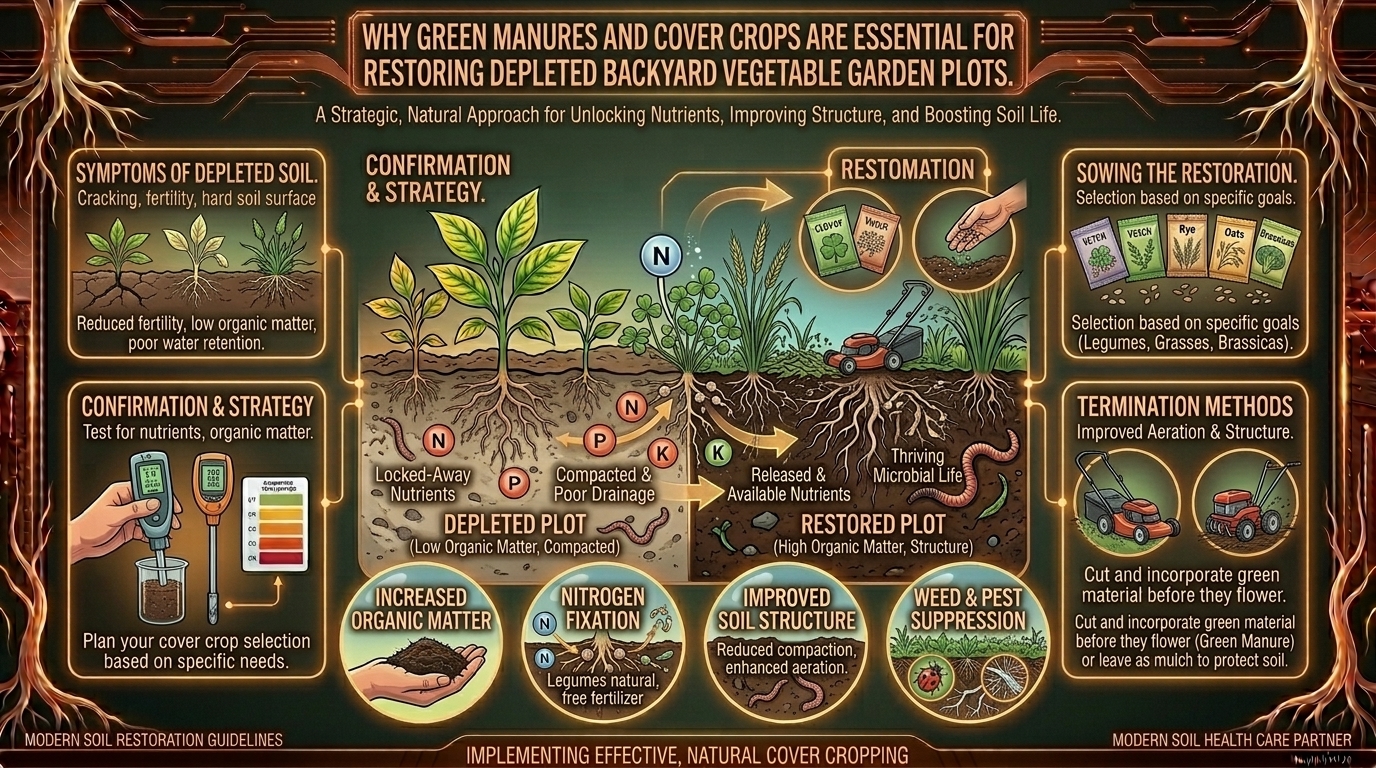
No-dig lasagna gardening mimics natural forest floors. By stacking organic layers on top of the ground without disturbing the existing soil strata below, you let soil microbes, earthworms, and macroorganisms do the heavy lifting for you. They tunnel upward, breaking down the layers, aerating the earth, and converting raw organic materials into rich, dark humus naturally.
2. The Core Principle: “Browns” and “Greens”
Just like a traditional compost pile, a successful lasagna bed is built by alternating layers of carbon-rich materials and nitrogen-rich materials.
A. Browns (Carbon-Rich Layers)
- What They Are: Dry, woody, or fibrous materials like corrugated cardboard, shredded autumn leaves, clean straw, and dry grass.
- What They Do: Provide the structural carbon framework, attract beneficial fungi, prevent compaction, and serve as the smothering weed barrier at the very bottom of the bed.
B. Greens (Nitrogen-Rich Layers)
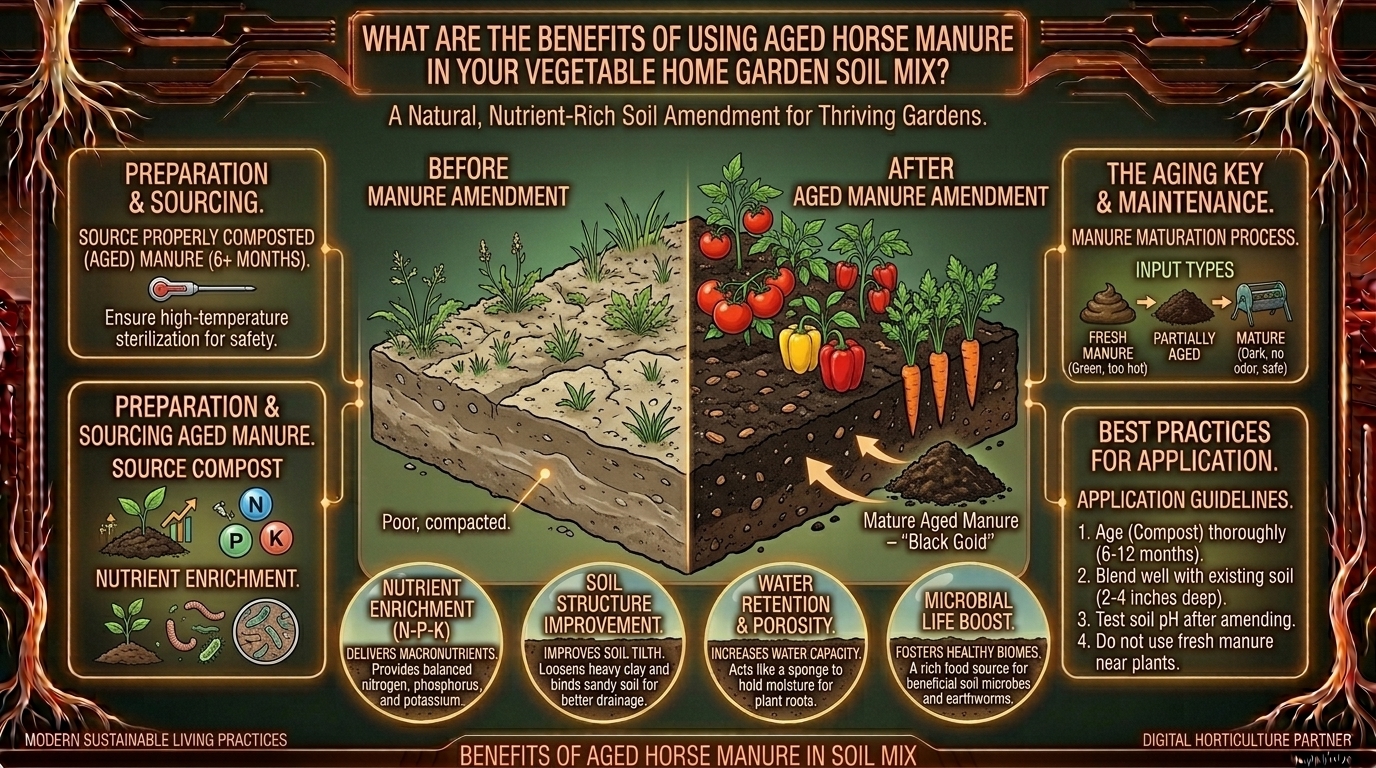
- What They Are: Fresh or moisture-rich materials like finished organic compost, aged livestock manure, green grass clippings, vegetable kitchen scraps, and seaweed.
- What They Do: Fuel the microbial activity, heat up the bed slightly to break down the carbon layers, and provide a rich reservoir of macro- and micronutrients for your future plants.
3. Regional Adaptations Across the U.S.
Because environmental conditions vary dramatically across the country, your lasagna bed construction should be customized to your local climate:
Texas
- Climate Challenge: Intense summer heat, high UV radiation, and heavy alkaline clay soils.
- Adaptation: Build your lasagna bed slightly deeper (at least 12 to 18 inches) to provide a thick, insulating buffer against scorching summer soil temperatures. Use heavy layers of moisture-retentive compost and shredded leaves to lock in precious irrigation water.
New York & Washington
- Climate Challenge: Freezing winters, heavy spring rains, and naturally acidic soils.
- Adaptation: Build your lasagna bed in late summer or autumn. This gives the layers all winter to settle, break down, and mellow out before spring planting. If your native soil is highly acidic, intersperse a light dusting of agricultural lime between compost layers.
California & San Francisco
- Climate Challenge: Mediterranean dry summers, water restrictions, and diverse urban microclimates.
- Adaptation: Lasagna beds are supreme water-savers in California. The sponge-like layers act as an organic reservoir, capturing every drop of winter rain or drip irrigation and preventing rapid surface evaporation during dry months.
4. Step-by-Step Masterclass: Building Your Lasagna Bed
Follow this chronological framework to build a gorgeous, weed-free, highly productive no-dig lasagna bed from scratch.
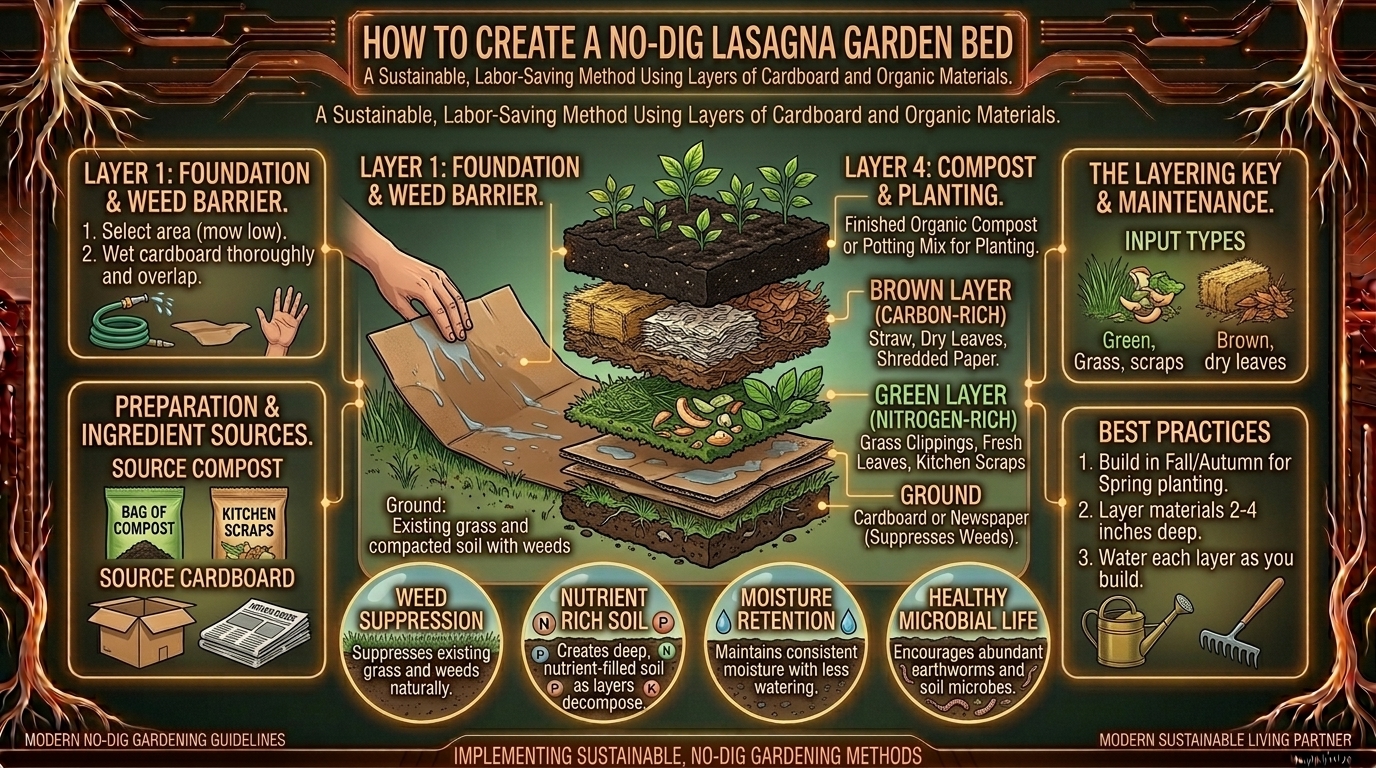
Step 1: Outline and Clear the Site
Mark out the boundaries of your new garden bed using a garden hose, rope, or wooden stakes. You do not need to remove existing grass, weeds, or sod. Simply mow or weed-whack any tall vegetation down as close to the soil surface as possible and leave the debris right where it is.
Step 2: Lay Down the Weed-Smothering Foundation (Cardboard)
Cover the entire marked area with overlapping layers of plain, unprinted corrugated cardboard.
- Crucial Rule: Remove all plastic tape, staples, and shiny colored glossy ink sections.
- Overlap Generously: Ensure overlapping edges are at least 6 to 8 inches wide so stubborn weeds and grass cannot find light gaps to peek through.
- Soak It: Thoroughly soak the cardboard layer with a garden hose until it is dripping wet. This jump-starts microbial decay and attracts earthworms right up to the surface.
Step 3: Alternate Carbon (Brown) and Nitrogen (Green) Layers
Now, build your lasagna stack, aiming for a total finished height of 12 to 18 inches (knowing it will settle down by about half over the next few months):
- Layer 1 (Brown): A 2-inch layer of crushed autumn leaves or clean straw over the wet cardboard.
- Layer 2 (Green): A 2-inch layer of nitrogen-rich compost, aged manure, or fresh green grass clippings.
- Repeat: Continue alternating 2-inch layers of browns and greens until you reach your target height.
Step 4: Top with a Premium Planting Layer
For your very top layer, finish with 3 to 4 inches of fine, weed-free finished compost or topsoil. This creates a clean, immediate seedbed and planting zone where you can transplant seedlings or direct-sow seeds right away without waiting for the lower layers to fully decompose.
Step 5: Water and Wait (Or Plant Immediately)
Give the entire completed lasagna bed a deep, thorough watering. If you built the bed in autumn, let it rest and cure over the winter months. If you built it in spring, you can plant transplant starts (like tomatoes, peppers, and brassicas) directly into the top compost layer on day one; as their roots grow deeper, they will encounter the rich, decomposing layers below.
5. Comprehensive FAQ: Everything You Need to Know
1. Do I really need to remove existing grass and weeds before laying cardboard?
No! That is the beauty of the lasagna method. The layer of overlapping wet cardboard completely blocks out sunlight, smothering all grass and weeds underneath. Over the course of a few months, the smothered grass dies, decomposes, and turns into free organic fertilizer for your new bed.
2. Can I use cardboard with black or colored ink?
Stick to plain, unprinted brown corrugated cardboard whenever possible. Avoid glossy, heavily waxed, or brightly colored cardboard containing heavy petroleum or chemical dyes, as these do not break down cleanly and can leach undesirable toxins into your vegetable soil.
3. How long does it take for a lasagna bed to break down?
If built in autumn, a lasagna bed will largely break down, mellow, and settle into rich, crumbly soil by spring. If built in spring, the top layers are ready for immediate planting, while the lower carbon layers will continue to decompose slowly throughout the growing season.
4. Will a no-dig lasagna bed attract pests like rodents or voles?
Properly built lasagna beds using standard garden materials do not attract pests any more than traditional tilled beds. However, avoid layering thick quantities of raw kitchen food scraps (like meat, dairy, or oily foods) directly into the bed, as these can attract mice or rats; stick strictly to plant-based scraps, leaves, straw, and compost.
5. How do I plant seeds in a fresh lasagna bed?
If you are direct-sowing tiny seeds (like carrots or lettuce), create a small 1-inch trench in the top compost layer and fill it with fine potting mix, planting your seeds there. For larger transplants (like tomato or pepper starts), simply pull aside the top mulch, dig a small pocket down into the compost layer, and plant your start securely.
6. Do I need to build a wooden frame around my lasagna bed?
You do not strictly need a wooden border. Many gardeners build “freestanding” lasagna beds with gently sloping sides (often called sheet-mulched berms). However, building a simple raised wooden frame (using rot-resistant cedar or redwood) helps contain the materials neatly, especially in urban yards or sloped San Francisco plots.
7. Will my lasagna bed dry out quickly in the summer?
Initially, loose organic materials can dry out in hot weather. To prevent this, ensure your layers are well-watered during construction, top the bed with a thin layer of fine mulch or compost to retain moisture, and install a simple drip irrigation line across the bed.
8. How do I maintain a lasagna bed in subsequent years?
Maintaining a no-dig bed is effortless. Each autumn or spring, simply top off the bed with a fresh 1-to-2-inch layer of organic compost and leaf mold. There is no tilling, no digging, and no turning required—nature’s soil food web maintains the structure for you.
9. Can I build a lasagna bed directly over concrete or asphalt?
Yes! This is called “sheet-mulching on hardscapes,” a popular technique for urban gardeners in San Francisco or New York who want to grow vegetables over a paved backyard or driveway. Because roots cannot access native soil below, build the bed slightly deeper (at least 18 to 24 inches) to give plant roots ample room to roam.
10. Why is my lasagna bed shrinking so much after a few weeks?
Shrinkage is completely normal and expected. As soil microbes, earthworms, and moisture break down the fluffy carbon and nitrogen layers, the entire stack compresses significantly (often dropping by 30% to 50% in height). This is a sign of healthy decomposition; simply top it off with fresh compost if needed.
Conclusion
Creating a no-dig lasagna bed using layers of cardboard and organic compost is a revolutionary shortcut to effortless, high-yield vegetable gardening. By abandoning the shovel and working in harmony with soil biology, you transform neglected ground into a fertile, moisture-retentive paradise without breaking your back.