Welcome back to kcplants.com! If you are a dedicated plant parent curating a lush indoor jungle across Texas, New York, California, Washington, or San Francisco, you know that the true magic of tropical houseplants lies in their foliage. Whether it is the glossy, mirror-like sheen of a Monstera deliciosa, the velvety emerald sheen of a Philodendron verrucosum, or the striking variegation of a Rubber Tree (Ficus elastica), clean leaves are the signature of a thriving indoor garden.
However, indoor life is dusty. Over time, household dust, hard water spots from tap water misting, and lingering pesticide residues settle onto leaf surfaces, forming a dull, grey film. This dust layer does more than look unsightly—it blocks stomata, choking off the plant’s ability to absorb light and carry out efficient photosynthesis.
While commercial chemical leaf shine sprays promise instant gloss, many contain petroleum distillates and synthetic aerosol propellants that clog leaf pores and suffocate the plant. The absolute gold standard used by professional horticulturists is a natural organic neem oil polishing solution.
This comprehensive, highly informative guide explores the science of leaf respiration, the incredible benefits of neem oil, and step-by-step instructions for mixing and applying a natural polishing solution to make your indoor tropicals gleam across every US climate zone.
1. The Science of Leaf Cleanliness: Why Dust Kills Shine
To understand why cleaning your plant leaves is vital, we must look at plant anatomy.
The Stomata and Photosynthesis
Leaves are biological solar panels.
- Embedded across the epidermis of plant leaves are microscopic valve-like cells called stomata.
- Stomata open and close to allow the plant to inhale carbon dioxide and exhale oxygen and water vapor during photosynthesis.
- When household dust, grease, and mineral deposits coat a leaf, they physically seal these stomata shut. The plant literally struggles to breathe and capture light, leading to sluggish growth, yellowing, and a dull, matte appearance.
2. Why Neem Oil is the Ultimate Leaf Polish
Neem oil is a naturally occurring botanical extract pressed from the seeds and fruits of the evergreen neem tree (Azadirachta indica).
The Dual Benefits: Shine Meets Protection
Unlike synthetic chemical furniture polish or silicone leaf sprays that suffocate plant pores:
- Breathable Lipid Coating: Pure, cold-pressed neem oil provides a rich, glossy finish that highlights natural leaf venation without sealing off stomata, provided it is properly diluted.
- Organic Pest Shield: Neem oil contains active compounds like azadirachtin, which acts as a powerful deterrent and organic treatment against common indoor pests like spider mites, thrips, scale, and mealybugs. Cleaning your leaves with neem oil simultaneously sanitizes your plant against hidden bugs!
3. Regional Indoor Factors Affecting Leaf Dust Accumulation
Your local environment heavily influences how quickly your indoor plants gather dust and grime:
New York & Washington (Winter Heating and Sealed Homes)
- The Challenge: During winter, closed windows and forced-air heating systems circulate microscopic dust particles continuously throughout indoor spaces, coating plant leaves in a heavy grey film within weeks.
- The Solution: Make leaf cleaning a core part of your monthly winter plant care routine, pairing your polishing session with a humidifier to keep foliage dust-free and hydrated.
San Francisco & California (Coastal Air and Open Windows)
- The Challenge: Enjoying the gorgeous California breeze by keeping windows open lets in fresh air, but it also invites outdoor street dust, pollen, and marine salt films onto indoor sills.
- The Solution: Wipe down broad-leaved tropicals monthly using an organic neem solution to cut through fine airborne particulate buildup.
Texas (AC Airflow and Dust Circulation)
- The Challenge: Continuous indoor air conditioning circulation in Texas homes blows fine dust particles directly onto horizontal leaf surfaces, dulling foliage rapidly.
- The Solution: Use a soft microfiber cloth combined with your neem polishing blend to lift dust safely without scratching delicate leaf cuticles.
4. Step-by-Step Guide: Mixing and Applying Neem Leaf Polish
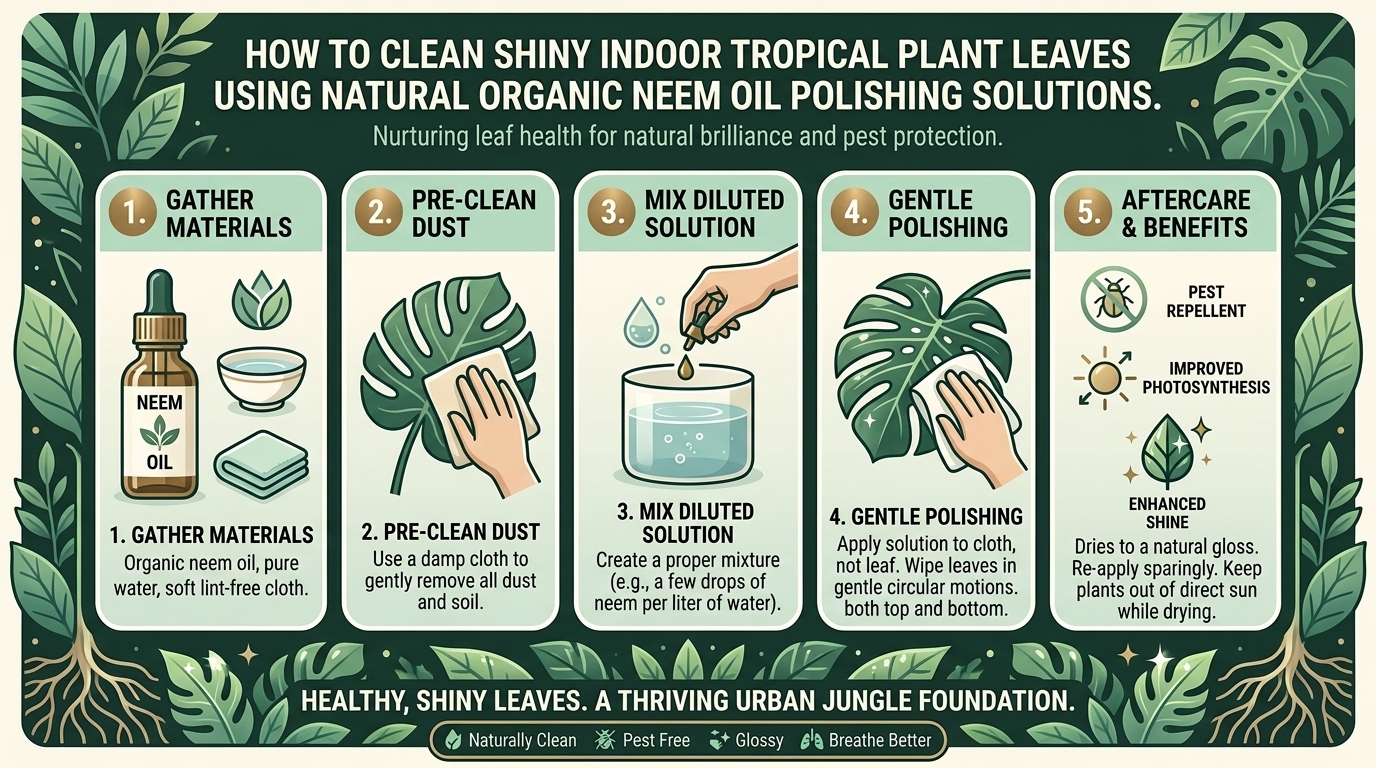
Creating your own organic leaf-shining solution is simple, safe, and inexpensive. Follow this professional recipe:
The Professional Recipe:
- 1 Quart (32 oz) of Warm Filtered Water (Warm water helps emulsify the oil).
- 1 Teaspoon of Pure, Cold-Pressed Raw Neem Oil (Ensure it is 100% cold-pressed with azadirachtin intact).
- 3 to 5 Drops of Mild Liquid Castile Soap or Organic Dish Soap (The soap acts as an emulsifier to bind the oil and water together, preventing separation).
Step 1: Pre-Cleaning Dust Removal
Before applying any liquid or oil, take a dry, ultra-soft microfiber cloth or a soft feather duster and gently wipe away loose surface dust from the leaves. Never rub dry dust directly against the leaf surface, as abrasive particles can scratch the delicate waxy cuticle (epicuticular wax).
Step 2: Mixing the Solution
Pour your warm water into a clean spray bottle or mixing bowl, add the liquid castile soap, and finally add the neem oil. Shake or stir vigorously until the mixture turns a milky-white consistency with no floating oil slicks on the surface.
Step 3: The Support Hand Technique
- Support the underside of the leaf with the palm of your hand to prevent snapping the stem or petiole.
- Spray a small amount of the neem solution directly onto a soft microfiber cloth or cotton pad (avoid spraying heavily straight onto the plant where puddles can form in leaf joints).
Step 4: Gentle Polishing Motion
- Gently wipe the top surface of each leaf using circular, sweeping motions from the base of the stem out to the tip.
- You will instantly see a brilliant, natural, non-greasy luster emerge. Repeat lightly on the undersides of leaves to clean away unseen pest eggs.
Step 5: Post-Polish Air Drying
Allow your freshly polished plants to dry in indirect ambient light. Never place a freshly oiled plant directly into blistering sun, as oil droplets can act like magnifying lenses under intense light rays, causing leaf scorch.
5. Frequently Asked Questions (FAQ)
1. Can I use pure olive oil or mayonnaise to make my houseplant leaves shine?
Never use kitchen oils (olive, vegetable, canola) or mayonnaise. Kitchen oils do not evaporate or dry; they turn rancid, attract dust like a magnet, and form an impenetrable suffocating barrier that kills plant cells and invites fungus. Always use horticultural neem oil.
2. How often should I clean and polish my indoor tropical plant leaves?
Cleaning your plant leaves every 3 to 4 weeks is ideal for most indoor environments. This frequency removes dust buildup, maintains a stunning shine, and keeps minor pest populations from taking hold.
3. Will neem oil burn my plant leaves?
Pure, undiluted neem oil can scorch leaves, especially when exposed to bright sunlight. However, when properly diluted with water and liquid dish soap according to our recipe, it is completely safe and gentle on tropical foliage.
4. Why does my neem polish solution smell strong?
Pure, organic cold-pressed neem oil has a distinct, earthy, garlic-onion-peanut aroma. While pungent, the scent dissipates entirely within 12 to 24 hours after application. You can add 2 drops of organic peppermint or lavender essential oil to mask the scent if desired.
5. Can I use this neem solution on fuzzy-leaved plants like African Violets?
No! Never use wet sprays or oils on plants with fuzzy, hairy leaves (such as African Violets, Gloxinias, or certain succulents). Water and oil get trapped in the microscopic hairs, causing immediate rotting and leaf spotting. Clean fuzzy leaves using a dry, ultra-soft artist’s paintbrush instead.
6. What should I do if my neem oil separates inside the spray bottle?
Neem oil naturally separates from water when left sitting. Always shake your spray bottle vigorously before every single spray application to ensure an even emulsion of oil and soap.
7. Does neem polish protect plants against dust settling again?
Yes! The very light, microscopic lipid layer left behind by neem oil creates a temporary anti-static barrier that repels dust particles, keeping your leaves cleaner for a longer period of time.
8. Is it safe to clean leaves on edible plants (like indoor herbs or citrus)?
While neem oil is organic, it leaves a bitter taste on edible crops. For indoor herbs or citrus fruits, wipe leaves down with plain warm water and a drop of mild dish soap rather than neem oil, rinsing thoroughly afterwards.
9. Can I leave the neem polish on the undersides of leaves?
Yes! Wiping the undersides of leaves with the neem solution is actually encouraged, as it cleans away dust and serves as a powerful preventative organic barrier against spider mites and thrips.
10. Why are my shiny leaves looking dull and hazy even after cleaning?
If leaves look hazy after cleaning, you may have used too much dish soap or left excess oily residue behind. Wipe the leaves down a second time using a clean microfiber cloth dampened only with warm water to remove excess film.
Conclusion
Cleaning and polishing your indoor tropical plant leaves using a natural organic neem oil solution is a transformative ritual that combines aesthetic brilliance with essential biological health. By removing dust, opening clogged stomata, and providing a protective shield against pests, you ensure your indoor jungle stays radiant and vigorous.