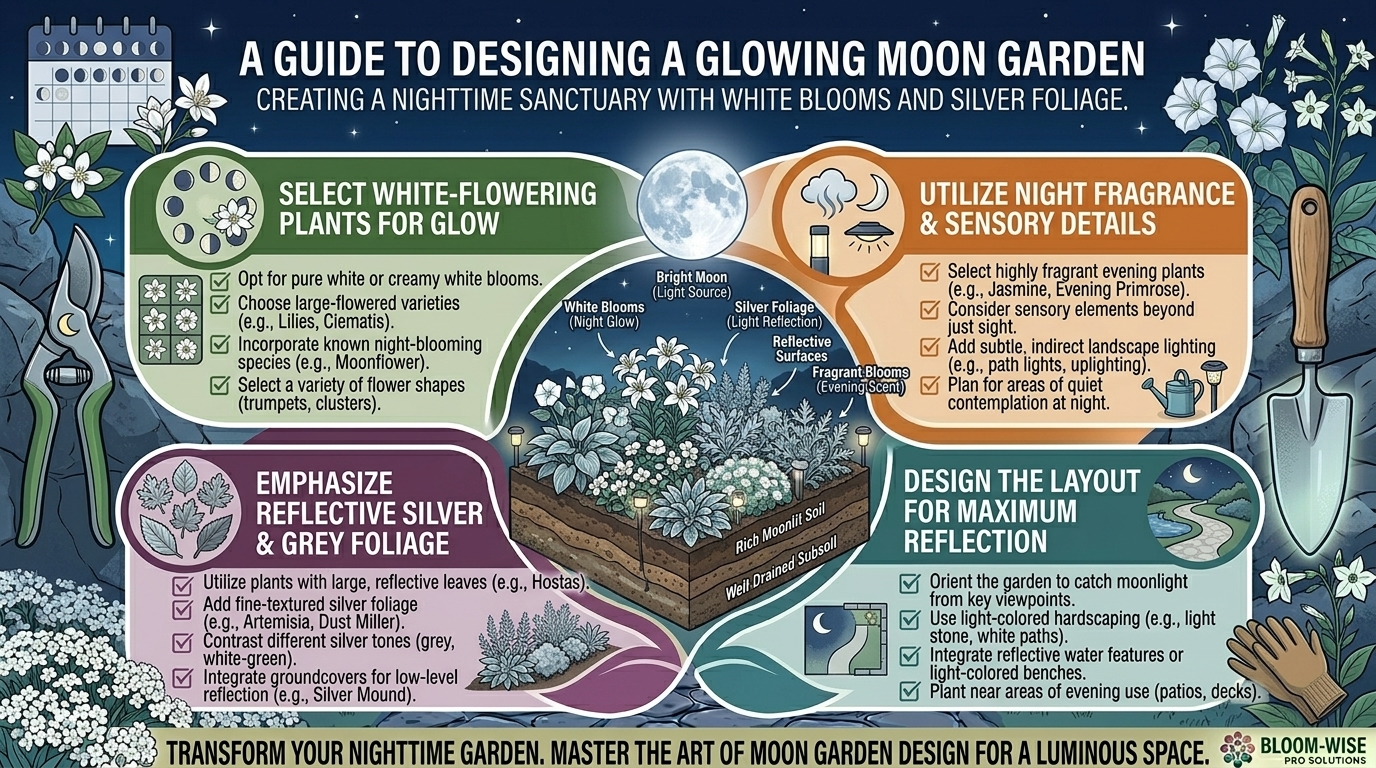
How to Design a Moon Garden Featuring White Flowers and Silver Foliage That Glow at Night
In our fast-paced, hyper-connected modern lives, our gardens are frequently enjoyed only during the rush of early morning or the bright glare of midday. Yet, when the sun dips below the horizon and the evening dusk settles over your landscape, a completely different world awakens. The heat of the day dissipates, nocturnal pollinators begin their dance, and the garden transforms into a quiet sanctuary of shadows and moonlight.
Enter the moon garden—a specialized landscape design concept curated specifically to come alive after dark. By utilizing a deliberate palette of luminous white blossoms, velvety silver foliage, reflective textures, and night-fragrant blooms, a moon garden catches and reflects moonlight, creating an ethereal, glowing oasis right in your backyard.
Whether you are designing a compact urban container deck in San Francisco, a secluded suburban courtyard in New York, a sprawling backyard retreat in Texas, or managing unique microclimates across Washington State and California, this comprehensive guide explores how to design, plant, and maintain a breathtaking moon garden for your website, kcplants.com.
1. The Core Design Principles of a Moon Garden
Creating a garden that appears to “glow” in the dark requires more than just planting random white flowers. It requires an understanding of how moonlight interacts with plant pigments and textures.
[ Moon Garden Design Framework ]
       │
       ├──> 1. The Reflective Color Palette (White & Silver)
       │
       ├──> 2. Night-Scented Aromatics (Nocturnal Pollinator Attraction)
       │
       ├──> 3. Contrasting Textures & Shapes (Capturing Moonbeams)
       │
       └──> 4. Strategic Placement (Bedrooms, Patios, and Pathways)
1. The Reflective Color Palette
Human rods and cones perceive color differently under low-light conditions. Bright reds, deep blues, and dark purples dissolve into black shadows after sunset. Conversely, pure white, cream, pale yellow, and silvery-gray reflect the minimal ultraviolet and white light bouncing off the moon, making them appear to phosphoresce or glow against the dark backdrop of night.
2. The Power of Nocturnal Fragrance
Many daytime flowers rely on bright visual cues to attract bees and butterflies. Night-blooming plants often compensate for the darkness by releasing heavy, intoxicating perfumes after sunset to attract nocturnal moths, sphinx moths, and bats. Integrating night-scented flowers adds an immersive sensory layer to your moon garden.
3. Strategic Placement
Position your moon garden where you will actually experience it during evening hours: directly outside a bedroom window, along a walkway leading to a backyard patio, or adjacent to an outdoor seating area where you can relax after dinner.
2. Essential Plants for Your Moon Garden: White Flowers & Silver Foliage
To achieve a true nighttime glow, curate a balanced structural mix of structural shrubs, perennials, vines, and annuals.
Star-Studded White Flowers
- Moonflower (Ipomoea alba): The undisputed queen of the moon garden. This vigorous vine produces massive, glowing white trumpet-shaped blossoms that literally unfurl right before your eyes as dusk falls, emitting a rich, sweet fragrance before closing up by mid-morning.
- Night-Scented Stock (Matthiola bicornis): While unassuming and plain-looking during the day, these delicate purple-and-white flowers release an intensely sweet, clove-like fragrance at night that perfumes an entire patio.
- White Sweet Autumn Clematis (Clematis terniflora): A powerhouse climber that bursts into a massive cloud of tiny, star-shaped white blossoms in late summer, creating a glowing cascade over fences or arbors.
- Casablanca Lilies and White Peonies: Provide massive, luminous structural flower heads that catch overhead moonlight brilliantly.
Luminous Silver and Gray Foliage
Flowers bloom and fade, but silver foliage provides a steady, glowing backdrop all season long.
- Silver Sage (Artemisia ludoviciana): Features velvety, deeply cut leaves that look like brushed silver and catch even the faintest glimmer of night light.
- Lamb’s Ear (Stachys byzantina): Offers thick, woolly, soft-textured leaves that feel like velvet and reflect a stark, silver-white sheen.
- Dusty Miller (Jacobaea maritima): A classic, hardy bedding plant featuring deeply lobed, frosted-silver leaves that maintain their luminescence through intense heat and coastal fog.
- Silver Mound Artemisia and Licorice Plant (Helichrysum petiolare): Create cascading, mounding textures that soften hard garden edges and illuminate dark garden borders.
3. Structural Hardscaping and Reflective Elements
Plants alone do not make a complete moon garden. Integrating reflective hardscaping materials amplifies the moonlight effect.
[ Hardscaping & Lighting Integration ]
       │
       ├──> 1. Light-Colored Paving (White Gravel, Limestone, or Flagstone)
       │
       ├──> 2. Water Features (Reflective Pools & Soundscapes)
       │
       └──> 3. Minimalist Soft Illumination (Warm Amber Accents)
Reflective Surfaces
- White Stone Paths: Use crushed white marble gravel, pale limestone pavers, or light-colored granite flagstones for garden pathways. These materials reflect moonlight upward, illuminating low-growing silver ground covers.
- Water Features: The surface of water acts as a natural mirror. Incorporating a dark-bottomed reflecting pool, a bubbling stone fountain, or a simple basin captures the moon’s reflection and adds the soothing sound of trickling water.
Strategic Lighting
While a moon garden relies primarily on natural moonlight, subtle, low-voltage warm amber or soft white LED up-lighting placed at the base of white-barked birch trees or ornamental grasses creates dramatic night shadows and accentuates textures without blinding your night vision.
4. Regional Design Adaptations Across the U.S.
Adapting your moon garden to your specific climate ensures your glowing oasis thrives year-round:
San Francisco & Coastal California
- Climate Challenge: Cool maritime summer temperatures and rolling evening fog provide natural moisture, but require plants that tolerate damp coastal air and mild sunlight.
- Plant Selection: Plant cascading silver licorice plants, white calla lilies, and silver mound artemisia in raised coastal beds where evening fog highlights their velvety textures.
Texas
- Climate Challenge: Blistering summer heat requires drought-tolerant plants that won’t wither during hot July and August nights.
- Plant Selection: Rely on tough, heat-hardy silver foliage plants like Texas sage (Leucophyllum frutescens), silver germander, and white-flowering datura (moonflower shrub) that thrive in baking sun and glow brightly under Texas moonlit skies.
New York & Northeast
- Climate Challenge: Freezing winters mean many striking moon garden stalwarts must be treated as annuals or hardy perennials that survive cold dormancy.
- Plant Selection: Utilize hardy perennials like white astilbe, hostas with white-variegated foliage, sweet autumn clematis, and night-scented tobacco (Nicotiana alata).
Washington State & Pacific Northwest
- Climate Challenge: Overcast, damp spring and autumn seasons mean your moon garden needs plenty of drainage and plants that tolerate damp shade.
- Plant Selection: Incorporate white bleeding hearts, white foxgloves, and shade-tolerant silver-painted ferns (Athyrium niponicum) that illuminate dark woodland garden corners.
5. Frequently Asked Questions (FAQ)
1. What makes a plant “glow” in a moon garden?
Plants glow in a moon garden because their flower petals and leaf surfaces contain specialized pigments or microscopic hairs that absorb and reflect ultraviolet and white light bouncing off the moon, making white and silver hues stand out sharply against dark shadows.
2. Do moon garden flowers only bloom at night?
Not all of them! While plants like the evening-blooming moonflower and night-scented stock open their blossoms specifically at sunset, many plants—such as white roses, sweet alyssum, and silver foliage perennials—remain decorative and luminous during the daytime as well.
3. Are moonflowers poisonous?
Yes. True moonflowers (Ipomoea alba) belong to the morning glory family, and their seeds contain alkaloids that are toxic if ingested by humans, dogs, cats, or horses. Keep them away from grazing pets and small children.
4. How do I design a moon garden for a small balcony or urban courtyard?
You can easily create a container moon garden! Use large white ceramic pots or galvanized metal containers filled with white trailing petunias, silver dusty miller, white-variegated ivy, and night-scented stock placed on a small patio table or railing.
5. What are the best fragrant plants for a nighttime garden?
Some of the most intensely fragrant night-blooming plants include night-blooming jasmine (Cestrum nocturnum), night-scented stock, moonflower, and sweet autumn clematis. Their sweet scents peak between dusk and midnight.
6. Will white flowers look dirty or dingy during the day?
Modern breeding has produced crisp, self-cleaning white flower cultivars (like white calibrachoa, iceberg roses, and white verbenas) that shed old blooms and maintain a clean, vibrant look throughout the entire growing season.
7. How does silver foliage help plants survive harsh sun?
The fine, microscopic hairs or reflective scales (trichomes) that give silver plants their frosted color act like a natural sunscreen and insulation layer, reflecting intense sunlight and reducing moisture loss in dry climates.
8. What kind of lighting should I use in a moon garden?
Avoid bright, harsh white security floodlights, which wash out subtle moonlight and blind night vision. Instead, use soft, low-voltage warm amber or soft golden LED accent lights tucked low to the ground or hidden behind foliage.
9. Can I create a moon garden in a shady backyard?
Yes! Shade gardens can glow brilliantly at night by utilizing white-flowering shade lovers (like white impatiens, lily of the valley, and white bleeding hearts) combined with silver-variegated hostas and silver-painted ferns.
10. How do I attract nocturnal pollinators to my moon garden?
Plant night-blooming, nectar-rich tubular flowers with pale or white petals (like evening primrose, moonflowers, and flowering tobacco). These visual cues and nocturnal perfumes attract beautiful sphinx moths, night-flying bees, and bats.
Conclusion
Designing a moon garden transforms your outdoor space from a daytime-only retreat into a magical, glowing nocturnal sanctuary. By carefully orchestrating a palette of luminous white flowers, velvety silver foliage, night-scented aromatics, and reflective hardscaping, you create a peaceful environment that comes alive long after the sun goes down.