Growing tomatoes is one of the most gratifying endeavors in home horticulture. There is nothing quite like stepping out into your backyard garden, patio, or urban balcony to harvest a sun-ripened, intensely sweet tomato. However, for gardeners growing indeterminate varieties anywhere from the scorching heat of Texas, the urban spaces of New York, the sun-drenched yards of California, the damp microclimates of Washington, to the foggy hills of San Francisco, one biological reality quickly becomes apparent: indeterminate tomato vines do not stop growing.
Unlike determinate (bush) tomatoes that reach a fixed height, set all their fruit at once, and die back, indeterminate vines act like botanical skyscrapers. Left to their own devices, they morph into massive, tangled jungles of vines, foliage, and shoots. While this looks lush initially, it creates a maintenance nightmare, chokes off airflow, invites fungal diseases, and forces the plant to waste valuable energy growing green leaves instead of ripening fruit.
Mastering the art of proper pruning is the ultimate secret weapon for transforming a messy tomato thicket into a clean, highly productive, disease-resistant food factory.
This comprehensive guide covers everything you need to know to prune your indeterminate tomato vines like a professional, ensuring maximum fruit yield and pristine air circulation.
Table of Contents
- Introduction to Indeterminate Tomato Growth Habits
- Determinate vs. Indeterminate: Why Pruning Matters
- The Anatomy of a Tomato Plant (Understanding Suckers)
- Essential Tools for Clean, Safe Tomato Pruning
- Step-by-Step Guide: How to Prune to a Single or Double Leader
- Strategic Defoliation for Air Circulation and Sunlight
- Regional Pruning Strategies (TX, NY, CA, WA, SF)
- Common Pruning Mistakes to Avoid
- Pro Tips for Maximizing Sugar Content and Yield
- Frequently Asked Questions (10 FAQs)
- Conclusion
1. Introduction to Indeterminate Tomato Growth Habits
To prune effectively, you must first understand how an indeterminate tomato plant grows. Native to tropical regions where they behave as perennial vines, indeterminate tomatoes produce a continuous main stem (or multiple main stems) that climbs upward, flowering and fruiting sequentially until frost or disease eventually kills the plant.
Without intervention, every single leaf axil—the tiny V-shaped space where a side branch meets the main stem—will sprout a brand-new shoot. Left unmanaged, these shoots turn into full-sized branches, multiplying exponentially week after week.
2. Determinate vs. Indeterminate: Why Pruning Matters
Gardeners often make the critical mistake of over-pruning determinate (bush) tomatoes, which severely cuts into their harvest because their fruit sets all at once on terminal shoots.
Indeterminate tomatoes, however, thrive on strategic pruning. Pruning yields massive benefits:
- Redirected Energy: Instead of wasting energy fueling hundreds of unnecessary side leaves, the plant channels its sugars directly into developing fruit clusters.
- Superior Air Circulation: Opening up the interior canopy allows wind and breeze to dry off dew and rain quickly, which is the single most effective defense against fungal leaf blights and powdery mildew.
- Easier Harvesting and Pests Control: Cleanly staked and pruned vines make harvesting effortless and give pests (like hornworms or aphids) nowhere to hide.
3. The Anatomy of a Tomato Plant (Understanding Suckers)
If you look closely at a tomato plant, you will see three main structural components:
- The Main Stem: The thick, primary vertical vine that provides the backbone of the plant.
- Fruit Trusses (Flower Clusters): These emerge directly out of the main stem, featuring delicate yellow blossoms that turn into tomatoes. Crucial rule: Never prune a flower cluster thinking it is a branch!
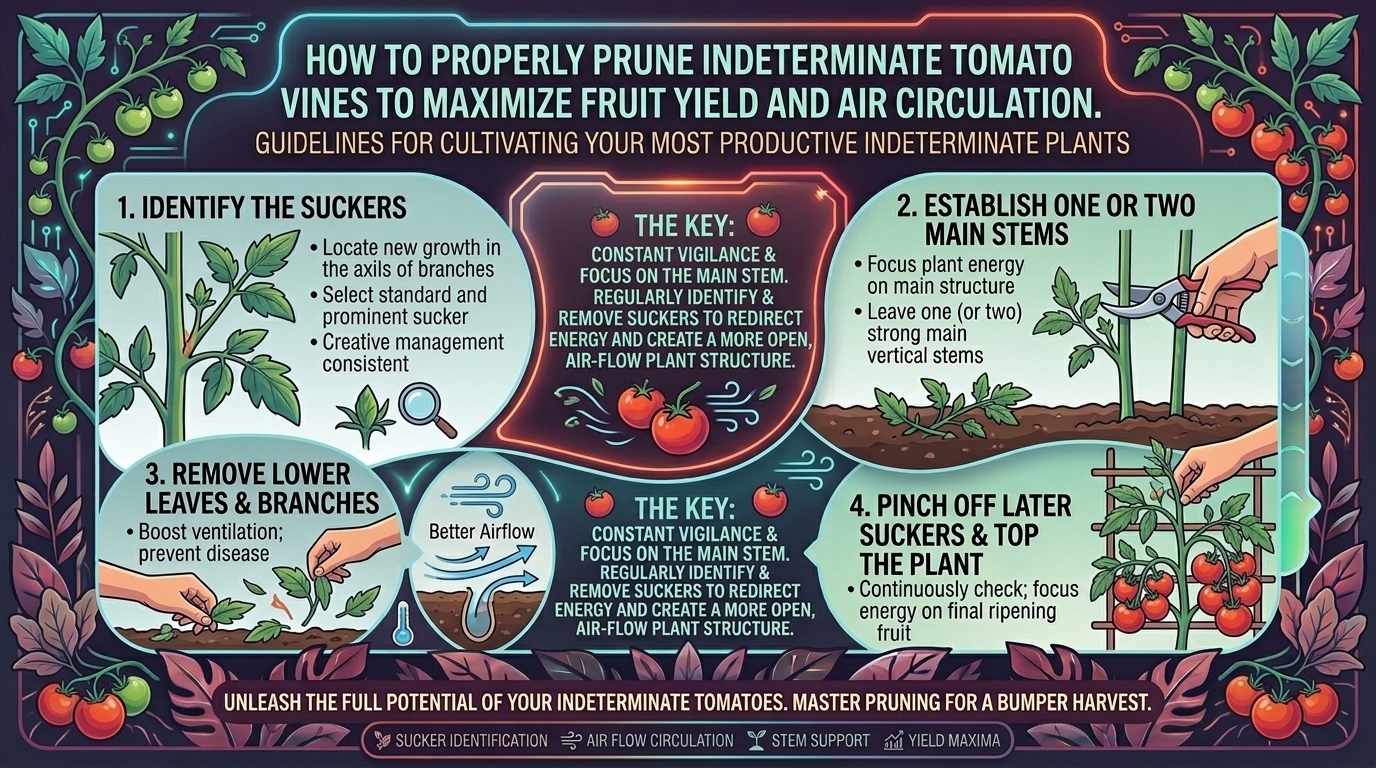
- Suckers: These are the aggressive secondary shoots that sprout precisely in the 45-degree angle (the axil) between a leaf stem and the main vertical vine.
The Golden Objective: Your primary goal in pruning indeterminate tomatoes is identifying and removing unwanted suckers before they grow too large, while protecting the main structural leader and flower clusters.
4. Essential Tools for Clean, Safe Tomato Pruning
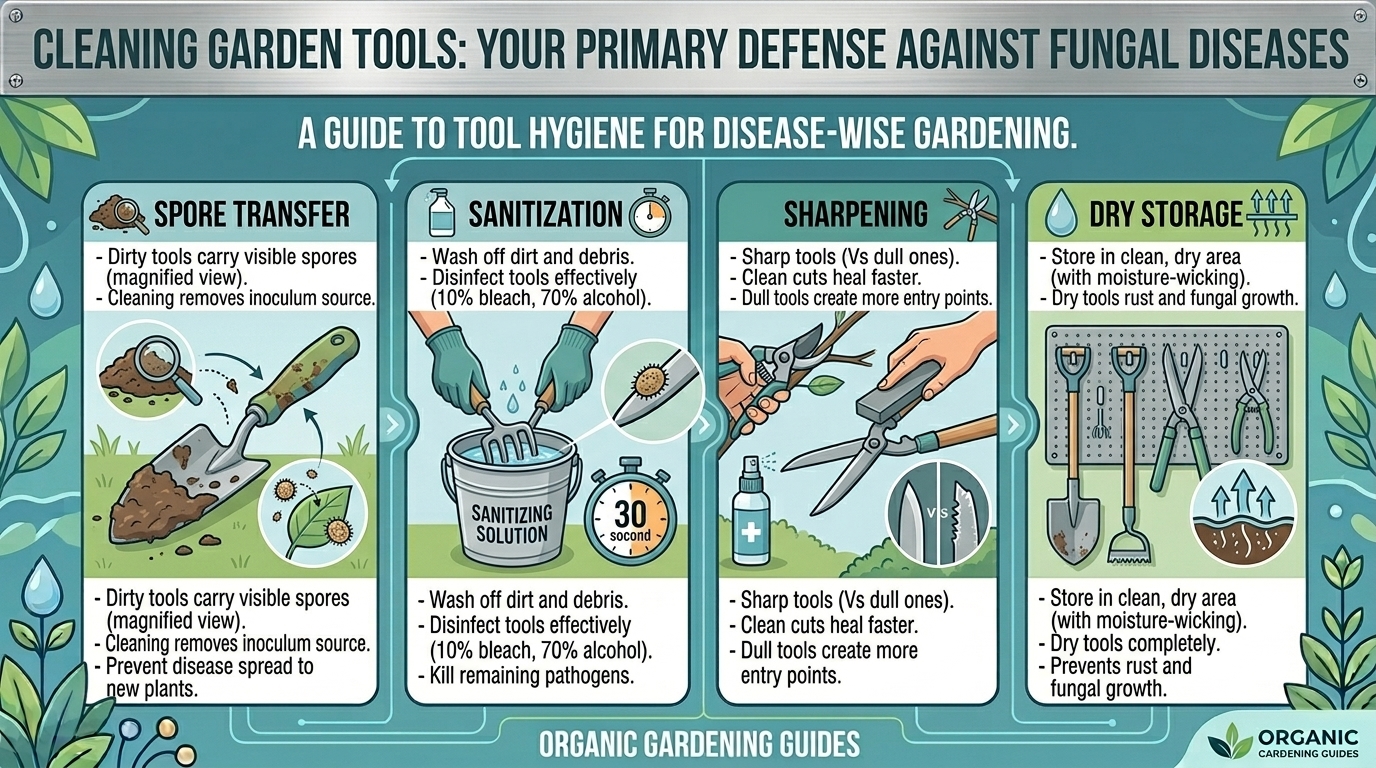
Using the wrong tools or dirty equipment can introduce devastating viral or bacterial plant pathogens (such as Tobacco Mosaic Virus or bacterial canker) straight into your garden.
- Sharp Bypass Pruners or Snips: Use clean, high-grade bypass hand pruners. Never use kitchen scissors or dull blades that crush and tear plant tissue, as ragged wounds take longer to heal.
- Rubbing Alcohol or Hydrogen Peroxide: Keep a spray bottle or sanitizing wipe handy to sterilize your blades between plants, especially if you notice any discoloration or suspect disease.
- Sturdy Stakes, Trellises, or Florida Weave Twine: Pruned indeterminate vines become top-heavy. Ensure your support system is locked in place before you begin heavy pruning.
5. Step-by-Step Guide: How to Prune to a Single or Double Leader
Most home gardeners managing confined backyard garden beds, raised beds, or large containers choose between a Single-Leader System or a Double-Leader System.
Method A: The Single-Leader System (Maximum Airflow)
- Identify the Main Stem: Locate the primary vertical vine growing straight up from the base.
- Pinch Small Suckers Weekly: Inspect your plant every 5 to 7 days. When you spot a small sucker in a leaf axil that is under 2 to 3 inches long, grasp it firmly between your thumb and forefinger and snap it cleanly to the side. It will pop off smoothly like a fresh green bean.
- Maintain the Leader: Let only the absolute top tip of the plant continue upward. Remove every single side sucker along the entire length of the main stem.
Method B: The Double-Leader System (Balanced Yield and Shade)
- Locate the First Strong Sucker: Allow the main stem to grow, but identify the very first vigorous sucker that develops immediately below the first major flower cluster.
- Promote It as Twin: Allow this specific lower sucker to grow outward and upward alongside the main stem, effectively turning your plant into a “two-stemmed tree.”
- Prune All Other Suckers: Just like the single-leader system, snap off all other subsequent suckers that appear higher up on both stems. This system doubles your fruit-bearing potential while keeping the canopy manageable.
6. Strategic Defoliation for Air Circulation and Sunlight
Pruning is not just about removing suckers; it also involves managing mature leaves as the plant matures.
- Remove Lower Leaves (The “Lollypop” Effect): Once your tomato plant reaches about 3 to 4 feet tall, snip off all lower leaves up to 12 to 18 inches off the ground. Lower leaves are the first to splash with soil-borne fungal spores during rain or watering, and they contribute little to photosynthesis.
- Thin Crowded Canopies: If leaves overlap densely in the center of the plant, selectively clip out a few interior fan leaves to let golden sunlight penetrate the fruit clusters and allow wind to blow freely through the center.
7. Regional Pruning Strategies (TX, NY, CA, WA, SF)
Your regional climate dictates how aggressively you should prune your indeterminate vines:
Texas (Beating Extreme Heat and Humidity)
- Strategy: Prune more aggressively to maximize airflow through the plant canopy, reducing humidity pockets that attract spider mites and fungal issues during humid spells. However, leave enough upper foliage canopy to shade developing fruit clusters from scorching afternoon UV rays.
New York (Maximizing Short Season Windows)
- Strategy: In late summer (roughly 4 to 6 weeks before your expected first autumn frost), perform “topping.” Clip off the very top growing tip of your main indeterminate vine. This stops the plant from wasting energy on new vine growth and forces all remaining plant sugars to concentrate into ripening the existing green fruit clusters before cold weather arrives.
California (Balancing Vigor in Sunshine)
- Strategy: California sun drives explosive, runaway vine growth. Strict single-leader or double-leader pruning is essential here, or your garden beds will quickly transform into an impenetrable 10-foot tangle of green vines.
Washington (Mitigating Damp, Wet Fungal Risks)
- Strategy: Aggressive lower leaf pruning is non-negotiable in Washington’s damp climate. Keeping foliage elevated well above the soil and thinning the interior canopy prevents persistent rain and heavy morning dew from triggering late blight.
San Francisco (Managing Cool Coastal Fog)
- Strategy: San Francisco’s cool fog and lower ambient temperatures slow down fruit ripening. Open up the canopy generously to expose as much fruit as possible to limited direct sunlight, ensuring quicker ripening before damp evening chills settle in.
8. Common Pruning Mistakes to Avoid
- Mistake 1: Letting Suckers Grow Too Large.
- The Fix: Snip suckers when they are small (under 3 inches) by hand. If you let a sucker grow as thick as a pencil, cutting it off leaves a massive wound that invites disease. If you miss one and it grows huge, leave it or cut it cleanly with sanitized pruners.
- Mistake 2: Pruning on Wet Days.
- The Fix: Always prune in the late morning on dry, sunny days. Pruning wet foliage spreads fungal spores from plant to plant on your hands and tools, and wet wounds heal much slower.
- Mistake 3: Removing All Leaves.
- The Fix: Remember that leaves are the solar panels that manufacture sugars for your tomatoes. Never strip a plant completely naked; always leave an active upper canopy of healthy leaves.
9. Pro Tips for Maximizing Sugar Content and Yield
- Prune Consistently, Not All at Once: Snip 2 or 3 small suckers a week rather than hacking away half the plant in one massive shearing session, which causes severe shock.
- Top Your Vines in Autumn: As mentioned for northern climates, topping your vines 30 days before the end of the season ensures you do not waste harvest potential on tiny tomatoes that will never ripen.
- Pair with Rich Organic Soil: Well-pruned plants supported by rich organic soil mix (packed with compost, coconut coir, and perlite) will reward your precision with exceptional flavor and heavy yields.
10. Frequently Asked Questions (10 FAQs)
Q1: Should I prune determinate (bush) tomato varieties the same way?
A: No! Never prune the suckers off determinate tomatoes. Determinate varieties set fruit at the ends of their branches; pruning their suckers drastically reduces your overall harvest. Only remove yellowing lower leaves on determinate plants.
Q2: What happens if I accidentally cut off the main growing tip (leader)?
A: Do not panic! If you accidentally snap the main leader, look for the healthiest, most vigorous side sucker directly beneath the cut and train it upward to become your new main leader. The plant will continue growing smoothly.
Q3: Do I need to apply wound sealer to pruned tomato stems?
A: No. Tomato plants possess natural healing compounds and heal very rapidly on their own when cut in dry, sunny weather. Applying chemical sealers or paints traps moisture and actually encourages rot.
Q4: Should I prune cherry tomato vines differently than beefsteak tomatoes?
A: The mechanics of removing suckers are identical, but because cherry tomatoes are exceptionally vigorous, many gardeners utilize a double-leader or triple-leader system for cherry varieties to handle their sheer volume of fruit, whereas large beefsteak varieties benefit greatly from strict single-leader training to maximize fruit size.
Q5: Can I root the tomato suckers I prune off in water to make new plants?
A: Yes, absolutely! Tomato suckers are natural cloning machines. Drop a healthy 4-to-6-inch sucker into a glass of clean water, and it will sprout robust white roots within 7 to 10 days, ready to be planted into organic soil for a bonus late-season harvest.
Q6: How often should I prune my indeterminate tomato vines?
A: Plan on walking through your garden once a week during peak growing season (spring and summer). Weekly maintenance takes only 5 minutes per plant and prevents suckers from getting out of control.
Q7: Why are my tomato stems turning purple or woody near the base?
A: Woody, thick brown stems near the base of a mature indeterminate tomato plant are a normal part of aging as the plant transitions into a sturdy tree-like trunk. Purple lower veins can sometimes indicate a temporary phosphorus uptake lockout due to cool soil temperatures, which usually resolves as weather warms.
Q8: Does pruning indeterminate tomatoes increase fruit size?
A: Yes. By limiting the number of competing branches and directing all plant photosynthesis and soil nutrients into fewer fruit clusters, individual tomatoes (especially slicing and beefsteak varieties) grow noticeably larger and sweeter.
Q9: Can I prune tomato plants at night?
A: Never prune at night. Pruning wounds need several hours of dry sunshine to form a protective callous. Nighttime pruning leaves open wounds exposed to high humidity and dampness, making them vulnerable to bacterial infections.
Q10: How do I know if a shoot is a flower bud or a leaf sucker?
A: Leaf suckers emerge directly in the V-shaped angle between the stem and a leaf, and they look like miniature growing branches. Flower clusters emerge directly from the main stem itself (never in an axil), featuring a zig-zag stem pattern with small green buds that open into yellow flowers.
Conclusion
Properly pruning your indeterminate tomato vines is a game-changing skill that elevates your home gardening from a guessing game into a precise, highly rewarding craft. By understanding how to identify and remove unwanted suckers, maintaining clean structural leaders, and opening up your plant canopy for maximum air circulation, you safeguard your harvest against disease and unlock incredible, sun-ripened yields.