Why Companion Planting Garlic Near Your Strawberry Patch Prevents Fungal Diseases and Pest Attacks
Gardening is ultimately the art of observation, where nature teaches us that no plant is meant to live in isolation. In a wild forest or an undisturbed prairie, plants grow shoulder-to-shoulder in complex, mutually beneficial communities. Yet, in traditional home landscaping and backyard gardens, we often make the mistake of planting neat, isolated monocultures—rows of only strawberries, blocks of only tomatoes, or single patches of herbs.
For gardeners growing anywhere from the humid expanses of Texas to the bustling urban patches of New York, the sun-drenched yards of California, the damp microclimates of Washington, or the foggy hills of San Francisco, adopting companion planting is a game-changer. Among all the classic pairings in organic horticulture, few match the powerful synergy of planting garlic right next to your strawberry patch.
Far more than just an aesthetic choice, pairing garlic with strawberries is an ancient, science-backed organic pest control strategy. It acts as a biological shield against common soil-borne fungal diseases, deters destructive insects, and even enhances the flavor profile of your sweet summer berries.
This comprehensive guide explores the fascinating science, practical methods, and regional strategies behind companion planting garlic near your strawberries using natural organic soils.
Table of Contents
- Introduction to Companion Planting Synergy
- The Vulnerability of Strawberries in Home Gardens
- The Secret Weapon: How Garlic Protects Its Neighbors
- The Science of Fungal Suppression and Soil Health
- Step-by-Step Guide: How to Layout Your Garlic and Strawberry Patch
- Building the Ideal Organic Soil Base for Both Crops
- Regional Planting Adjustments (TX, NY, CA, WA, SF)
- Maintenance, Watering, and Harvesting Timelines
- Pro Tips for Maximizing Companion Yields
- Frequently Asked Questions (10 FAQs)
- Conclusion
1. Introduction to Companion Planting Synergy
Companion planting is the practice of growing mutually beneficial plants close together to exploit their natural chemical, physical, or biological traits. While some companions work by fixing nitrogen in the soil (like beans and peas), others act as living security guards, repelling pests or releasing natural antimicrobial compounds into the surrounding earth.
Garlic (Allium sativum) and strawberries (Fragaria × ananassa) are the textbook definition of a dream team. While strawberries are notoriously delicate, shallow-rooted perennials susceptible to a battery of fungal spores and crawling pests, garlic is an aggressive, pungent, sulfur-rich bulb that naturally deters threats while demanding very little root space.
2. The Vulnerability of Strawberries in Home Gardens
Strawberries are a favorite crop for home gardeners, but anyone who has grown them knows they face constant biological pressure. Because strawberry fruit sits directly on or very close to the damp soil surface, they are prime targets for opportunistic pathogens.
- Gray Mold (Botrytis cinerea): The most common strawberry plague. It turns ripening berries into a fuzzy, gray, rotting mess, especially in damp or humid weather.
- Verticillium Wilt: A devastating soil-borne fungus that enters strawberry roots, causing leaves to curl, brown, and the entire plant to collapse.
- Pest Pressures: Slugs, snails, spider mites, aphids, and beetles frequently target strawberry foliage and sweet fruit.
Relying on synthetic chemical fungicides or pesticides to protect edible fruit defeats the purpose of growing your own food. This is where natural companion planting steps in to prevent outbreaks before they start.
3. The Secret Weapon: How Garlic Protects Its Neighbors
Garlic is packed with organosulfur compounds—most notably allicin—which gives garlic its distinct, sharp aroma and powerful therapeutic properties. When garlic grows in the garden, these sulfur compounds act on multiple levels:
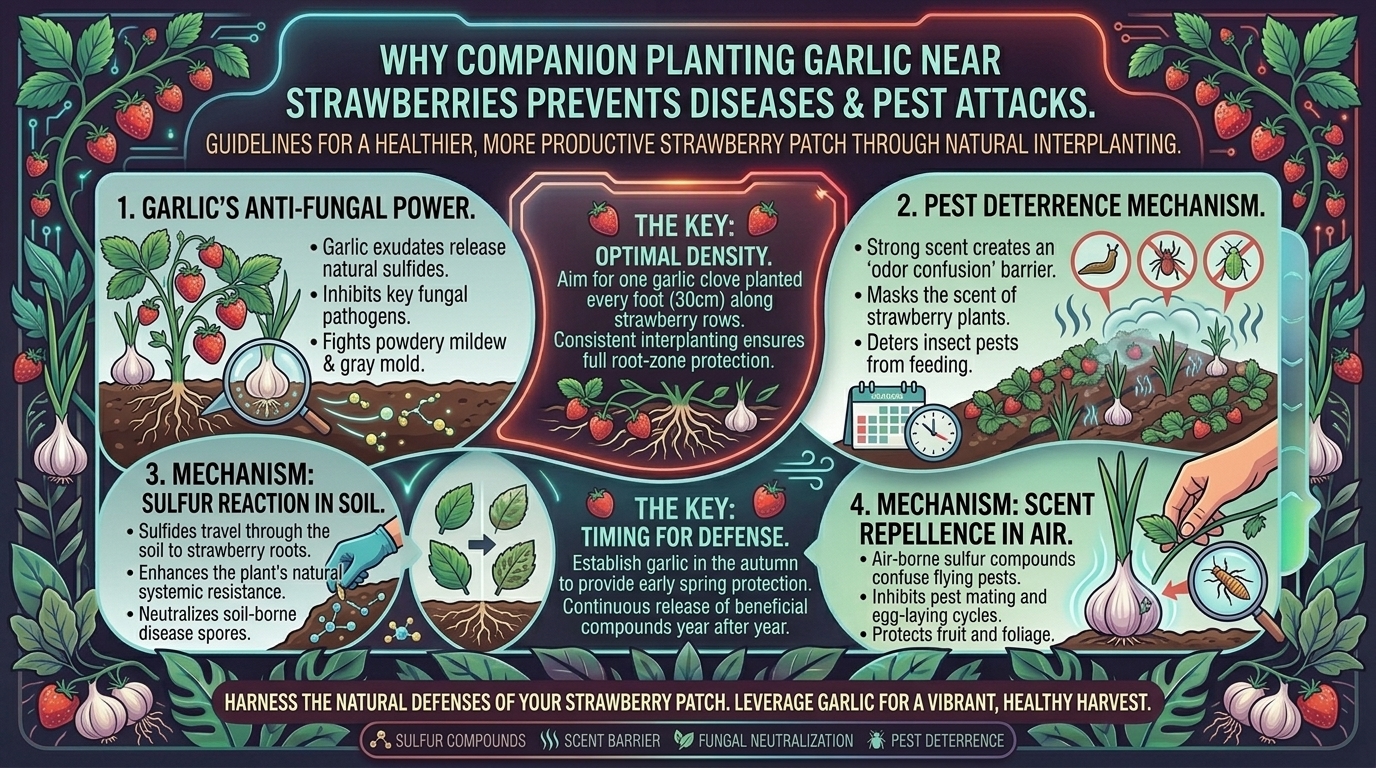
- Natural Airborne Deterrent: The pungent scent of garlic acts as a powerful confusion and repellent mechanism for pests like aphids, spider mites, thrips, and Japanese beetles. Pests relying on scent to locate their host plants find themselves disoriented by the powerful allicin veil surrounding the strawberry patch.
- Subterranean Root Defense: Garlic roots exude natural antimicrobial compounds into the rhizosphere (the root zone). These exudates inhibit the growth of harmful pathogens in the soil, keeping the surrounding earth clean and balanced.
- Slug and Snail Deterrent: Slugs despise crawling over sulfur-rich, pungent organic material, making a perimeter of garlic plants an effective physical and chemical deterrent against mollusk invasions.
4. The Science of Fungal Suppression and Soil Health
Fungal diseases like powdery mildew and gray mold thrive in stagnant, humid environments where plant foliage stays wet. Garlic provides an invisible shield against these infections through its natural fungicidal properties.
Furthermore, garlic and strawberries make excellent spatial companions:
- Complementary Root Zones: Garlic features a deep, vertical, narrow bulb root system that dives straight down into the soil. Strawberries have shallow, fibrous root systems that spread horizontally in the top few inches of earth.
- Zero Competition: Because their root systems occupy completely different subterranean layers, garlic and strawberries do not compete for water or primary nutrients. They live in total harmony.
5. Step-by-Step Guide: How to Layout Your Garlic and Strawberry Patch
To maximize the protective benefits of garlic, arrangement matters. You do not want to randomly scatter cloves; instead, use strategic design principles.
- The Perimeter Guard Layout: Plant a dense single or double row of garlic cloves completely around the outer perimeter of your raised bed or strawberry patch. This creates a chemical and aromatic barrier that incoming pests must cross first.
- Interplanting Between Plants: Alternatively, tuck individual garlic cloves right between your strawberry mother plants, maintaining a spacing of roughly 6 to 8 inches between each garlic bulb.
- Timing Synchronization: In most regions, garlic is planted in autumn (to overwinter and bulb up by early summer), while strawberries are planted in early spring or autumn. When spring arrives, your garlic shoots will already be tall and active, ready to protect emerging strawberry blossoms from day one.
6. Building the Ideal Organic Soil Base for Both Crops
Both strawberries and garlic thrive in rich, well-draining, living organic soil, but they have slight preferences that you can easily balance in a custom mix.
- The Soil Recipe: Combine 40% high-grade organic compost (for rich nutrients), 40% coconut coir (to retain moisture without compacting), and 20% perlite or coarse sand (to guarantee exceptional drainage).
- pH Requirements: Both crops prefer a slightly acidic to neutral soil pH ranging between 6.0 and 6.8.
- Avoid Heavy Clay: Heavy, waterlogged clay soils will rot garlic bulbs and drown strawberry roots. If your backyard native dirt is heavy clay, planting in raised beds or fabric grow bags using a custom organic soil base is essential.
7. Regional Planting Adjustments (TX, NY, CA, WA, SF)
Your regional climate dictates how you manage your garlic-strawberry companion patch:
Texas (Managing Heat and Humidity)
- The Challenge: Intense spring humidity can easily trigger gray mold on ripening strawberries.
- The Solution: Plant hardneck or softneck garlic in autumn so it establishes strong sulfur production by spring. Space your strawberry plants wider apart to maximize airflow through the humid canopy, letting garlic do its work against fungal spores.
New York (Overwintering Garlic with Strawberries)
- The Challenge: Freezing winter temperatures require protection for both perennial strawberries and overwintering garlic cloves.
- The Solution: Cover your entire bed with a thick blanket of clean straw mulch in late autumn. The straw insulates the garlic cloves and strawberry crowns through freezing snow, then acts as clean bedding for ripening strawberries in summer.
California (Mediterranean Sunshine & Dry Spells)
- The Challenge: Managing irrigation so both moisture-loving strawberries and moderate-water garlic stay hydrated without root rot.
- The Solution: Utilize a targeted drip irrigation system running beneath a thick layer of organic mulch. Garlic will deter the spider mites that often plague California strawberry patches during dry spells.
Washington (Defending Against Damp Rot)
- The Challenge: Persistent spring rain creates a breeding ground for fungal diseases like Botrytis gray mold.
- The Solution: Raise your companion beds high. The antifungal root exudates from your garlic perimeter will help keep soil pathogens suppressed during wet weather spells.
San Francisco (Coping with Cool Fog and Microclimates)
- The Challenge: Cool fog keeps foliage damp for long morning hours, encouraging fungal spores.
- The Solution: Position your companion patch in the sunniest microclimate available. The natural antimicrobial properties of your garlic barrier provide vital resistance against cool-weather fungal creep.
8. Maintenance, Watering, and Harvesting Timelines
- Watering Rhythms: Both crops appreciate consistent moisture, but garlic prefers to dry out slightly as harvest approaches in early summer. Water deeply and infrequently rather than giving shallow daily sprinkles.
- Garlic Scapes: In late spring, your garlic plants will shoot up curly green flower stalks called scapes. Snip these off! Snipping scapes redirects plant energy back down into swelling the bulb while giving you a delicious bonus harvest for your kitchen.
- Harvesting Timeline: Garlic is typically ready to harvest in early-to-mid summer (when the lower leaves turn yellow and brown). Once you pull the garlic bulbs, your strawberry plants will continue producing fruit through the warm season while leaving behind a clean, pest-deterrent soil legacy.
9. Pro Tips for Maximizing Companion Yields
- Use Softneck Garlic in Mild Winters: If you live in mild coastal regions like parts of California or San Francisco, softneck garlic varieties (Silver Rose or Inchelium Red) perform exceptionally well and produce abundant foliage.
- Plant Day-Neutral Strawberries: Pair your garlic perimeter with day-neutral strawberry varieties (like Albion or Seascape) that fruit continuously from spring through autumn, maximizing your harvest window.
- Never Skip the Mulch: Surround your companion bed with clean straw. It keeps developing strawberries clean, prevents mud from splashing fungal spores onto leaves, and suppresses weeds.
10. Frequently Asked Questions (10 FAQs)
Q1: Will the garlic flavor transfer to my strawberries and make them taste like onions?
A: Absolutely not! While garlic releases natural chemical compounds into the soil and air to deter pests, it does not alter the genetic flavor or sweetness of neighboring strawberry fruits. Your strawberries will taste pure and sweet.
Q2: Do garlic and strawberries compete for soil nutrients?
A: No. Garlic roots grow deep vertically, while strawberry roots are shallow and fibrous. They occupy different subterranean layers, making them ideal companions with zero nutrient conflict.
Q3: When is the best time of year to plant this companion pair?
A: Plant your garlic cloves in the autumn (4 to 6 weeks before your ground freezes, or in late autumn in milder southern zones). Plant your strawberry crowns in early spring (or autumn in warm-winter climates) so they grow alongside the already-established garlic shoots.
Q4: Can I grow garlic and strawberries together in containers or pots?
A: Yes! You can plant strawberries around the outer edge of a large 15-to-20-gallon container or fabric grow bag, with 3 or 4 garlic cloves tucked into the center or perimeter. Ensure the container has excellent drainage and rich organic soil.
Q5: Does garlic really prevent powdery mildew on strawberries?
A: While no plant companion is a 100% cure-all, the sulfur compounds and natural antimicrobial exudates from garlic significantly inhibit fungal spore germination and suppress common plant pathogens in the immediate soil environment.
Q6: Can I use green garlic chives instead of bulb garlic for strawberries?
A: Yes! Society garlic, garlic chives (Allium tuberosum), and regular bulb garlic all belong to the Allium family and provide similar pest-repellent aromatic benefits, though bulb garlic offers stronger subterranean antimicrobial exudates.
Q7: Do I need to fertilize the garlic and strawberry bed differently?
A: Both crops appreciate a balanced organic approach. Top-dressing your bed with rich compost in early spring provides all the slow-release nitrogen and trace minerals both plants need without requiring synthetic chemical fertilizers.
Q8: What pests do garlic plants deter away from strawberries?
A: Garlic effectively deters aphids, spider mites, thrips, June beetles, and slugs from settling into your strawberry patch due to its potent sulfur aroma and natural deterrent chemistry.
Q9: What should I do when the garlic is ready to harvest while strawberries are still fruiting?
A: When your garlic is ready to harvest in early summer, gently loosen the soil around each bulb with a garden fork and lift them out carefully so you do not disturb the shallow roots of your neighboring strawberry plants.
Q10: Can I replant garlic in the same strawberry bed year after year?
A: It is best to practice crop rotation or replenish your soil with fresh compost annually. Planting the exact same allium family members in the exact same spot year after year can deplete specific trace minerals and invite soil-borne pests.
Conclusion
Companion planting garlic near your strawberry patch is one of the smartest, most natural strategies you can adopt in your home garden. By harnessing the power of natural allicin compounds, subterranean antimicrobial exudates, and aromatic pest deterrence, you create a self-sustaining ecosystem that protects your sweet berries from fungal diseases and destructive insects without a single drop of synthetic chemicals.