How to Protect Your Stored Root Vegetables from Fungal Decay During Long Winter Storage Months
There is a profound, old-world satisfaction in harvesting a bounty of root vegetables—carrots, beets, parsnips, turnips, rutabagas, and winter radishes—at the end of the growing season and tucking them away for the cold months. Long before modern refrigeration, root cellars were the lifeline of households, allowing families to enjoy fresh, nutrient-dense garden harvests deep into winter and early spring.
However, the transition from garden soil to long-term storage introduces a formidable adversary: fungal decay. Microscopic fungal spores, including Botrytis cinerea (gray mold), Rhizopus soft rot, and various Fusarium and Penicillium species, are omnipresent in the environment. Once root vegetables are harvested, their immune systems weaken, and any physical blemish, excess moisture, or improper temperature fluctuation creates an open invitation for these fungi to colonize your harvest, turning crisp roots into mushy, moldy waste.
Whether you are storing backyard harvests in the unpredictable winter climate of New York, managing cellar humidity in Washington, navigating mild winters in California, dealing with urban basement storage in San Francisco, or adapting to seasonal shifts in Texas, mastering the art of post-harvest preservation is essential.
This comprehensive masterclass explores the science of root crop decay, optimal curing and storage environments, packing materials, and expert tips to ensure your stored root vegetables remain crisp, clean, and fungal-free all winter long.
The Science of Fungal Decay in Stored Roots
To protect your root crops, you must first understand how storage fungi operate. Root vegetables are living, breathing biological tissues even after harvest; they continue to respire, consuming starches and releasing carbon dioxide, heat, and moisture.
Fungal spores require three primary conditions to colonize stored vegetables: spores (which are always present), a vulnerable host surface, and moisture.
- The Danger of Free Moisture: Condensation is the primary catalyst for fungal outbreaks in storage. If warm, humid air hits a cold root vegetable, water droplets form on the skin. This thin film of moisture gives dormant fungal spores the hydration they need to germinate, penetrate the skin, and liquefy the surrounding cell walls.
- Mechanical Wounds as Open Gates: Bruises, nicks from garden forks, torn skin, and cut taproot tips expose the sugary interior of the root. Fungi feed on these starches, rapidly spreading from a single wounded carrot to an entire storage bin via mycelial threads.
- Ethylene Gas Cross-Contamination: Storing ethylene-producing fruits (like apples and pears) in the same confined space as root vegetables accelerates respiration, softening the roots and making them highly susceptible to fungal rot.
The Four Pillars of Fungal Prevention in Winter Storage
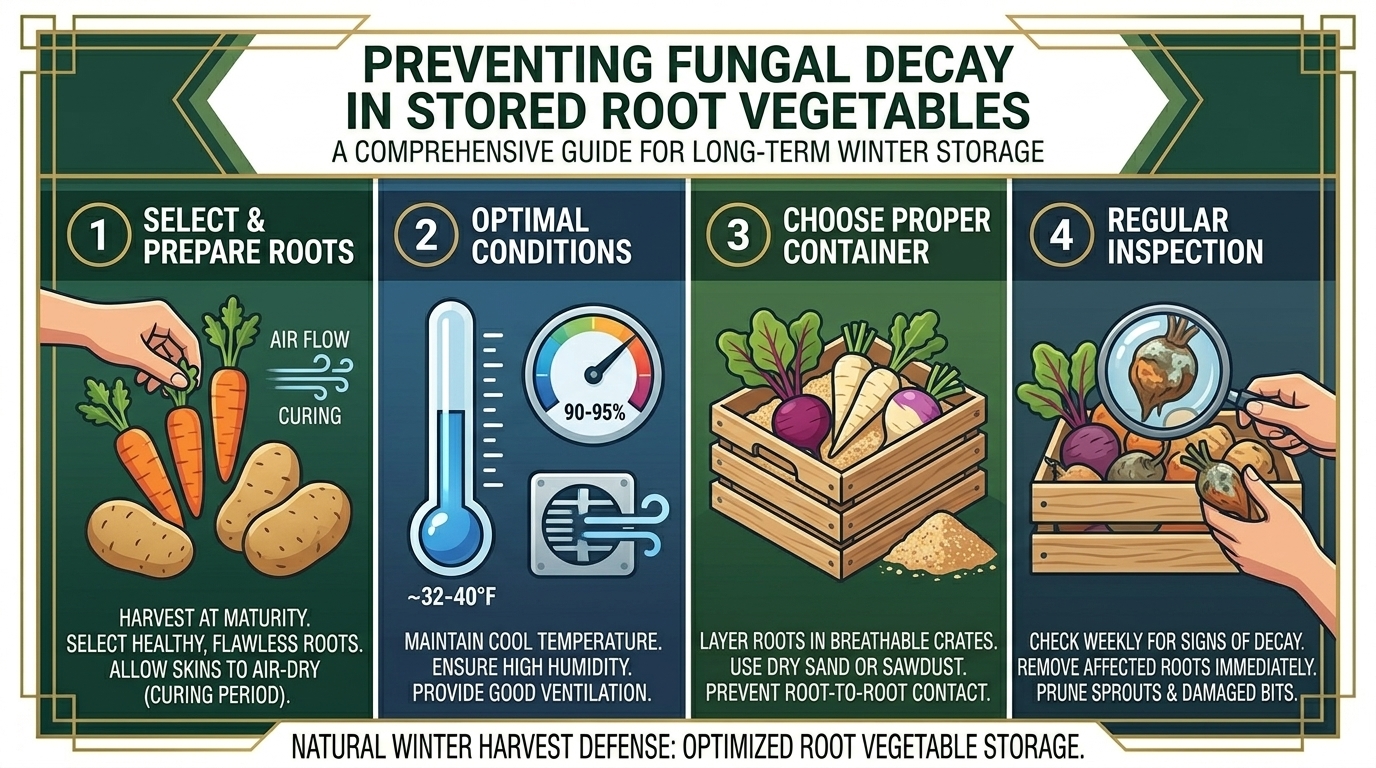
Successful long-term storage relies on mastering four environmental and handling variables: Temperature, Humidity, Air Circulation, and Hygiene.
1. Temperature Control (The Sweet Spot)
Most root vegetables enter a deep dormancy when kept at near-freezing temperatures without actually freezing.
- Ideal Range: 32°F to 40°F (0°C to 4°C).
- Why it matters: Temperatures above 50°F cause roots to sprout, lose moisture, and become spongy, while temperatures below 32°F cause water inside the plant cells to expand, forming ice crystals that rupture cell walls and create a sugary, rotting mess when thawed.
2. Humidity Management
Root vegetables are roughly 85% to 90% water. If storage air is too dry, they shrivel and dry out; if it is too wet and stagnant, fungi take over.
- Ideal Relative Humidity: 90% to 95%.
- Why it matters: High humidity keeps roots crisp and turgid, but it must be paired with gentle air movement to prevent condensation pooling on the vegetables.
3. Air Circulation
Stagnant air pockets in root cellars or storage boxes trap transpired moisture and heat, creating micro-incubators for mold. Slatted crates, breathable packing materials, and occasional ventilation are mandatory.
4. Rigorous Hygiene
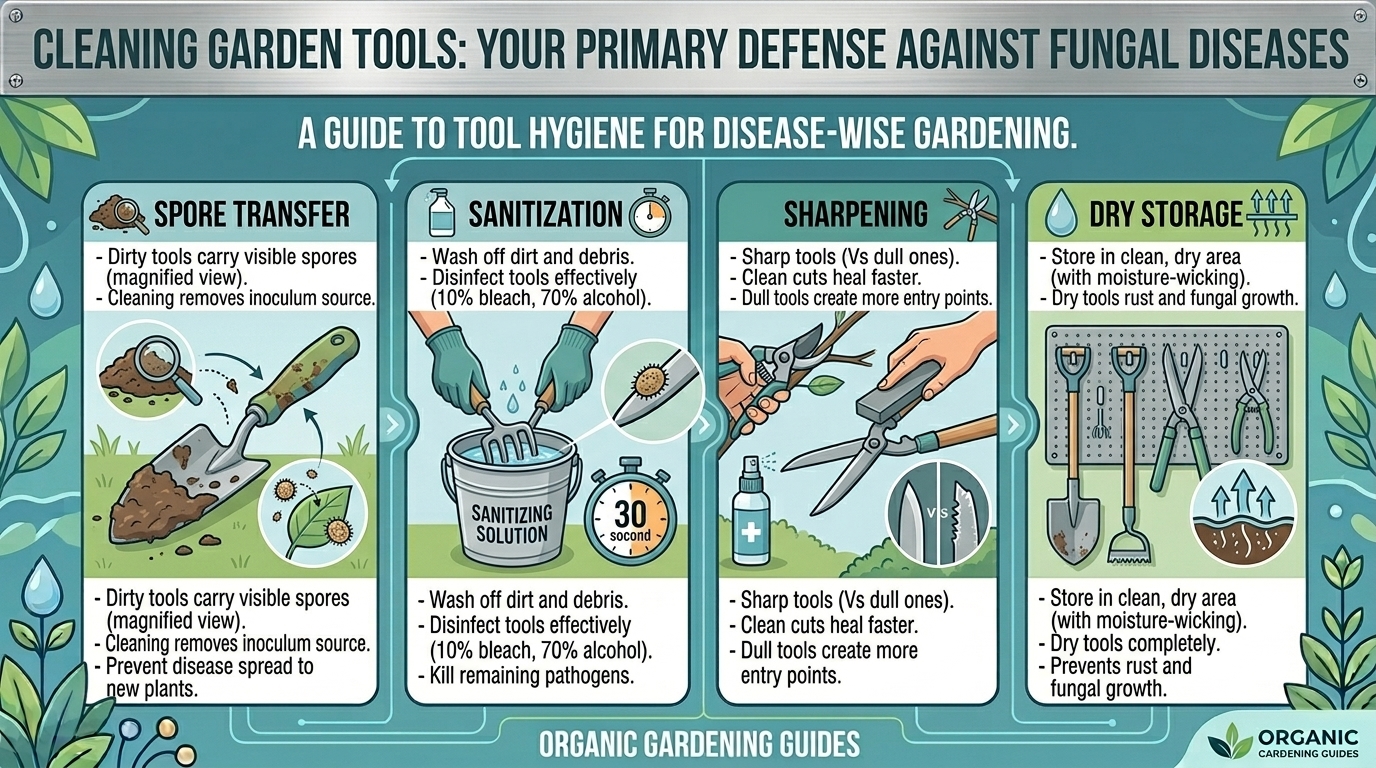
Storage facilities must be sterile before roots arrive. Disinfecting crates, shelves, and storage rooms with a mild bleach solution or horticultural vinegar eliminates lingering fungal spores from previous seasons.
Step-by-Step Guide to Harvesting, Curing, and Storing Root Crops
Preventing fungal decay begins the moment you put a garden fork into the ground. Careless harvesting guarantees storage failure.
Phase 1: Harvesting with Care
- Wait for Drier Soil: Whenever possible, harvest root vegetables when the soil is moderately dry. Digging in waterlogged mud coats roots in wet soil packed with fungal pathogens.
- Use a Garden Fork, Not Your Hands: Never pull root crops up by their leafy greens. Use a garden fork gently loosened a few inches away from the taproot to lift the crop cleanly, preventing snapped tips and skin tears.
- Handle Like Eggs: Bruised roots rot first. Avoid throwing, dropping, or stacking roots roughly into harvest baskets.
Phase 2: Trimming and Curing
- Trim the Greens Immediately: Twist or cut the green tops off carrots, beets, and turnips, leaving about 1/2 inch of stem. Never cut the stems flush with the crown, and never pull the greens off by hand, as tearing the crown opens a direct entryway for mold. Leave taproots intact.
- Brush Off Excess Soil (Do Not Wash!): Gently brush loose dirt off the roots with your hands or a soft brush. Do not wash root vegetables before long-term storage. Washing introduces surface moisture that invites fungal decay. The residual dry field dirt actually protects the skin.
- Curing (The Healing Phase): For sturdy roots like winter squash, potatoes, and thick-skinned beets, let them cure in a cool, shaded, well-ventilated area (50°F to 60°F) for 3 to 7 days. This allows minor skin abrasions to cork over (suberize), forming a natural barrier against fungi. (Note: Carrots and parsnips prefer immediate cool storage without a warm curing phase).
Phase 3: Selecting Packing Media and Containers
Depending on your storage space (whether a dedicated root cellar, an unheated garage, or a refrigerator crisper drawer), choose the appropriate packing method to isolate roots and maintain humidity.
| Root Crop | Storage Method | Ideal Temperature | Ideal Humidity | Storage Lifespan |
| Carrots | Layered in damp sand, peat moss, or sawdust | 32°F – 34°F | 95% | 4 – 6 months |
| Beets | Packaged in damp sawdust or perforated bags | 32°F – 38°F | 90% – 95% | 3 – 5 months |
| Parsnips | Leave in garden over winter (or store like carrots) | 32°F – 34°F | 95% | 4 – 6 months |
| Winter Radishes | Layered in sand or stored in crates | 32°F – 34°F | 90% – 95% | 2 – 4 months |
| Rutabagas & Turnips | Waxed or packed in moist sawdust | 32°F – 36°F | 90% – 95% | 4 – 5 months |
Regional Storage Strategies for Different Climates
Winter storage looks vastly different depending on your geographic location and local winter temperatures:
- Texas: Mild southern winters make traditional root cellars difficult because ground and ambient temperatures remain too warm. Texas gardeners often rely on refrigerator crisper drawers or insulated coolers filled with damp sand kept in air-conditioned pantries or shaded garages.
- New York and the Northeast: Classic winter conditions make basement root cellars ideal. Partitioning off a corner of an unheated basement against an exterior foundation wall provides the perfect natural 35°F environment.
- California: Coastal and interior California climates require careful temperature monitoring. Unheated garages can experience wild diurnal temperature swings; storing roots in insulated boxes packed with slightly damp coconut coir buffers these shifts.
- Washington and the Pacific Northwest: Abundant winter moisture means humidity management is your biggest challenge. Ensure storage media (like sand or sawdust) is only barely damp—resembling wrung-out a sponge—to prevent mold explosions.
- San Francisco: Urban microclimates rarely experience freezing outdoor temperatures, but basements in San Francisco are often damp. Use sealed food-grade plastic bins with perforated lids or breathable burlap sacks stored in cool pantries to control moisture.
Routine Maintenance and Weekly Inspection Protocols
Storing root vegetables is not a “set-it-and-forget-it” task. Fungal spores can infiltrate even the best-prepared batches over time.
- The Weekly Sort: Inspect your storage crates every 7 to 10 days. Gently lift roots and check for softness, damp spots, fuzzy white/gray mold, or foul odors.
- Immediate Removal: The golden rule of root storage is “one rotten apple spoils the barrel.” The moment you spot a single moldy carrot or beet, remove it immediately and discard it. Fungi spread rapidly via airborne spores and direct contact with neighboring roots.
- Adjusting Moisture: If packing sand or sawdust feels completely dry and roots are starting to shrivel, mist the top layer lightly with a spray bottle. If condensation beads heavily on storage container walls, remove the lid for a few hours to air out excess humidity.
Troubleshooting Common Storage Rot Issues
- Issue: A fuzzy gray mold (Botrytis) is spreading across my stored carrots.
- Solution: Your storage humidity is too high and air circulation is blocked. Discard infected roots immediately, wipe down surrounding roots with a dry cloth, and transfer remaining carrots to clean, dry, well-ventilated crates.
- Issue: Stored beets and turnips are becoming spongy and rubbery.
- Solution: The storage air is too dry, causing the roots to transpire and lose moisture. Pack them deeper into damp sand, sawdust, or perforated plastic bags to trap humidity.
- Issue: Roots are sprouting white shoots inside the storage box.
- Solution: The storage temperature is too warm (above 45°F). Move your containers to a cooler location, such as a lower basement shelf or an unheated garage corner.
Frequently Asked Questions (FAQ)
1. Should I wash root vegetables before putting them into winter storage?
No. Washing root vegetables removes their natural protective skin microflora and introduces excess surface moisture, which dramatically accelerates fungal decay. Brush off loose dirt gently and store them unwashed.
2. What is the ideal temperature and humidity for storing root crops?
The optimal environment is 32°F to 40°F (0°C to 4°C) with a high relative humidity of 90% to 95% to keep roots crisp without encouraging mold growth.
3. Can I store apples and carrots in the same storage bin?
Never. Apples, pears, and bananas release high amounts of ethylene gas, which causes root vegetables to soften, sprout prematurely, and rot much faster. Always store root crops separately.
4. Why should I leave 1/2 inch of stem on root vegetables?
Cutting the greens too close to the crown or pulling them off by hand creates an open wound. Leaving a 1/2-inch stem stub acts as a natural plug that blocks fungal spores from entering the core of the root.
5. What packing medium is best for preventing mold on carrots?
Damp (not wet) clean builder’s sand, peat moss, coconut coir, or hardwood sawdust are exceptional packing media. They cushion the roots, isolate them from one another, and maintain steady humidity.
6. How often should I inspect my stored root vegetables during winter?
You should inspect your stored roots every 7 to 10 days. Promptly removing any softening or moldy roots prevents fungal decay from spreading to the rest of your harvest.
7. What causes root vegetables to turn mushy and soft in storage?
Mushy rot is usually caused by bacterial soft rot or fungal pathogens thriving in conditions that are too warm, too wet, or lacking air circulation, often originating from a bruised or wounded root.
8. Can I store root vegetables in plastic bags?
Yes, but with caution. If using plastic bags (like grocery bags or storage tubs), you must punch numerous ventilation holes in them to prevent carbon dioxide buildup and deadly condensation.
9. What should I do if I don’t have a basement or root cellar?
If you live in a warm climate or lack a cellar, you can store small batches of root vegetables in your refrigerator’s crisper drawers wrapped in slightly damp paper towels inside perforated bags, or bury an insulated metal garbage can in your backyard garden soil as an outdoor mini-root cellar.
10. Where can I find more expert tips on harvesting, storing, and growing garden crops?
For comprehensive horticultural guides, regional planting calendars, and expert food preservation tips, visit kcplants.com.
Conclusion
Protecting your stored root vegetables from fungal decay during the long winter months is a rewarding skill that bridges the gap between garden harvest and year-round nutrition. By mastering temperature, maintaining high relative humidity with proper airflow, handling your harvests with pristine care, and conducting weekly inspections, you can enjoy crisp, sweet, disease-free carrots, beets, and parsnips all winter long. Whether you are managing cellar storage in New York or adapting creative solutions in Texas, these time-tested techniques ensure your hard work in the garden pays off until spring.