What Are the Best Compact Herbs You Can Grow on a Sunny Kitchen Windowsill Year-Round?
There is a distinct, culinary magic that comes from reaching across your kitchen counter while preparing a meal, snipping a few fresh sprigs of fragrant basil, thyme, or rosemary, and dropping them straight into your pan. Whether you are plating fresh culinary creations in a sunlit San Francisco apartment, an urban high-rise in New York, a spacious residential kitchen in Texas, or vibrant homes across California and Washington, having a living herb garden right at your fingertips transforms both your cooking and your kitchen’s aesthetic.
However, many home cooks assume that growing fresh herbs requires a sprawling outdoor garden or a large backyard patio. In reality, with a sunny kitchen windowsill and the right selection of compact plant varieties, you can harvest fresh, aromatic greens 365 days a year—no matter what the weather is doing outside.
Brought to you by kcplants.com, this comprehensive, expert-led masterclass explores the absolute best compact herbs for indoor windowsills, breaks down their care and light requirements, and shares pro tips to ensure your kitchen garden thrives year-round.
Part I: The Anatomy of a Successful Windowsill Herb Garden
Growing herbs indoors presents unique environmental challenges compared to outdoor gardening. To set your kitchen garden up for long-term success, you must balance three critical indoor factors:
- Light Intensity: Herbs are notoriously sun-worshipping plants. Most culinary herbs require at least 4 to 6 hours of direct sunlight daily. A south-facing windowsill is the gold standard in the Northern Hemisphere, offering maximum light energy. East- and west-facing windows are the runner-up choices, while north-facing windows rarely provide enough natural light without supplemental LED grow lights.
- The Microclimate Challenge: Kitchen windowsills can experience wild temperature swings. They trap intense heat when the sun beats through the glass, yet they can become drafty and ice-cold during winter nights if windows lack insulation. Choosing resilient, compact varieties helps withstand these minor shifts.
- Pot Size and Drainage: Kitchen herbs grown on windowsills are typically constrained to smaller containers (4 to 6 inches in diameter). Always choose pots with functioning bottom drainage holes to prevent soggy soil and root rot.
Part II: The Best Compact Herbs for Your Kitchen Windowsill
Here are the finest, most compact culinary herb varieties that adapt exceptionally well to indoor pot culture, fitting neatly on narrow windowsills without taking over your workspace.
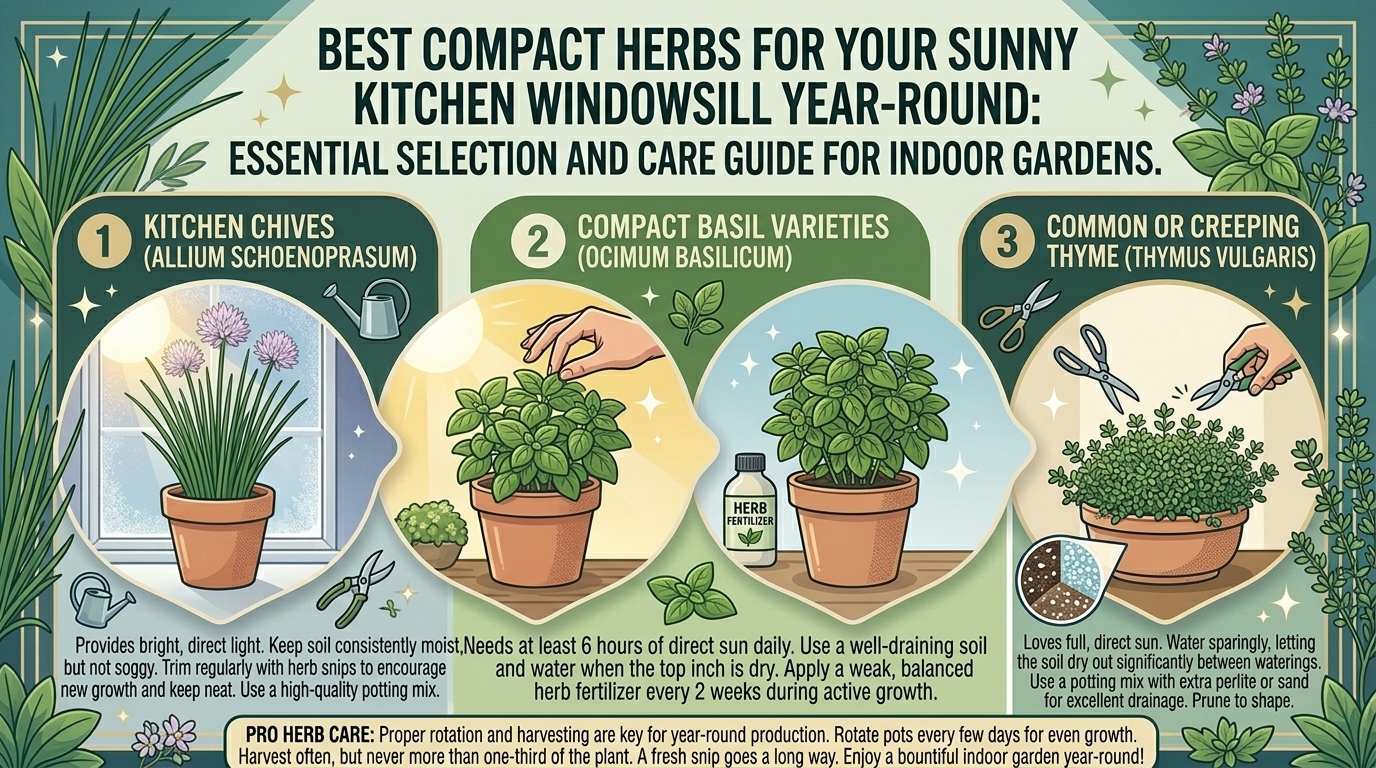
1. Basil (Ocimum basilicum – Dwarf or Compact Varieties like “Spicy Bush” or “Minette”)
- Flavor Profile & Culinary Use: Sweet, pungent, and earthy. Essential for Italian pestos, fresh margherita pizzas, caprese salads, and Thai stir-fries.
- Why It Works on a Windowsill: Standard Genovese basil grows large and bolts quickly indoors. Dwarf varieties like “Spicy Bush” produce tight, globe-shaped mounds of tiny leaves that stay compact and fit easily on any sill.
- Care Essentials: Basil loves maximum heat and light (6–8 hours daily). Pinch off the top center growing tips regularly to encourage bushier lateral growth rather than tall, single-stemmed flowering.
2. Chives (Allium schoenoprasum)
- Flavor Profile & Culinary Use: A delicate, mild onion-and-garlic flavor that elevates baked potatoes, omelets, soups, and cream cheese spreads.
- Why It Works on a Windowsill: Chives grow in tight, upright clumps from underground bulbs, meaning they have a tiny footprint and take up minimal horizontal space on a sill.
- Care Essentials: They thrive in bright, direct light and prefer their soil to dry out slightly between waterings. Harvest them by snipping individual blades down near the soil base with clean kitchen shears.
3. Mint (Mentha species – Peppermint or Spearmint)
- Flavor Profile & Culinary Use: Refreshing, cooling, and herbaceous. Perfect for herbal teas, summer cocktails, lamb dishes, and vibrant Mediterranean salads.
- Why It Works on a Windowsill: In a garden bed, mint acts as an aggressive invasive weed. Growing mint indoors in a contained pot is actually the only way to keep its runaway root system safely managed.
- Care Essentials: Mint is a thirsty herb that hates drying out completely. Keep its soil consistently moist. Provide bright, indirect to direct light.
4. Thyme (Thymus vulgaris – English or Lemon Thyme)
- Flavor Profile & Culinary Use: Woody, floral, and aromatic. A cornerstone herb for roasted vegetables, soups, stews, and roasted chicken.
- Why It Works on a Windowsill: Thyme is a naturally low-growing, woody perennial with a semi-trailing habit that fits neatly in small pots or shallow window boxes.
- Care Essentials: Thyme originates from the rocky Mediterranean. It prefers dryer soil conditions and plenty of bright, direct sunlight. Overwatering is its number one enemy.
5. Oregano (Origanum vulgare)
- Flavor Profile & Culinary Use: Bold, robust, and slightly peppery. Essential for Greek salads, homemade tomato sauces, marinades, and roasted meats.
- Why It Works on a Windowsill: Oregano forms compact, mounding clumps that tolerate heavy harvesting and adapt well to indoor air conditions.
- Care Essentials: Like thyme, oregano prefers a drier “soak-and-dry” watering routine and demands maximum sun exposure to develop its concentrated essential oils and rich flavor.
6. Parsley (Petroselinum crispum – Curly or Flat-Leaf Italian)
- Flavor Profile & Culinary Use: Clean, bright, and slightly grassy. Widely used as a finishing garnish, in chimichurri sauces, and to brighten heavy dishes.
- Why It Works on a Windowsill: Parsley grows in a neat, upright rosette pattern. While it develops a deep taproot, compact varieties thrive in standard 6-inch kitchen pots.
- Care Essentials: Parsley enjoys consistent moisture (do not let it dry out completely) and flourishes in bright, indirect to direct sunlight.
7. Rosemary (Salvia rosmarinus – Prostrate or Dwarf Cultivars like “Arp” or “Blue Boy”)
- Flavor Profile & Culinary Use: Piney, resinous, and deeply aromatic. Incredible with roasted potatoes, focaccia bread, and roasted meats.
- Why It Works on a Windowsill: Standard rosemary bushes grow massive, but dwarf cultivars like “Blue Boy” maintain a tight, miniature architectural shape ideal for windowsills.
- Care Essentials: Requires maximum direct sun and extremely well-draining, sandy soil. Let the soil dry out thoroughly between waterings.
Part III: Step-by-Step Guide to Planting Your Windowsill Herb Garden
Setting up your kitchen herb garden correctly ensures healthy growth from day one:
- Select the Right Containers: Choose pots made of breathable terra cotta or lightweight ceramic that feature at least one drainage hole. Standard 4-to-6-inch pots allow you to group multiple individual herb pots together on a narrow sill.
- Mix Fast-Draining Soil: Never use heavy, compact outdoor garden soil. Use a light, premium potting mix blended with perlite or coarse sand to ensure oxygen reaches the root zone.
- Planting Your Herbs: Fill your pots halfway, gently tease apart nursery herb root balls, place them at the same depth they grew in their original containers, and backfill with soil. Press lightly around the base.
- Initial Watering and Settling: Give your newly potted herbs a thorough watering until liquid runs out of the drainage holes. Empty any standing water from the saucer after 15 minutes.
- Position on the Sill: Arrange your pots on your brightest kitchen windowsill, ensuring they receive uninterrupted sunlight.
Part IV: Regional and Seasonal Windowsill Adaptations
Depending on where you live across our key regions, indoor growing conditions fluctuate:
- San Francisco & New York (Urban Kitchens): High-rise apartments or urban canyon streets often limit natural daylight hours. If your kitchen window faces north or is blocked by neighboring buildings, supplement your sunlight with a small, sleek LED kitchen grow light fixture mounted above the sill.
- Texas, California, & Washington: Expansive sunrooms and bright southern exposures in Texas and California provide ample natural light, but intense summer afternoon sun can scorch delicate herbs like basil. Providing a sheer curtain during peak afternoon glare prevents leaf burn. In cooler Washington winters, watch out for cold window drafts that can shock tropical or Mediterranean herbs.
Part V: Pro Tips for Harvesting and Maintenance
- Never Over-Harvest at Once: As a rule of thumb, never harvest more than one-third of a plant’s total foliage at any single time, allowing the plant enough leaves to continue photosynthesis.
- Prune From the Top: Always harvest herbs by snipping stems just above a pair of leaf nodes. This stimulates lateral branching, turning your herbs into lush, dense bushes rather than tall, spindly stems.
- Rotate Your Pots: Windowsill herbs naturally lean toward the glass as they chase sunlight. Give your pots a quarter-turn every week to ensure even, upright growth.
10 Frequently Asked Questions (FAQ)
1. Can I grow all culinary herbs together in one large long window box?
It is generally better to plant them in individual pots. Herbs like mint (which loves moisture) and rosemary or thyme (which prefer dry soil) have conflicting watering requirements that make co-habitating in a single container difficult.
2. How many hours of sunlight do kitchen herbs need on a windowsill?
Most culinary herbs require a minimum of 4 to 6 hours of direct sunlight daily. South-facing windows provide the best results year-round.
3. What should I do if my kitchen doesn’t have a sunny window?
You can still grow a thriving indoor herb garden by installing a compact LED grow light or a desktop under-cabinet growing strip directly above your pots, keeping them illuminated for 10 to 12 hours a day.
4. Why is my indoor basil plant getting tall, leggy, and dropping leaves?
Leggy growth usually indicates insufficient light combined with a lack of regular pruning. Move basil to your brightest window and pinch off the top center stems to encourage bushy growth.
5. How often should I water my indoor windowsill herb garden?
Watering frequency depends on the herb. Mediterranean herbs (rosemary, thyme, oregano) prefer their soil to dry out between waterings, while moisture-loving herbs (mint, parsley, basil) prefer consistently damp soil.
6. Can I use regular garden dirt from my yard for my indoor herb pots?
No. Outdoor garden soil is too heavy, compacts easily inside pots, lacks proper drainage, and often harbors weed seeds or insect pests. Always use a sterile, lightweight indoor potting mix.
7. Do I need to fertilize my indoor culinary herbs?
Feed your indoor herbs sparingly—once a month during spring and summer—using a diluted, water-soluble organic fertilizer. Avoid heavy synthetic fertilizers, as you will be consuming the leaves.
8. Why do my indoor herbs develop white powdery spots on their leaves?
White powdery spots usually indicate powdery mildew, which is caused by high humidity, stagnant air, and insufficient light. Increase air circulation around your pots and ensure they get maximum sunlight.
9. Can I harvest my herbs during the winter months?
Yes! While growth slows down during shorter winter days due to reduced natural sunlight, you can still harvest smaller amounts regularly, especially if you supplement with a grow light.
10. Which herbs are the absolute easiest for complete beginners?
Chives, mint, and thyme are widely considered the most forgiving, resilient, and easy-to-grow herbs for indoor kitchen windowsills.
Conclusion
Growing compact culinary herbs on a sunny kitchen windowsill year-round is a rewarding, delicious, and deeply satisfying way to bring nature into your home. By choosing resilient dwarf varieties like bush basil, chives, thyme, and mint, providing bright light, and mastering simple harvesting techniques, you can enjoy farm-to-table freshness right from your kitchen counter every single day. Visit kcplants.com regularly for expert plant care guides, design tips, and inspiration to help your indoor garden thrive!