How to Care for Delicate Indoor Orchids So They Bloom Repeatedly Year After Year
Orchids occupy a legendary status in the botanical world. Famed for their ethereal, cascading blossoms, intricate symmetry, and vibrant tropical color palettes, they represent the absolute peak of elegance for interior styling. Whether you are styling a minimalist glass-front apartment in San Francisco, an urban loft in New York, a bright sunroom in Texas, or chic residential spaces across California and Washington, a blooming orchid instantly elevates any room.
Yet, a pervasive myth surrounds these stunning plants: many people treat them as disposable, single-use floral arrangements, tossing them into the compost bin the moment their initial blossoms fade. In reality, orchids are hardy, long-lived perennials. In their native jungle habitats, they thrive for decades, sending out glorious new flower spikes year after year.
Brought to you by kcplants.com, this comprehensive, expert-led masterclass provides your ultimate blueprint for understanding orchid biology, mastering their unique watering and lighting needs, and encouraging repeat blooms season after season.
Part I: Decoding Orchid Biology – Epiphytes vs. Terrestrial Plants
To care for a delicate orchid successfully, you must first understand how they live in nature. The vast majority of popular indoor orchids—most notably Phalaenopsis (Moth Orchids)—are epiphytes (air plants).
- Growing on Trees, Not in Soil: In tropical rainforests, Phalaenopsis orchids do not grow in dark, heavy garden soil. Instead, they cling to the bark of high jungle trees, where their roots are exposed freely to warm tropical air, bright dappled sunlight, and rushing rainwater.
- The Power of Velamen Roots: Notice the thick, silvery-green or white roots winding inside your orchid pot? They are covered in a spongy, specialized outer layer called velamen. Velamen acts like a natural sponge, rapidly absorbing moisture and atmospheric humidity during tropical downpours and turning bright green when saturated.
- Why Traditional Soil Kills Orchids: Because their roots evolved to breathe open air, planting an epiphyte in dense, standard potting soil suffocates them, cuts off oxygen, and triggers rapid root rot. They require specialized chunky bark or moss media.
Part II: The Four Pillars of Year-Round Orchid Success
Mastering four fundamental environmental pillars is all it takes to transition from an accidental orchid killer to a confident master grower.
1. Light: The Engine of Blooms
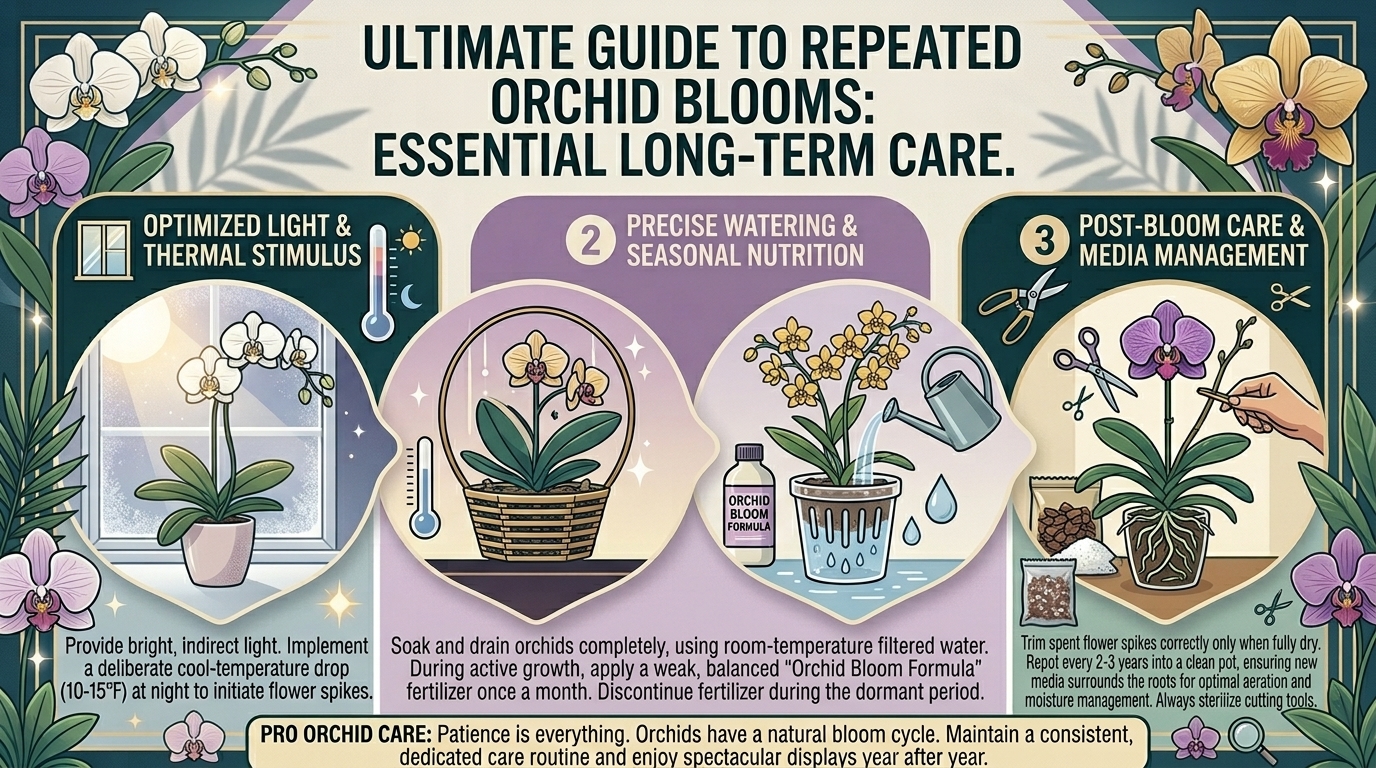
- The Sweet Spot: Orchids need bright, indirect sunlight to manufacture the sugars required to produce flower spikes. An east-facing window (or a filtered south/west window protected by a sheer curtain) is ideal.
- Reading the Leaves: Dark, dark green leaves indicate your orchid is starved for light and unlikely to re-bloom. Healthy orchid leaves should be a bright, grassy, yellow-green color. If leaves turn reddish-purple or burn, they are receiving too much direct, scorching sun.
2. The Art of Watering: The “Soak and Dry” Method
- Forget the Ice Cube Myth: While popular advice suggests placing three ice cubes on your orchid weekly, this practice can shock the tropical root system with freezing water temperatures and lead to root decay.
- The Soak Technique: Instead, water your orchid thoroughly when the potting medium is completely dry and the roots inside a clear plastic pot have turned a silvery-gray color. Submerge the inner pot in a bowl of tepid water for 10 to 15 minutes, let it drain completely, and return it to its outer decorative cachepot. Never let your orchid sit in standing water.
3. Humidity and Air Circulation
- Tropical Mimicry: Orchids thrive in 50% to 70% humidity. Modern indoor climate control (heating and air conditioning in homes across Texas, California, Washington, and New York) dries out indoor air. Place your orchid on a pebble tray filled with water or use a nearby room humidifier.
- Breezes Matter: In nature, constant jungle breezes dry out wet leaves and prevent fungal growth. Gentle, indirect air movement from an oscillating room fan keeps your orchid healthy.
4. Nutrition: Feed Weakly, Weekly
- Orchids are light feeders. During their active spring and summer growing season, feed them weekly using a specialized, urea-free orchid fertilizer diluted to one-quarter strength. Flush the pot with plain water once a month to prevent chemical salt buildup.
Part III: Step-by-Step Guide to Encouraging Repeat Blooms
The primary reason orchids fail to re-bloom indoors is a lack of environmental cues. In the wild, tropical seasons shift, triggering the plant to flower. You can replicate these natural cycles inside your home:
- Wait for the Current Bloom Cycle to End: Once all flowers naturally drop off, inspect the remaining flower spike. If the spike stays green and plump, it may branch and produce secondary blooms. If the spike turns brown, yellow, and dry, use sterilized pruning shears to cut it cleanly off at the base near the leaves.
- Provide a Temperature Drop in Autumn: Phalaenopsis orchids initiate flower spikes in response to a slight shift in seasonal temperature. In late autumn, place your orchid in a room where nighttime temperatures drop by 10 to 15 degrees Fahrenheit (down to around 60°F or 15°C) compared to daytime warmth for 3 to 4 weeks.
- Support New Growth: When a new green spike begins emerging from between the lower leaves, resume regular watering, bright indirect light, and weak fertilizer feeding. Stake the tall flower spike gently to a bamboo support rod as it grows upward to prevent snapping.
Part IV: When and How to Repot Your Orchid
Orchids do not need frequent repotting. In fact, they prefer to be slightly root-bound. However, every 1 to 3 years, the organic potting medium breaks down, decomposes, and suffocates the roots.
- Signs It’s Time to Repot: The medium has turned into mushy soil, roots are spilling massively over the pot, or white salt crusts have built up.
- The Right Medium: Never use regular potting soil. Use chunky grade-A horticultural fir bark mixed with perlite and sphagnum moss.
- The Process: Gently remove the orchid, trim away any dead, papery, or mushy brown roots with sterilized scissors, place the plant into a specialized slotted orchid pot, and pack fresh bark gently around the root system.
Part V: Pro Tips for Troubleshooting Common Orchid Issues
- Wrinkled, Leathery Leaves: Usually a sign of severe underwatering or root rot (where rotted roots can no longer drink water, mimicking drought symptoms). Check the roots immediately.
- Yellowing Lower Leaves: A single bottom leaf turning yellow and dropping off is natural aging. Multiple yellowing leaves usually point to overwatering or extreme temperature shock.
- Bud Blast: If your orchid drops its unopened flower buds before they blossom, it is typically reacting to drafts, sudden temperature drops, ethylene gas from ripening fruit nearby, or erratic watering.
10 Frequently Asked Questions (FAQ)
1. Why do people put ice cubes on orchids, and is it a good idea?
The ice cube method became popular as an easy way to prevent overwatering. However, tropical orchids are sensitive to freezing temperatures, and ice water can shock and damage their delicate root systems. Thorough soaking and draining is much healthier.
2. How do I know when my orchid needs to be watered?
Look at the roots inside a clear plastic pot. If the roots are a vibrant, plump bright green, the plant has enough water. If the roots have turned a silvery-gray or white color and the bark is dry, it is time to water.
3. Should I cut off the flower spike after all the blossoms fall off?
It depends. If the stem stays green, leave it alone—it can branch and bloom again. If the stem turns brown, yellow, and dry, cut it off cleanly at the base with sterilized scissors.
4. How do I trigger my orchid to re-bloom year after year?
To trigger a new bloom cycle, expose your orchid to a natural autumn temperature drop (about 10 to 15 degrees cooler at night than during the day) for a few weeks, combined with bright, indirect light.
5. What is the best potting mix for indoor orchids?
Epiphytic orchids require a coarse, fast-draining medium, such as a blend of chunky pine bark, horticultural charcoal, perlite, and a small amount of sphagnum moss. Never use regular garden soil.
6. Can I grow orchids in a pot without drainage holes?
It is very risky. Orchids hate standing water. Planting them in a clear plastic inner pot with plenty of drainage holes—which is then placed inside a decorative outer cachepot—allows you to remove excess water easily.
7. Why are my orchid’s leaves turning yellow?
Lower leaf yellowing can be normal aging. However, widespread yellowing usually points to overwatering, root rot, or direct, scorching sun exposure burning the leaves.
8. How much light do indoor orchids require?
They thrive in bright, indirect sunlight. An east-facing window or a shaded south/west window provides the ideal balance of light energy without burning the delicate foliage.
9. Do orchids need high humidity to survive indoors?
Yes. Orchids prefer 50% to 70% humidity. Using a pebble tray filled with water, grouping plants together, or running a humidifier helps replicate their native tropical habitat.
10. How often should I fertilize my blooming orchid?
Fertilize weakly, weekly during the active spring and summer growing seasons using a balanced, water-soluble orchid fertilizer diluted to one-quarter strength. Reduce or halt feeding in winter.
Conclusion
Caring for delicate indoor orchids does not have to be an intimidating mystery. By understanding their epiphyte roots, providing bright indirect light, mastering the soak-and-dry watering technique, and honoring their natural temperature cycles, you can enjoy stunning, cascading blossoms year after year. Visit kcplants.com regularly for expert guides, plant care tutorials, and inspiration to help your indoor jungle flourish!