Welcome to kcplants.com! If you are a resident anywhere across Texas, New York, California, Washington, or San Francisco, you already know how fast-paced modern life can be. Between demanding work schedules, urban noise, and screen time, getting a restful night’s sleep often feels like an impossible luxury.
When searching for sleep solutions, most people turn to blackout curtains, white noise machines, or melatonin supplements. But have you ever considered looking to your windowsill?
Beyond adding a touch of vibrant natural beauty to your bedside table, certain indoor plants act as natural air purifiers, regulate humidity, and emit calming botanical scents that actively promote deep, restorative sleep.
This comprehensive guide explores the science of bedroom botany, highlights the absolute best plants for better sleep, and offers regional tips to help your sleep sanctuary thrive regardless of your local climate.
1. The Science of Sleep and Bedroom Air Quality
Why do plants in the bedroom actually make a difference? It comes down to indoor air chemistry, nocturnal respiration, and psychological well-being.
Indoor Air Pollution is Real
Modern homes in cities like New York, San Francisco, and Seattle (Washington) are built tightly for energy efficiency. While great for heating bills, this traps volatile organic compounds (VOCs) released by carpets, furniture paint, synthetic mattresses, and cleaning products. Breathing these microscopic pollutants overnight can cause low-grade inflammation, nasal congestion, and restless sleep.
The NASA Clean Air Study & Beyond
Famously, NASA’s Clean Air Study demonstrated that common tropical houseplants can absorb harmful toxins like formaldehyde, benzene, and trichloroethylene through their leaves and roots, breaking them down into harmless plant nutrients.
How Plants Influence Sleep Physiology
- Oxygen Production (Reverse Respiration): While most plants release oxygen during the day via photosynthesis and carbon dioxide at night, a special group of plants—including succulents and orchids—perform Crassulacean Acid Metabolism (CAM). They absorb carbon dioxide and release fresh oxygen at night, keeping your bedroom oxygen-rich while you snooze.
- Natural Humidity Regulation: Dry indoor heating in New York winters or air conditioning in Texas summers can dry out nasal passages, leading to snoring and sore throats. Plants release moisture vapor through transpiration, naturally balancing indoor humidity to an optimal 40% to 60%.
- Psychological De-compression: Simply gazing at living green foliage lowers cortisol (stress hormone) levels and slows heart rates, easing the transition into REM sleep.
2. Regional Considerations for Bedroom Plants
Your local outdoor environment shapes your indoor bedroom climate, which dictates how your sleep-supporting plants will behave.
New York & Washington (Chilly Winters & Dry Air)
- The Challenge: Bitter winter cold and constant indoor heating dry out bedroom air drastically.
- The Solution: Choose resilient humidity-tolerant plants or place a small humidifier nearby. Keep plants away from drafty window glass during freezing snaps.
San Francisco & California (Coastal Fog & Moderate Temp)
- The Challenge: Mild temperatures are fantastic for plants, but coastal marine layers mean indoor air can occasionally feel damp.
- The Solution: Ensure good bedroom airflow and avoid overwatering, letting soil dry out slightly between waterings to prevent fungus gnats.
Texas (Intense AC & Warm Nights)
- The Challenge: Heavy air conditioning running for months at a time strips moisture from bedrooms.
- The Solution: Choose drought-tolerant bedroom plants that handle temperature fluctuations well, and keep them out of direct blasts from overhead AC vents.
3. The Top 7 Indoor Plants for Better Sleep
Here are the absolute best botanical sleep aids you can invite into your bedroom, carefully selected for air purification, nighttime oxygen output, and ease of indoor care.
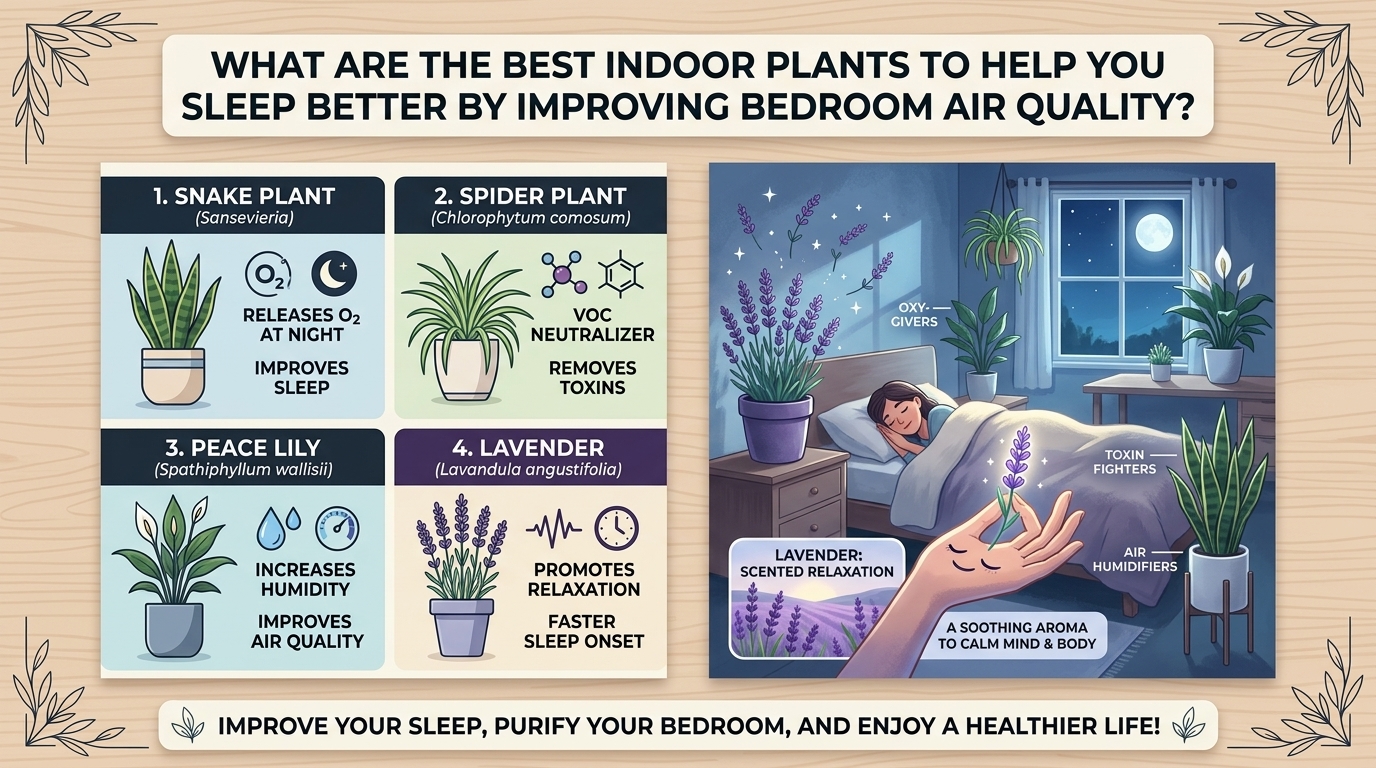
1. Snake Plant (Dracaena trifasciata)
- Why it helps: The undisputed champion of bedroom plants. As a CAM plant, it inhales carbon dioxide and releases pure oxygen throughout the night. It is also a top-tier air purifier recognized by NASA for filtering formaldehyde and benzene.
- Care Profile: Thrives on neglect. Low to bright indirect light and watering only when the soil is 100% dry (every 3–4 weeks).
2. Peace Lily (Spathiphyllum)
- Why it helps: Peace lilies excel at boosting indoor humidity by up to 5% through high transpiration rates. This added moisture suppresses airborne microbes and relieves dry sinuses and allergies that disrupt sleep.
- Care Profile: Prefers medium, indirect light and evenly moist soil. It will dramatically droop when thirsty, perking right back up within hours of a good drink.
3. Lavender (Lavandula angustifolia)
- Why it helps: While technically an outdoor perennial, dwarf varieties can be grown indoors on a bright south-facing windowsill. Lavender’s soothing, herbaceous aroma is scientifically proven to slow heart rate, lower blood pressure, and reduce anxiety.
- Care Profile: Demands maximum sunshine (6+ hours of bright light) and sharp-draining soil. Do not let it sit in soggy water.
4. Aloe Vera (Aloe barbadensis miller)
- Why it helps: Like the snake plant, Aloe Vera is a succulent that emits oxygen at night. Beyond sleep, having a living medicinal plant on hand for overnight skin soothing or minor burns is a fantastic bedroom bonus.
- Care Profile: Needs a sunny window and minimal water. Terracotta pots work best here (as outlined in our container guides at kcplants.com).
5. English Ivy (Hedera helix)
- Why it helps: Ranked by NASA as one of the most effective plants for filtering airborne mold particles. If you suffer from nighttime asthma, snoring, or allergy flare-ups, English Ivy can drastically clean your sleeping environment.
- Care Profile: Prefers cooler room temperatures and bright indirect light. Keep soil slightly moist.
6. Valerian (Valeriana officinalis)
- Why it helps: Valerian root has been used as a natural herbal sedative for centuries to combat insomnia. Having the live plant in your bedroom offers a subtle, sweet, calming vanilla-like fragrance that lulls the mind to sleep.
- Care Profile: Thrives in bright sunlight and requires consistent, moderate soil moisture.
7. Areca Palm (Dypsis lutescens)
- Why it helps: A graceful, non-toxic tropical palm that acts as a natural humidifier. It removes chemical toxins while pumping moisture into dry bedrooms, making it ideal for dry winter months in New York or Washington.
- Care Profile: Prefers bright, indirect light and moist (not soggy) soil.
4. Tips for Creating the Ultimate Plant-Filled Sleep Sanctuary
Maximizing the sleep benefits of your indoor jungle requires thoughtful placement and maintenance:
- Less is More: You don’t need an indoor greenhouse. 2 to 3 medium-sized plants per bedroom are enough to notice measurable improvements in air quality and humidity.
- Lighting Check: If your bedroom has north-facing windows or heavy curtains, stick to low-light champions like Snake Plants and Peace Lilies. If you have sunny south-facing windows, Lavender and Aloe Vera will thrive.
- Keep Foliage Dust-Free: Wipe broad leaves with a damp cloth every few weeks. Dust buildup clogs plant pores, reducing their ability to purify bedroom air.
- Avoid Heavily Fragranced Traps: While mild scents like lavender or jasmine are relaxing, avoid intensely sweet or pungent blooming plants that might trigger headaches or sensory overload while trying to rest.
5. Frequently Asked Questions (FAQ)
1. Do indoor plants steal oxygen from your bedroom while you sleep?
This is a widespread myth! While it is true that plants respire and consume small amounts of oxygen at night, the amount they use is negligible—far less than a pet sleeping on your bed, another human being, or even a burning candle. Plus, CAM plants like snake plants actually release oxygen at night.
2. Can bedroom plants cause allergies?
Most foliage plants improve allergies by capturing dust. However, flowering plants or plants sitting in constantly wet, moldy soil can trigger spores. To prevent this, use well-draining soil mixes and let topsoil dry out between waterings.
3. Which bedroom plant is best for absolute beginners who forget to water?
The Snake Plant is unmatched. It can easily survive weeks of neglect, low indoor light, and irregular watering schedules while quietly cleaning your air.
4. Can I keep lavender indoors in a dark bedroom?
Lavender struggles in dark rooms. It is a sun-worshipper that requires intense, bright light. If your bedroom lacks natural sunlight, you can supplement with a small LED grow light for a few hours a day.
5. Are any popular houseplants toxic to pets if kept in the bedroom?
Yes. Peace lilies, English Ivy, and certain pothos varieties are toxic to cats and dogs if ingested. If your pets sleep in your bedroom with you, opt for pet-safe alternatives like Parlor Palms, Calatheas, or Areca Palms.
6. How do bedroom plants help with snoring?
Plants that increase indoor humidity (like Peace Lilies and Areca Palms) soothe dry, irritated nasal passages and throats. Dry air causes tissue swelling that worsens snoring, so maintaining balanced humidity helps promote quieter, smoother breathing.
7. Do I need special lighting for bedroom plants at night?
No. Plants need a dark cycle just like humans do to complete their biological processes. Turn off all artificial bedroom lights (including grow lights) at night so both you and your plants can rest.
8. How often should I clean the leaves of my bedroom plants?
Wipe your plant leaves down once a month with a soft, damp microfiber cloth. This removes accumulated household dust and maximizes their photosynthetic and air-filtering efficiency.
9. Will bedroom plants attract bugs while I sleep?
If cared for properly, indoor plants do not attract pests. Fungus gnats can appear if soil is kept waterlogged, but letting the topsoil dry out completely prevents this issue entirely.
10. How many plants do I need in a standard bedroom to notice cleaner air?
NASA researchers suggested having roughly one medium-to-large potted plant per 100 square feet of living space. For an average master bedroom, 2 to 3 healthy plants are plenty to make a noticeable difference.
Conclusion
Transforming your bedroom into a green, natural sleep sanctuary is one of the easiest, most rewarding upgrades you can make to your daily wellness routine. Whether you are battling dry winter heat in New York, managing city air pollution in San Francisco, or seeking calm in Texas, plants like the Snake Plant, Peace Lily, and Lavender offer a natural pathway to deeper, cleaner, and more restorative sleep.