How to Create a Stylish Indoor Herb Garden Station with Proper Full-Spectrum LED Grow Lights
Welcome back to kcplants.com! If you are a culinary enthusiast or urban gardener located anywhere from the vibrant kitchens of Texas and California to the cozy apartments of New York, Washington, and San Francisco, you know the magic of cooking with fresh herbs. There is simply no comparison between store-bought plastic clamshell herbs and clipping vibrant, aromatic basil, rosemary, or mint straight from your own indoor garden station.
However, growing sun-loving culinary herbs indoors comes with a major hurdle: light. Most traditional kitchen windows—especially in northern urban hubs or shaded courtyard apartments—simply do not provide the 6 to 8 hours of intense, direct sunlight that culinary herbs crave. Without it, herbs stretch out, become pale and leggy, and lose their rich essential oils.
The solution? A dedicated indoor herb station powered by full-spectrum LED grow lights.
This comprehensive, step-by-step guide covers how to design an aesthetically stunning, modern indoor herb station while mastering the science of LED lighting to keep your kitchen garden thriving year-round.
1. The Anatomy of an Indoor Herb Station
Creating an indoor herb garden that complements your home decor rather than looking like a messy science lab requires balancing design with horticulture.
Choosing Your Station Location
Before buying equipment, look at your space. A successful station needs three things:
- Proximity to the Kitchen: For culinary herbs, convenience is key. Placing your station on a kitchen counter, a dedicated open shelving unit, or a bar cart ensures you can easily snip fresh garnishes while cooking.
- Access to Power: Because you will be running LED grow lights for 10 to 14 hours a day, ensure an electrical outlet is nearby without needing messy, tangled extension cords.
- Air Circulation: Herbs hate stagnant air, which breeds powdery mildew and fungal gnats. Choose a spot with gentle natural airflow, away from heavy drafts or hot stove grease splatters.
2. Demystifying Full-Spectrum LED Grow Lights
Gone are the days of buzzing, hot, purple-hued “blurple” grow lights. Modern LED technology has revolutionized indoor gardening.
Why Full-Spectrum?
Full-spectrum LEDs mimic natural sunlight, emitting a balanced blend of wavelengths across the visible light spectrum (along with invisible infrared and ultraviolet accents in advanced models).
- Blue Light (400–500 nm): Drives vigorous foliage development, compact stem growth, and robust leaf density. Essential for leafy herbs like basil, cilantro, and mint.
- Red Light (600–700 nm): Stimulates root development, essential oil production (which gives herbs their potent flavor), and overall plant maturation.
Why LEDs Beat Traditional Bulbs
- Energy Efficiency: LEDs consume a fraction of the electricity that old incandescent or fluorescent bulbs use, keeping your utility bill low.
- Low Heat Emission: Traditional lights burn delicate herb leaves if placed too close. High-quality LEDs run cool to the touch, allowing you to position them close to your plants for maximum light absorption.
- Long Lifespan: A quality horticultural LED fixture easily lasts 50,000+ hours of continuous use.
3. Regional Microclimate Strategies
Even indoors, your local regional climate influences how your herb station behaves.
New York & Washington (Chilly Winters & Low Natural Light)
- The Challenge: Winters here bring deeply overcast skies and heavy indoor heating, creating ultra-dry air that can stress tender herbs like cilantro and parsley.
- The Solution: Rely heavily on your LED grow lights to make up for short winter daylight hours. Keep your herb station away from drafty single-pane kitchen windows.
San Francisco & California (Coastal Fog & Moderate Light)
- The Challenge: Coastal fog and marine layers reduce the quality of natural window light, while indoor temperatures remain relatively mild.
- The Solution: Use full-spectrum lights on a timer set for 12 hours a day to simulate bright summer conditions, and ensure good kitchen ventilation to manage ambient humidity.
Texas (Intense Summer Heat & AC)
- The Challenge: Texas summers are scorching, requiring continuous AC use. While outdoor herbs can bake in the sun, indoor kitchen herbs need stable temperatures away from cold AC vents.
- The Solution: Position your stylish herb cart or counter station away from direct HVAC air blasts, and choose drought-tolerant Mediterranean herbs if your indoor air runs dry.
4. Step-by-Step: Building Your Stylish Herb Station
Follow these steps to assemble a functional, beautiful indoor garden station.
Step 1: Selecting the Right Containers
As we emphasize across our guides at kcplants.com, container choice matters.
- Terracotta Pots: Excellent for Mediterranean herbs (rosemary, thyme, oregano) because they allow soil to dry out between waterings.
- Glazed Ceramic or Self-Watering Planters: Fantastic for moisture-loving herbs like mint, basil, and cilantro, which despise drying out completely. Ensure every pot features a drainage tray to protect your kitchen furniture.
Step 2: Crafting the Ideal Soil Mix
Culinary herbs grown indoors need ultra-light, fast-draining soil. Avoid heavy garden dirt or dense potting compost. Mix standard organic potting soil with 30% to 40% perlite or pumice to ensure maximum oxygen flow to the roots.
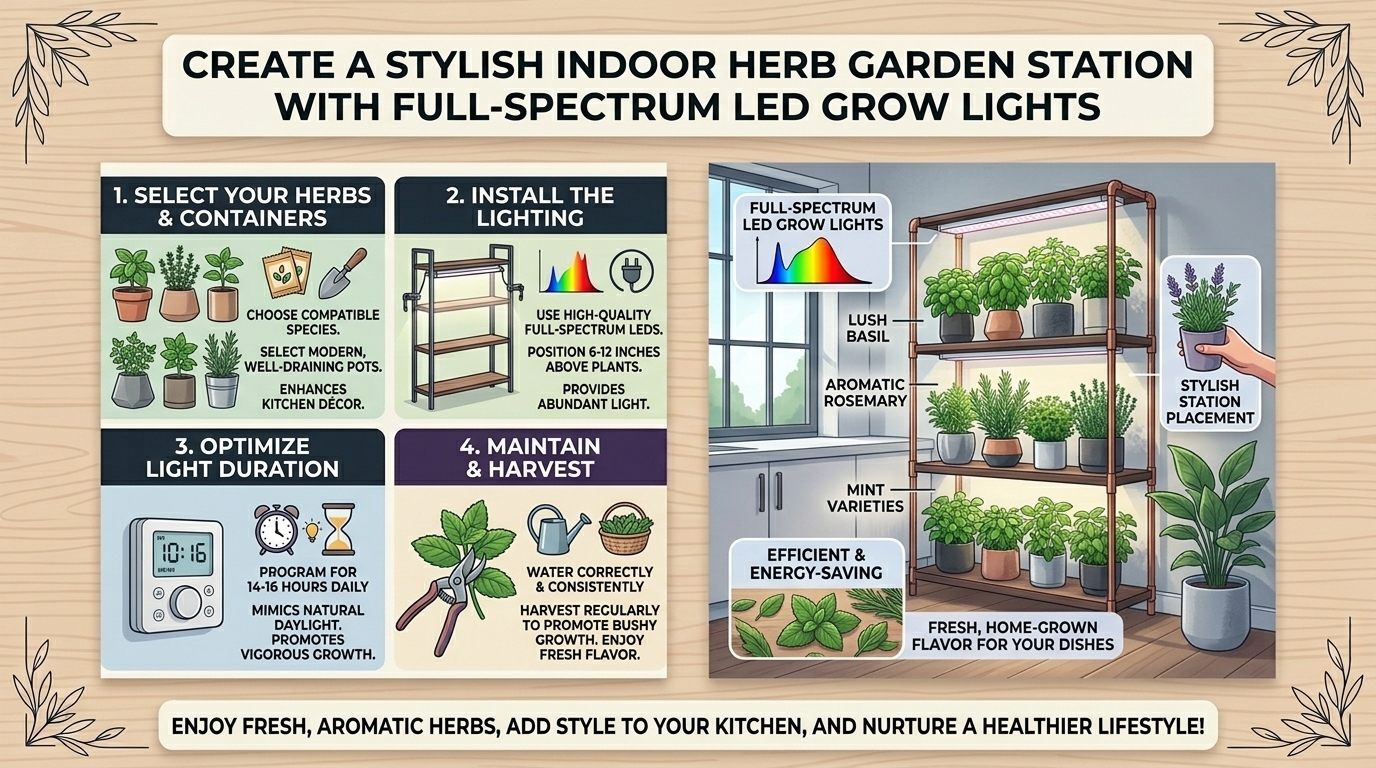
Step 3: Installing the Grow Light Fixture
The secret to successful indoor herb gardening is light distance and duration.
- Height Adjustment: Hang or mount your LED grow light fixture roughly 6 to 12 inches above the top leaves of your herbs. If the light is too far away, herbs stretch toward it (becoming “leggy” and weak); if too close, high-intensity lights can bleach tender leaves.
- Lighting Duration: Set your grow lights on an automatic plug-in timer for 12 to 14 hours per day. Herbs need a dark rest period, so avoid leaving lights running 24/7.
Step 4: Choosing Your Herb Lineup
Not all herbs grow well indoors together. Group plants with similar water and light needs:
- The Dry-Lovers (Needs bright light, less water): Rosemary, Thyme, Oregano, Sage.
- The Thirst-Quenchers (Needs bright light, consistent moisture): Basil, Cilantro, Parsley, Mint (keep mint in its own separate pot, as its aggressive roots will choke out other herbs!).
5. Maintenance Tips for a Thriving Indoor Kitchen Garden
- Harvest Frequently: Don’t let your herbs grow straight up like trees. Regularly pinch off the top growing tips of basil and mint. This encourages the plant to branch out laterally, resulting in a much bushier, high-yielding harvest.
- Water Wisely: Use the finger test—stick your finger 1 inch into the soil. If it feels dry, water thoroughly until it drains out the bottom, then empty the saucer. Never let pots sit in standing water.
- Organic Fertilization: Because indoor potting soil loses nutrients over time, feed your herbs once a month during spring and summer with a diluted, organic liquid seaweed or fish emulsion fertilizer.
6. Frequently Asked Questions (FAQ)
1. Can I grow all culinary herbs indoors under LED lights?
Most leafy and woody herbs (basil, mint, thyme, rosemary, oregano, parsley, cilantro) thrive indoors under proper full-spectrum LEDs. Massive root-heavy root vegetables or large vining plants are poorly suited for indoor kitchen stations, but standard culinary herbs excel.
2. How many hours a day should my LED grow lights stay on?
Set your automatic timer for 12 to 14 hours daily. This mimics ideal spring and summer growing conditions, providing enough photosynthetic energy without disrupting the plant’s natural dark rest cycle.
3. Why are my indoor basil stems turning thin and leggy?
Leggy growth is a classic sign of insufficient light intensity or distance. Move your LED fixture closer to the top of the plant (within 6 to 8 inches) or increase the daily operational time on your timer.
4. Do I need to buy expensive commercial grow lights, or will desk lamps work?
You don’t need industrial greenhouse setups! A stylish modern desk lamp or under-cabinet fixture fitted with a high-output, full-spectrum LED grow bulb (look for 5000K–6500K color temperature and high CRI) works wonderfully for small kitchen stations.
5. Why is my indoor rosemary plant dying even with grow lights?
Rosemary’s #1 enemy is overwatering combined with poor drainage. Even with great lights, if rosemary sits in heavy, wet soil, root rot will set in rapidly. Use a gritty cactus-and-herb soil mix in a breathable terracotta pot and let the soil dry out completely between waterings.
6. Can I keep mint in the same pot as my other herbs?
Never plant mint with other herbs! Mint spreads aggressively via underground runners and will quickly out-compete and choke out the root systems of basil, thyme, or oregano. Always give mint its own dedicated container.
7. Do indoor LED grow lights run up electricity bills?
Not at all. Modern horticultural LEDs are exceptionally energy-efficient. Running a standard 20W to 30W LED setup for 12 hours a day uses minimal electricity—usually costing just pennies a month.
8. How do I prevent fungus gnats in my kitchen herb garden?
Fungus gnats breed in chronically damp topsoil. Let the top 2 inches of soil dry out entirely between waterings, and consider topping your pots with a thin layer of horticultural sand or coarse perlite to break the gnats’ life cycle.
9. Should I prune my herbs before winter dormancy?
Yes, giving your herbs a light harvest or trim in late autumn helps prevent them from getting spindly as natural indoor light drops, allowing your LED lights to focus energy on compact, robust winter growth.
10. How long do indoor kitchen herbs typically live?
Annual herbs like cilantro and basil have a natural lifespan of several months before they bolt (flower and go to seed). Perennial herbs like rosemary, thyme, mint, and oregano can live for several years indoors with proper pruning, lighting, and repotting.
Conclusion
Creating a stylish indoor herb garden station with full-spectrum LED grow lights is one of the most rewarding upgrades you can bring to your home. It combines modern interior aesthetics with culinary utility, ensuring you have farm-fresh, pesticide-free flavors right at your fingertips 365 days a year.