What Are the Easiest Leafy Green Vegetables for Absolute Beginners to Grow in Small Spaces?
Welcome to kcplants.com! If you are stepping into the world of gardening for the very first time, feeling a bit overwhelmed by sprawling garden layouts, or simply dealing with the limited square footage of a sunny apartment balcony or a tiny patio, you are in the exact right place.
Whether you are navigating the scorching summers of Texas, battling the brisk and unpredictable seasons of New York, working with diverse microclimates across California, making the most of Washington’s lush Pacific Northwest moisture, or cultivating a micro-urban garden in San Francisco, growing your own food is entirely achievable.
You do not need a massive backyard or years of agricultural experience to enjoy a continuous, abundant harvest of fresh, crisp, vitamin-packed greens. In fact, some of the most nutritious vegetables on the planet are also the absolute easiest, fastest, and most forgiving plants for beginners working in tight spaces.
This comprehensive, highly optimized master guide explores everything you need to know to successfully grow effortless leafy greens in small spaces.
1. Introduction: Why Leafy Greens Are the Ultimate Beginner Crops
When starting a garden, choosing the right plant is the single most critical factor for success. Many beginners make the mistake of starting with tricky crops like vining tomatoes, head cabbage, or root vegetables that require precise soil depths and long maturation periods.
Leafy greens, on the other hand, are the undisputed champions of beginner gardening for several reasons:
- Incredible Speed: Most leafy greens go from seed to harvest in just 30 to 45 days. This instant gratification keeps beginners motivated.
- Small Space Friendly: Their shallow root systems mean they do not require deep soil. They thrive happily in window boxes, shallow containers, hanging baskets, and compact vertical towers.
- The “Cut-and-Come-Again” Harvest: Unlike single-harvest vegetables (like carrots or heads of lettuce), many greens allow you to snip outer leaves while leaving the center intact, yielding weeks of continuous harvests from a single plant.
- Nutritional Superpower: Homegrown greens packed fresh from your small-space garden contain significantly more vitamins, antioxidants, and vibrant flavors than anything you will find wrapped in plastic at the grocery store.
2. Regional Considerations for Small Space Growers
Even when growing greens in containers or small raised containers, your local regional climate dictates when and how your plants thrive:
- Texas & Southern California: These regions experience intense heat waves. Cool-season greens (like spinach and traditional lettuces) will bolt (go to seed and turn bitter) quickly when temperatures spike. Beginners here should plant in early spring or autumn, and utilize partial shade cloths during the hottest months.
- New York & Washington: These areas enjoy wonderful spring and fall growing windows, with mild summers that are absolute heaven for leafy greens. However, winter frosts mean container gardens must either be brought indoors or transitioned to cold frames as temperatures drop.
- San Francisco: San Francisco’s famously mild, foggy, maritime climate creates a perpetual spring-like environment. This makes it one of the easiest cities in the country to grow leafy greens year-round on a balcony or patio, provided your plants get enough bright indirect or direct sunlight.
3. The Top 5 Easiest Leafy Greens for Absolute Beginners
Let’s dive into the five most foolproof, high-yield leafy green vegetables that practically grow themselves, even if you have zero gardening experience.
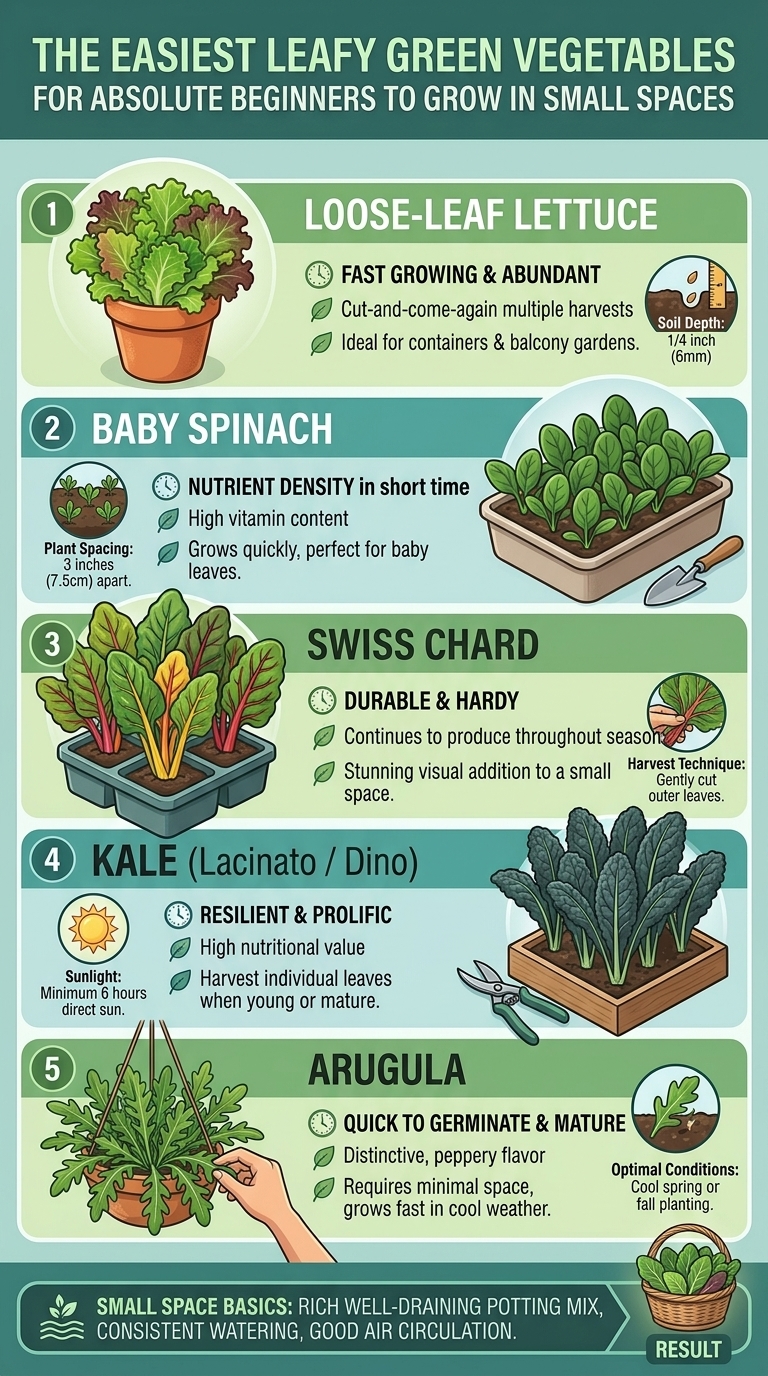
1. Leaf Lettuce (Loose-Leaf Varieties)
- Why it’s easy: Loose-leaf lettuces (such as Black Seeded Simpson, Oakleaf, or Red Salad Bowl) do not form tight heads. This makes them remarkably forgiving. If a few leaves look imperfect, you simply snip them off. They germinate in days and grow aggressively.
- Space requirements: Can be grown in containers as shallow as 6 inches deep. You can even plant them in window boxes.
2. Swiss Chard
- Why it’s easy: Swiss chard is virtually indestructible. It tolerates poor soil, resists heat better than lettuce, shrugs off light frosts, and suffers from very few pest issues. Plus, varieties like Bright Lights feature stunning neon-yellow, pink, orange, and red stems, making them as ornamental as they are edible.
- Space requirements: Needs a slightly deeper pot (about 8 to 10 inches) due to its larger stature, but a single container can supply a household with greens for months.
3. Kale (Dwarf or Siberian Varieties)
- Why it’s easy: Kale is a powerhouse of hardiness. It grows vigorously in almost any container and actually tastes sweeter after being kissed by a light frost (making it a favorite in New York and Washington).
- Space requirements: Choose “dwarf” varieties like Dwarf Blue Curled for small spaces, which stay compact and bushy rather than shooting up into massive 4-foot stalks.
4. Spinach
- Why it’s easy: While spinach can be sensitive to intense mid-summer heat, it is exceptionally easy to grow during spring and autumn across all regions. It germinates reliably and adds a rich, earthy flavor to salads and smoothies.
- Space requirements: Very shallow root system. It thrives in narrow window boxes, gutters hung on railings, or small patio pots.
5. Arugula (Rocket)
- Why it’s easy: Arugula is the sprinter of the vegetable garden. Seeds sprout within 48 hours, and you can begin harvesting baby greens in less than three weeks. It has a delightful, peppery bite that elevates any meal with zero effort.
- Space requirements: Thrives in tight quarters. You can broadcast seeds densely across a small container for a lush, microgreen-style carpet of greens.
4. Small Space Container and Setup Guide
When you don’t have a backyard, containers become your entire ecosystem. Setting them up correctly ensures your greens thrive.
Selecting Containers
- Drainage is Non-Negotiable: Every container, whether it’s a plastic pot, a wooden crate, a fabric grow bag, or a repurposed kitchen colander, must have drainage holes at the bottom. Stagnant water causes root rot instantly.
- Material Matters: Terracotta pots dry out quickly (great for humid Washington, harder to manage in hot Texas). Plastic and fabric grow bags retain moisture longer and keep roots cool.
- Size Guidelines: For shallow-rooted greens (lettuce, spinach, arugula), a container depth of 6 to 8 inches is plenty. For larger structural greens like chard and kale, aim for 8 to 12 inches.
The Ideal Soil Blend
Never use heavy native dirt from the ground in containers; it compacts like concrete and suffocates roots.
- Use a high-quality, lightweight potting mix blended with organic compost.
- Ensure the mix is loose and fluffy to allow delicate roots to expand rapidly.
5. Planting and Sowing Techniques for Maximum Yield
Getting your seeds into the soil properly sets the stage for a thriving harvest.
- Direct Sowing: For greens like lettuce, arugula, and spinach, there is no need to start seeds indoors. Simply press the tiny seeds directly into your moistened container soil.
- Planting Depth: A general rule of thumb for small seeds is to plant them at a depth equal to twice their width. Most small green seeds only need to be covered by a light dusting of soil (about 1/4 inch) or pressed firmly into the surface.
- Spacing Strategy: If you want a dense, continuous harvest of baby greens, you can sow seeds closely together (about 1 to 2 inches apart). If you want full-sized individual plants, thin them out once they reach 3 inches tall so they have about 4 to 6 inches of breathing room.
6. Essential Daily Care and Maintenance
Leafy greens are low-maintenance, but they do have a few basic requirements to stay crisp and productive.
- Sunlight Requirements: Most leafy greens prefer 4 to 6 hours of direct sunlight daily, or bright indirect light. If you are on a shaded San Francisco balcony, focus heavily on shade-tolerant greens like spinach, kale, and chard. If you are in blazing Texas sun, provide afternoon shade to protect them from scorching.
- Watering Routine: Because small containers dry out faster than in-ground gardens, check your pots daily. Stick your finger an inch into the soil; if it feels dry, water thoroughly until it runs out the bottom drainage holes. Keep moisture levels consistent to prevent greens from turning bitter.
- Feeding Your Plants: Containers wash nutrients away over time. Feed your greens every 2 to 3 weeks with a water-soluble, nitrogen-rich organic fertilizer (like liquid kelp or fish emulsion) to promote lush, fast leaf growth.
7. The Magic of “Cut-and-Come-Again” Harvesting
One of the most rewarding aspects of growing leafy greens in small spaces is mastering the harvest technique.
Instead of ripping the entire plant out of the soil:
- Wait until the plants are at least 4 to 6 inches tall.
- Using clean kitchen scissors or garden snips, gently cut the outer, larger leaves near the base of the plant.
- Leave the inner, tiny leaves intact so they can continue absorbing sunlight and growing new foliage.
- With this method, a cluster of 5 or 6 containers can easily provide a continuous salad supply for a small household all season long.
8. Troubleshooting Common Small-Space Issues
Even the easiest plants can occasionally run into minor roadblocks. Here is how to fix them quickly:
- Leggy, Weak Stems: If your greens look tall, thin, and floppy, they are starving for light. Move your container to a brighter window, balcony spot, or supplement with a simple LED grow light.
- Bitter Taste: Bitterness in lettuce or arugula is usually caused by heat stress or lack of water. Harvest your greens early in the morning, ensure consistent watering, and move containers to cooler, shaded spots during heatwaves.
- Pests (Aphids or Fungus Gnats): Indoor or balcony pots can occasionally attract tiny pests. Spray leaves gently with organic insecticidal soap or a mild mixture of castile soap and water. Letting the top layer of soil dry out completely between waterings eliminates fungus gnats.
9. Creative Small-Space Layout Ideas
No traditional yard? No problem! Get creative with your layout:
- Vertical Wall Planters: Mount fabric pockets or recycled wooden pallets against a sunny wall to grow rows of colorful lettuce and kale vertically.
- Hanging Baskets: Hang wire or plastic baskets from porch ceilings or balcony overhangs. Cascading varieties of leaf lettuce and trailing herbs look gorgeous and save precious floor space.
- Windowsill Herb and Green Boxes: Install window box planters securely outside your kitchen window for instant, literal “farm-to-table” access while cooking.
10. Frequently Asked Questions (FAQ)
Q1: Do I need direct sunlight to grow leafy greens on a small balcony or indoor space?
A: While direct sunlight (4–6 hours) is ideal, many leafy greens—especially spinach, chard, and kale—can tolerate partial shade or bright indirect light. If growing strictly indoors with no direct sun, a basic LED grow light will yield fantastic results.
Q2: Can I grow leafy greens indoors on a windowsill all year round?
A: Yes! Varieties like leaf lettuce, arugula, and baby spinach adapt wonderfully to indoor windowsills, especially during harsh winters in New York or Washington. Just ensure they get enough light and aren’t subjected to drying out from indoor heating vents.
Q3: How often should I harvest my container greens?
A: Once your plants reach about 4 to 6 inches in height, you can harvest outer leaves every few days using the “cut-and-come-again” method. Never strip the entire plant at once unless you are ready to replant.
Q4: Why is my lettuce tasting bitter?
A: Bitterness is typically triggered by high temperatures (heat stress) or irregular watering. When greens get too hot or dry out, they trigger a defense mechanism and produce milky latex compounds that taste bitter. Keep them watered and provide shade during peak heat.
Q5: What is the best potting soil to use for small-space container gardening?
A: Always use a lightweight, organic potting mix (often labeled as container mix). Never use topsoil or garden soil from the ground, as it is too heavy, compacts easily, and lacks proper drainage in enclosed pots.
Q6: Can I reuse the soil in my containers for the next batch of greens?
A: Yes, but you should revitalize it first. After harvesting an old crop, remove dead root clumps, break up any chunks, and mix in a generous handful of fresh organic compost and slow-release fertilizer to replenish lost nutrients.
Q7: How do I prevent my small containers from drying out too fast in hot climates like Texas?
A: In hot regions, choose larger containers or fabric grow bags (which insulate roots better than small plastic pots), use light-colored pots that reflect heat, add a thin layer of mulch or perlite on top of the soil, and water deeply during the coolest part of the morning.
Q8: Can I grow multiple types of greens in the same container?
A: Absolutely! This is called companion planting or mixed-salad sowing. You can plant a mix of loose-leaf lettuce, arugula, and spinach in a single wide container to create a stunning, high-yield mini salad bowl.
Q9: How long does it take from planting seeds to my first harvest?
A: Most beginner leafy greens grown from seed in containers are ready for their first baby leaf harvest in just 21 to 30 days, and reach full maturity within 40 to 50 days.
Q10: Do container-grown greens need to be fertilized?
A: Yes. Because watering frequently in containers leaches nutrients out of the soil over time, giving your greens a mild, water-soluble organic fertilizer every 2 to 3 weeks keeps them vibrant, fast-growing, and sweet-tasting.
Conclusion
Growing your own food in a small space is one of the most empowering, grounding, and delicious hobbies you can adopt. By selecting forgiving, rapid-growing crops like leaf lettuce, Swiss chard, kale, spinach, and arugula, utilizing well-drained containers, and following a simple watering and harvesting routine, anyone can enjoy an endless supply of fresh greens right outside their door—whether you are gardening on a sunny Texas patio, a New York fire escape, a California balcony, a Washington porch, or a San Francisco urban nook.