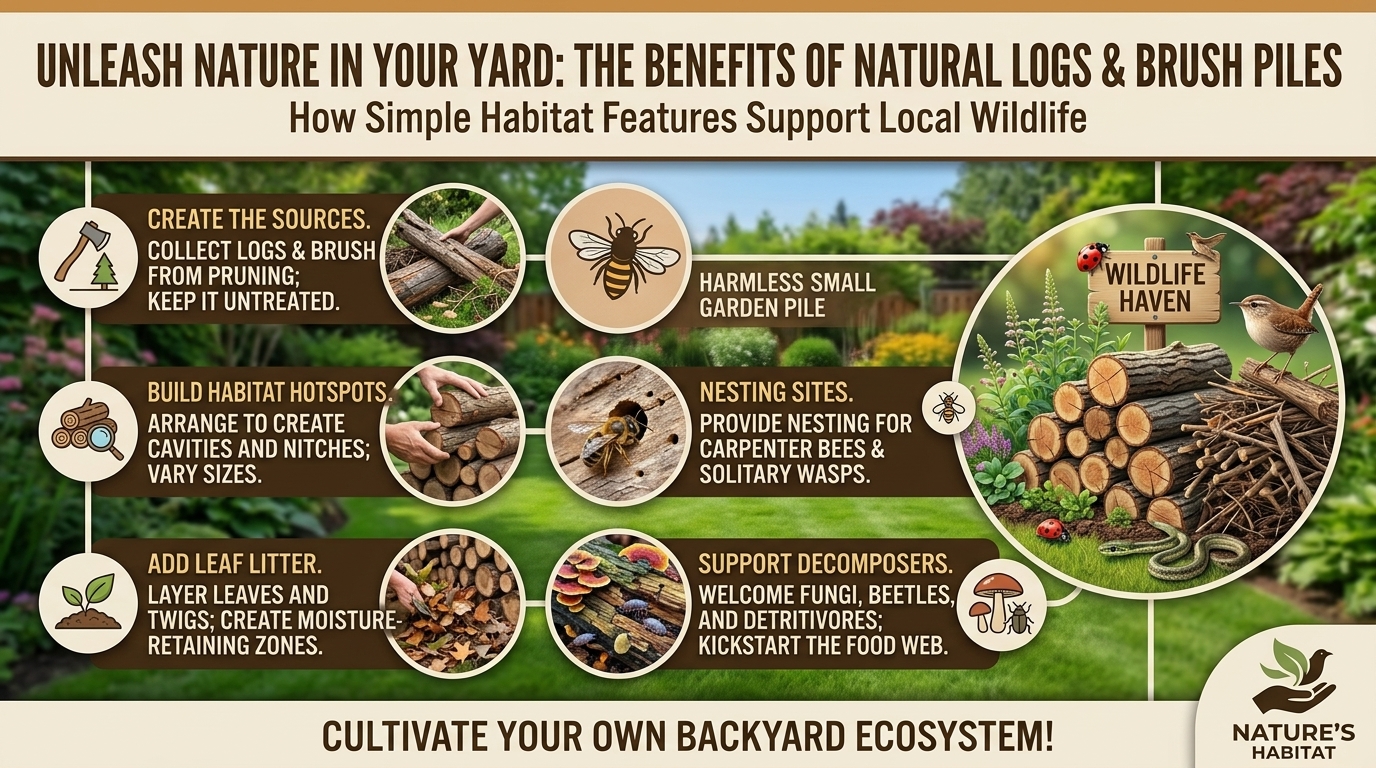
Why incorporating natural logs and brush piles supports beneficial backyard wildlife populations.? Modern landscaping often prioritizes manicured lawns, pristine mulch beds, and immediate leaf disposal. However, this hyper-tidy approach strips suburban and urban ecosystems of essential habitat structures. In natural ecosystems, dead wood, fallen branches, and leaf litter form the structural foundation for terrestrial food webs. By intentionally adding natural logs, fallen limbs, and structured brush piles into home gardens, property owners can restore critical shelter, nesting areas, and foraging sites for beneficial wildlife.
Whether managing a suburban lot in Texas, an eco-conscious residential garden in California or San Francisco, a woodland perimeter in Washington, or a native plant haven in New York, incorporating woody debris helps balance backyard micro-ecosystems naturally.
At KC Plants, we advocate for ecological landscape design that bridges the gap between clean residential aesthetics and functional wildlife habitat.
1. Ecological Benefits of Dead Wood and Brush Piles
Decaying wood acts as a biological engine for home ecosystems. As wood breaks down, it cycles nutrients into the surrounding soil while supporting diverse wildlife across all levels of the food chain.
Ecological Functions of Dead Wood
- Thermal Protection: Dense stacks of logs and intertwined branches cushion small animals against extreme temperatures, providing cool moisture pockets during summer heatwaves in Texas and California, as well as frost protection during northern winters in New York and Washington.
- Predator Evasion: Small songbirds (like wrens, towhees, and sparrows), beneficial garter snakes, and native lizards use the tight lattice of brush piles to escape domestic cats and predatory birds.
- Overwintering Sites: Solitary native bees, wood-boring beetles, ladybugs, and monarch butterfly chrysalises rely on hollow log cavities, loose bark, and dry twig gaps to safely hibernate through winter.
- Soil Nutrient Cycling: Fungi and saproxylic insects break down cellulose and lignin in decaying logs, returning rich organic matter and humic acid to native soil beds.
| Supported Wildlife Species | Ecological Role | Favored Wood Structure | Regional Significance |
| Native Bees & Wasps | Essential pollinators & aphid controllers | Hollow logs, drill-drilled wood, stem bundles | Texas, California, San Francisco, New York, Washington |
| Salamanders & Toads | Natural pest control (slugs, mosquitoes) | Moist, ground-contact decaying logs | Washington, New York, San Francisco bay microclimates |
| Songbirds (Wrens, Towhees) | Seed dispersal & caterpillar management | Dense brush piles with interwoven branch covers | All regions |
| Garter Snakes & Lizards | Rodent & insect population control | Sun-exposed log stacks & rock-adjacent wood | Texas, California, New York |
| Mycelium & Fungi | Nutrient cycling & soil building | Rotting hardwood logs buried in partial shade | Washington, New York, Northern California |
2. Step-by-Step Guide to Building an Aesthetic Backyard Brush Pile
Building a wildlife-friendly brush pile does not mean dumping loose lawn debris into a messy heap. Constructing a stable, structured framework keeps the pile organized and visually intentional within your landscape.
1.Establish a Heavy Log Base Grid:Prevents rot stall and creates crawl pathways underneath.
Lay 4 to 6 thick, heavy logs parallel to one another on bare ground, spaced about 6 to 12 inches apart. Place a second layer of thick logs perpendicular over the first layer to form a sturdy crisscross grid elevated slightly off the soil.
2.Layer Medium Branches and Stiff Prunings:Creates protected inner nesting chambers.
Stack medium-sized tree limbs across the base grid in alternating directions. Leave loose hollow pockets inside the interior so small birds, toads, and mammals can easily move throughout the core.
3.Cap the Top with Fine Twigs and Evergreen Boughs:Sheds heavy rains while trapping interior warmth.
Weave smaller twigs, leafy prunings, or coniferous branches over the top of the stack. This dense upper canopy acts as a roof that shields internal chambers from rain, wind, and strong sunlight.
4.Anchor the Perimeter with Native Perennials and Climbing Vines:Blends structure into ornamental flower beds.
Plant native climbing vines (like Coral Honeysuckle or Native Clematis) or tall perennial grasses around the base of the pile. As plants grow, they soften the edges of the wood stack, integrating it seamlessly into your garden design.
3. Integrating Dead Wood Safely Across Different Regions
Managing dead wood requires adjusting construction methods based on local climate risks, pest regulations, and municipal codes.
- Texas & Warm Southern Climates: Keep brush piles at least 20 to 30 feet away from residential structures to avoid attracting drywood termites or unwanted rodents near home foundations. Elevating the base grid allows airflow while providing shade for native reptiles.
- California & San Francisco (Defensible Space Considerations): In wildfire-prone areas, adhere strictly to local defensible space guidelines (Zone 1 and Zone 2). Place habitat wood structures at least 30 feet away from structures, maintain small footprint piles, and keep wood moist or surrounded by fire-resistant native plants.
- Washington & Pacific Northwest: Moisture is abundant. Position logs in partial shade to encourage moss and lichen colonization. Nurse logs (decaying fallen trees) serve as perfect growing beds for native ferns, huckleberries, and tree seedlings.
- New York & Cold Northern Climates: Build deeper, densely packed brush piles before late autumn. Heavy snow blankets the top twigs, creating an insulated subnivean layer underneath where overwintering amphibians and beneficial insects stay protected from freezing winds.
10 Frequently Asked Questions (FAQ)
1. Will building a brush pile attract unwanted pests like rats or mice?
Rats prefer human food waste, open trash, and dense unmaintained trash heaps rather than elevated, clean wood stacks. Using coarse tree limbs without food scraps keeps brush piles focused on wild bird, amphibian, and beneficial insect shelter.
2. Does decaying wood in the yard attract subterranean termites to my house?
Subterranean termites feast on buried or damp wood. To protect your home, construct brush piles and place natural logs at least 20 to 30 feet away from house foundations, garages, and wooden fences.
3. How large should a backyard brush or log pile be?
A ideal residential habitat pile measures roughly 4 to 6 feet wide and 3 to 4 feet high. This compact footprint provides ample thermal insulation for wildlife while remaining manageable within residential property lines.
4. How long does a natural log or brush pile last before rotting away?
Hardwood logs (such as oak, maple, or cedar) decompose slowly over 5 to 10 years, while softwoods (such as pine or fir) break down within 2 to 4 years. As the wood breaks down into rich humus, simply top off the pile with fresh branches.
5. Can I use pressure-treated or painted lumber to build a habitat pile?
No. Pressure-treated wood, painted timber, and chemically stained boards contain copper, arsenic, or synthetic compounds that leach toxic residues into the soil, harming beneficial fungi, amphibians, and native insects. Use only raw, untreated natural wood.
6. What types of birds use brush piles for shelter?
Ground-foraging and low-nesting birds—including Song Sparrows, Dark-eyed Juncos, Carolina Wrens, Spotted Towhees, and Black-capped Chickadees—use brush piles for cover from wind and predators.
7. How do I make a wood pile look intentional and attractive in a suburban yard?
Build neat, stacked log structures (like a Scandinavian log crib or insect hotel framework), border the wood stack with natural fieldstone, or surround the perimeter with native flowering shrubs, ferns, and ornamental grasses.
8. Is it better to put a brush pile in full sun or deep shade?
A balance of both is ideal. Sun-exposed logs attract basking lizards, butterflies, and solitary bees, while shaded logs retain the moisture required by toads, salamanders, earthworms, and native fungi.
9. Can I add fallen autumnal leaves to my brush pile?
Yes! Scattering loose leaves into the interior and around the base creates a rich leaf litter zone that shelters overwintering native caterpillars, firefly larvae, and beneficial predatory beetles.
10. How do natural logs benefit garden soil health?
As saproxylic fungi digest natural logs, they generate mycorrhizal networks that connect to nearby plant roots, improving soil moisture retention, aeration, and nutrient transfer across your garden beds.
Conclusion
Incorporating natural logs and structured brush piles into your landscape is one of the most effective ways to support local biodiversity. By recycling fallen branches and dead wood, you create self-sustaining habitats that protect pollinators, songbirds, native reptiles, and soil-building microbes.