How to Build a Vertical Strawberry Pallet Planter for a Rustic Farmhouse Garden Aesthetic
Growing fresh, juicy strawberries doesn’t require sprawling acreage or expansive garden plots. A vertical strawberry pallet planter combines space-saving practical design with a charming, rustic farmhouse aesthetic. By transforming a discarded wooden shipping pallet into a multi-tiered vertical garden, you create a space-efficient feature ideal for small yards, patios, balconies, and urban micro-gardens.
Whether you are gardening in sunny spaces across Texas and California, working within small outdoor areas in San Francisco, managing variable seasonal weather in New York, or building a damp-tolerant patio garden in Washington, vertical pallet planters elevate your crops—literally. Lifting strawberry plants off the bare ground protects tender fruits from soil-borne fungi, keeps crawling pests like slugs and snails at bay, and makes harvesting effortless.
At KC Plants, we specialize in helping home gardeners build functional, sustainable, and visually stunning garden features tailored to regional growing conditions.
1. Materials and Tools Needed for the Build
Before starting construction, gather the appropriate materials. Ensuring your pallet is safe for food production is the most critical first step.
Safety First: Choosing the Right Wood Pallet
Not all wooden pallets are safe for growing edible plants like strawberries. Pallets used in international shipping are often treated with chemicals to prevent pest transportation.
- Look for the HT Stamp: Only use pallets stamped with the letters HT (Heat Treated). Heat treating uses kiln heat to sanitize the wood without chemicals.
- Avoid MB Stamps: Never use pallets stamped with MB (Methyl Bromide). Methyl bromide is a toxic chemical fungicide and pesticide that can leach directly into soil and edible crops.
- Check Wood Condition: Avoid pallets with oil stains, unexplained paint spills, major structural cracks, or foul odors.
Tools and Supplies List
- 1 Heat-Treated (HT) wooden shipping pallet
- 1 roll of heavy-duty commercial landscape fabric or weed barrier
- 1 roll of 1/2-inch wire mesh (hardware cloth)
- Heavy-duty staple gun and galvanized 1/2-inch staples
- Claw hammer, crowbar, and wood screws
- Orbital sander or medium-grit sandpaper (80 to 120 grit)
- Non-toxic, outdoor-safe wood sealant or linseed oil (optional)
- High-quality organic potting soil mix blended with compost and perlite
- 12 to 18 strawberry plants (June-bearing or Everbearing varieties)
2. Step-by-Step Guide to Building Your Pallet Planter
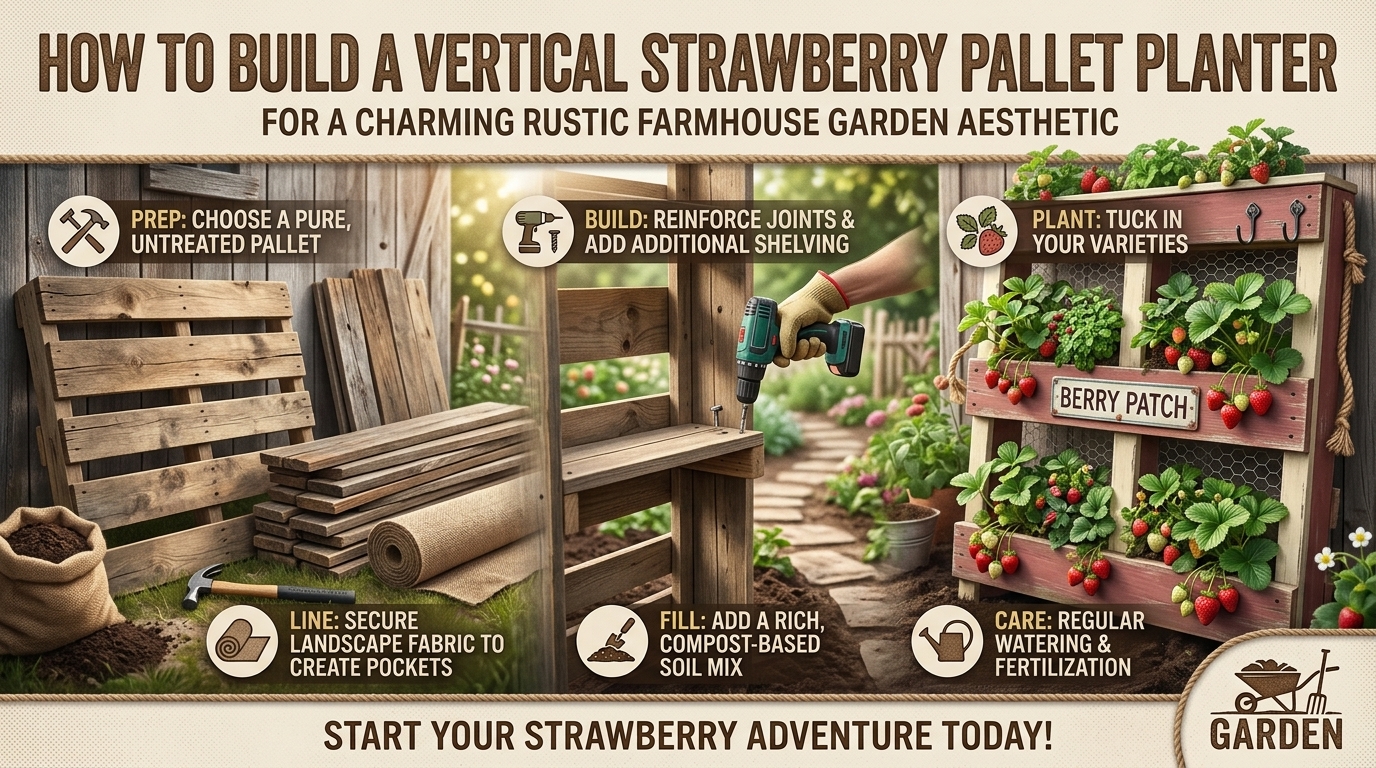
Building a sturdy vertical planter takes about 1 to 2 hours of labor. Follow this simple construction guide to ensure proper structural integrity and long-term soil retention.
1.Inspect, Clean, and Sand the Pallet:Prepare the raw wood frame safely.
Examine the pallet for protruding nails and pull or hammer them flat. Sand the exterior wooden slats thoroughly to eliminate rough edges and splinters, creating a clean base for handle mounts or paint finishes.
2.Attach Hardware Cloth and Landscape Fabric:Form stable soil pockets and backing.
Lay the pallet face down. Cover the back, bottom, and side panels with heavy-duty landscape fabric, folding corners tightly like wrapping a gift. Staple the fabric securely every 2 to 3 inches along internal wood supports. Reinforce the bottom base panel with 1/2-inch hardware cloth for extra support.
3.Apply a Non-Toxic Exterior Sealant (Optional):Preserve wood frame integrity.
To protect the raw wood from moisture decay and enhance the warm, rustic farmhouse look, coat the front exposed slats with raw linseed oil or a certified food-safe non-toxic exterior stain. Allow it to dry completely.
4.Fill with Lightweight Soil and Plant Strawberries:Pack medium firmly to eliminate air pockets.
Lay the planter flat on the ground. Pour potting mix into the open horizontal slats, packing soil tightly into every internal pocket. Insert strawberry plants into the front openings, tucking root balls securely under horizontal slats.
5.Water Thoroughly and Allow Initial Root Anchorage:Settle roots flat before vertical mounting.
Water the planter thoroughly while it remains horizontal on the ground. Keep the planter flat for 7 to 10 days to allow strawberry roots to anchor firmly into the soil before lifting the structure upright against a wall or fence.
3. Selecting the Best Strawberry Varieties for Vertical Gardens
Choosing the correct variety of strawberry determines how consistently your planter produces fruit throughout the season.
| Strawberry Type | Harvest Window | Fruit Yield Characteristics | Best Fit for Pallet Planters |
| Everbearing (e.g., Fort Laramie, Quinault) | 2–3 distinct harvests (Spring, Summer, Fall) | Medium-sized, sweet berries continuously through warmer months. | Ideal Choice: Provides steady, attractive fruit display all season. |
| Day-Neutral (e.g., Seascape, Albion, Tribute) | Continuous fruit production (60°F–80°F range) | Reliable, sweet berries that flower regardless of day length. | Ideal Choice: Perfect for long harvest windows in CA, TX, and WA. |
| June-Bearing (e.g., Chandler, Allstar, Jewel) | Single massive harvest over 2 to 3 weeks (Early Summer) | Very large, high-yield berries produced all at once in spring. | Great for jam making, but leaves planter fruit-free late in the season. |
4. Care and Maintenance Tips for Vertical Strawberry Planters
Vertical planters lose moisture faster than traditional in-ground garden beds due to elevated exposure to wind and ambient heat.
Smart Irrigation Strategies
- Top-Down Drip Lines: Install a simple 1/4-inch drip irrigation tube along the top slat row. Water naturally trickles downward through lower soil pockets, hydrating all plants evenly.
- Daily Moisture Checks: Check moisture levels daily during summer heat spikes in warm regions like Texas or California. Soil in shallow pallet pockets should feel like a wrung-out sponge.
Feeding and Sun Exposure Requirements
- Sunlight Needs: Position your vertical planter where it receives at least 6 to 8 hours of direct sunlight daily for maximum flower and berry development.
- Organic Fertilization: Apply a balanced, liquid organic berry fertilizer (rich in potassium and phosphorus) every 2 to 3 weeks during active flowering and fruit development.
10 Frequently Asked Questions (FAQ)
1. How do I know if a wooden pallet is safe for growing food?
Check the burnt stamp on the side of the pallet frame. Safe pallets display the HT stamp (Heat Treated). Avoid pallets marked MB (Methyl Bromide), as well as un-stamped, painted, or chemical-stained pallets.
2. How many strawberry plants can fit in a standard vertical pallet planter?
A standard 48×40-inch pallet typically features 6 horizontal slat sections, allowing you to comfortably plant 12 to 18 individual strawberry plants without overcrowding root zones.
3. What is the best potting mix for a vertical pallet garden?
Use a lightweight, well-draining organic potting soil mix blended with 20% compost and 10% perlite or coarse sand. Avoid heavy topsoil or garden soil, which compacts easily and restricts root drainage inside wooden pockets.
4. How do I overwinter a vertical strawberry pallet planter in cold winter climates?
In freezing regions like New York or inland Washington, move the pallet to an unheated garage, shed, or sheltered wall in late autumn. Cover plants with straw mulch or burlap to protect root crowns from severe frost cycles.
5. Why are the lower plants in my vertical pallet planter drying out?
Water naturally drains quickly toward the bottom, but initial soil absorption near the top can leave lower tiers dry. Ensure you water thoroughly until excess moisture drains from the bottom base, or install a vertical drip irrigation line.
6. Do I need to remove runners from pallet-grown strawberries?
Yes. Strawberry plants send out long creeping stems called runners to reproduce. Pinch off runners during the first growing season so the plant directs its energy into establishing strong root systems and producing larger fruit.
7. How long will a wooden pallet planter last outdoors?
A heat-treated wooden pallet lined with quality landscape fabric typically lasts 2 to 4 years before wood decomposition requires frame replacement or rebuilding.
8. Can I paint my vertical pallet planter to match my outdoor decor?
Yes. Use non-toxic, water-based exterior acrylic latex paint or food-safe exterior stain. Apply paint only to the outer wood surfaces, avoiding direct contact with inner planting soil.
9. How do I prevent pests like birds and slugs from eating my vertical strawberries?
Elevating strawberries off the ground naturally stops most crawling pests like slugs and snails. To deter birds from picking at ripe red berries, drape lightweight garden bird netting over the planter face during peak harvest windows.
10. Can I grow other plants alongside strawberries in a vertical pallet garden?
Yes. Companion plants like French marigolds, chives, thyme, and creeping rosemary grow well in shallow pallet pockets alongside strawberries while helping to deter common garden pests.
Conclusion
Building a vertical strawberry pallet planter is a simple, budget-friendly project that combines practical gardening with rustic farmhouse design. By selecting a heat-treated pallet, lining it with durable landscape fabric, choosing Everbearing or Day-Neutral strawberry varieties, and keeping soil evenly moist, you can turn a bare wall or patio corner into a productive strawberry harvest.