How to Spot and Treat Mosaic Virus Symptoms on Home Garden Cucumber and Squash Leaves
Mosaic virus infections—including Cucumber Mosaic Virus (CMV), Squash Mosaic Virus (SqMV), and Zucchini Yellow Mosaic Virus (ZYMV)—are among the most destructive plant diseases targeting home gardens. Once a cucurbit plant contracts a mosaic virus, there is no chemical or organic cure. The pathogen spreads systemically through plant vascular tissues, causing leaf distortion, stunted growth, and bitter, unmarketable fruit.
Whether you are growing zucchini in sunny gardens across Texas and California, tending raised beds in New York and Washington, or managing compact outdoor containers in San Francisco, recognizing early mosaic symptoms and taking immediate containment steps protects the rest of your garden.
At KC Plants, we focus on practical identification, insect vector control, and long-term prevention strategies to keep your garden resilient.
1. Spotting the Key Symptoms of Mosaic Virus
Because mosaic viruses share physical traits with nutrient deficiencies and herbicide injury, proper diagnosis requires looking for a combination of leaf and fruit symptoms.
Folia Symptoms on Cucumber and Squash
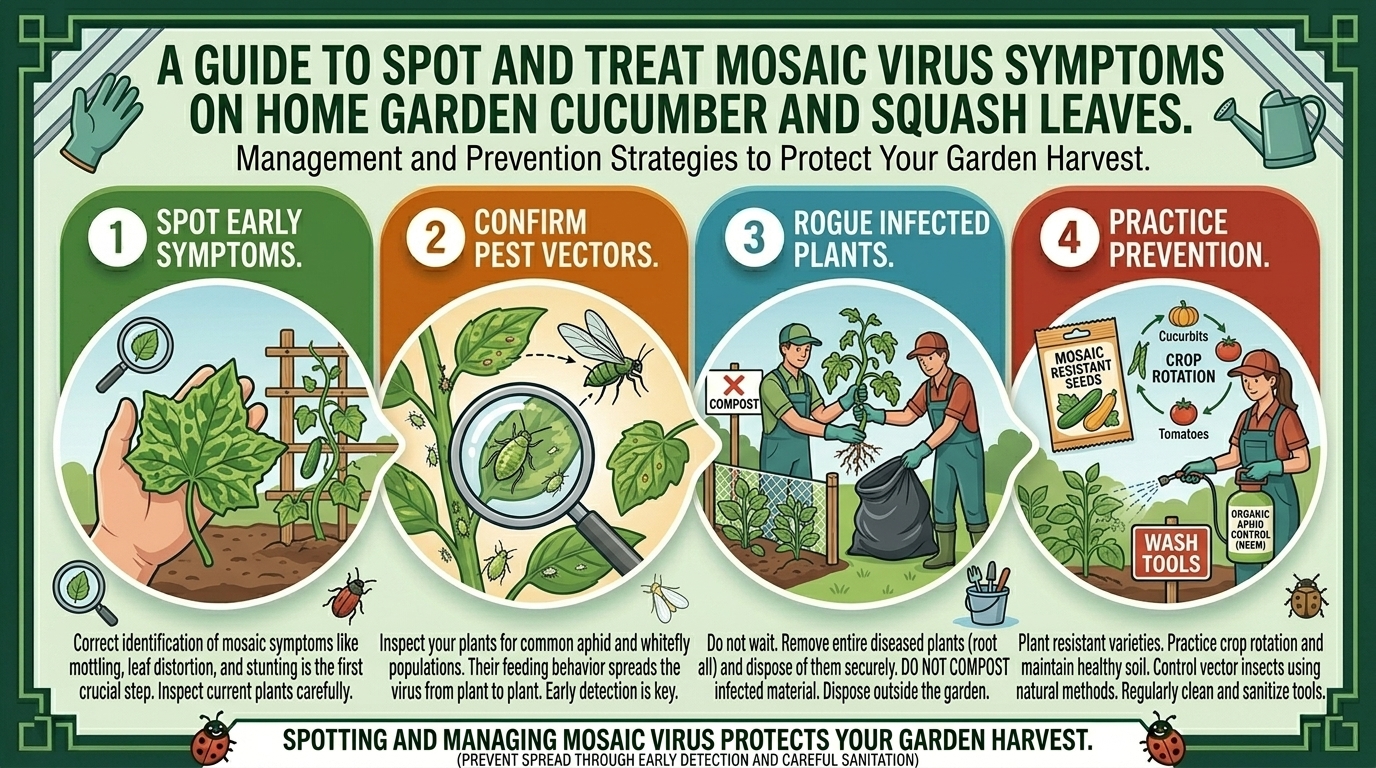
- Mottled Coloration: Leaves display an irregular pattern of contrasting dark green, light green, and yellow patches (the signature “mosaic” effect).
- Leaf Blistering and Distortion: Tissue between leaf veins bubbles upward, forming raised blisters. Leaves often curl downward, puckering along the edges.
- Shoestringing: Severely infected foliage develops thin, narrow, strap-like leaves where leaf blades fail to expand normally.
- Stunted Vine Growth: Internodes remain short, causing vines to stop growing normally and display a bushy, stunted habit.
Impact on Fruit Production
Fruit harvested from mosaic-infected vines often shows raised warts, bumpy ridges, or pale yellow splotches. In severe cases, fruits remain tiny, turn bitter, or rot prematurely on the vine.
| Symptom Feature | Mosaic Virus Infection | Nitrogen/Magnesium Deficiency | Herbicide Drift Exposure |
| Color Pattern | Irregular dark/light green mottle | Uniform yellowing between leaf veins | Pale growth points; bleaching |
| Leaf Shape | Bumpy, puckered, “shoestring” straps | Normal shape; pale or yellowing tissue | Cupped, fan-like, distorted tips |
| Spread Speed | Spreads rapidly via insect vectors | Slow, uniform progress across beds | Appears suddenly after application |
2. Vectors and Transmission: How Mosaic Virus Spreads
Understanding how mosaic viruses enter your garden helps you prevent initial infection.
- Sap-Feeding Vectors (Aphids): Aphids are the primary transmission vector for CMV and ZYMV. An aphid can pick up viral particles from weeds in under 60 seconds and transfer them to your cucumber plants during exploratory feeding bites.
- Mechanical Contamination: Garden tools, gloves, and hands transfer viral sap from an infected plant to healthy leaves during pruning, harvesting, or trellising.
- Infected Seed Stock: Squash Mosaic Virus (SqMV) can be seed-borne, meaning infected seeds bring the virus directly into your garden beds upon germination.
3. Practical Steps for Management and Containment
Because plant viruses cannot be cured once inside host tissues, management focuses entirely on sanitation and vector suppression.
1.Rogue and Remove Infected Plants:Stop viral spread immediately.
Carefully pull up infected cucumber or squash plants by the roots as soon as symptoms appear. Double-bag the infected foliage and place it directly in the trash. Never compost plants with viral infections.
2.Sanitize Gardening Tools Promptly:Prevent mechanical transmission.
Dip pruners, shears, and garden knives in a 10% bleach solution or 70% isopropyl alcohol between working on individual plants to prevent mechanical sap transfer.
3.Control Sap-Feeding Insects:Manage aphid vector populations.
Inspect the undersides of foliage weekly for aphids. Wash off small colonies with a steady stream of water, or apply insecticidal soap and neem oil sprays to limit vector movement.
4.Clear Surrounding Perennial Weeds:Eliminate weed reservoirs.
Remove broadleaf weeds like milkweed, nightshade, chickweed, and catnip from garden perimeters, as they act as overwintering host reservoirs for mosaic viruses.
10 Frequently Asked Questions (FAQ)
1. Can a plant recover from mosaic virus if provided proper fertilizer?
No. Mosaic viruses spread systemically throughout the vascular system of the plant. Fertilizing an infected plant will not clear the virus and may encourage aphids to feed on fresh, nitrogen-rich growth.
2. Is fruit from a mosaic-infected squash safe to eat?
Yes. Plant viruses do not infect humans or animals. However, heavily distorted or warty fruits often taste bitter and have a tough, unpalatable texture.
3. Can mosaic virus survive in garden soil over winter?
Most mosaic viruses (like Cucumber Mosaic Virus) require living host tissue or insect vectors to survive and do not persist directly in bare soil. However, viral particles can overwinter in live perennial weed roots.
4. Do reflective mulches help prevent mosaic virus?
Yes. Silver or aluminum reflective mulches confuse flying aphids by reflecting UV light, reducing their likelihood of landing on young cucumber and squash seedlings.
5. What are virus-resistant cucumber varieties?
Varieties like ‘Marketmore 76’, ‘Diviva’, ‘Suyo Long’, and ‘Countach’ carry genetic resistance or tolerance to Cucumber Mosaic Virus (CMV).
6. Can cucumber beetle bites spread mosaic virus?
Cucumber beetles primarily transmit bacterial wilt (Erwinia tracheiphila), but species like the spotted cucumber beetle can mechanically vector Squash Mosaic Virus (SqMV).
7. Does neem oil kill mosaic virus?
No. Neem oil has no direct effect on plant viruses. However, neem oil helps suppress aphids, whiteflies, and beetles, indirectly reducing viral transmission rates.
8. Why do squash leaves turn yellow with green veins?
Yellow leaves with green veins usually indicate interveinal chlorosis from a magnesium or iron deficiency, whereas mosaic virus creates an irregular, blotchy, mottled pattern with leaf puckering.
9. Should I burn infected plants?
If local municipal regulations permit outdoor burning, burning infected plant material safely destroys the virus. Otherwise, seal infected plants in plastic trash bags for municipal disposal.
10. How quickly does mosaic virus spread through a garden?
When aphid populations are high, mosaic virus can spread across an entire bed of cucumbers or squash within 7 to 14 days.
Conclusion
Managing mosaic virus on cucumber and squash plants requires swift action. Because viral infections cannot be cured, early identification of leaf mottling, immediate removal of infected plants, tool sanitation, and active aphid control are your best defenses. Planting virus-resistant varieties and maintaining clean garden perimeters ensures a productive, healthy harvest year after year.