There are few sensory experiences in horticulture quite as enchanting as stepping into a classic cottage garden in late spring and being greeted by the sweet, intoxicating fragrance of blooming sweet peas (Lathyrus odoratus). With their ruffled, butterfly-like blossoms cascading in shades of deep violet, soft rose, crisp white, and rich crimson, sweet peas are the absolute crown jewels of the cool-season cutting garden.
However, sweet peas are vigorous, climbing herbaceous vines. Without sturdy, reliable vertical support, these delicate climbers will quickly collapse into a tangled, muddy mat on the garden floor, making them vulnerable to fungal diseases and reducing their flower yield.
While you can purchase mass-produced plastic netting or industrial metal stakes from a big-box hardware store, nothing honors the romantic, organic aesthetic of a cottage garden quite like a hand-built, custom rustic twig trellis. Crafted from fallen branches pruned from your own landscape, a rustic twig trellis is sustainable, free, visually stunning, and structurally ideal for sweet pea tendrils.
Whether you are designing a courtyard garden in San Francisco, managing cool-season annuals in Washington State, planting cottage borders in New York, or navigating unique growing timelines across California and Texas, this comprehensive guide explores how to forage, design, and build a sturdy rustic twig trellis for your website, kcplants.com.
1. The Anatomy of a Sweet Pea Climber: Why Twigs Work Best
Before selecting your building materials, you must understand how sweet peas climb and why natural wood provides a superior mechanical grip compared to smooth plastic or wire structures.
The Tendril Advantage
Sweet peas do not twine their stems around supports like morning glories or pole beans; instead, they climb using specialized tendrils—modified leaf structures that whip through the air until they make physical contact with a small-diameter object, instantly curling around it in a tight, vice-like grip.
- The Problem with Smooth Metal: Industrial wire cages or smooth bamboo stakes offer a slick surface that sweet pea tendrils struggle to grasp securely, causing heavy vines to slide down in high winds.
- The Benefit of Rough Bark: Naturally fallen twigs and branches feature rough, textured bark, small side-branch nodes, and irregular surface imperfections that give sweet pea tendrils dozens of natural anchor points to latch onto.
2. Foraging and Sourcing Your Rustic Building Materials
Building a rustic twig trellis begins long before you touch a piece of twine. It starts with an afternoon walk around your yard or local wooded area to forage the right architectural components.
[ Twig Selection Breakdown ]
       │
       ├──> Primary Uprights (Stout, Straight Branches: 5 to 7 feet tall, 1 to 2 inches thick)
       │
       ├──> Horizontal / Diagonal Rungs (Flexible, Medium Twigs: 3 to 4 feet long)
       │
       └──> Natural Lashing Cord (Jute Twine, Sisal, or Willow Withes)
Choosing the Right Wood Species
Not all wood branches are created equal. You want branches that are strong, flexible, and slow to rot when pushed into damp garden soil.
- Ideal Woods: Hazelnut (the traditional English cottage garden choice), willow, dogwood, birch, apple orchard prunings, and oak.
- Woods to Avoid: Avoid soft, decaying woods like rotting pine or punky poplar that will snap under the weight of a mature, water-soaked sweet pea vine by mid-season.
Sizing Specifications
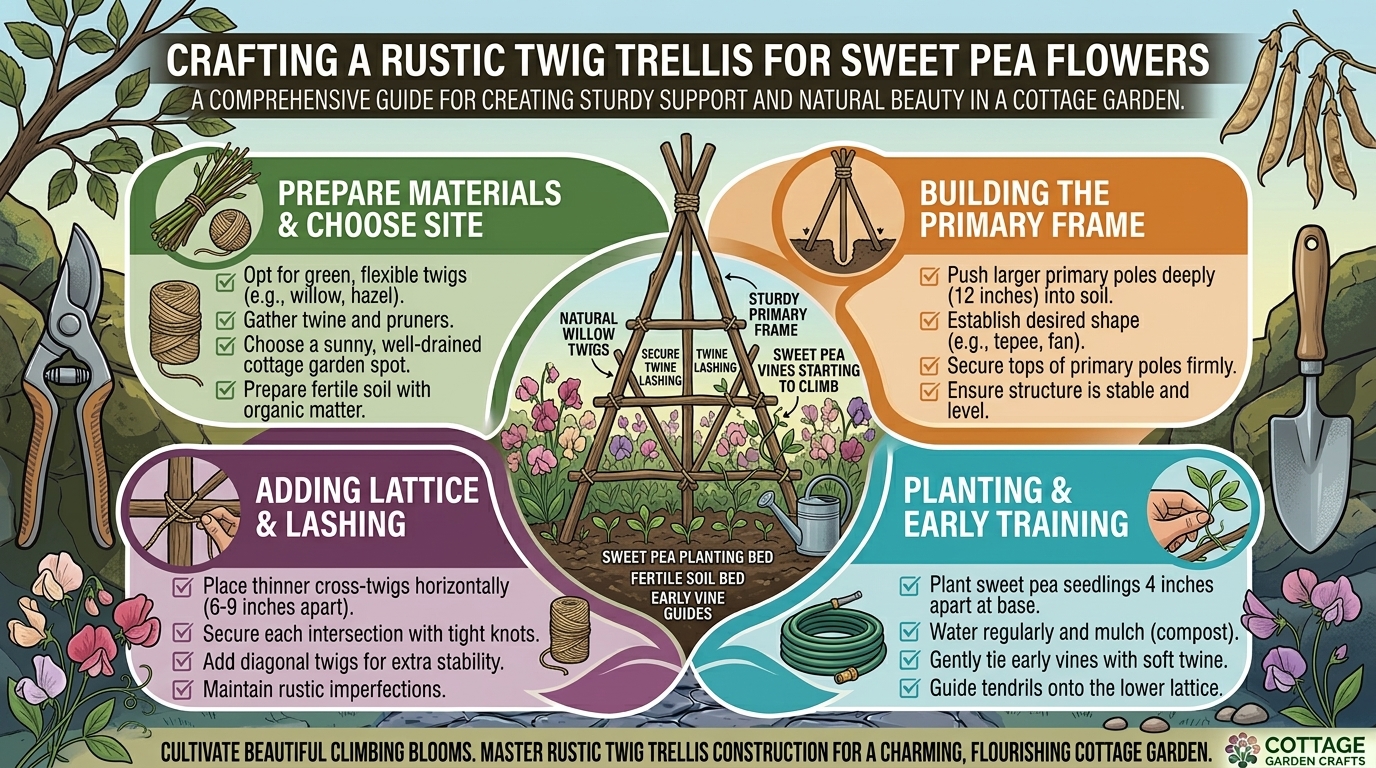
- Vertical Uprights: You will need 4 to 6 stout upright posts measuring roughly 5 to 7 feet in length and about 1 to 2 inches in diameter at the base. These will be driven deep into the ground to bear the structural load.
- Horizontal and Diagonal Weaving Twigs: Collect a large bundle of thinner, highly flexible side-branches (about the thickness of a pencil) measuring 3 to 4 feet long to weave across your framework.
3. Step-by-Step Construction Guide: Building the A-Frame or Teepee Trellis
While there are many architectural styles for twig structures, the A-Frame Trellis and the Rustic Teepee are the two strongest designs for holding heavy sweet pea vines. Here is the step-by-step masterclass on building a classic A-Frame twig trellis.
[ A-Frame Construction Workflow ]
       │
       ├──> Step 1: Prep and Sharpen Upright Base Stakes
       │
       ├──> Step 2: Drive Primary Posts into the Garden Soil
       │
       ├──> Step 3: Lash the Central Apex Ridge Beam
       │
       └──> Step 4: Weave Cross-Bracing Twig Rungs
Step 1: Sharpening the Base Stakes
Using hand prunings shears (secateurs), cut the bottom end of your four primary upright posts at a sharp 45-degree angle. This creates a clean point, making it infinitely easier to drive the branches deep into garden soil without splitting the wood.
Step 2: Establishing the Footprint
Measure out a rectangular garden bed measuring roughly 4 feet long by 2 feet wide (the ideal footprint for a double row of sweet peas). Drive your four main upright posts firmly into the four corners of the bed to a depth of at least 12 to 18 inches, ensuring absolute rock-solid stability.
Step 3: Creating the A-Frame Apex
Take two long, straight horizontal poles and lash them across the top of your vertical posts running the length of the bed. Then, lean matching pairs of A-frame support branches inward so they meet at a top central ridge beam. Secure all intersecting joints tightly using natural jute twine or sisal rope tied in secure square lashings.
Step 4: Weaving the Ladder Rungs
Sweet peas need horizontal rungs spaced every 6 to 8 inches apart to grab as they grow upward. Take your flexible medium twigs and lash them horizontally across the A-frame legs, working your way from the base of the soil all the way up to the apex. Interweave diagonal cross-braces to form a sturdy diamond lattice pattern that prevents lateral wobbling.
4. Planting Sweet Peas Around Your New Twig Trellis
Once your rustic structure stands firmly in place, it is time to introduce your sweet pea seeds or starter transplants.
Sowing and Training
- Direct Sowing vs. Transplants: Depending on your climate, direct sow seeds in early spring (or autumn in mild-winter regions) directly along the base of the outer perimeter of your twig trellis.
- Pinching for Bushiness: When your sweet pea seedlings reach about 6 inches tall, pinch out the growing tip just above a lower leaf node. This encourages the plant to throw out multiple side shoots, creating a lush, dense wall of foliage that will completely cloak your twig trellis in flowers.
- Guiding Early Tendrils: In the beginning stages, your young sweet pea seedlings may need a little human encouragement. Gently weave the very first wandering tendrils around the lower twigs of your trellis. Once they make contact, the vines will take over and climb autonomously.
5. Regional Adaptations for Sweet Pea Trellises Across the U.S.
Sweet peas are cool-season lovers that thrive in temperate climates, requiring slight regional adjustments across the United States:
San Francisco & Coastal California
- Climate Challenge: Mild maritime winters and cool summers provide an absolute paradise for sweet peas, allowing vines to grow exceptionally tall and heavy-yielding over a long season.
- Construction Tip: Because San Francisco winds can whip through urban backyards, drive your primary upright stakes at least 18 inches deep into the soil and use heavy-duty sisal lashing to anchor the trellis against gusts.
Washington State & Pacific Northwest
- Climate Challenge: Cool, damp spring weather encourages lush vegetative growth, but heavy spring rains can waterlog soil and loosen unsecured wooden stakes.
- Construction Tip: Use rot-resistant local woods like cedar or oak for your base posts, and treat the bottom 12 inches of buried wood with natural linseed oil to prevent premature soil rot.
New York & Northeast
- Climate Challenge: Late spring frost warnings require careful seed timing, followed by rapid summer transitions that test plant endurance.
- Construction Tip: Build your A-frame trellis in early March before the soil thaws completely, ensuring your structure is locked in place so sweet peas can emerge and race up the twigs as soon as spring arrives.
Texas
- Climate Challenge: Blistering southern heat arrives early in Texas, cutting the sweet pea season short as temperatures climb into the 80s and 90s.
- Construction Tip: Position your rustic twig trellis in an eastern-facing exposure where it receives cool morning sun and afternoon shade, extending your sweet pea blooming window before summer heat sets in.
6. Frequently Asked Questions (FAQ)
1. What is the best wood to use for a rustic twig trellis?
Hazelnut, willow, and dogwood are traditional favorites because their young branches are exceptionally flexible and easy to bend or weave. Apple and oak pruning waste also work wonderfully for sturdy structural uprights.
2. How do I keep my twig trellis from rotting in damp garden soil?
To extend the life of your trellis, avoid pushing untreated softwoods straight into wet soil. You can char the bottom 12 inches of your wooden stakes over an open flame (an ancient Japanese wood-preservation technique called shou sugi ban) or coat the buried bases in organic linseed oil.
3. Will sweet peas climb a rustic twig trellis naturally without help?
Yes! Sweet peas climb using sensitive tendrils that wrap around rough objects automatically. However, during their first few weeks of vertical growth, gently guiding and tucking stray shoots into the lower twig rungs ensures an even, beautiful distribution across the trellis.
4. How tall should a sweet pea twig trellis be?
Most standard climbing sweet pea varieties grow anywhere from 5 to 8 feet tall. Therefore, your structural upright poles should stand at least 6 feet high out of the soil to accommodate their mature vertical ambitions.
5. Can I reuse a rustic twig trellis for multiple years?
Unreated natural twig trellises typically last for 1 to 2 growing seasons before natural biological decomposition softens the wood. At the end of the season, you can toss the decomposed twigs directly into your hot compost pile and build a fresh, beautiful structure next spring!
6. What other climbing plants can grow on a twig trellis?
Beyond sweet peas, your rustic twig trellis is strong enough to support other light annual climbers like nasturtiums, black-eyed Susan vines (Thunbergia alata), canary creeper, and moonflowers. Avoid heavy perennial crops like large winter squash or heavy grapes.
7. How do I anchor a twig trellis in windy garden locations?
If your garden is prone to strong winds, build an A-frame or teepee design rather than a flat wall trellis. The triangular physics of an A-frame disperse wind loads safely, keeping the entire structure anchored firmly in the earth.
8. What kind of string should I use to lash the twigs together?
Use natural, biodegradable tying materials like untreated jute twine, sisal rope, or soft cotton garden twine. Avoid shiny nylon fishing line or plastic zip ties, as they clash with the rustic cottage garden aesthetic and do not decompose naturally.
9. Can I build a twig trellis in a raised garden bed?
Yes! Building a smaller, teepee-style twig trellis inside a raised vegetable bed works wonderfully. Simply push the base stakes deep into the rich potting soil of your raised bed, ensuring they anchor securely into the wooden frame below if necessary.
10. When is the best time of year to harvest and build my twig trellis?
Late winter (January or February) is the ideal time to forage and prune branches from your landscape trees, as trees are dormant and pruning won’t harm active growth. Building your trellis during winter prepares you to plant sweet peas as soon as early spring arrives.
Conclusion
Building a rustic twig trellis for your sweet pea flowers is one of the most rewarding, sustainable, and visually charming projects you can undertake in a cottage garden. By transforming fallen tree prunings into a work of functional garden art, you provide the ultimate textured support structure for your sweet peas while enhancing the organic beauty of your outdoor space.