What Are the Best Spring-Blooming Bulb Flowers to Plant in Autumn for Early Seasonal Color?
Autumn is the quiet foundation season for every vibrant spring garden. While leaves turn gold and summer blooms fade, planting spring-blooming bulbs during the fall months ensures a sudden explosion of early seasonal color before the rest of the landscape wakes up. Autumn-planted bulbs sit dormant underground through winter, utilizing cold soil temperatures to establish strong root systems so they can push up flowers at the first sign of early spring warmth.
Whether you are gardening in the humid transitions of Texas, managing freeze cycles in New York, adapting to coastal microclimates in San Francisco and California, or working with damp maritime springs in Washington, timing your bulb planting in autumn is essential for spring success.
At KC Plants, we specialize in helping gardeners select, time, and care for spring-blooming bulbs across diverse regional growing zones.
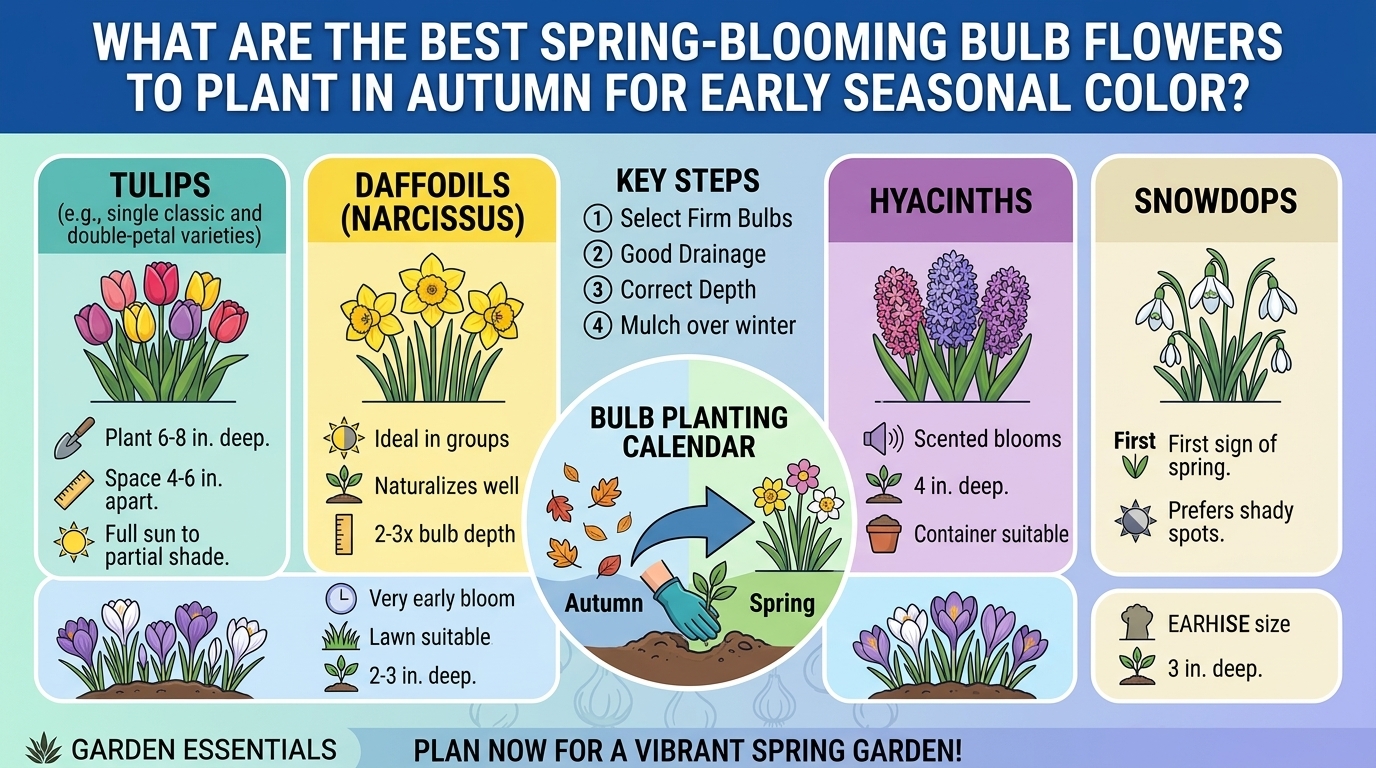
1. Top Spring-Blooming Bulbs to Plant in Autumn
Different spring bulbs bloom at different times throughout the season. Mixing early, mid, and late-season spring bloomers creates a continuous sequence of color from late February through early June.
Early-Spring Bloomers (Feb–March)
- Snowdrops (Galanthus nivalis): Delicate, nodding white flowers that frequently bloom through melting snow cover. Perfect for planting beneath deciduous tree canopies.
- Crocus (Crocus chrysanthus & vernus): Low-growing, cup-shaped blooms in brilliant shades of purple, yellow, white, and striped tones. Highly reliable early naturalizers.
- Glory-of-the-Snow (Scilla forbesii): Star-shaped blue flowers with white centers that carpet garden beds in early spring.
Mid-Spring Bloomers (March–April)
- Daffodils (Narcissus): Indestructible spring classics with trumpet-shaped blooms ranging from yellow and cream to orange and soft pink. Naturally deer and rodent-resistant due to toxic alkaloids.
- Grape Hyacinths (Muscari armeniacum): Dense, cobalt-blue flower clusters resembling tiny bunches of grapes. Ideal for border edging and under-planting with tulips.
- Hyacinths (Hyacinthus orientalis): Highly fragrant, dense flower spikes in rich violet, magenta, pink, and ivory.
Late-Spring Bloomers (April–May)
- Tulips (Tulipa): Elegant, iconic spring blooms available in virtually every color. For reliable perennial return, choose Species Tulips or Darwin Hybrid varieties.
- Ornamental Alliums (Allium giganteum): Dramatic architectural globes of purple or white flowers that bloom on tall stems as tulip foliage fades. Naturally pest-resistant.
| Bulb Class | Bloom Window | Chill Requirement (Weeks under 45°F) | Sunlight Needs | Rodent / Deer Resistance |
| Snowdrops | Very Early Spring | 14–16 Weeks | Partial to Full Shade | High |
| Crocus | Early Spring | 12–14 Weeks | Full Sun to Partial Shade | Low (Squirrels target) |
| Daffodils | Mid-Spring | 12–16 Weeks | Full Sun to Partial Shade | Extreme (Pest-Proof) |
| Tulips | Mid to Late Spring | 12–16 Weeks | Full Sun | Low (Deer / Voles love) |
| Alliums | Late Spring | 10–12 Weeks | Full Sun | High (Onion family scent) |
2. Regional Autumn Planting Timelines and Chill Requirements
Spring bulbs require a cold dormant period (vernalization)—typically 12 to 16 weeks at temperatures below 45°F (7°C)—to initiate flower bud development.
1.New York and Inland Washington (Sept–Oct):Cold Northern Winters (Zones 4–6).
Plant bulbs in early to mid-autumn when soil temperatures fall below 60°F, but 4 to 6 weeks before the ground freezes solid. This gives roots time to anchor before winter locks the soil.
2.Northern California and San Francisco (Oct–Nov):Mild Coastal Climates (Zones 7–9).
Plant bulbs in mid-to-late autumn. In mild winter zones with short chill cycles, pre-chill cold-dependent bulbs like tulips and hyacinths in your refrigerator for 6 to 10 weeks before planting.
3.Texas and Southern California (Nov–Dec):Warm Southern Winters (Zones 8–10).
Delay bulb planting until late autumn or early winter when soil cools down. Pre-chill tulip and crocus bulbs for 10 to 12 weeks in a paper bag in the crisper drawer (keep away from ripening apples, which emit ethylene gas that aborts flower buds).
3. Step-by-Step Guide to Planting Spring Bulbs for Maximum Display
Proper planting depth and soil preparation protect bulbs from winter rot and rodent foraging.
- The Golden Depth Rule: Plant bulbs at a depth equal to 3 times the height of the bulb. For example, a 2-inch tall daffodil bulb should be planted 6 inches deep (measured from the base of the bulb to the soil surface).
- Pointy Side Up: Place bulbs in the ground with their root plate facing down and pointed tips facing upward. If unsure of orientation, plant the bulb on its side; it will naturally direct root and stem growth correctly.
- Plant in Clusters and Drifts: Avoid planting bulbs in rigid, straight single-file lines. Instead, dig broad planting holes and place 5 to 15 bulbs together in loose clusters for a natural, dramatic burst of spring color.
- Soil and Drainage: Bulbs rot quickly in soggy, waterlogged soil. Amend planting beds with coarse compost, grit, or sand to ensure fast drainage throughout winter wet periods.
10 Frequently Asked Questions (FAQ)
1. What happens if I plant spring bulbs too early in autumn?
Planting when soil temperatures are still warm (above 65°F) can cause bulbs to sprout green foliage prematurely in autumn. Warm soil also increases the risk of fungal bulb rot.
2. Can I plant bulbs in autumn if I missed the ideal planting window?
Yes. As long as the ground is not frozen solid and bulbs are firm (not soft or moldy), plant them immediately—even in December or January. It is better to get them into the ground than to let them dry out in storage.
3. How do I prevent squirrels and voles from digging up my tulip bulbs?
Cover newly planted bulb beds with 1/2-inch hardware cloth mesh secured under a layer of soil, or dust bulbs with coarse bone meal and chili powder. Alternatively, interplant tulips with pest-resistant daffodils and alliums.
4. Do I need to water spring bulbs after planting them in autumn?
Yes. Water bulb beds thoroughly immediately after planting to settle the soil around root zones and initiate initial autumn root growth. Regular rainfall is usually sufficient through winter.
5. Can I grow spring-blooming bulbs in outdoor pots and container gardens?
Yes. Use frost-safe ceramic or terracotta containers with excellent drainage holes. Pack containers with layers of bulbs at varying depths (a “bulb lasagna” layout) for a dense, layered spring show.
6. Do spring bulbs come back every year (perennialize)?
Daffodils, Alliums, Crocuses, and Snowdrops return and multiply reliably year after year. Modern hybrid tulips often act as annuals and produce smaller blooms in their second year unless you choose wild Species Tulips.
7. Should I remove dying leaves after spring bulbs finish blooming?
No! Leave yellowing bulb foliage intact for 6 to 8 weeks after flowering. Green leaves absorb sunlight and transfer critical energy back into the bulb for next year’s bloom cycle. Trim foliage only after it turns completely brown and papery.
8. What is bulb fertilizer, and when should I apply it?
Add slow-release bulb fertilizer or organic bone meal to the bottom of the planting hole in autumn, mixing it into the subsoil below the bulb root zone. Avoid direct contact between raw fertilizer and bulb roots.
9. Why didn’t my spring bulbs bloom after sprouting leaves?
Lack of blooms (“blindness”) usually occurs due to insufficient winter chilling, planting in deep shade, premature cutting of foliage the previous spring, or overcrowded bulbs requiring division.
10. Can I store spring bulbs in the freezer to pre-chill them?
No! Freezing temperatures destroy bulb cellular tissue and kill the plant. Pre-chill bulbs only in a standard refrigerator set between 35°F and 45°F.
Conclusion
Planting spring-blooming bulbs in autumn is one of the easiest, high-reward investments you can make in your landscape. By choosing a mix of early, mid, and late-season species, observing proper regional planting windows, and ensuring sharp soil drainage across Texas, New York, California, Washington, and San Francisco, your garden will burst into brilliant seasonal color at the first sign of spring.