Every gardener who has ever tried to pull a stubborn dandelion or thistle out of dry, baked clay knows the agonizing feeling: you pull with all your might, the stems snap cleanly off at the surface, and the deeply anchored taproot remains safely cocooned below, ready to sprout new shoots by next weekend.
Heavy clay soil—found abundantly in regions like Texas, parts of California, and urban pockets across the country—presents a unique weed-removal challenge. When wet, clay turns into a sticky, impermeable morass that clings to roots like wet cement; when dry, it bakes into a concrete-like crust that grips underground rhizomes with vice-like strength.
Relying on synthetic chemical weed killers is not the answer. Glyphosate and other harsh herbicides do nothing to improve soil structure, poison beneficial soil microbes, and leave dead root matter behind to decompose sluggishly.
Fortunately, you can completely conquer stubborn weeds in heavy clay without harsh chemicals by combining smart mechanical techniques, proper moisture management, and biological soil repair.
1. Understanding the Enemy: Weeds and Heavy Clay
To defeat deep-rooted weeds in clay, you must first understand why they thrive there.
Why Weeds Love Clay
- Compaction Tolerance: Weeds like dandelions, dock, bindweed, and thistles possess immense root pressure. Their specialized taproots can punch through dense, compacted layers that delicate garden vegetables cannot penetrate.
- Nutrient Reserves: Heavy clay is often rich in trapped minerals. Deep-tapping perennial weeds exploit these locked nutrients, storing massive amounts of energy in fleshy taproots or underground rhizomes.
The Broken-Root Trap
When you try to pull a weed out of dry clay, the tension causes the brittle stem or root crown to snap. Because many clay-adapted weeds are prolific propagators, any piece of root left behind can regenerate an entirely new plant. Hand-pulling without loosening the earth is often counterproductive.
2. Essential Tools for Clay Extraction
Traditional hand trowels and standard garden spades will bend, snap, or frustrate you when thrust into dense clay. Equipping yourself with the right specialized tools makes all the difference:
1. The Dandelion Weeder / Taproot Extractor
A long-shafted, forged steel weeder with a V-notched tip allows you to slice deep down alongside taproots, leveraging the fulcrum against the clay to pop the entire root out intact.
2. The Broadfork
A heavy-duty, multi-tined manual tool that allows you to stand on the crossbar and use your body weight to fracture and aerate dense clay without turning or inverting the soil layers. This loosens the grip clay has on weed networks.
3. The Horisugi (Japanese Soil Knife / Hori-Hori)
A thick, convex stainless steel blade with a serrated edge on one side and a sharp cutting edge on the other. It acts simultaneously as a trowel, knife, and root saw.
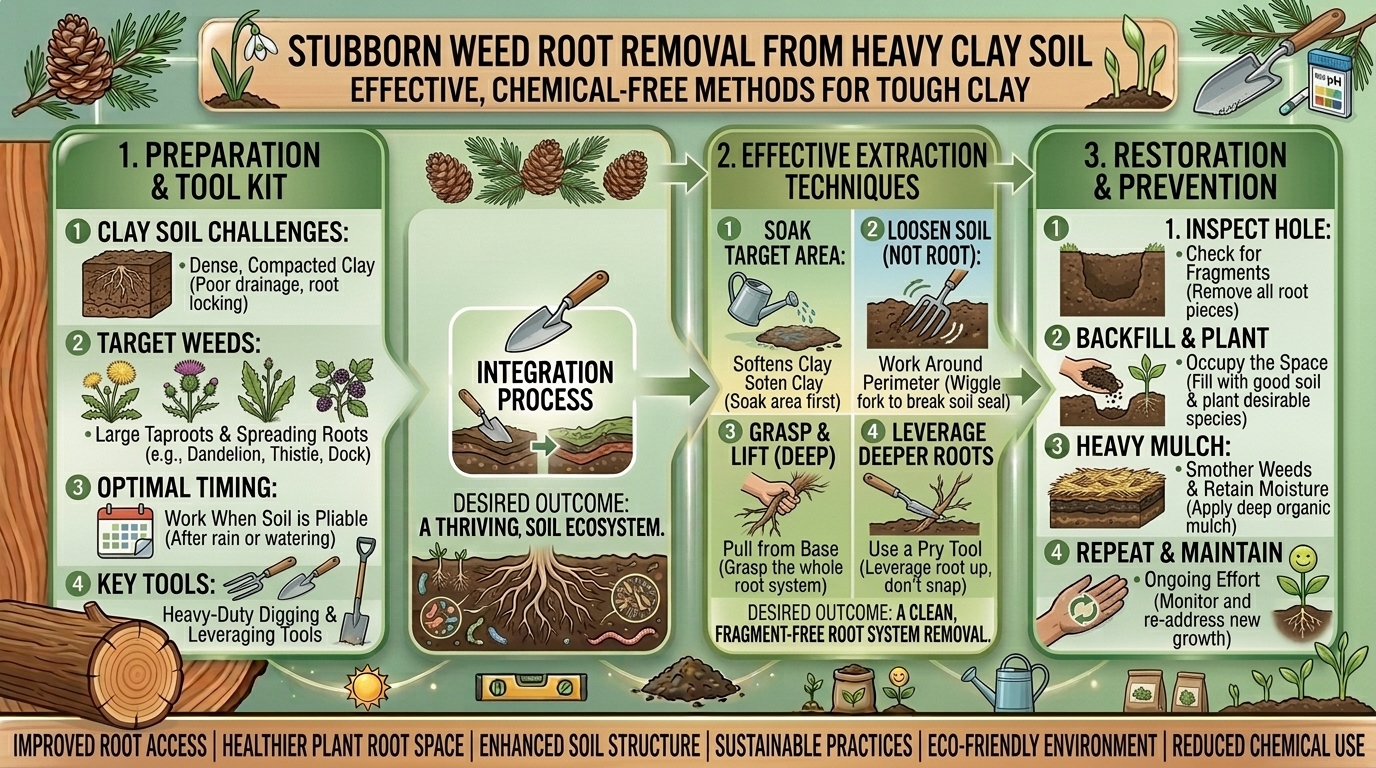
3. Step-by-Step Chemical-Free Extraction Protocol
[ Assess Weed Infestation in Clay ]
       │
       ├──> Step 1: Pre-Soak the Soil (Soften the Matrix)
       │
       ├──> Step 2: Choose the Right Tool (Broadfork or Hori-Hori)
       │
       ├──> Step 3: Leverage & Extract (Pull the Entire Taproot)
       │
       └──> Step 4: Sheet Mulch / Cover to Prevent Recolonization
Step 1: Pre-Soak the Earth (Never Pull Dry Clay)
Never attempt to weed heavy clay when it is bone-dry.
- The Technique: Water the weed-infested area deeply 24 hours before you plan to work. The water lubricates the clay particles, loosening their grip on underground root systems and allowing you to slide a tool deep alongside taproots.
Step 2: Loosen Rather Than Yank
Instead of wrapping your fingers around the green stem and pulling upward, position your weeding tool (like a hori-hori or taproot knife) 2 to 3 inches away from the base of the weed.
- Push the blade straight down parallel to the root.
- Gently rock the handle to lever the soil outward, breaking the suction and friction holding the clay to the root.
Step 3: Extract and Inspect
Grasp the base of the weed right where it meets the soil, and pull straight up. Check the extracted root tip: if it tapered to a clean end, you successfully removed the whole root. If it snapped off, use your knife to dig out the remaining segment.
Step 4: Immediate Smothering (Sheet Mulching)
For areas overrun with creeping weeds like Bermuda grass, bindweed, or dense chickweed, trying to dig out every millimeter of root is impossible.
- Lay down layers of overlapping plain cardboard or thick newspaper directly over the clay.
- Top it with 3 to 4 inches of organic mulch or compost. This chokes out light, halts photosynthesis, and lets soil earthworms naturally break down the remaining root systems over the season.
4. Regional Approaches: Managing Clay Weeds Across the U.S.
Climate and soil mineral composition change how clay behaves across different regions:
Texas
- The Challenge: Texas “Blackland Prairie” and gumbo clay bake into rock-hard bricks during summer, making root extraction nearly impossible without mechanical softening.
- The Strategy: Weed immediately after heavy spring or autumn rains when the clay is workable (the “plastic stage”). Incorporate organic compost and gypsum to permanently alter the structure of the clay, making future weed removal effortless.
California & San Francisco
- The Challenge: Mediterranean dry summers turn regional clay into concrete. Urban plots in San Francisco and inland valleys experience heavy seasonal baking.
- The Strategy: Utilize winter rains to tackle deep-rooted perennial weeds. Apply thick organic bark mulches during dry months to keep the top layer of clay loose and friable.
New York
- The Challenge: Humid summers combined with suburban clay-loam soils foster aggressive perennial weed species like dandelion, plantain, and thistle.
- The Strategy: Spring and early autumn offer ideal moisture levels for broadforking and root extraction before summer heat sets in.
Washington State
- The Challenge: High rainfall keeps clay soils waterlogged and heavy through winter and spring, followed by dense weed growth.
- The Strategy: Avoid working wet clay too aggressively to prevent structural damage (puddling). Use sheet mulching techniques during saturated months to suppress weeds naturally.
5. Frequently Asked Questions (FAQ)
1. Will boiling water kill weed roots in clay soil?
Pouring boiling water over weeds can scald surface foliage and weaken small annual weeds, but it rarely penetrates deep enough into dense clay to destroy deep taproots like dandelions or thistles. It is best used for pavement cracks rather than garden beds.
2. Can I use vinegar as a natural weed killer on clay?
Horticultural vinegar (20% acetic acid) acts as a powerful contact bio-herbicide that scorches green top growth within hours. However, it does not translocate down into deep taproots, meaning resilient perennial weeds in clay will almost always resprout from their surviving root systems a couple of weeks later.
3. How do I stop weeds from coming back in heavy clay?
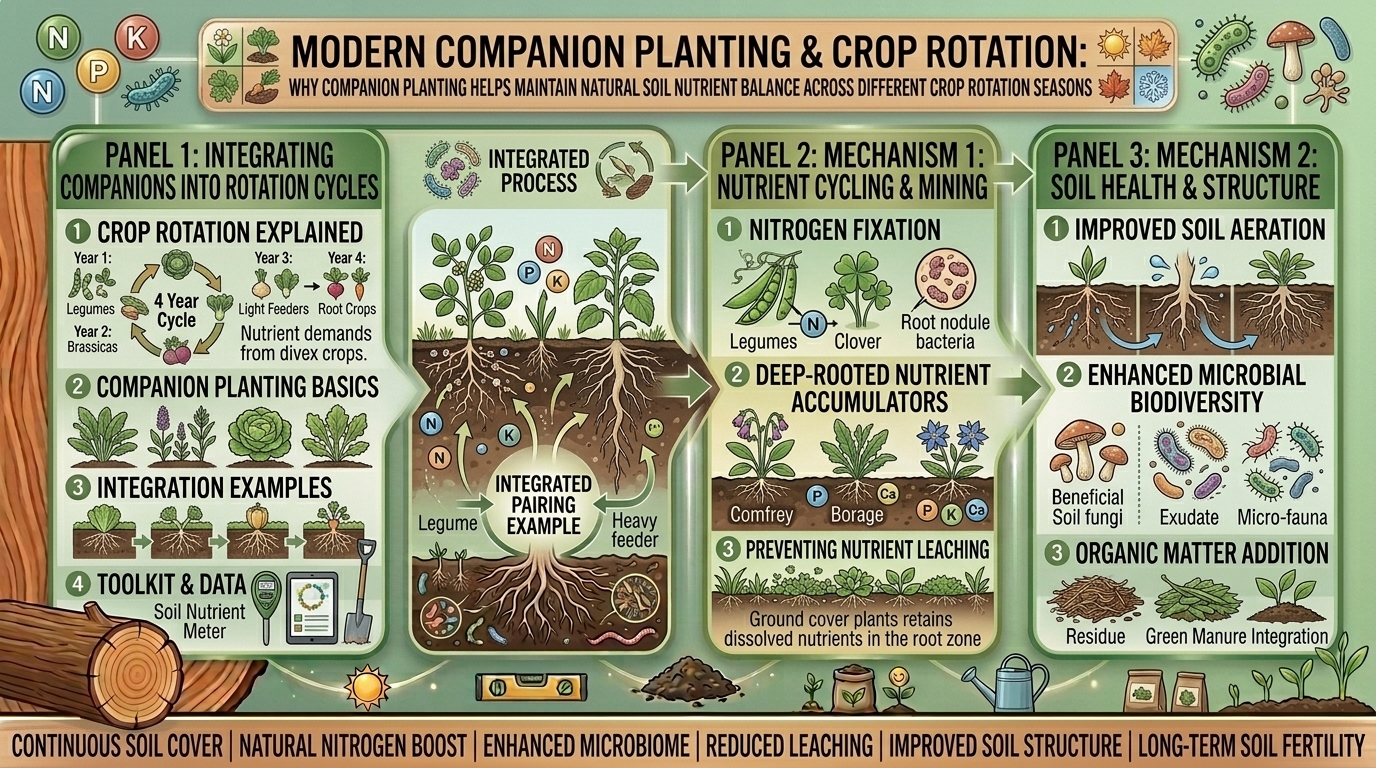
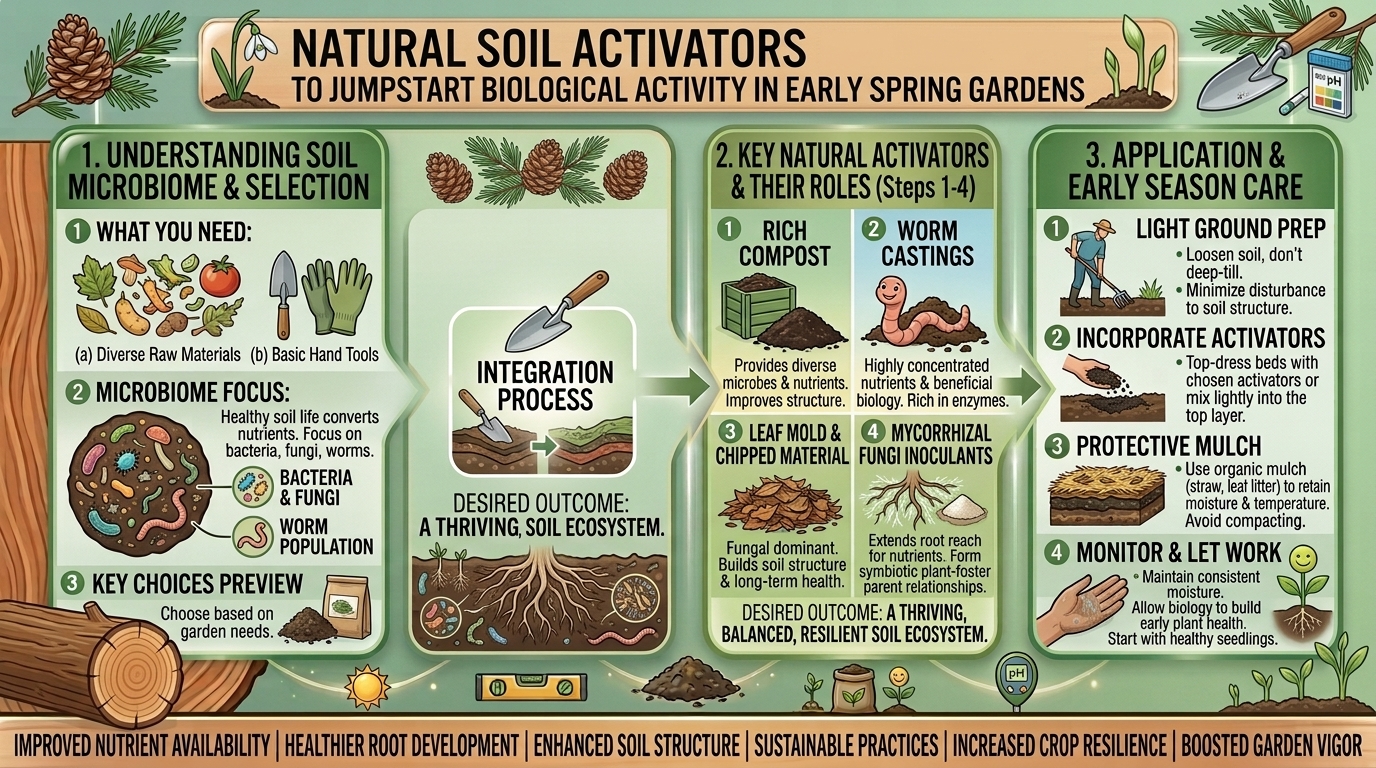
The ultimate prevention is improving the clay itself. By annually top-dressing your beds with organic compost, worm castings, and mulches, you transform heavy clay into crumbly loam, which makes future weeding a simple, hand-pulling task.
4. What is the best season to remove deep-rooted weeds?
Spring and autumn are ideal. During these seasons, soil moisture is naturally higher, softening the clay, and weeds are actively channeling energy into root systems, making them easier to extract entirely.
5. Can I compost weeds that have deep taproots?
Annual weeds that have not gone to seed can safely go into your compost pile. However, perennial weeds with aggressive taproots (like dandelions with mature seed heads) or spreading rhizomes (like bindweed) should be discarded in yard waste bins or drowned in a bucket of water for weeks until completely rotted.
6. Why do taproots snap so easily in clay soil?
Clay particles have a high surface-area-to-volume ratio and bond tightly to organic surfaces when dry. This creates high friction against underground roots, causing them to shear off under tension rather than slide out of the earth.
7. Does flame weeding work on clay soil weeds?
Flame weeders (propane torches) effectively rupture cell walls in young annual weeds, killing them instantly. Like vinegar, though, they only target top-growth and will not eradicate deep taproots in heavy clay without repeated applications.
8. Is it better to pull weeds when clay is wet or dry?
Always pull when clay is damp (workable), never when it is bone-dry or soaking wet. Wet clay sticks to tools and ruins soil structure; dry clay is rock-hard. Aim for that “Goldilocks” window 24 to 48 hours after a good rain or watering.
9. Can chickens help clear weeds out of clay garden beds?
Yes! If you have a portable chicken tractor or can fence off an unplanted bed, chickens love scratching at clay soil, eating weed seeds, and unearthing shallow roots while naturally aerating the surface with their claws.
10. How deep do clay-adapted weed roots typically grow?
Some aggressive taproot weeds (like dandelions, dock, and burdock) can drive their main taproots 6 to 12 inches (or even deeper) straight down into clay profiles, which is why shallow surface pulling always fails.
Conclusion
Tackling stubborn weed roots in heavy clay soil without chemical herbicides requires patience, the right tools, and an understanding of soil moisture dynamics. By pre-soaking the earth, leveraging specialized tools like hori-hori knives and broadforks, and addressing the root cause through organic soil improvement, you can permanently reclaim your garden beds.