As winter thaws and the first hints of spring warmth begin to coax bulbs from the earth, many gardeners eagerly reach for seed packets and garden tools. However, while air temperatures rise quickly, soil temperatures lag behind. Deep underneath the surface, your garden’s microscopic workforce—earthworms, beneficial bacteria, mycorrhizal fungi, and protozoa—are waking up sluggishly from winter dormancy.
When soil biology remains asleep, nutrients remain locked in organic matter, and newly planted seeds or transplants struggle to establish robust root systems. Instead of relying on harsh synthetic chemical fertilizers that force fast top-growth while bypassing the soil food web, seasoned horticulturists turn to natural soil activators.
These organic amendments stimulate microbial metabolism, warm the rhizosphere, and transform cold, lethargic earth into a buzzing subterranean ecosystem.
Whether you are preparing urban containers in San Francisco, amending heavy clay in Texas, waking up damp soils in Washington State, or prepping beds across New York and California, this comprehensive guide explores the best natural soil activators to jumpstart your garden this spring.
1. The Science of Soil Biology in Early Spring
To understand why soil activators are necessary, you must look at how soil functions when temperatures hover between 45°F and 55°F.
The Microbial Slumber
During freezing winter months, soil microbes enter a state of metabolic stasis. As spring arrives, soil biology does not switch on overnight.
- Nutrient Cycling Delay: Plants cannot absorb raw organic matter (like composted manure or chopped leaves) directly. They rely entirely on bacteria and fungi to break down these materials into bio-available mineral ions (nitrates, phosphates, potassium).
- The Activator Solution: Natural soil activators supply immediate carbon, amino acids, and complex carbohydrates that feed waking microbes, accelerating their population growth and enzymatic activity weeks ahead of schedule.
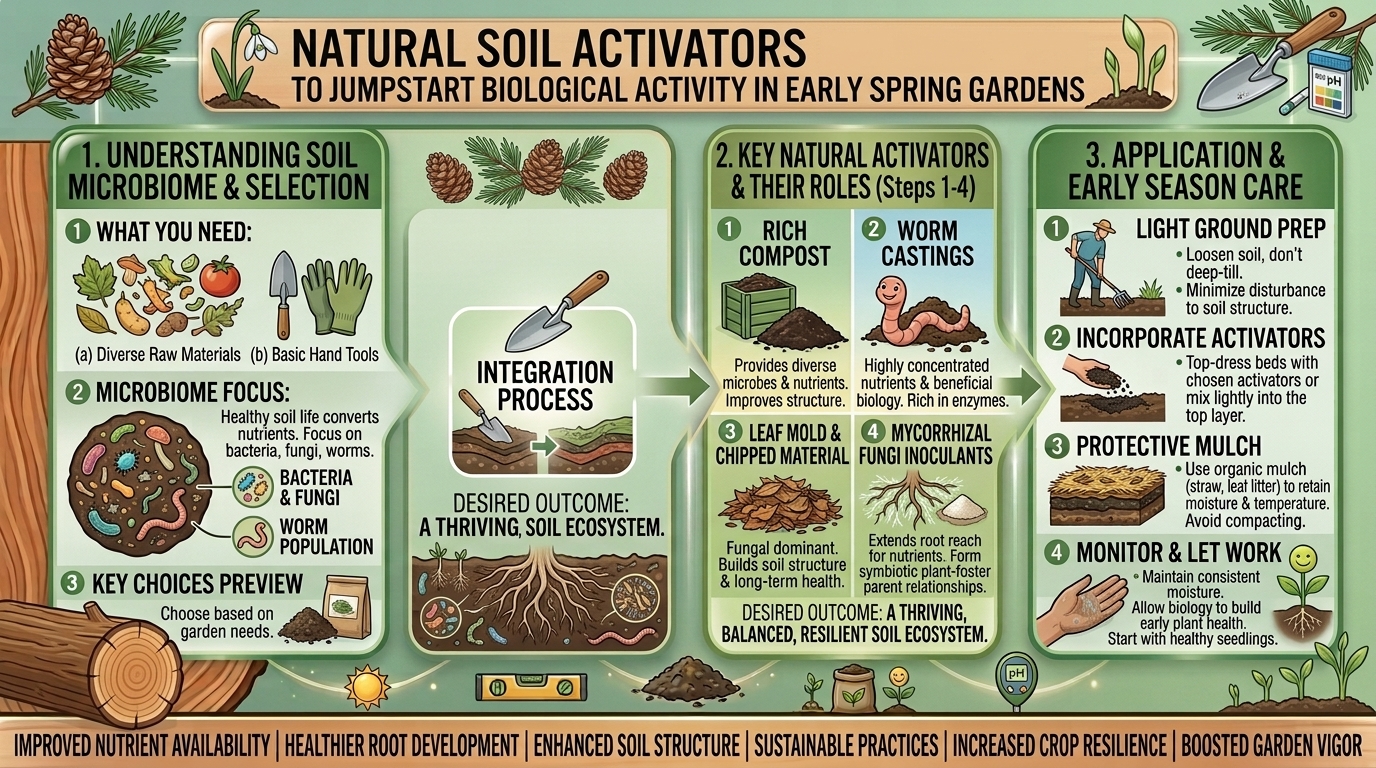
2. Top Natural Soil Activators to Waken Your Spring Garden
Here are the most powerful, scientifically proven natural amendments used to jumpstart biological activity in early spring.
1. Liquid Kelp and Seaweed Extract
- What It Is: Concentrated extracts derived from marine macroalgae (such as giant kelp).
- Why It Works: Seaweed is packed with natural plant growth regulators (auxins, cytokinins, and gibberellins) and trace minerals. When applied as an early spring root drench, it acts as an immediate stimulant for soil bacteria and beneficial fungi, encouraging rapid root elongation and microbial multiplication.
2. Finished Vermicompost and Worm Castings Tea
- What It Is: The digested organic output of earthworms, brewed into a aerated liquid tea or applied directly as a top-dressing.
- Why It Works: Worm castings are an absolute powerhouse of biological diversity. They introduce millions of active aerobic bacteria, protozoa, and beneficial enzymes directly into cold spring soil, instantly inoculating barren or depleted beds with a living workforce.
3. Humic and Fulvic Acids
- What It Is: Organic compounds extracted from ancient decomposed plant matter (leonardite).
- Why It Works: Humic acids act as a biological catalyst. They improve the Cation Exchange Capacity (CEC) of your soil, chelating locked-up minerals (like iron and phosphorus) and providing an immediate carbon food source that stimulates bacterial proliferation in cold earth.
4. Blackstrap Molasses
- What It Is: A thick, dark byproduct of sugar cane refining, rich in natural sugars, sulfur, and trace minerals.
- Why It Works: Molasses is pure energy for soil microbes. Mixing 1 to 2 tablespoons of unsulfured blackstrap molasses per gallon of water in early spring feeds native soil bacteria, causing an exponential population boom that rapidly breaks down organic residue.
5. Fish Hydrolysate (Cold-Processed)
- What It Is: Whole fish ground into a liquid fertilizer using cold enzymatic processing (rather than heat).
- Why It Works: Because cold processing preserves delicate proteins, amino acids, and natural oils, fish hydrolysate feeds both the plant and the soil food web, releasing amino acids that soil fungi crave in early spring.
3. Step-by-Step Guide: Applying Spring Soil Activators
[ Early Spring Soil Assessment ]
       │
       ├──> Step 1: Clear Debris & Let Soil Warm Slightly
       │
       ├──> Step 2: Apply Granular Amendments (Humates / Castings)
       │
       ├──> Step 3: Drench with Liquid Biologicals (Kelp / Molasses Tea)
       │
       └──> Step 4: Mulch to Retain Spring Warmth
Step 1: Clear and Gently Aerate
Remove heavy winter mulch temporarily to let the early spring sun strike the soil surface. Use a garden fork to gently loosen the top 2 inches of soil, allowing oxygen to penetrate.
Step 2: Incorporate Dry Amendments
Work dry organic activators—such as worm castings or humic acid granules—into the top layer of your soil or spread them evenly as a restorative top-dressing.
Step 3: Apply Liquid Drenches
Mix your liquid activators (such as liquid kelp, fish hydrolysate, and a splash of blackstrap molasses) into lukewarm water. Drench the soil thoroughly. Tip: Warm water helps awaken dormant microbes faster than ice-cold tap water.
Step 4: Reapply Breathable Mulch
Once treated, cover the bed with a light layer of organic mulch to trap nocturnal heat and protect fragile surface microbes from late-season frost.
4. Regional Spring Strategies Across the U.S.
Soil activation timing and techniques vary drastically based on regional climates:
California & San Francisco
- Climate Dynamic: Mild winters transition rapidly into warm spring days, but coastal San Francisco microclimates feature persistent cool marine fog.
- Activation Strategy: Focus on liquid kelp and humic acids in early March to boost microbial respiration in cool coastal garden beds before summer drought restrictions set in.
Texas
- Climate Dynamic: Winters are short and mild, meaning Texas soils (especially heavy “Blackland Prairie” clay) warm up earlier in the year.
- Activation Strategy: Apply worm castings and molasses teas in late February. This breaks up dense clay compaction early, allowing spring root systems to dive deep before the intense summer heat arrives.
New York
- Climate Dynamic: Long, freezing winters leave soils frozen solid well into March, accompanied by heavy spring snowmelt and saturation.
- Activation Strategy: Wait until the soil can be worked without sticking to your boots (typically mid-to-late April). Apply cold-processed fish hydrolysate and humic acids to recharge microbial populations depleted by months of frost.
Washington State
- Climate Dynamic: Extended damp, cool spring conditions keep soil temperatures low and prone to waterlogging and fungal stagnation.
- Activation Strategy: Use aerated worm casting teas combined with kelp extract. This introduces aggressive aerobic bacteria that outcompete anaerobic pathogens thriving in damp Pacific Northwest soils.
5. Frequently Asked Questions (FAQ)
1. Can I use ordinary table sugar instead of blackstrap molasses?
No. White table sugar lacks the vital trace minerals, sulfur, and complex organic compounds found in blackstrap molasses. Furthermore, refined sugar can attract unwanted pests and disrupt soil fungi balance.
2. How early in the spring should I apply soil activators?
Apply your activators as soon as the soil is workable and daytime temperatures consistently reach the 50s. If the ground is still frozen solid, microbes cannot metabolize the amendments.
3. Will soil activators replace the need for fertilizer?
Soil activators are not direct N-P-K fertilizers; rather, they are biological stimulants. They unlock nutrients already present in your soil and compost. However, pairing them with organic meals (like blood or bone meal) creates a complete feeding program.
4. Can I use soil activators in container gardens and pots?
Yes! In fact, container potting mixes lack native soil microbes, making annual spring inoculation with worm castings and liquid kelp essential for indoor or patio plant vitality.
5. How long does it take for soil activators to show results?
You will typically notice improved soil texture, earthworm activity, and vibrant green foliage growth within 2 to 3 weeks of application as microbial populations multiply.
6. Are chemical fertilizers considered soil activators?
No. Synthetic chemical fertilizers (like ammonium nitrate) actually harm soil biology over time by increasing soil salinity and killing beneficial earthworms and mycorrhizal fungi. Natural activators nourish the living soil ecosystem.
7. Do I need to water after applying dry soil activators?
Yes. Microbes require moisture to survive and multiply. Always water your garden beds thoroughly after applying dry amendments or liquid drenches to help them soak deep into the root zone.
8. Can I mix liquid kelp and molasses together in the same watering can?
Absolutely! Combining liquid kelp, fish hydrolysate, and blackstrap molasses creates a legendary DIY microbial “cocktail” that provides both growth hormones and instant sugar energy for soil bacteria.
9. Will soil activators attract rodents or pests?
Using liquid kelp, humic acid, and worm castings will not attract pests. However, if you use raw fish products, ensure they are watered deeply into the soil so roaming animals are not tempted to dig.
10. How often should I apply natural soil activators throughout the year?
A heavy application in early spring to jumpstart biology is ideal, followed by a lighter maintenance drench in mid-summer and a final application in late autumn to feed microbes before winter dormancy.
Conclusion
Jumpstarting your garden in early spring is about much more than just tossing seeds into the dirt; it is about awakening the living ecosystem beneath your feet. By utilizing powerful natural soil activators like liquid kelp, worm castings, humic acids, and blackstrap molasses, you bridge the gap between cold winter dormancy and explosive spring growth.
Whether you are managing coastal fog in San Francisco, waking up heavy clay in Texas, or navigating damp soils in Washington and New York, feeding your soil’s microbiome sets the stage for a resilient, breathtakingly productive growing season.
What natural methods do you typically use to wake up your garden soil after a long winter freeze?