How to Grow Edible Salad Greens in Shallow Indoor Window Boxes During Chilly Winter Months
Welcome back to kcplants.com! If you are a foodie or urban gardener located across diverse winter climates—from the brisk, snow-dusted high-rises of New York and Washington to the foggy coastal air of San Francisco, the variable temperatures of California, or the sudden winter freezes of Texas—you know the heartbreak of winter produce. Grocery store salad greens in January are often limp, expensive, and packaged in wasteful plastic clamshells.
What if you could harvest a crisp, peppery, pesticide-free salad right from your own kitchen window while winter gales howl outside?
Growing edible salad greens indoors in shallow window boxes is one of the most rewarding, practical winter gardening projects you can undertake. Unlike massive tomato plants or deep-rooted root vegetables, salad greens have shallow root systems that thrive in compact containers, making them tailor-made for narrow indoor window sills.
This comprehensive guide explores everything you need to know to establish a thriving, beautiful indoor salad bar through the darkest months of the year.
1. Why Salad Greens Are Perfect for Indoor Winter Growing
Before picking out seeds and soil, it helps to understand why leafy greens excel indoors when other crops fail.
The Shallow Root Advantage
Crops like lettuce, spinach, arugula, and mâche do not need deep soil. Their root systems naturally spread horizontally, thriving comfortably in containers as shallow as 4 to 6 inches deep. This makes long, narrow window boxes the ultimate space-saving vehicle for indoor urban gardening.
Cool-Season Resilience
In nature, salad greens are cool-season crops. They naturally prefer crisp temperatures (ideal growing temps hover between 60°F and 65°F). This biological preference means they do not mind indoor winter room temperatures, unlike tropical sun-worshippers that sulk when home heaters kick on.
2. Choosing the Best Salad Greens for Indoor Windowsills
Not all greens perform equally under indoor winter conditions. Here are the top-performing varieties for indoor window boxes:
- Leaf Lettuce (Loose-Leaf Varieties): Varieties like Black Seeded Simpson, Grand Rapids, and Red Salad Bowl grow quickly, tolerate lower indoor light levels, and can be harvested repeatedly using the “cut-and-come-again” method.
- Arugula (Rocket): Fast-sprouting with a wonderfully peppery kick. Arugula handles indoor conditions like a champion and germinates in just a few days.
- Spinach: Nutrient-dense and cold-tolerant. While it grows slightly slower than lettuce, it provides incredible harvests of dark, iron-rich leaves.
- Asian Greens & Mustards: Varieties like Mizuna and Tatsoi bring fantastic texture and mild spice to salads while resisting common indoor pests.
3. Regional Winter Challenges & Solutions
Your local climate heavily dictates how your indoor window boxes behave during winter months.
New York & Washington (The Deep Freeze & Dry Heat)
- The Challenge: Bitter freezing temperatures outside mean window glass gets ice-cold. If your window box touches single-pane winter glass, delicate salad roots can freeze. Simultaneously, indoor radiators blast dry heat.
- The Solution: Leave a 1-to-2-inch air gap between your window box and the glass. Use a small room humidifier to combat dry radiator heat, and pull boxes back on sub-zero nights.
San Francisco & California (Coastal Fog & Low Winter Light)
- The Challenge: Winter in coastal California and San Francisco brings short, overcast days, heavy marine layers, and dim indoor lighting.
- The Solution: Because natural winter window light is weak in coastal cities, supplement your window box with a compact full-spectrum LED grow light strip mounted directly above the box.
Texas (Mild Winters & HVAC Cycles)
- The Challenge: Texas winters are generally mild, but sudden cold snaps can catch indoor growers off guard, and cycling heating/cooling systems create rapid moisture swings in potting soil.
- The Solution: Monitor indoor soil moisture closely. Texas indoor air can dry out soil rapidly when heaters run, so keep a close watering eye on shallow boxes.
4. Step-by-Step: Setting Up Your Indoor Window Box
Follow these steps to assemble a productive, stylish indoor salad station.
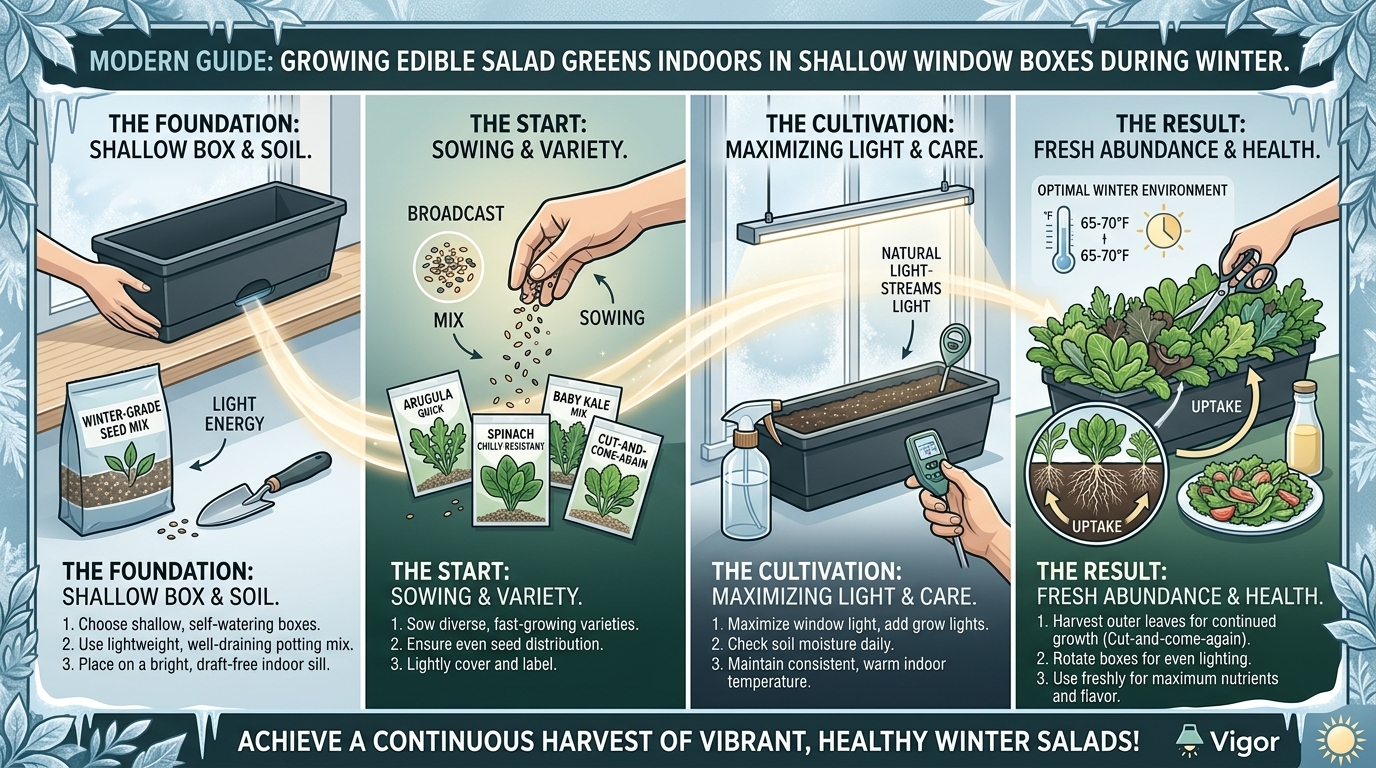
Step 1: Selecting the Right Window Box
- Depth & Drainage: Choose a window box that is at least 4 to 6 inches deep and features active drainage holes at the bottom. Without drainage holes, soil quickly becomes waterlogged, leading to root rot and damping-off disease.
- Aesthetics: Terracotta window boxes look stunning and breathe well, but lightweight fiberglass, plastic, or wooden window boxes with inner liners are easier to move around your kitchen. Always pair your box with a matching waterproof saucer.
Step 2: Crafting the Ideal Soil Mix
Salad greens demand light, nutrient-rich, fluffy soil that retains moisture without compacting.
- Mix 70% high-quality organic potting soil with 30% perlite or vermiculite to create an airy, well-draining bed. Avoid heavy outdoor garden dirt, which packs down like concrete in shallow containers.
Step 3: Planting Your Seeds
- Sowing Method: Because window boxes are shallow, you can broadcast seeds evenly across the surface or plant them in neat shallow rows spaced 1 inch apart.
- Planting Depth: Cover seeds lightly with just 1/8 to 1/4 inch of fine soil or vermiculite. Press the soil down gently to ensure good seed-to-soil contact.
- Initial Watering: Mist the soil gently using a spray bottle to avoid washing away tiny seeds. Cover the box loosely with clear plastic wrap for the first 3 to 5 days to lock in humidity until germination occurs.
Step 4: Providing Adequate Light
- Place your window box in your home’s brightest window (south-facing or west-facing is ideal).
- If natural light falls short (especially in northern urban apartments), suspend a full-spectrum LED grow light bar 8 to 10 inches above the box, setting an automatic timer for 12 to 14 hours a day.
5. Maintenance and Harvest Techniques
- Consistent Moisture: Because shallow window boxes hold less soil, they dry out faster than large pots. Check the top inch of soil daily; keep it evenly moist like a wrung-out sponge, but never soggy.
- The Cut-and-Come-Again Harvest: Instead of pulling up entire plants, use clean kitchen scissors to snip off the outer, larger leaves of your lettuce and arugula when they reach 4 to 6 inches tall, leaving the central growing crown intact. The plant will continuously push out fresh new leaves for weeks!
- Air Circulation: Gentle indoor airflow prevents fungal issues like powdery mildew. If your kitchen air is stagnant, run a small oscillating fan on low nearby for an hour a day.
6. Frequently Asked Questions (FAQ)
1. Do I need a south-facing window to grow salad greens indoors in winter?
While south-facing windows offer the best natural light, east- and west-facing windows can also work. If your home lacks bright natural windows during dark winter months, supplementing with an affordable full-spectrum LED grow light is essential for success.
2. Can I use regular garden dirt from my backyard for indoor window boxes?
Never use backyard garden dirt indoors. Outdoor soil is heavy, compacts tightly in shallow containers, drains poorly, and often harbors weed seeds, fungal spores, and lawn pests like gnats or grubs. Always use a sterile indoor potting mix.
3. How long does it take for indoor salad greens to grow from seed to harvest?
Fast-growing varieties like arugula and loose-leaf lettuce can be harvested for baby greens in as little as 3 to 4 weeks from the day you plant the seeds.
4. Why are my indoor lettuce seedlings tall, pale, and floppy?
This is classic etiolation caused by a severe lack of light. The seedlings are stretching desperately toward a window source. Move the box closer to a bright window or lower your LED grow light fixture directly over the plants.
5. How do I prevent mold or “damping-off” disease in my window box?
Damping-off occurs when seedlings rot at the soil line due to overwatering, lack of airflow, and stagnant humidity. Prevent this by using well-draining soil, removing plastic humidity domes once seeds sprout, and ensuring good air circulation around your window box.
6. Can I reuse the potting soil after harvesting my greens?
After 2 or 3 successive harvests, the nutrients in a shallow window box will be largely depleted. You can refresh the soil by mixing in fresh compost or worm castings, or start fresh with a new batch of organic potting mix for your next round.
7. Do I need to fertilize indoor salad greens?
Because salad greens are harvested very quickly as baby or mature leaves, heavy chemical fertilization isn’t usually necessary if you started with nutrient-rich organic soil. If growing past 6 weeks, a very weak dilution of organic liquid kelp or fish emulsion can be applied once.
8. Why do indoor lettuce greens taste bitter?
Bitterness in indoor lettuce is usually triggered by temperature stress (if the box gets too hot near a sunny window or heater vent) or if the plants are allowed to dry out completely between waterings. Keep temperatures moderate and soil evenly moist.
9. Can I grow head lettuce (like Iceberg or Romaine) in shallow window boxes?
Compact head lettuces can work, but loose-leaf varieties are vastly superior for indoor shallow boxes because you can harvest leaves incrementally. Large, dense head lettuces require deeper root space and longer growing periods.
10. How do I keep pests like aphids away from indoor winter greens?
Pests are less common indoors during winter, but they can hitchhike on clothing or pets. Inspect your greens weekly. If aphids appear, a gentle spray with insecticidal soap or wiping leaves with a damp cloth will clear them right up.
Conclusion
Growing edible salad greens in shallow indoor window boxes during chilly winter months is a fantastic way to bring life, color, and fresh farm-to-table flavor into your home. By choosing fast-maturing loose-leaf varieties, providing proper well-draining soil, and supplementing with full-spectrum LED light where nature falls short, you can enjoy crisp, homegrown salads all winter long.