Stepping into your home garden—whether you are working with heavy, stubborn native earth in Texas, managing a backyard plot in California, or cultivating garden beds in Washington state—only to find your soil packed as tight as concrete, can be deeply discouraging. When clay soil is compacted, plant roots suffocate, water pools on the surface instead of soaking in, and trying to push a garden trowel into the ground feels like digging into stone.
Many frustrated gardeners assume the only way to fix heavy clay is to rent a heavy motorized rototiller or bring in a backhoe to smash up the earth. Do not do this.
Using heavy mechanical tillage on wet or compacted clay actually destroys whatever fragile soil structure remains, shattering delicate fungal networks and creating an invisible, rock-hard “pan layer” just beneath the surface that makes drainage even worse.
The true, permanent way to fix compacted clay soil is through natural, biological, and organic methods. By working with nature rather than fighting against it, you can transform dense clay into a dark, crumbly, fertile topsoil.
This comprehensive, expert-backed guide breaks down how to loosen and enrich compacted clay soil naturally without ever touching heavy machinery.
1. Why Is Clay Soil So Prone to Compaction? (The Science)
To fix clay, you must understand its microscopic structure. Clay particles are microscopic, flat plates (like tiny shingles or playing cards).
- When clay soil gets wet, water molecules slide between these flat plates, making the soil sticky, slick, and heavy.
- As the sun bakes the soil and moisture evaporates, those flat plates pull tightly together, locking into a dense, solid matrix that leaves almost zero pore space for air or water movement.
Because clay lacks natural pore space, plant roots cannot expand, and beneficial soil microbes starve for oxygen.
2. The Golden Rules of Managing Clay Soil
Before diving into specific amendments, keep these fundamental laws of clay management in mind:
- Never Work Wet Clay: Walking on or digging into wet clay is the absolute fastest way to ruin your soil. It squeezes out every remaining air pocket, instantly turning loose dirt back into brick mortar. Always wait until clay soil is moderately dry (crumbly to the touch) before working it.
- Never Add Just Sand: A common gardening myth suggests mixing sand into clay to loosen it. Unless you add sand in equal proportions (often 50% sand by volume), mixing a little sand into clay literally creates sub-grade concrete. Always rely on organic matter instead of sand.
- Embrace No-Till: Stop turning your soil upside down with a shovel every spring. Tilling destroys earthworm burrows and kills beneficial fungal hyphae that naturally bind soil into stable, loose crumbs.
3. Top Natural Methods to Break Up and Enrich Clay Soil
Transforming compacted clay requires a multi-pronged organic approach. By combining physical, chemical, and biological strategies, you can permanently alter your soil’s structure.
A. Heavy Top-Dressing with Organic Compost (“The Blanket Method”)
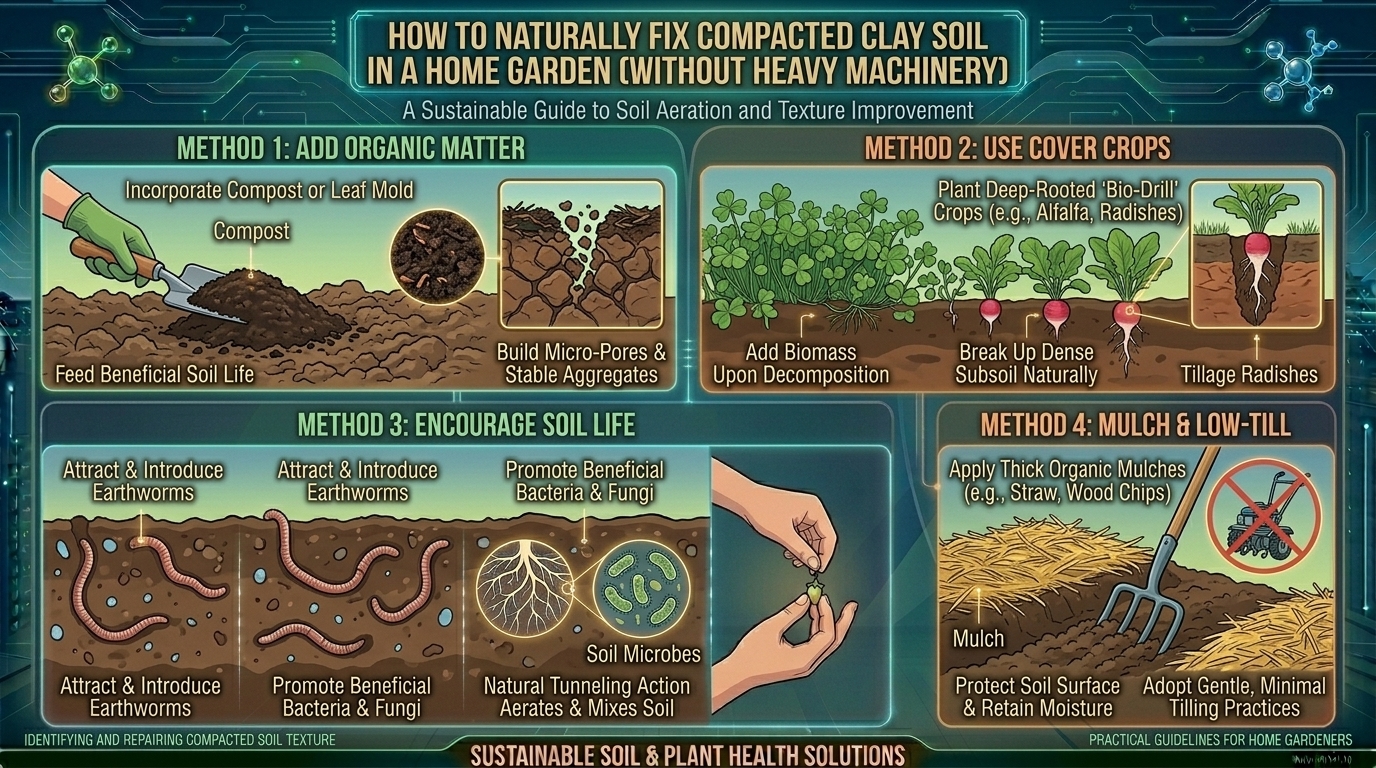
Compost is your primary weapon against clay. Because you shouldn’t dig deeply into clay, you can apply compost on top of the soil and let nature do the heavy lifting.
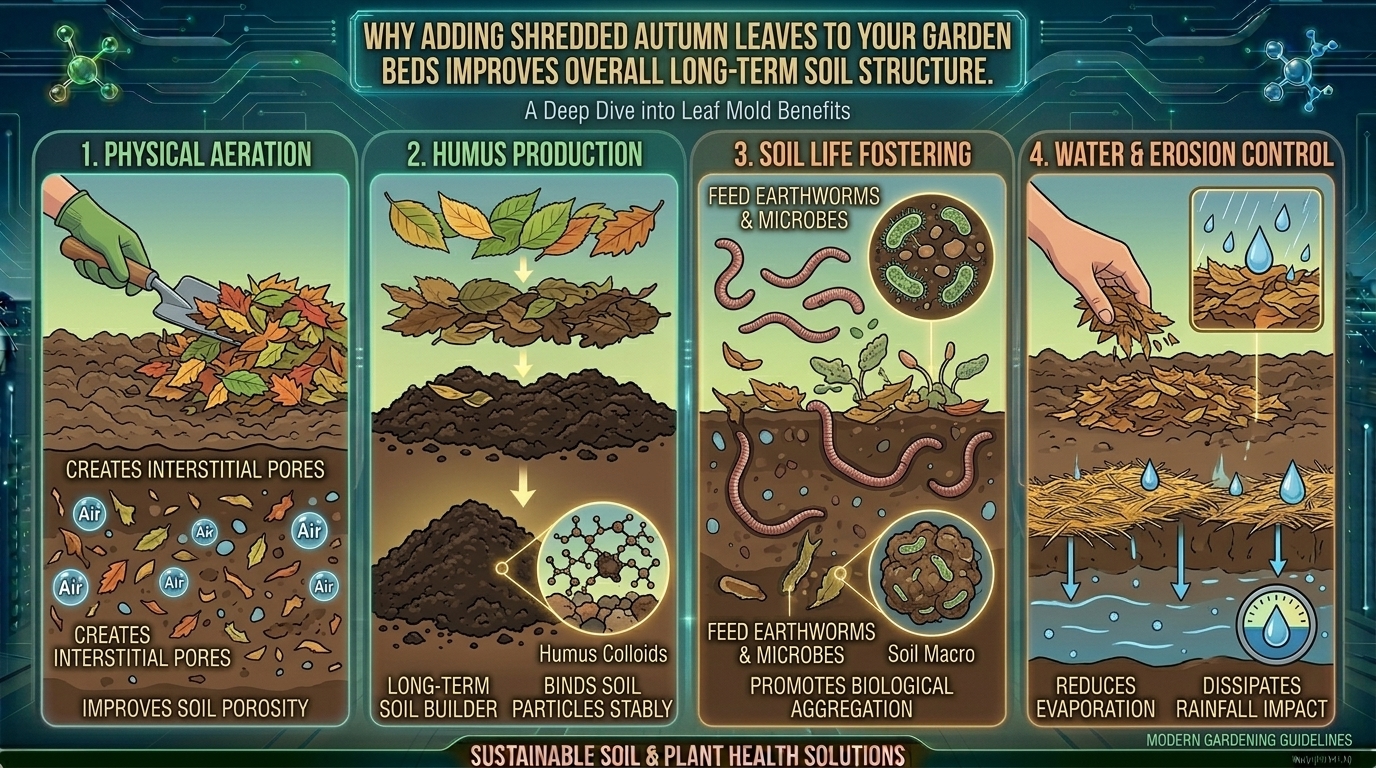
- How it works: Earthworms, beetles, and microscopic soil microbes feed on the compost and tunnel downward, pulling organic matter deep into the clay layers. Over time, this organic humus creates stable soil aggregates that prevent clay particles from locking back together.
- How to apply: Spread a 2-to-3-inch layer of rich organic compost across the surface of your garden beds every spring and fall. Do not work it in deeply; let earthworms incorporate it naturally.
B. Plant Deep-Rooting Cover Crops (Biological Subsoilers)
Instead of renting a mechanical subsoiler machine, let plants do the work for you. Cover crops with aggressive taproots are nature’s biological drills.
- What to plant: Daikon Radishes (Tillage Radishes) and Winter Rye.
- How it works: Daikon radishes grow massive, fleshy taproots that plunge 12 to 18 inches straight down into hard, compacted clay. When winter frost kills the radish, the root rapidly decomposes underground, leaving behind deep vertical shafts, open air channels, and rich organic matter that instantly improves drainage and aeration.
C. Natural Gypsum (Calcium Sulfate)
If your clay soil is sodic or tightly bound, applying agricultural-grade natural gypsum can work wonders.
- How it works: Gypsum provides calcium ions that displace sodium and magnesium ions clinging to clay particles. This chemical reaction causes microscopic clay plates to clump together slightly into larger aggregates (flocculation), opening up tiny pore spaces for water and air without altering your soil pH.
- How to apply: Sprinkle gypsum over the soil surface according to package instructions and water it in gently.
D. Sheet Mulching (Lasagna Gardening)
If you are starting a brand-new garden bed over rock-hard clay, skip digging entirely. Use sheet mulching to smother weeds and build topsoil upward.
- How to do it: Lay down overlapping layers of unprinted brown cardboard directly over the hard clay. Soak the cardboard thoroughly with water, then layer 6 to 8 inches of alternating “greens” (compost, grass clippings) and “browns” (straw, shredded leaves, wood chips) on top. Over several months, earthworms will move up from the clay, consume the cardboard, and loosen the underlying earth.
4. Frequently Asked Questions (FAQ)
1. Can I use a rototiller to break up compacted clay soil quickly?
While a rototiller will chop clay up into loose pieces temporarily, it is a short-term illusion. Within a few heavy rains, the loose clay will resettle into an even tighter, denser layer than before, while destroying earthworms and soil structure. Avoid tilling.
2. How long does it take to naturally loosen hard clay soil?
True biological soil transformation takes time. While top-dressing with compost improves the top inch immediately, completely transforming compacted clay into loose, rich loam through organic matter and cover crops takes about 1 to 2 full seasons of consistent management.
3. Does adding sand to clay soil actually make it harder?
Yes! Unless you mix in massive amounts of coarse masonry sand (often exceeding 50% of the total soil volume), mixing a small amount of sand into clay fills the micro-pore spaces, resulting in a dense mixture that behaves like structural mortar.
4. Why does water pool on top of my clay garden beds after it rains?
Clay particles pack tightly together, leaving almost no macro-pore spaces for water to drain downward. When heavy rain falls, the surface seals off immediately, causing water to pool and run off rather than soaking into the root zone.
5. Are earthworms effective at breaking up clay soil?
Earthworms are your best allies in clay soils. As they consume organic matter and tunnel through heavy clay, they create stable vertical burrows that allow water and air to penetrate deep underground while coating their tunnels with nutrient-rich mucus.
6. Can I grow root vegetables (like carrots and potatoes) in heavy clay soil?
Growing long, straight carrots in heavy, compacted clay is very difficult; they will often fork, twist, or stunt. If you want to grow root crops in clay, build raised beds on top of the native soil and fill them with a loose, loamy soil mix.
7. Does natural gypsum change the pH of my soil?
Unlike agricultural lime (which raises pH) or elemental sulfur (which lowers pH), pure agricultural gypsum is chemically pH-neutral. It supplies calcium and sulfur without altering your soil’s acidity or alkalinity.
8. What are the best organic mulches to protect clay soil?
Shredded straw, chopped autumn leaves, and untreated wood chips make exceptional surface mulches for clay. They prevent the hot sun from baking the clay into a concrete crust and protect the soil surface from the destructive impact of heavy raindrops.
9. Should I add perlite or pumice to clay garden beds?
In smaller raised beds or intensive garden areas, blending in horticultural perlite or coarse volcanic pumice helps create permanent structural air pockets within heavy clay soil, improving long-term drainage.
10. How do I know when clay soil is dry enough to work in?
Grab a handful of soil and squeeze it firmly. If it forms a wet, slick mud ball that stays smashed together and shiny, it is too wet to touch. If it crumbles apart easily under gentle pressure, it is dry enough to plant, weed, or top-dress.
Conclusion
Fixing compacted clay soil in your home garden does not require renting heavy machinery or destroying your yard’s natural ecosystem. By respecting the rules of clay, avoiding mechanical tilling, applying heavy layers of organic compost, planting deep-rooting cover crops like daikon radishes, and protecting the surface with organic mulch, you can permanently transform dense, heavy earth into a dark, crumbly, fertile paradise.