Stepping out into your home garden—whether you are tending a backyard raised bed in Austin, Texas, managing an urban container garden on a New York City balcony, cultivating plots in Washington state, or working with soil in San Francisco and across California—is a deeply rewarding endeavor. You invest your time, water, and care into planting seeds, dreaming of lush green foliage, vibrant flowers, and abundant harvests.
However, sometimes your garden tells a different story. Instead of vigorous, healthy growth, you notice your plants turning a pale, sickly yellow, stalling out completely, and looking weak.
When your garden exhibits these symptoms, the culprit is frequently the most critical macronutrient in all of horticulture: Nitrogen (N).
Nitrogen is the fundamental building block of plant life. Without an adequate supply in your soil, plants cannot manufacture chlorophyll, synthesize essential proteins, or fuel their growth engine.
This comprehensive, expert-backed guide breaks down the exact science of nitrogen in the garden, the primary warning signs of a severe nitrogen deficiency, why it happens, and how you can naturally and organically restore your soil fertility.
1. What Is Nitrogen and Why Do Plants Need It?
To understand deficiency, you must understand nitrogen’s role in plant biology. Along with Phosphorus (P) and Potassium (K), Nitrogen is one of the three primary macronutrients (often displayed as N-P-K on fertilizer labels).
- Chlorophyll Production: Nitrogen is a core component of chlorophyll, the pigment that gives plants their deep green color and enables them to capture sunlight for photosynthesis.
- Amino Acids and Proteins: Nitrogen forms the structural amino acids that build plant cells, stems, and leaves.
- Vegetative Growth: It is the primary engine behind rapid stem and leaf development. Without nitrogen, a plant cannot expand its canopy or build the solar panels (leaves) it needs to produce fruit.
2. The Main Warning Signs of Severe Nitrogen Deficiency
Because nitrogen is a mobile nutrient within a plant, the organism behaves strategically when supplies run low. It pulls nitrogen away from older, lower leaves and relocates it upward to feed new, tender top growth. Consequently, deficiency symptoms always appear in a predictable pattern.
Here are the key warning signs to look for in your garden:
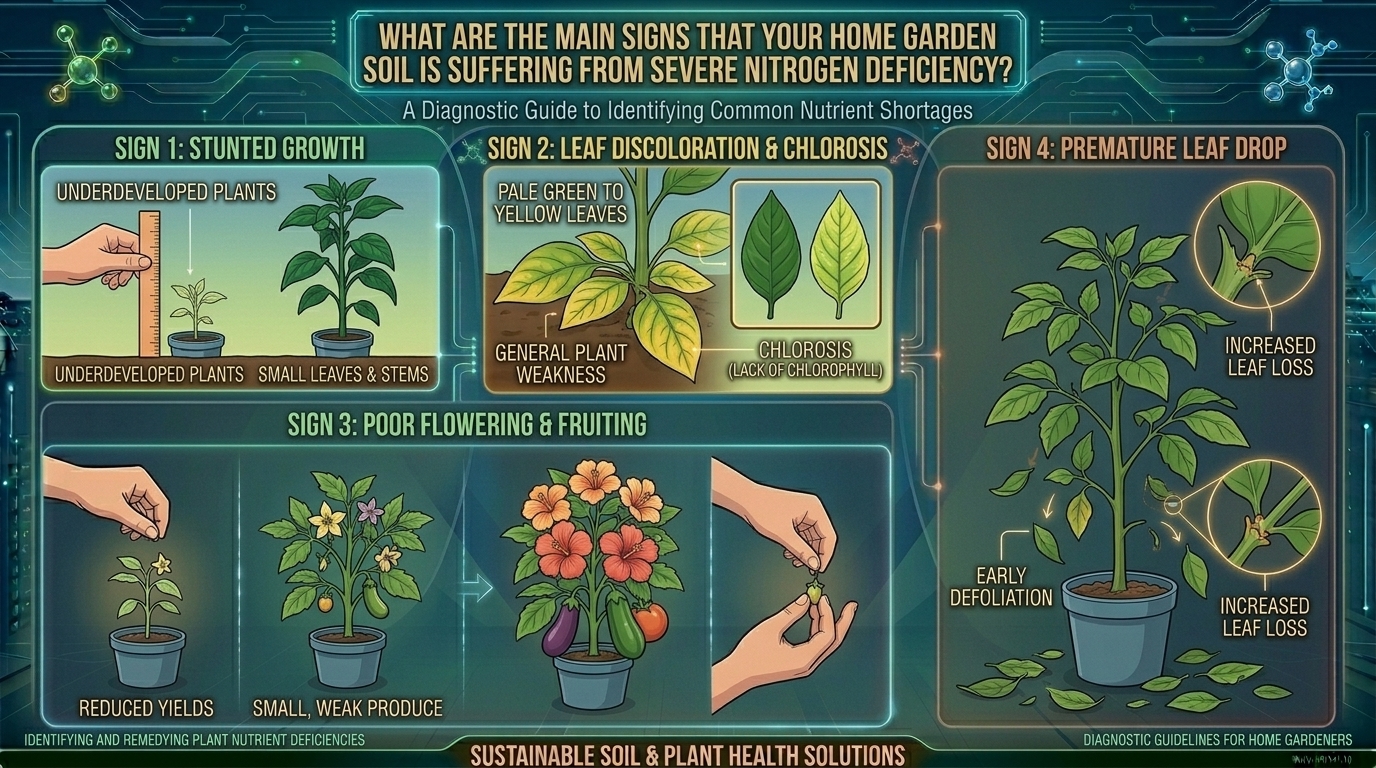
A. General Chlorosis (Yellowing of Lower Leaves)
The earliest and most distinct sign of nitrogen deficiency is a uniform fading or yellowing of the older leaves at the bottom of the plant.
- Unlike iron deficiency (where veins stay green while tissue turns yellow), nitrogen deficiency causes the entire leaf—including the veins—to fade from a healthy green to pale yellow, light green, and eventually translucent white before withering and dropping off.
B. Stunted, Spindly Growth and Minimal Vigor
If your plants look like miniature versions of what they are supposed to be, with thin, fragile stems and very few side branches, nitrogen is usually missing. Because the plant cannot manufacture enough proteins or cell walls, overall vegetative growth grinds to a near-total halt.
C. Premature Leaf Drop and Early Senescence
When lower leaves are stripped of their remaining nitrogen, they age rapidly, turn completely yellow or brown, become papery, and fall off the plant prematurely. The lower portion of the plant becomes bare and naked.
D. Purplish or Reddish Stems (In Certain Varieties)
While phosphorus deficiency often causes purple stems, severe nitrogen stress can also trigger anthocyanin production, causing the main stems, leaf stems (petioles), and veins of certain crops (like tomatoes and peppers) to develop a purplish or dark reddish tint alongside yellowing leaves.
E. Drastic Reduction in Yields
Because a plant lacks the leaf surface area (photosynthetic capacity) required to flower and fruit, heavy-feeding crops like corn, tomatoes, squash, and brassicas will produce tiny, underdeveloped fruit or fail to set fruit entirely.
3. Why Did Your Soil Run Out of Nitrogen?
Nitrogen is an elusive element. Unlike minerals like phosphorus or potassium that stay locked in soil mineral particles, nitrogen is highly volatile and water-soluble. It vanishes from your soil through several pathways:
- Leaching from Heavy Rains or Watering: Nitrate ($NO_3^-$), the form of nitrogen plants absorb best, is water-soluble. Heavy seasonal downpours or overzealous watering wash it straight down past the root zone.
- Microbial Tie-Up (High Carbon Amendments): If you add fresh, uncomposted high-carbon materials (like raw wood chips or sawdust) directly to your soil, soil microbes consume all available nitrogen to break down the carbon, temporarily starving your plants.
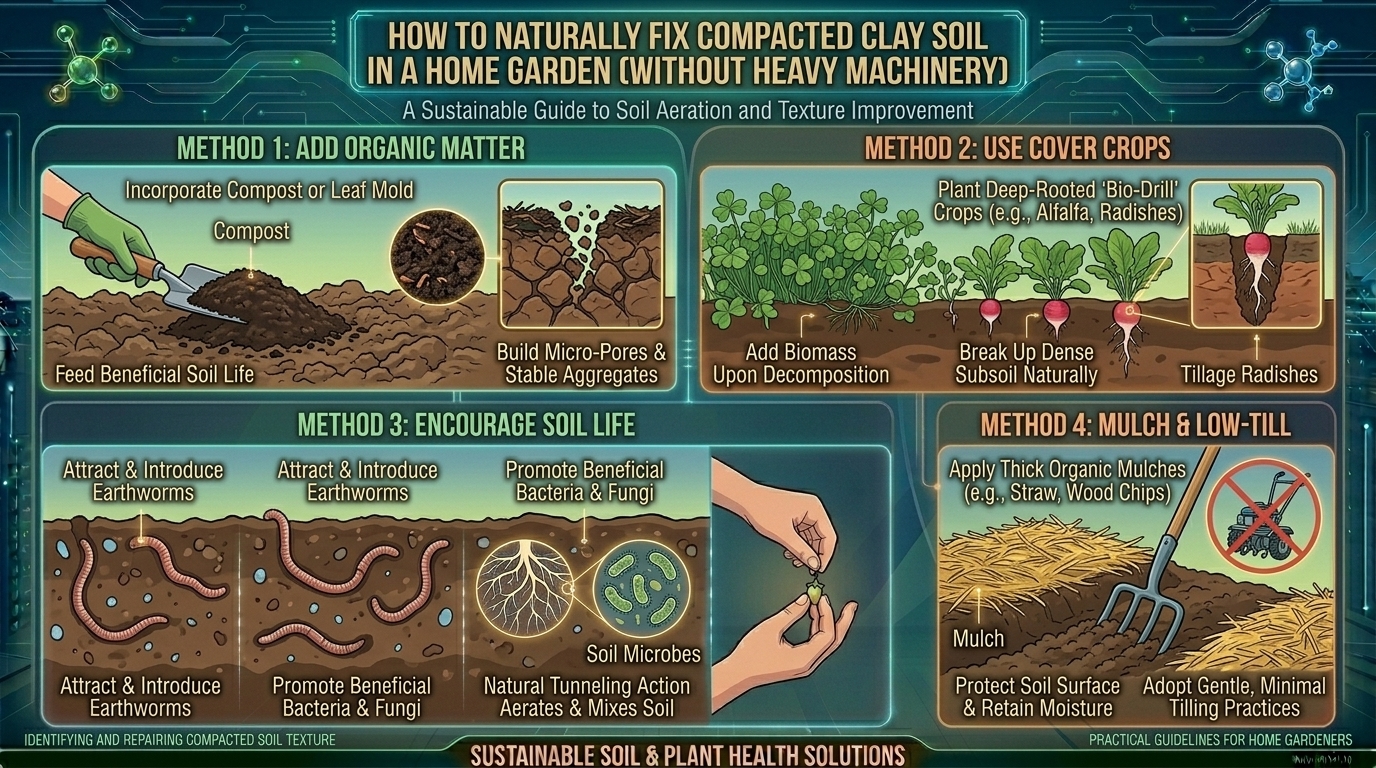
- Lack of Organic Matter: Soils stripped of organic compost and earthworm activity lose their biological capacity to cycle and hold nitrogen.
4. How to Fix Nitrogen Deficiency Naturally and Organically
If your soil test or plant symptoms confirm a nitrogen shortage, avoid synthetic chemical fertilizers (like high-salt ammonium nitrate), which force rapid, weak growth and kill off beneficial soil microbes. Instead, restore your soil using these powerful, slow-release organic methods:
A. Fast-Acting Organic Liquid Amendments
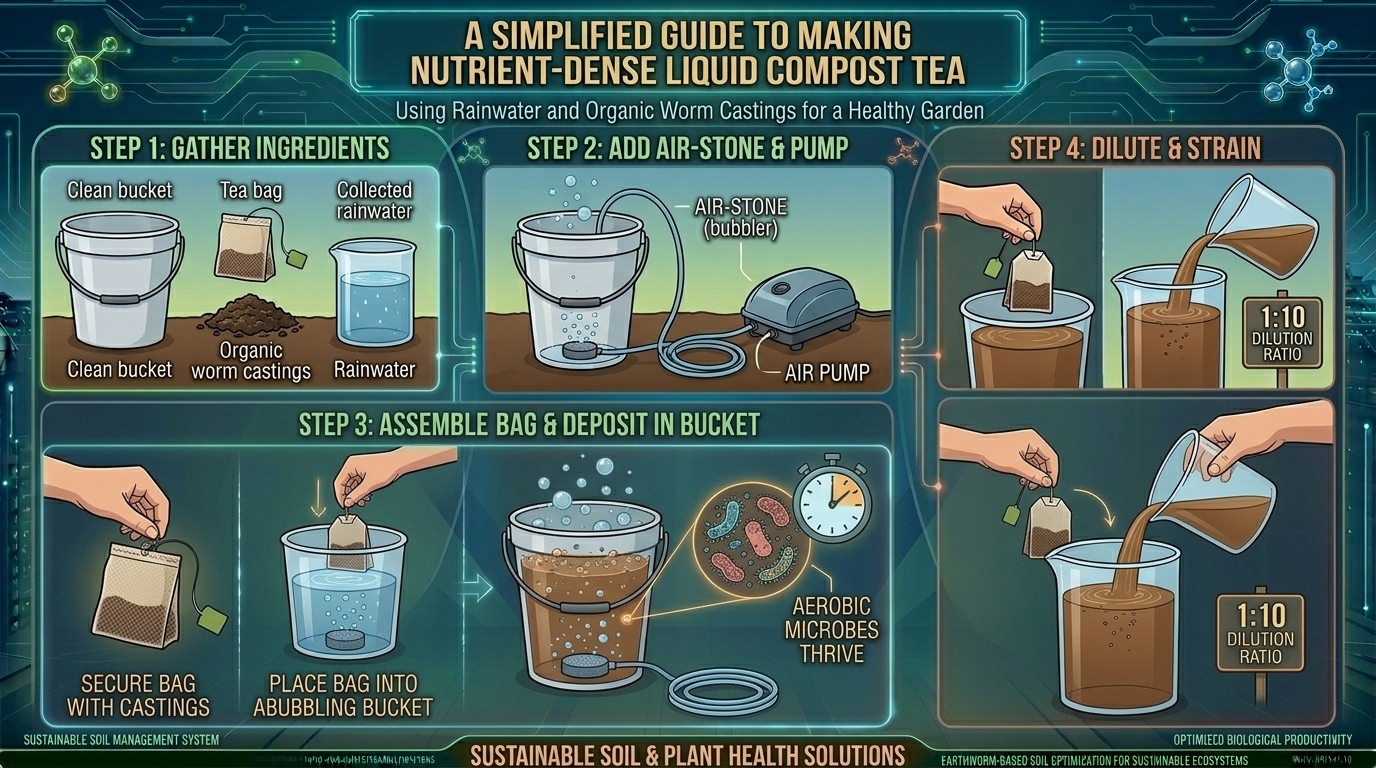
- Fish Emulsion or Fish Hydrolysate: A concentrated organic liquid derived from fish processing. Diluted in water and applied to the root zone, it delivers a rapid, gentle nitrogen boost that green up pale plants within days.
- Blood Meal: Dried animal blood packing a massive organic nitrogen punch (around 12% N). Use sparingly, as applying too much too fast can burn roots or attract digging pests.
B. Long-Term Organic Soil Builders
- Aged Organic Compost and Worm Castings: Top-dressing your beds with rich compost introduces stable organic matter and active nitrogen-fixing microbes.
- Alfalfa Meal or Feather Meal: Outstanding slow-release organic meals that break down over weeks, feeding soil bacteria and providing a steady, reliable supply of nitrogen.
- Planting Green Manure (Cover Crops): Growing legumes like crimson clover or hairy vetch during the off-season. Legumes host symbiotic Rhizobium bacteria on their roots that pull nitrogen gas straight out of the atmosphere and fix it directly into the soil.
5. Frequently Asked Questions (FAQ)
1. How can I tell the difference between nitrogen deficiency and overwatering?
Overwatering causes lower leaves to turn yellow and drop, but the soil will remain constantly soggy, and roots will show signs of rot (brown and mushy). Nitrogen deficiency occurs even when moisture levels are correct, and the soil is typically depleted of organic matter.
2. Can indoor potted foliage plants suffer from nitrogen deficiency?
Yes! Indoor houseplants like monsteras, pothos, and fiddle-leaf figs exhaust the limited nutrients in their potting soil over time. If their lower leaves turn pale yellow and growth stops, they need a gentle organic liquid nitrogen feed or a fresh top-dressing of worm castings.
3. Do tomato plants need more nitrogen than other vegetables?
Tomatoes are moderate-to-heavy feeders. They need steady nitrogen during their early vegetative growth phase. However, be careful not to over-fertilize tomatoes with too much nitrogen later in the season, or you will end up with massive, lush green vines and zero fruit!
4. Why are my corn plants turning yellow at the tips first?
In corn and other grasses, a nitrogen deficiency often starts as a characteristic V-shaped yellowing starting at the tip of the oldest lower leaves and progressing inward along the midrib.
5. Can I use coffee grounds directly to fix nitrogen deficiency?
While coffee grounds contain nitrogen, they are not a quick fix. Raw coffee grounds are mostly carbon and must be composted first before their nitrogen becomes bio-available to plants. Dumping raw grounds directly on soil can temporarily tie up existing nitrogen.
6. How fast do plants recover after I apply an organic nitrogen fertilizer?
When using a fast-acting organic liquid like fish emulsion or liquid kelp, you will typically see plants begin to green up and regain vigor within 3 to 7 days. Slow-release meals like alfalfa or feather meal take 2 to 3 weeks to break down.
7. Does high soil pH lock up nitrogen?
While nitrogen is less prone to pH lockout than phosphorus or iron, extreme soil pH (below 5.5 or above 8.0) suppresses the beneficial soil microbes responsible for converting organic nitrogen into plant-usable nitrate. Maintaining a pH between 6.0 and 7.0 prevents this.
8. Will adding manure instantly solve nitrogen deficiency?
Aged, well-composted manure is an excellent nitrogen source. However, never use fresh, raw manure directly on vegetable gardens, as it contains harmful pathogens and is so hot with ammonia that it will burn and kill plant roots.
9. Can cover crops completely eliminate the need for organic fertilizers?
In in-ground garden beds, planting nitrogen-fixing cover crops (like clover or vetch) year after year drastically reduces or even eliminates the need to buy outside fertilizers by generating natural fertility in-situ.
10. How do I prevent nitrogen from leaching out of my soil during heavy rain?
Maintain a thick blanket of organic mulch (like straw or chopped leaves) across your soil surface to prevent heavy rains from beating down and washing away soluble nutrients, and continuously build up your soil’s organic matter content to act as a nutrient sponge.
Conclusion
Recognizing the signs of a severe nitrogen deficiency—such as pale yellow lower leaves, stunted growth, and poor yields—allows you to intervene before your home garden suffers permanent damage. By turning away from harsh synthetic chemicals and embracing organic amendments like fish emulsion, blood meal, worm castings, and cover crops, you can permanently restore your soil’s biological health and ensure your plants thrive.